Artwork
Seated Female Nude Looking Forward
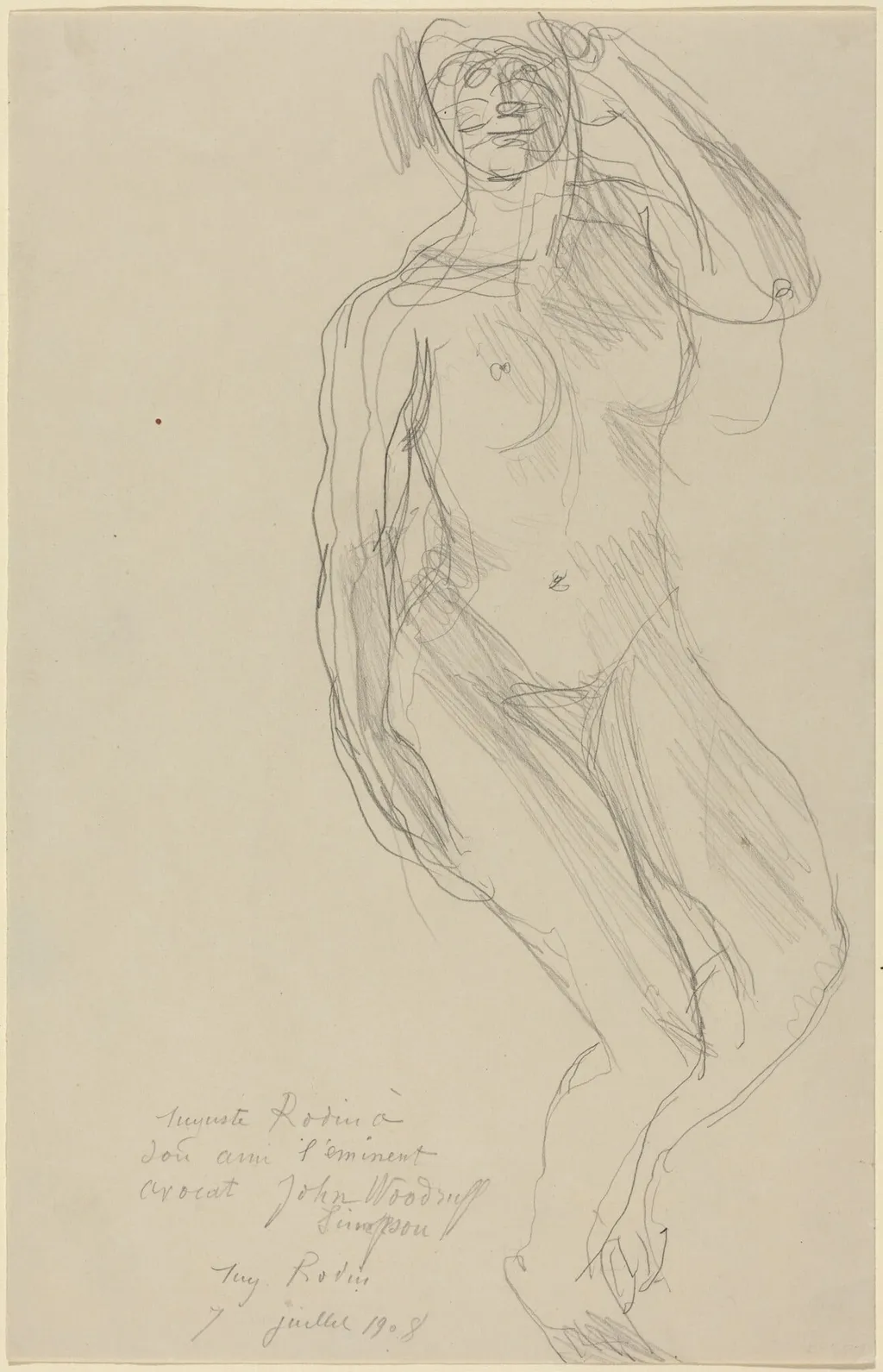
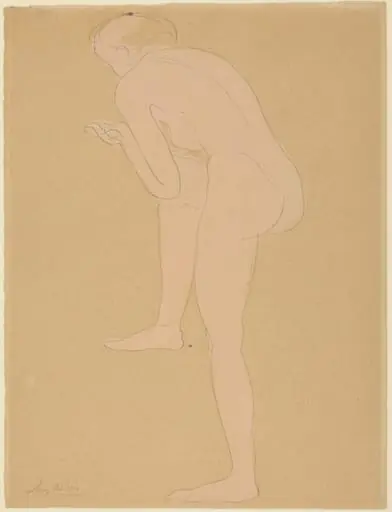
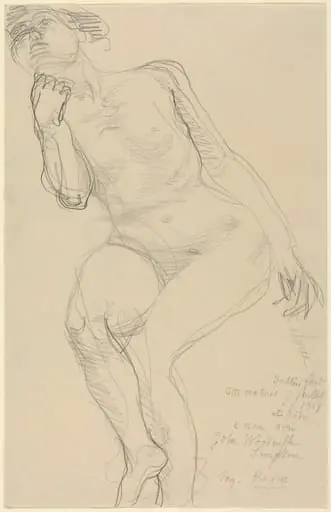
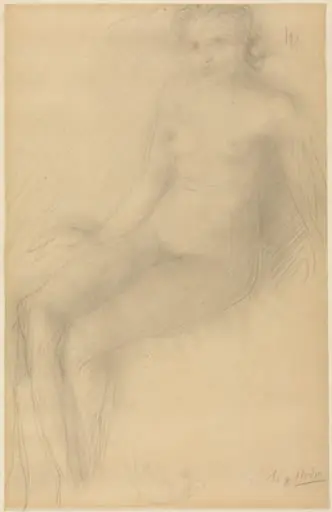
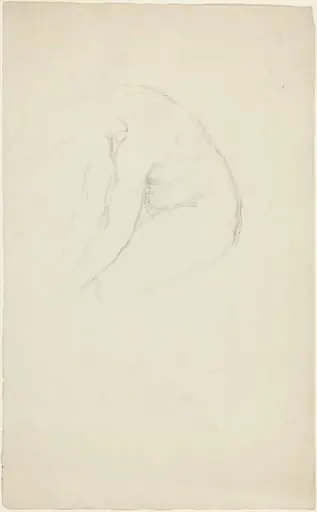
Seated Female Nude Looking Forward is a graphite drawing by Auguste Rodin. It dates from 1908 and is held in the collection of the National Gallery of Art.
About this work
Overview
Created in 1908, this graphite drawing by Auguste Rodin captures a seated female nude in a moment of quiet stillness.
Created in 1908, this graphite drawing by Auguste Rodin captures a seated female nude in a moment of quiet stillness. Executed on folded paper, the work reflects Rodin’s ongoing engagement with the human form beyond sculpture. The medium’s simplicity and the paper’s physical texture contribute to the drawing’s intimate, spontaneous quality, aligning with his practice of rapid, observational studies.
Subject & Meaning
The figure sits with her left arm extended above her head and her right resting on her thigh, her torso turned slightly to the right while her gaze remains forward. This posture suggests introspection rather than performance, avoiding idealized beauty in favor of natural, unposed presence. Rodin’s focus on the body’s weight and alignment emphasizes physical authenticity over narrative or symbolic intent.
Technique & Style
Rodin employed bold, fluid graphite lines to define form and suggest volume, with varying pressure creating areas of dense shadow and delicate contour. The folded paper introduces subtle creases that interact with the drawing, enhancing the sense of immediacy. Shading is applied with minimal refinement, prioritizing expressive energy over polished finish, characteristic of his preparatory sketches.
History & Provenance
This drawing emerged during a period when Rodin was intensely documenting the human figure through drawings and small-scale models. It likely served as a study for larger sculptural works or as an independent exploration of posture and mass. Its survival reflects Rodin’s habit of preserving even informal sketches, many of which were later recognized for their artistic merit beyond their original functional role.
Context
In early 20th-century France, academic traditions still dominated figure drawing, yet Rodin’s approach rejected idealization in favor of raw, tactile observation. His drawings, often made quickly from life, challenged conventions by valuing movement and imperfection. This piece aligns with his broader effort to redefine sculpture through the immediacy of drawing, treating both as equally vital expressions of form.
Legacy
Rodin’s graphite studies, including this one, influenced later artists by demonstrating how drawing could convey emotional and physical presence without finish or detail. They shifted perception of preparatory work from mere sketches to autonomous expressions. Today, such drawings are valued for their directness, offering insight into Rodin’s process and his enduring redefinition of the human form in modern art.
Artist & collection
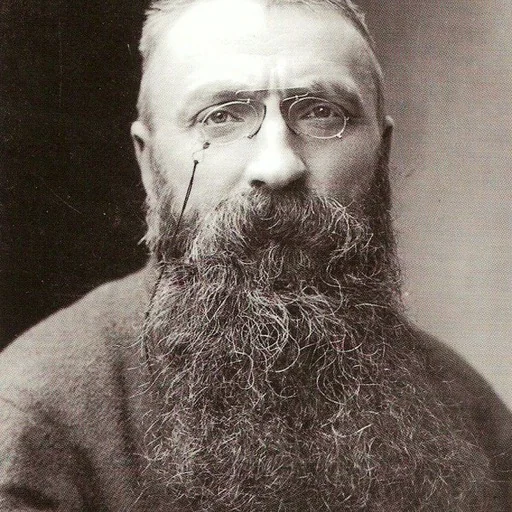
Artist
François Auguste René Rodin (; French: ; 12 November 1840 – 17 November 1917) was a French sculptor generally considered the founder of modern sculpture.