Artwork
Dancing Figure
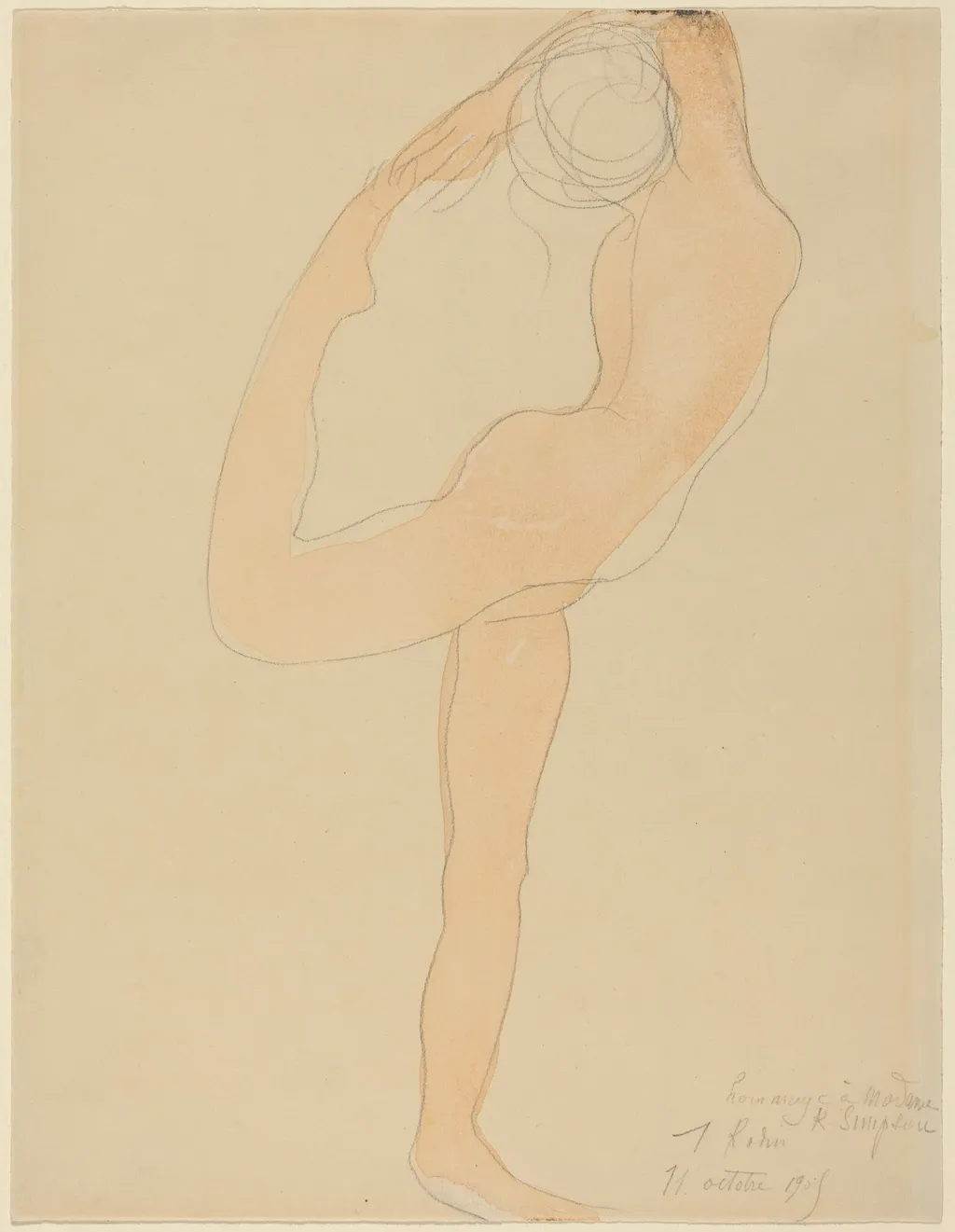
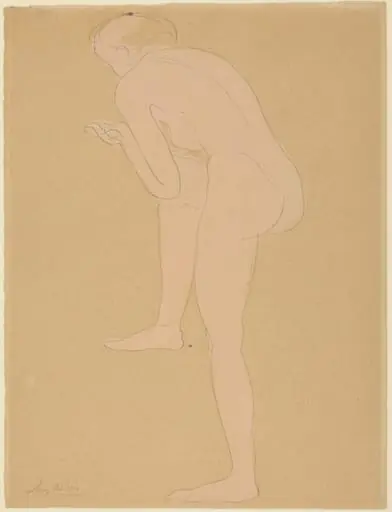
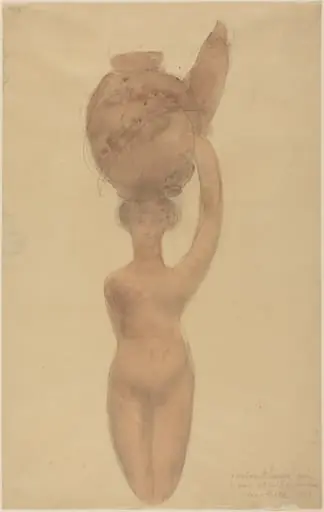
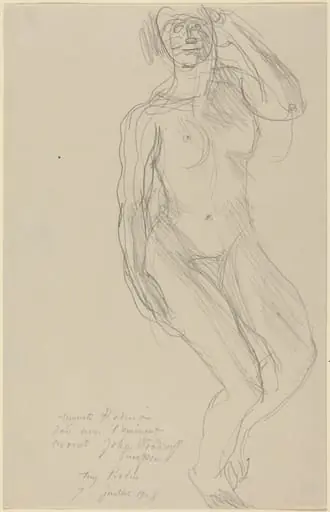
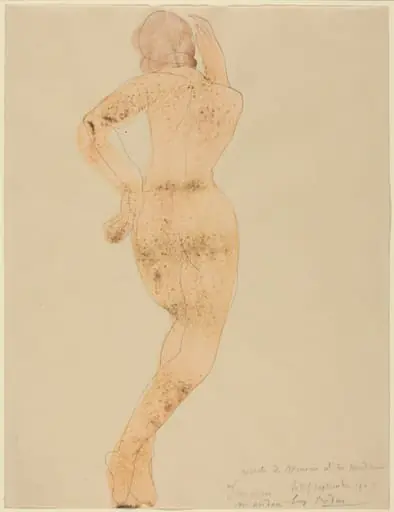
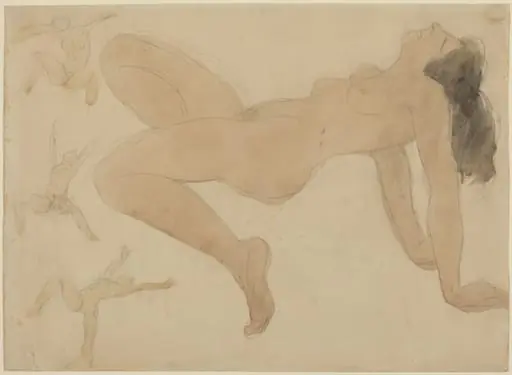
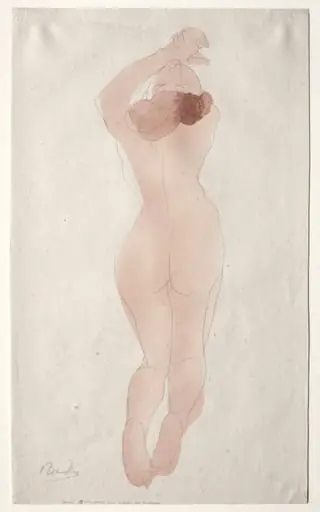
Dancing Figure is a graphite drawing by Auguste Rodin. It dates from 1905 and is held in the collection of the National Gallery of Art.
About this work
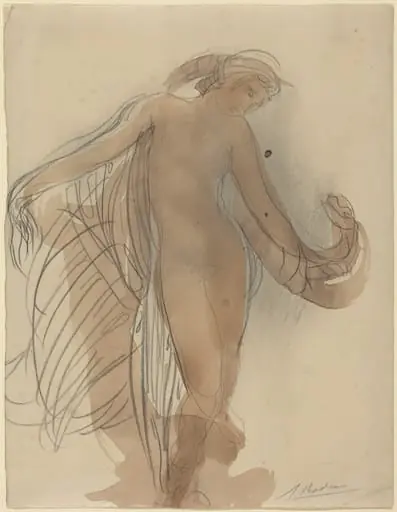
This quick sketch shows a single arm and leg mid-motion, like someone’s caught in the middle of a dance.
This quick sketch shows a single arm and leg mid-motion, like someone’s caught in the middle of a dance. The lines are loose and wobbly, almost like the artist was drawing fast—just the basic shapes matter. The skin tones are soft, with a pale pinkish wash that blurs the edges.
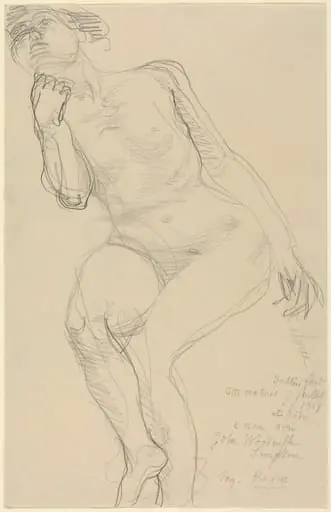
The signature in the corner says it’s by Rodin, dated 1905. He scribbled the name "Madame Simpsons" (maybe a model?) but it’s unclear.
If you like this sketchy style, check out Rodin, Auguste.
Overview
Created in 1905, this graphite and watercolor drawing by Auguste Rodin captures a fleeting moment of movement. Unlike his large-scale sculptures, this work is intimate and spontaneous, executed with rapid, unrefined strokes. It belongs to a series of figure studies Rodin produced in his later years, prioritizing gesture over finish. The piece bears his signature and a tentative inscription, suggesting a personal or informal context.
Subject & Meaning
The drawing depicts a single dancer in motion, rendered with only an arm and a leg emerging from a blurred torso. The pose suggests a transient, unposed gesture—perhaps a rehearsal or private moment—rather than a formal performance. The ambiguity of the figure’s identity, coupled with the scribbled name 'Madame Simpsons,' hints at an unnamed model, reinforcing Rodin’s interest in the body as a vessel of lived motion rather than idealized form.
Technique & Style
Rodin employed loose, sketchy lines in graphite, layered with a pale pink watercolor wash to suggest skin tone and soft shadows. Edges dissolve where pigment bleeds, emphasizing fluidity over definition. The absence of detail and the emphasis on movement reflect his shift from polished modeling to expressive immediacy. This technique mirrors the energy of his sculptural studies, translating three-dimensional dynamism into two-dimensional spontaneity.
History & Provenance
The drawing was made during Rodin’s later years, a period when he increasingly turned to drawings as independent works rather than preparatory studies. It likely originated in his studio, where he frequently invited models to move freely while he sketched. Its survival suggests it was retained by the artist or a close associate, though its early ownership remains undocumented. The inscription 'Madame Simpsons' may indicate a model’s name, but no verified record confirms her identity.
Context
In 1905, Rodin was internationally recognized but increasingly focused on private exploration over public commissions. His drawings from this time reveal a fascination with motion, impermanence, and the body’s expressive potential beyond classical ideals. These works responded to broader artistic shifts toward immediacy and psychological presence, aligning with emerging modernist sensibilities while remaining rooted in observational practice.
Legacy
This drawing exemplifies Rodin’s influence on modern figural art by prioritizing gesture and emotional resonance over finish. His willingness to leave works in a sketch-like state challenged traditional notions of completion, paving the way for later artists who valued process and spontaneity. Though minor in scale, such studies are now recognized as vital to understanding his evolving approach to the human form.
Artist & collection
Artist
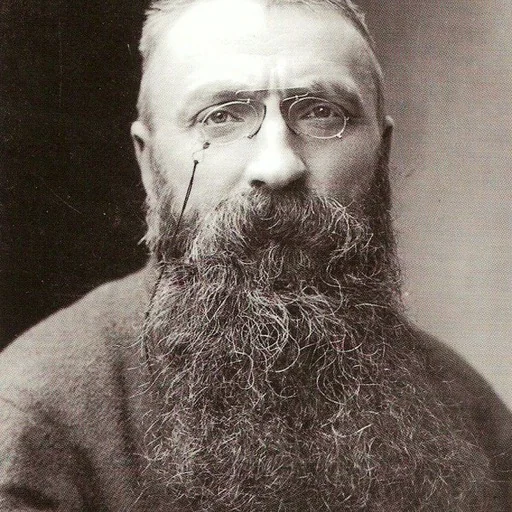
François Auguste René Rodin (; French: ; 12 November 1840 – 17 November 1917) was a French sculptor generally considered the founder of modern sculpture.