Artwork
Kundry
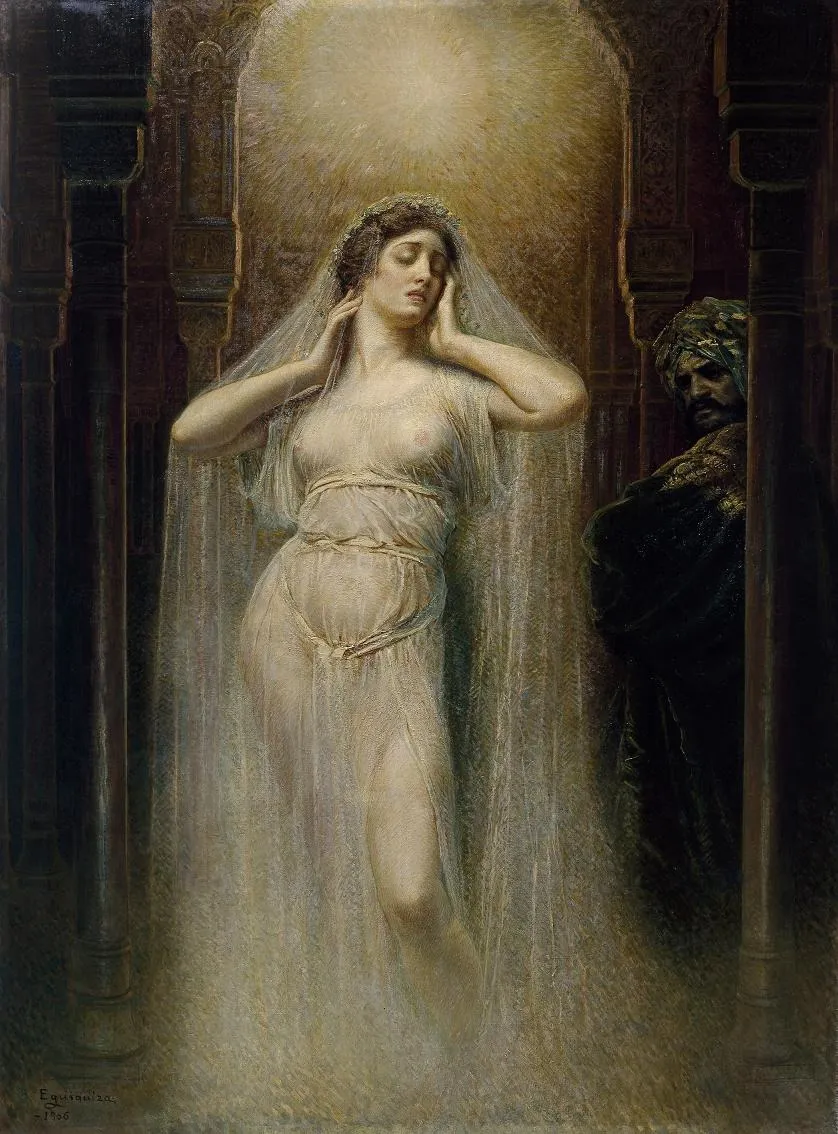
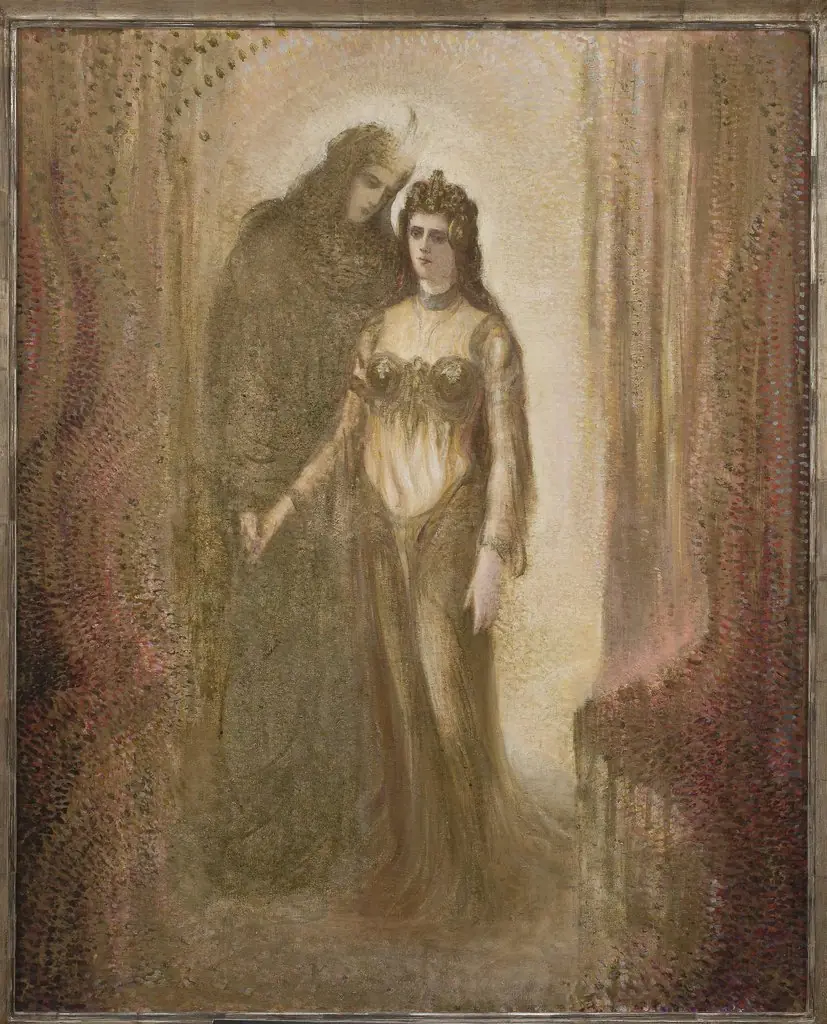
Kundry is an oil painting by the Post-Impressionist artist Rogelio de Egusquiza. It dates from 1906 and is held in the collection of the Museo del Prado.
About this work
Overview
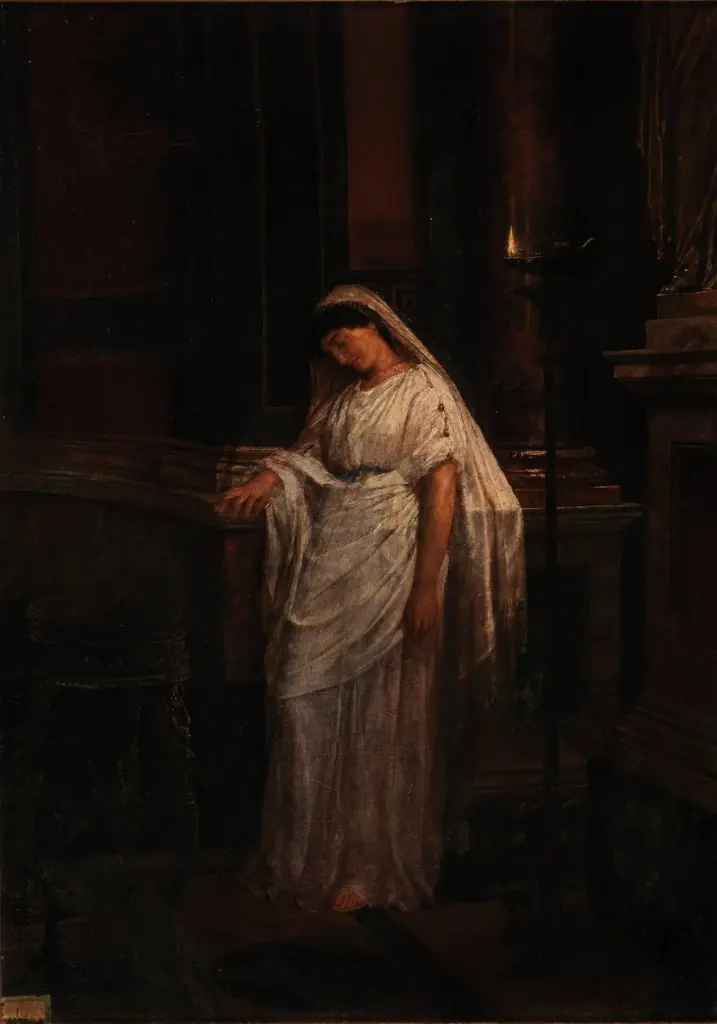
Rogelio de Egusquiza’s 1906 oil painting titled *Kundry* belongs to the post‑Impressionist period and is part of the Museo del Prado’s collection. The work portrays the operatic figure Kundry, a character created by Richard Wagner, reflecting Egusquiza’s long‑standing interest in the composer’s music.
Subject & Meaning
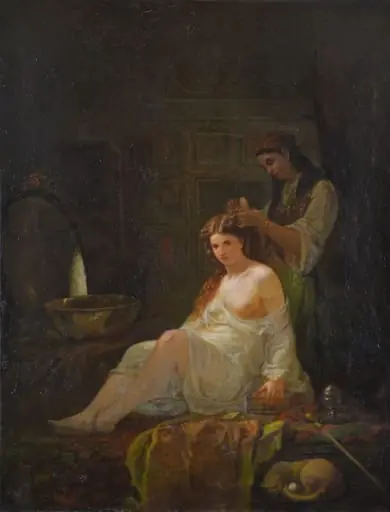
The canvas shows a woman in a sheer white gown, her hands lifted to her head, gaze lowered in a contemplative pose. Behind her, a darkly patterned backdrop frames a man wearing a turban who watches her with a solemn expression, suggesting a narrative tension drawn from Wagner’s dramatic themes.
Technique & Style
Egusquiza employs a muted palette of browns and beiges, allowing the translucent dress and the figure’s form to emerge through subtle tonal shifts. The composition relies on chiaroscuro, using pronounced light‑dark contrasts to model volume and create a quiet, introspective atmosphere.
History & Provenance
Born in 1845, the Spanish painter Egusquiza became known for promoting Wagner’s music in Spain. His fascination with the composer led to several Wagner‑inspired works, of which *Kundry* is a notable example. The painting entered the Prado’s holdings as part of its 20th‑century acquisitions.
Context
During the early 1900s, European artists often turned to literary and musical sources for inspiration. Egusquiza’s choice of a Wagnerian heroine reflects the broader cultural interest in Symbolist subjects and the exploration of psychological depth through visual art.
Artist & collection
Artist
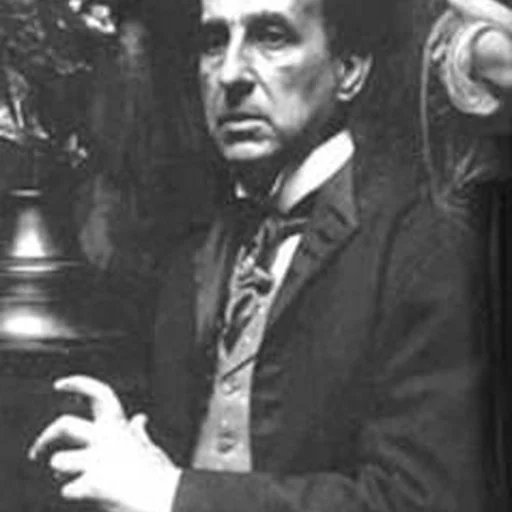
Rogelio de Egusquiza y Barrena (1845 – 10 February 1915) was a Spanish painter, known for his friendship with the German composer Richard Wagner, whose works he helped make familiar in Spain.