Artwork
Miraflores Altarpiece
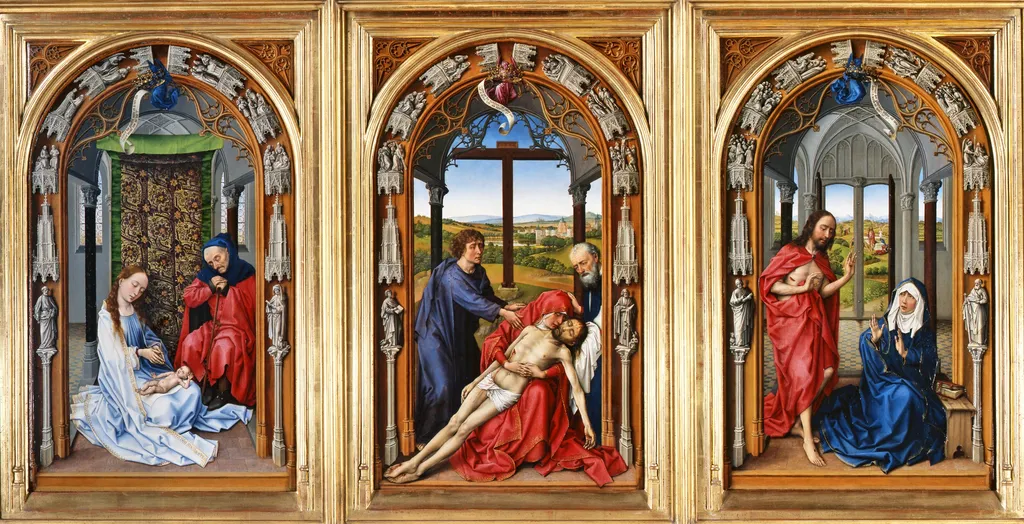
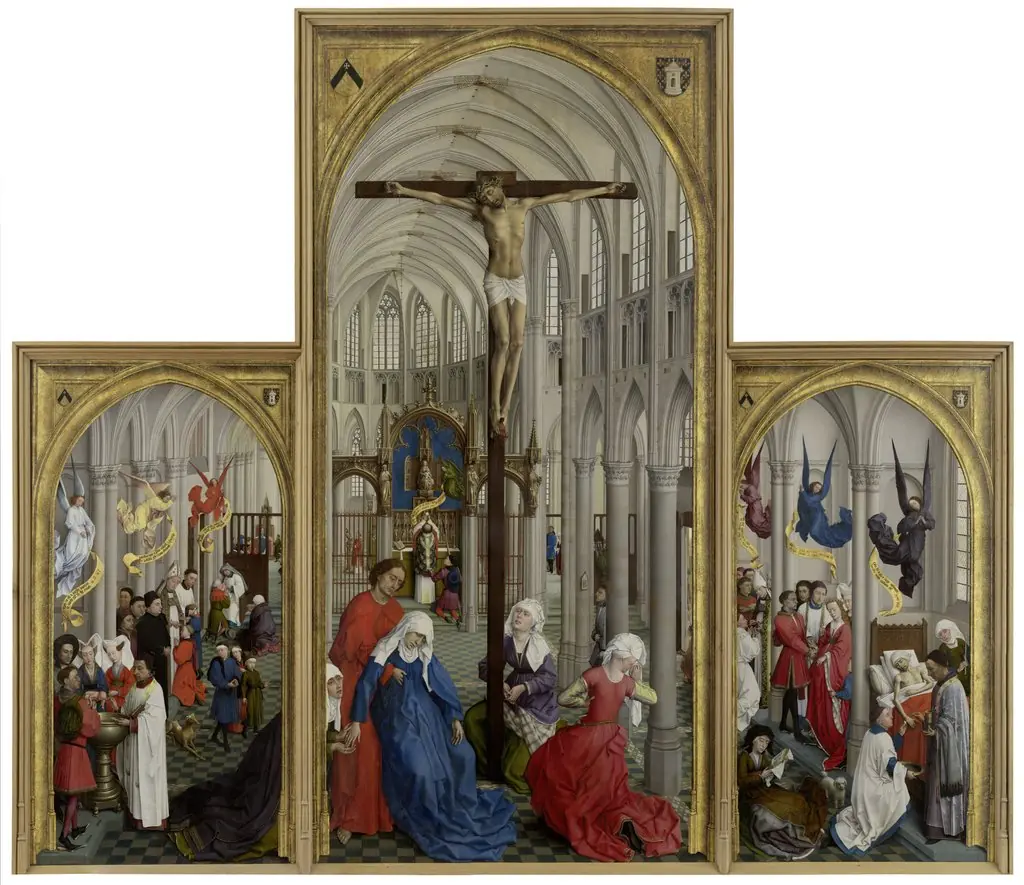
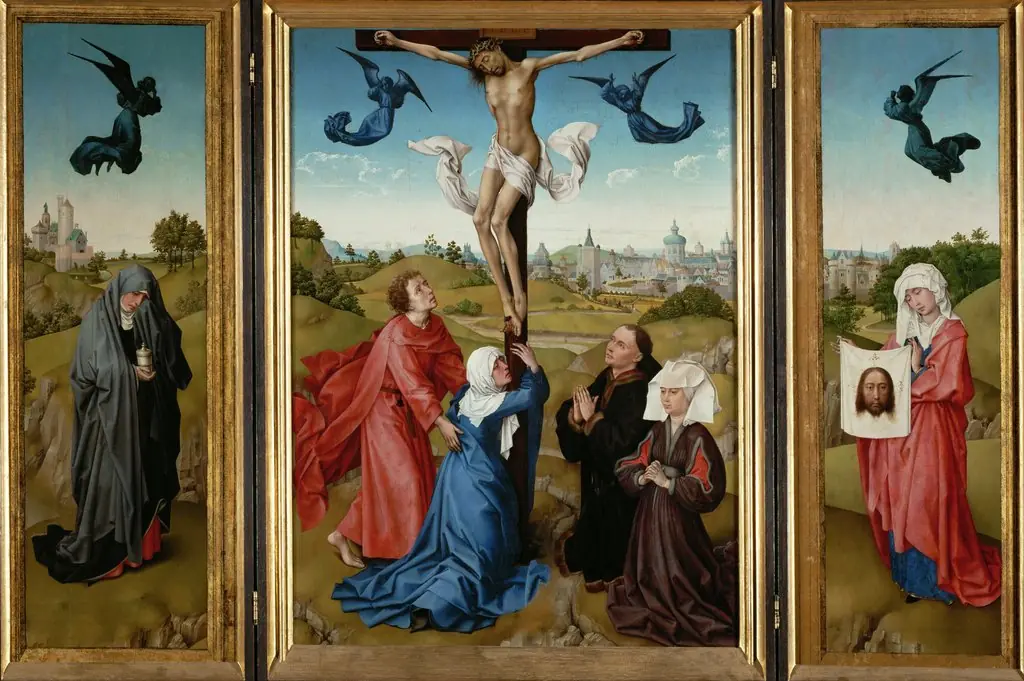
Miraflores Altarpiece is an oil painting by the Northern Renaissance artist Rogier van der Weyden. It dates from 1443 and is held in the collection of the Gemäldegalerie Berlin.
About this work
The work is one of the earliest examples of van der Weyden’s careful detail and rich color.
This altarpiece shows scenes from Christian tradition in oil paint. Rogier van der Weyden painted it for a monastery around the early 1440s. It was moved to Berlin in 1850.
The work is one of the earliest examples of van der Weyden’s careful detail and rich color. It was made for private prayer, not big public display. Only three of the original panels survive today.
Check out Rogier van der Weyden next.
Overview
The Miraflores Altarpiece, a three‑panel oil work on oak dating from roughly 1442–1445, was created by the Early Netherlandish painter Rogier van der Weyden. Currently housed in Berlin’s Gemäldegalerie, it entered the collection in 1850 after having served a monastic setting in its original context.
Subject & Meaning
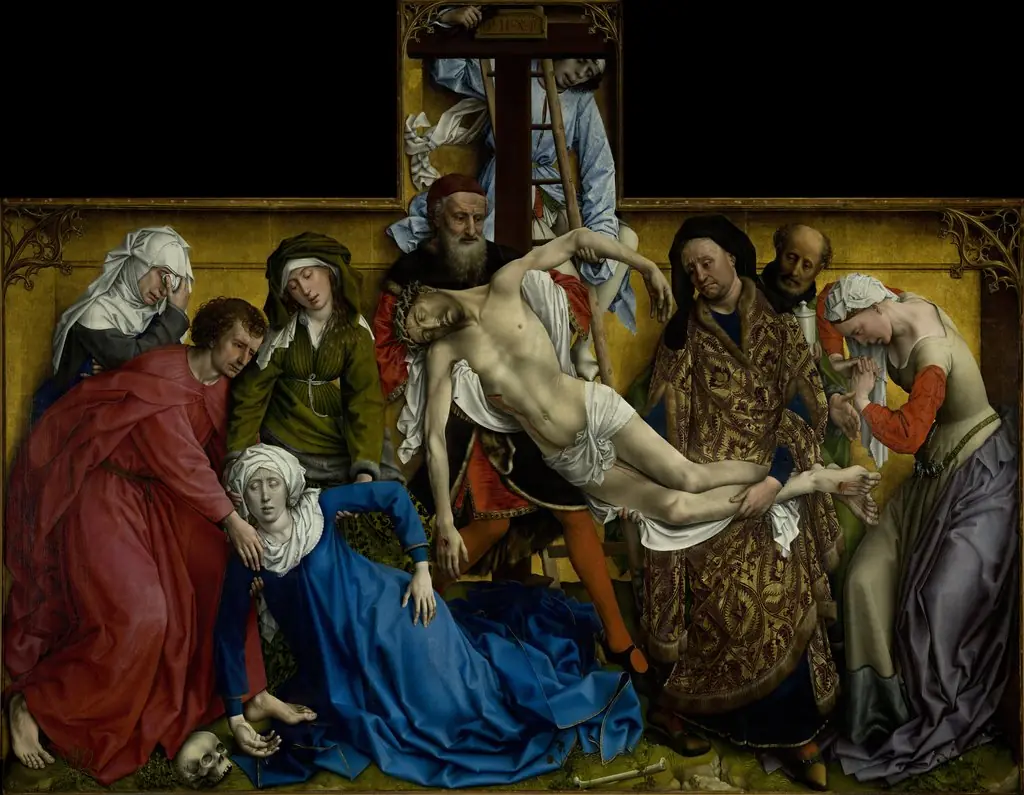
The central narrative follows the Virgin Mary through three pivotal moments: the Holy Family, the Pietà in which she cradles the dead Christ, and the post‑Resurrection appearance of Christ to his mother. This sequence presents a chronological meditation on birth, death, and resurrection, with Mary as the unifying focus.
Technique & Style
Van der Weyden employs a restrained palette dominated by whites, reds, and blues, while emphasizing linear contours, especially the elongated line of Christ’s body in the Pietà. The panels are framed by Gothic arches with intricate open tracery, and each contains painted illusionistic reliefs that enhance the symbolic program.
History & Provenance
Originally commissioned for a monastic community in the early 1440s, the altarpiece functioned as a private devotional object rather than a public altar piece. Only three of the original panels survive; they were transferred to Berlin in the mid‑19th century, where they have remained.
Legacy
The work reflects the period’s triptych conventions, integrating detailed iconography within its architectural framing. Its decorative portals, rendered as imagined reliefs, were widely copied by contemporaries such as Petrus Christus, Dirk Bouts, and Hans Memling, shaping the visual language of mid‑15th‑century Netherlandish painting.
Artist & collection
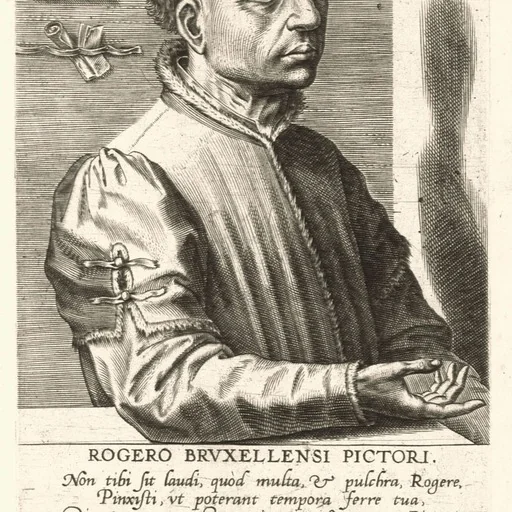
Artist
Rogier van der Weyden (Dutch: ; 1399 or 1400 – 18 June 1464), initially known as Roger de la Pasture (French: ), was an early Netherlandish painter whose surviving works consist mainly of religious triptychs,…