Artwork
Portret kolonii polskiej w Rzymie
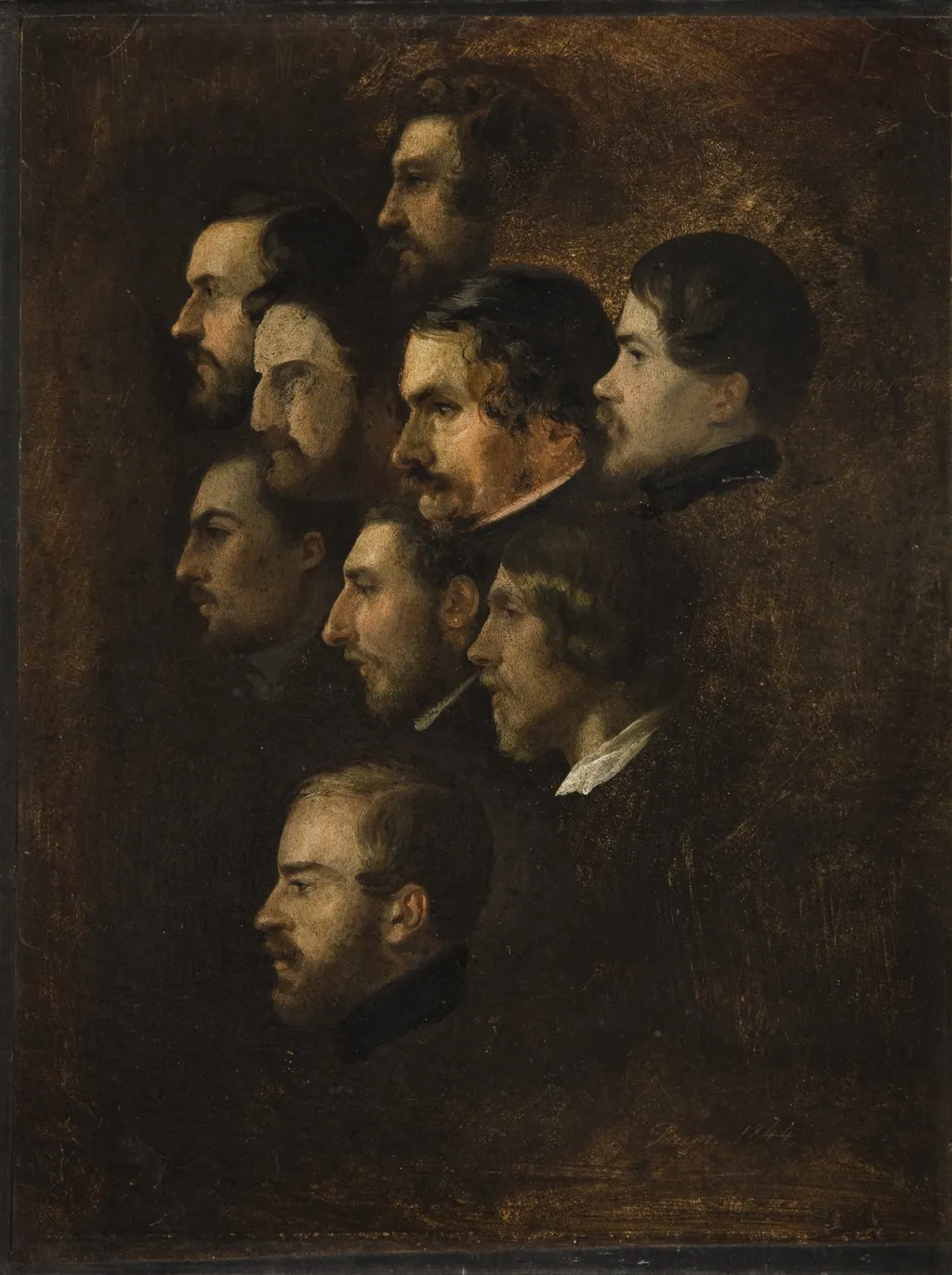
Portret kolonii polskiej w Rzymie is an unspecified painting by the Realist artist Romuald Chojnacki. It dates from 1844 and is held in the collection of the National Museum in Kraków.
About this work
Overview
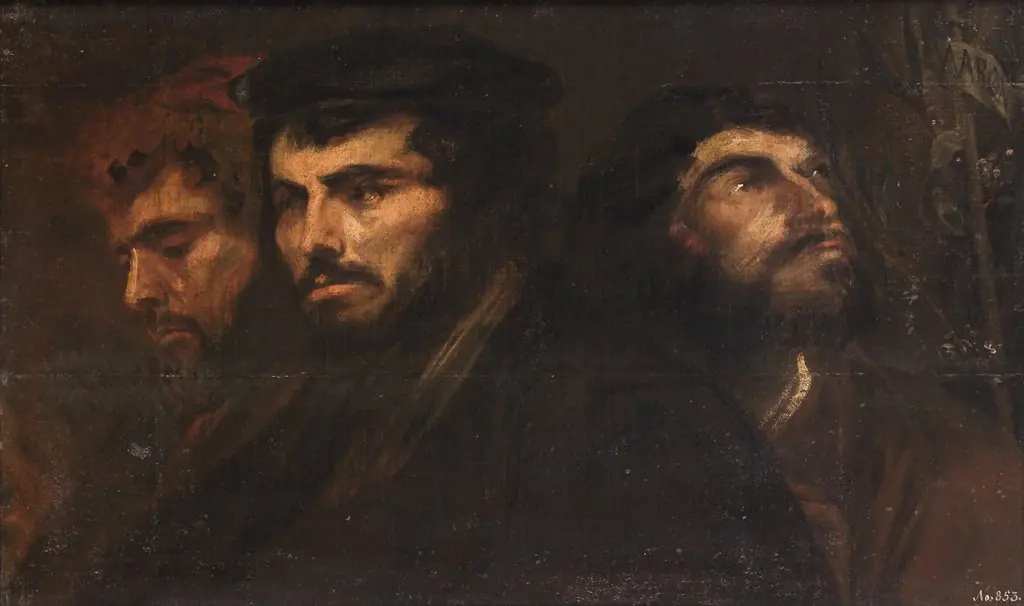
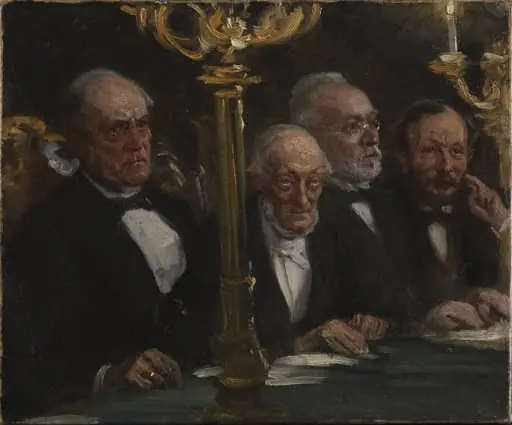
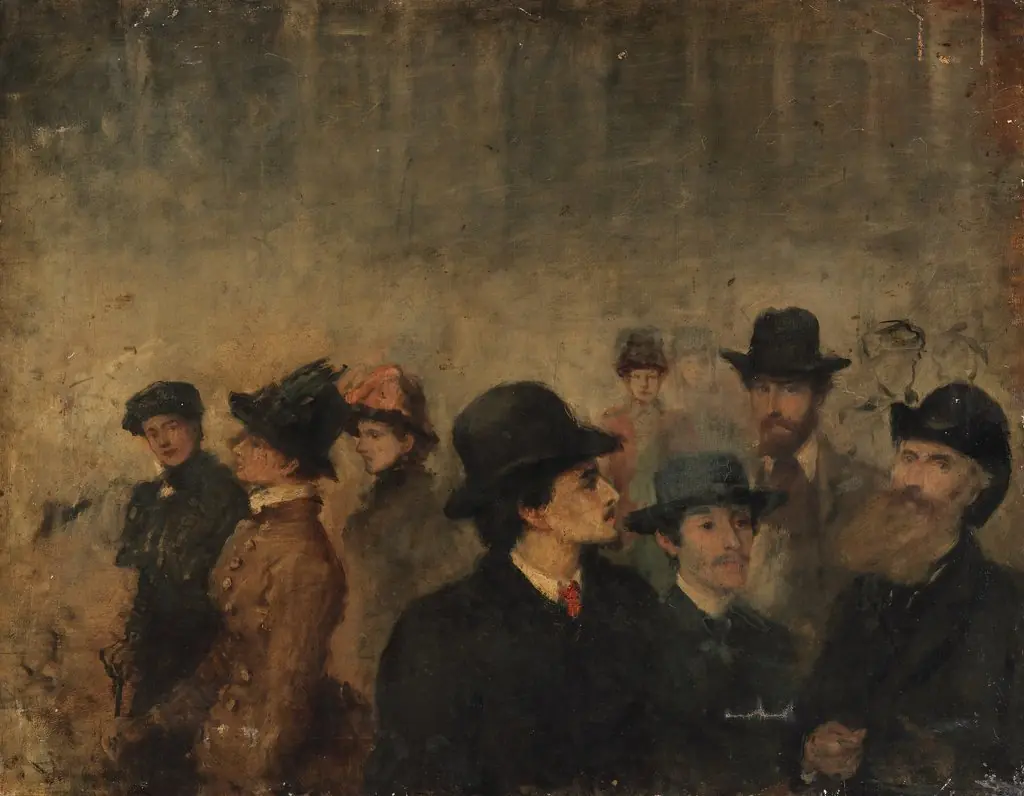
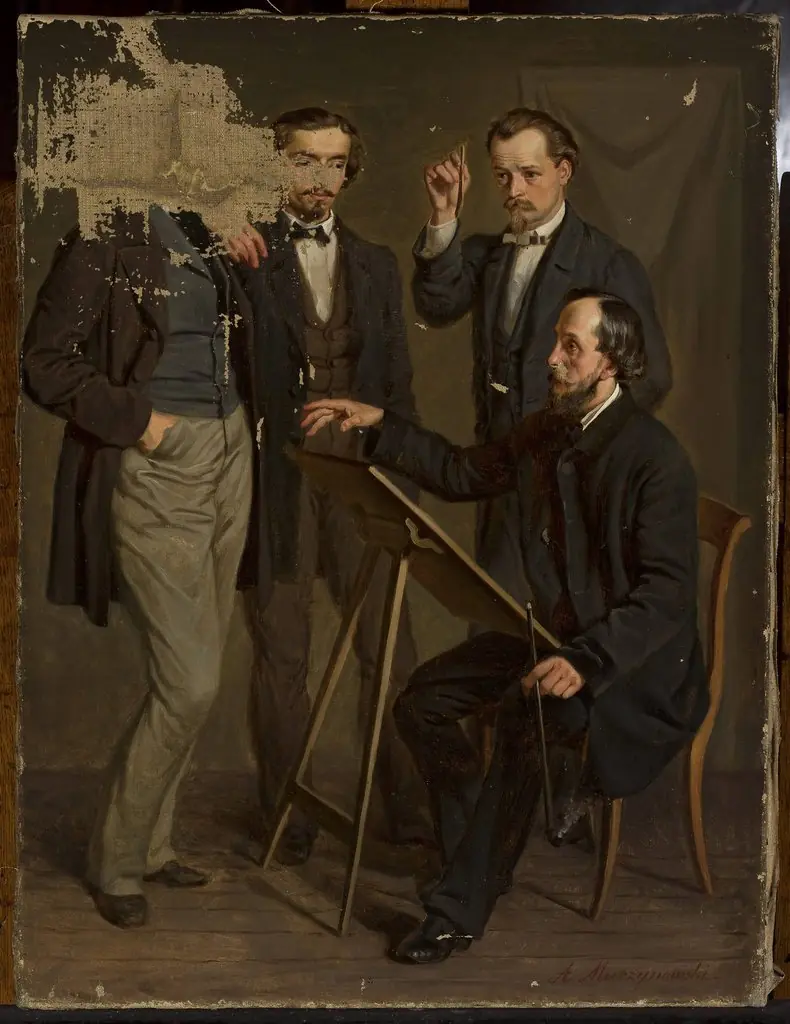
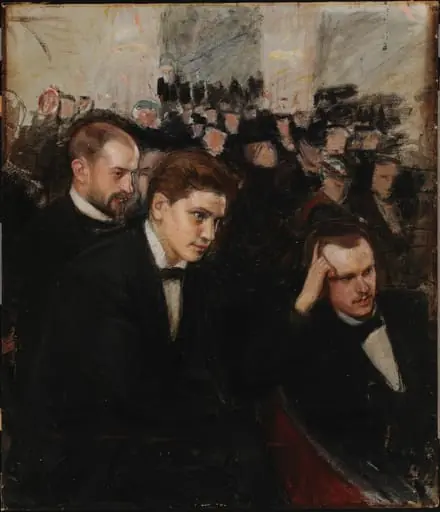
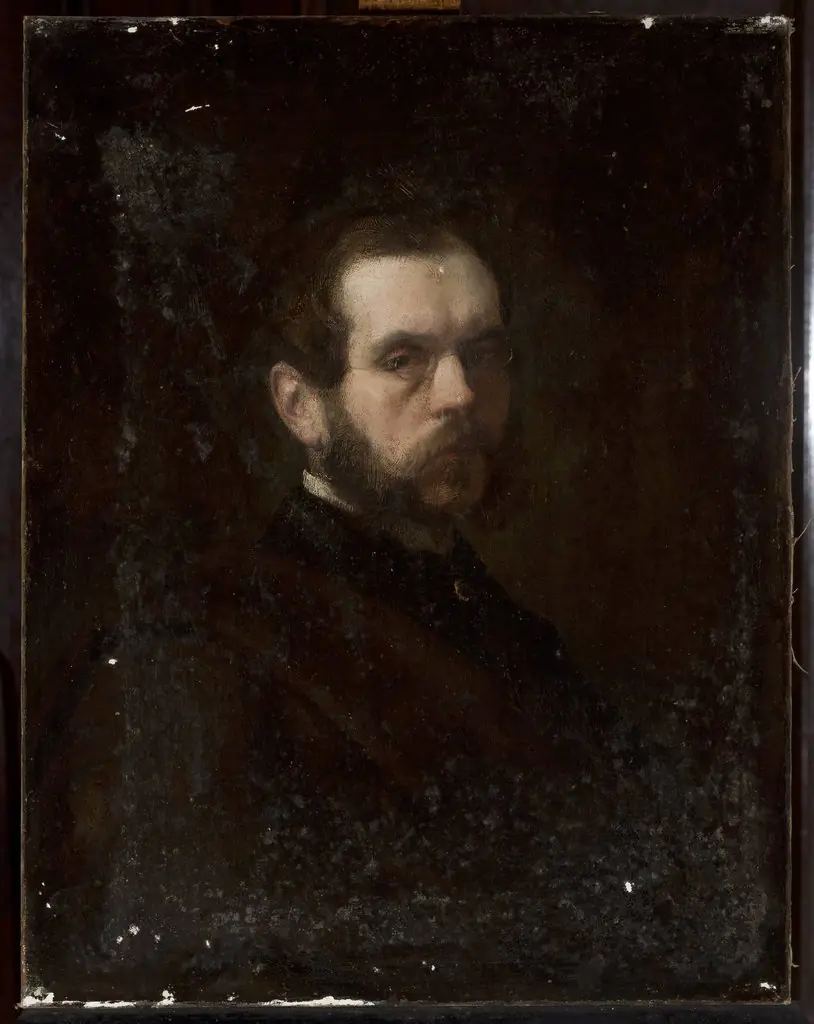
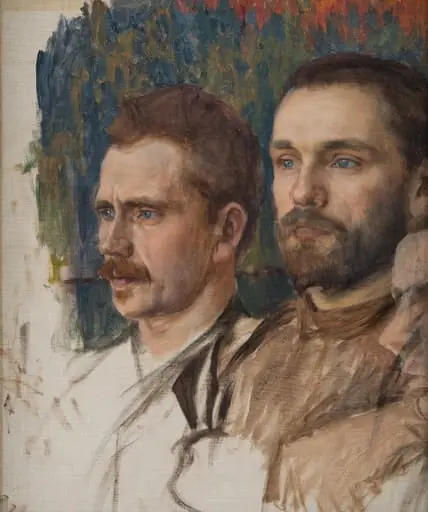
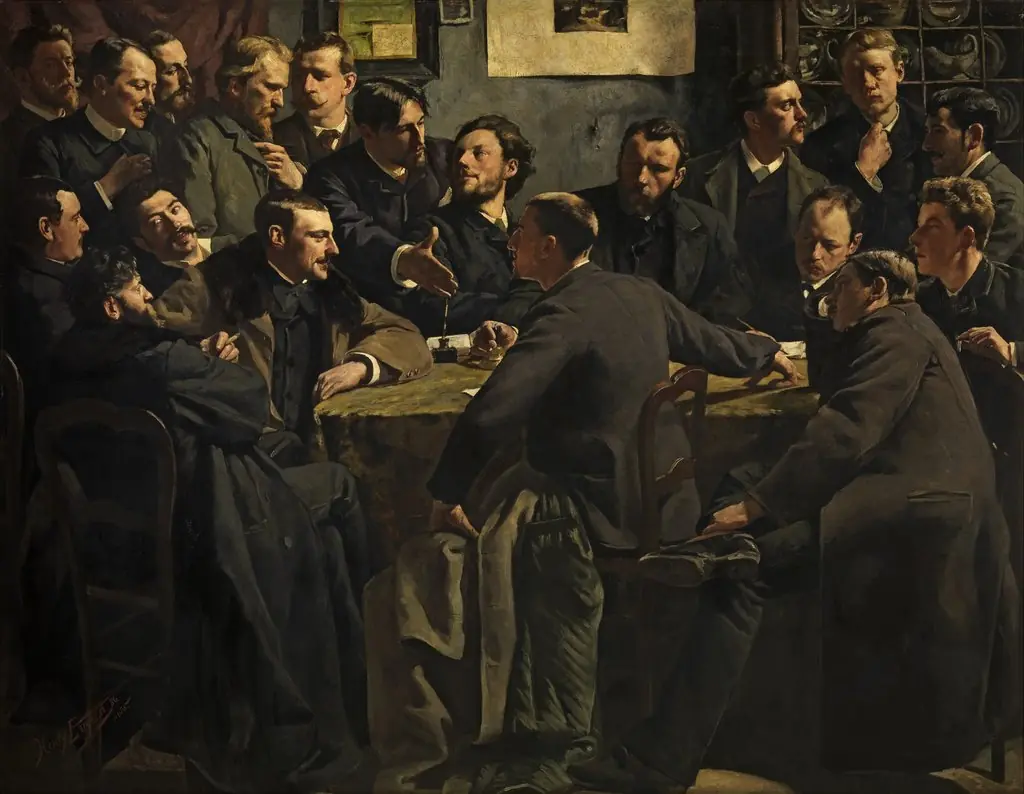
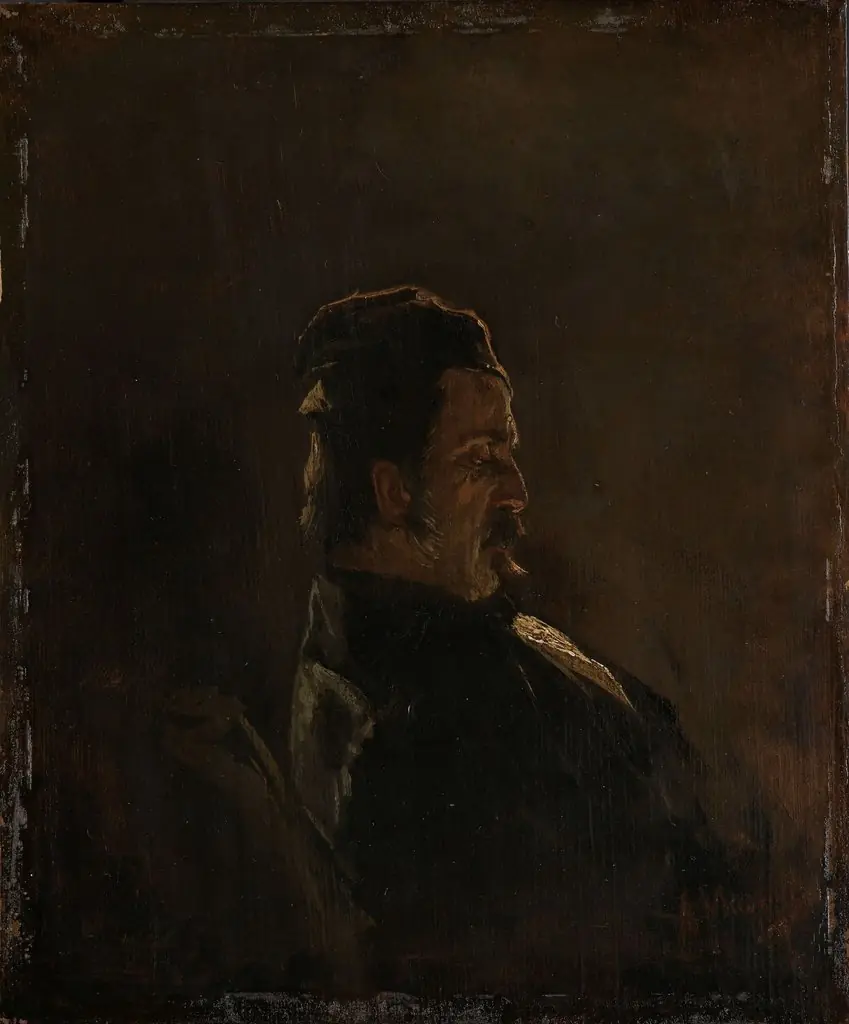
Romuald Chojnacki’s 1844 oil painting, titled *Portret kolonii polskiej w Rzymie*, is part of the collection of the National Museum in Kraków. The work depicts a group of men assembled in a vertical, profile‑wise arrangement against a subdued, dark backdrop, creating a formal, almost ceremonial presentation.
Subject & Meaning
The figures represent members of the Polish expatriate community in Rome, likely scholars or artists gathered abroad. Their solemn expressions and the restrained composition suggest a collective identity rooted in contemplation, perhaps reflecting the political and cultural concerns of Poles living in exile during the mid‑nineteenth century.
Technique & Style
Chojnacki employs a realistic manner of portraiture, rendering each face with careful attention to anatomical detail and individual expression. The painting relies on chiaroscuro, juxtaposing bright illumination on the profiles with deep shadows in the background, thereby modelling volume and heightening the sense of gravitas.
History & Provenance
Created in 1844, the canvas entered the National Museum in Kraków’s holdings at an unspecified date, where it remains on display. Its provenance traces back to the artist’s own circle of Polish émigrés, linking the work directly to the community it portrays.
Context
The mid‑1800s saw many Polish intellectuals and artists seeking refuge in cities such as Rome, where they formed informal colonies to preserve national culture. Chojnacki’s portrait captures this diaspora, situating the painting within broader narratives of Polish nationalism and the Romantic era’s fascination with exile.
Own this work as a print
Artist & collection