Artwork
Lukeva paimenpoika
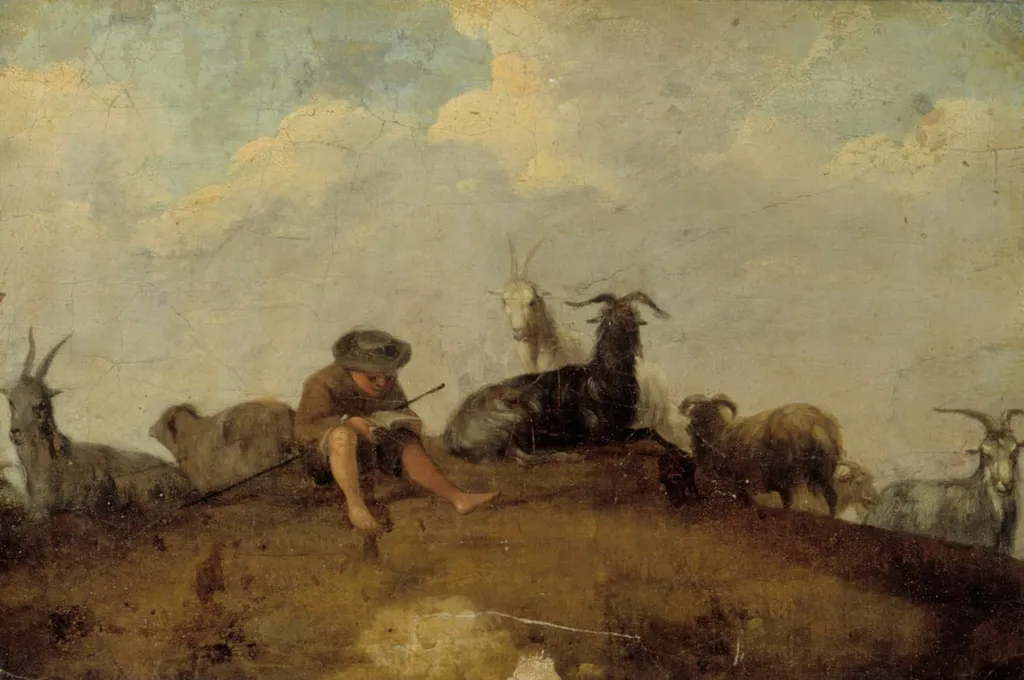
Lukeva paimenpoika is an unspecified painting by the Realist artist Johann Heinrich Roos. It dates from 1682 and is held in the collection of the Finnish National Gallery.
About this work
Overview
The painting belongs to the genre of pastoral imagery common in 17th-century European art, rendered with quiet attention to natural detail.
Painted around 1682 by Johann Heinrich Roos, this work depicts a quiet moment in rural life. A young shepherd, seated on a stone, observes a small herd of goats and sheep under a pale, cloud-dappled sky. The scene is uneventful yet deliberate, emphasizing stillness over action. The painting belongs to the genre of pastoral imagery common in 17th-century European art, rendered with quiet attention to natural detail.
Subject & Meaning
The boy, dressed simply and wearing a broad hat, embodies the quiet vigilance of rural shepherding. His calm posture and lack of movement suggest patience rather than labor. The animals, some resting, others grazing, reinforce a sense of harmony between human and animal within a dry, sun-baked landscape. The scene avoids drama, instead offering a contemplative view of daily pastoral existence.
Technique & Style
Roos employs soft, muted tones to convey the arid terrain and hazy atmosphere. The goats’ curved horns and the sheep’s shaggy wool are rendered with careful observation, reflecting his interest in naturalistic detail. Brushwork is restrained, avoiding flourish in favor of quiet realism. The sky, lightly washed with pale hues, provides a gentle contrast to the textured ground, enhancing the scene’s stillness.
History & Provenance
The painting entered the collection of the Museum of Ethnography, where it remains today. While its early ownership is undocumented, its subject and style align with Roos’s known body of work from the 1680s, when he frequently depicted livestock and rural figures in southern German and Swiss landscapes. Its preservation suggests it was valued for its observational accuracy rather than grandeur.
Context
In late 17th-century Germany, genre scenes like this one reflected growing interest in everyday life, influenced by Dutch painting traditions. Roos, trained in the tradition of animal and landscape specialists, focused on authentic depictions of rural environments. This work fits within a broader cultural shift toward valuing quiet, unidealized moments over mythological or aristocratic themes.
Legacy
Though not widely exhibited outside niche collections, the painting contributes to the understanding of how pastoral life was visually recorded in early modern Europe. Its restrained composition and attention to animal anatomy reflect Roos’s role in bridging naturalist observation with genre painting. It remains a quiet example of how ordinary moments were given artistic weight during a period of evolving visual culture.
Artist & collection

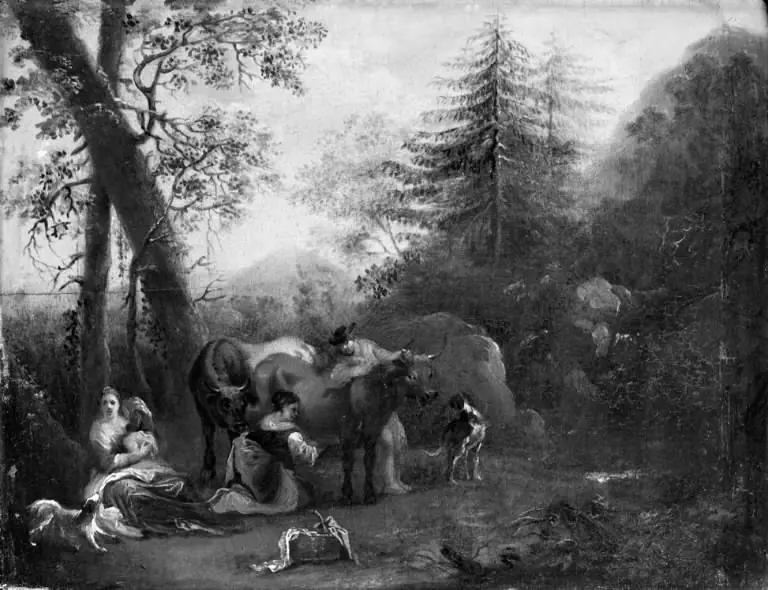
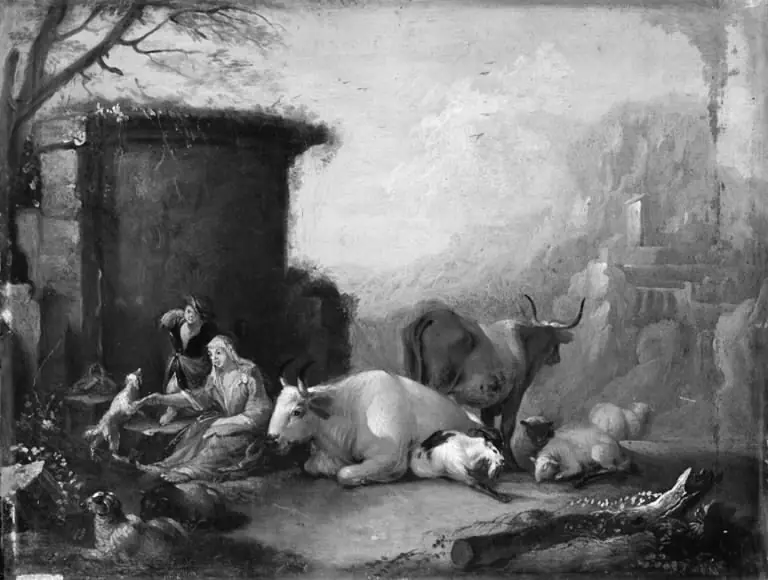
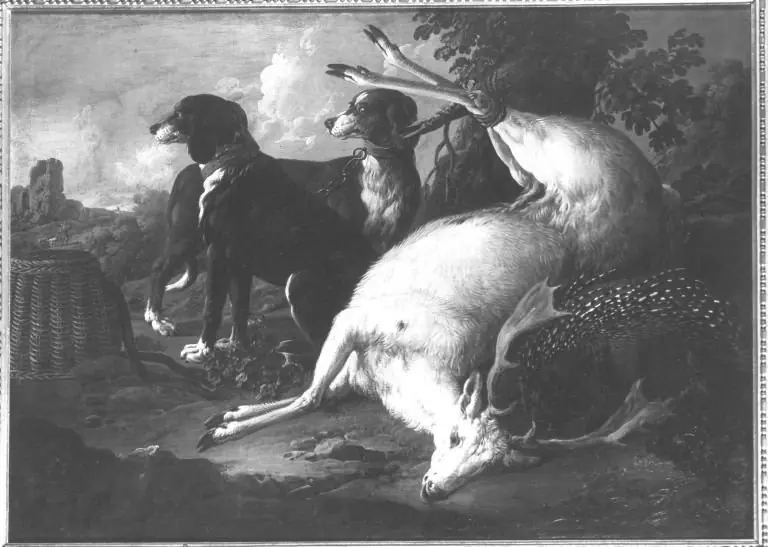
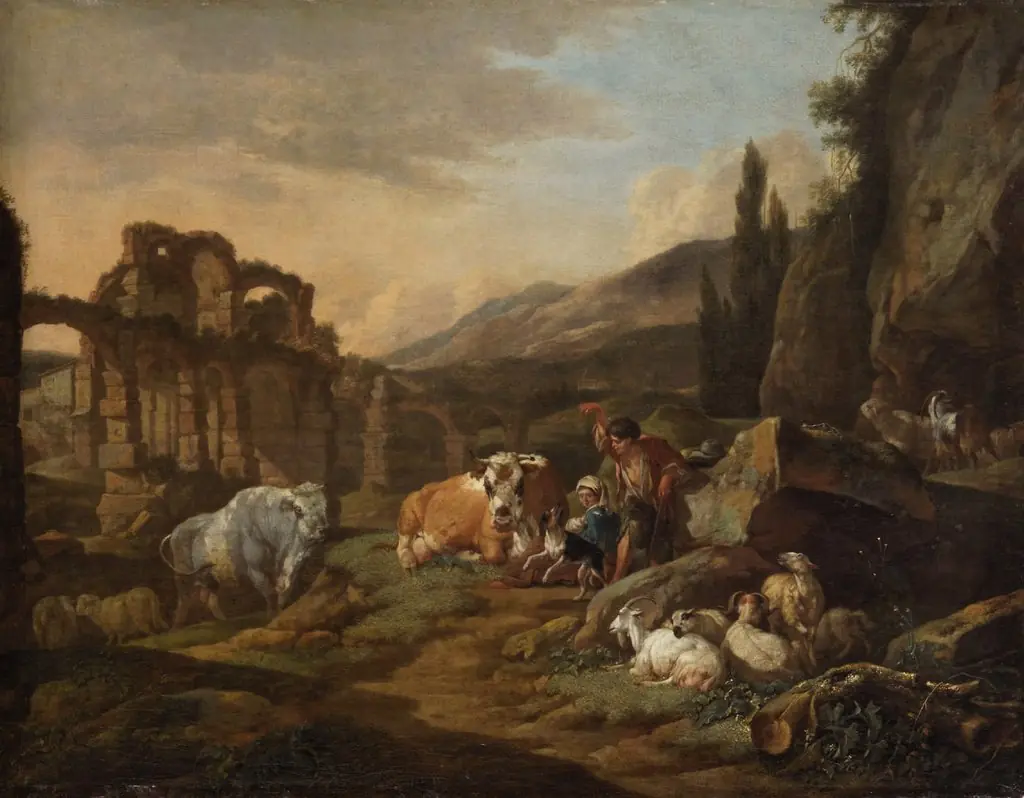
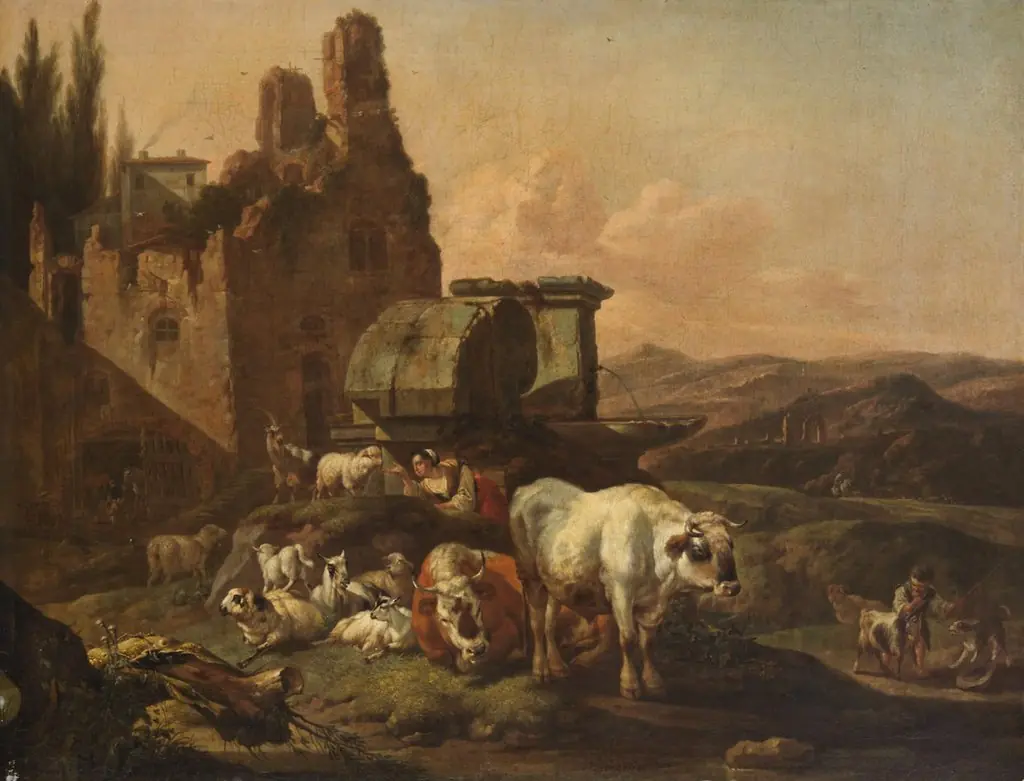
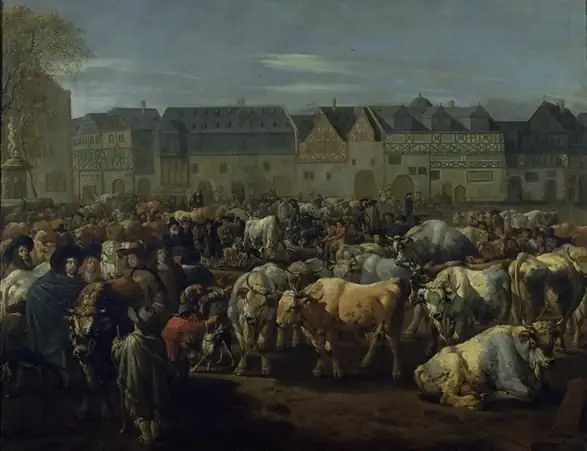
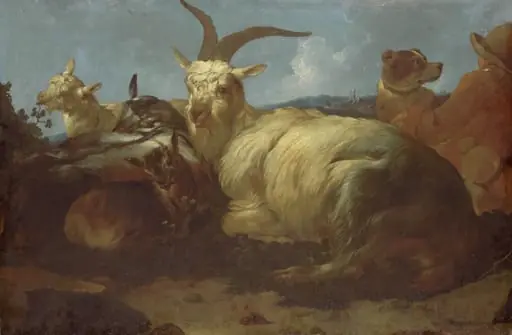 A Goatherd Watching his Animals
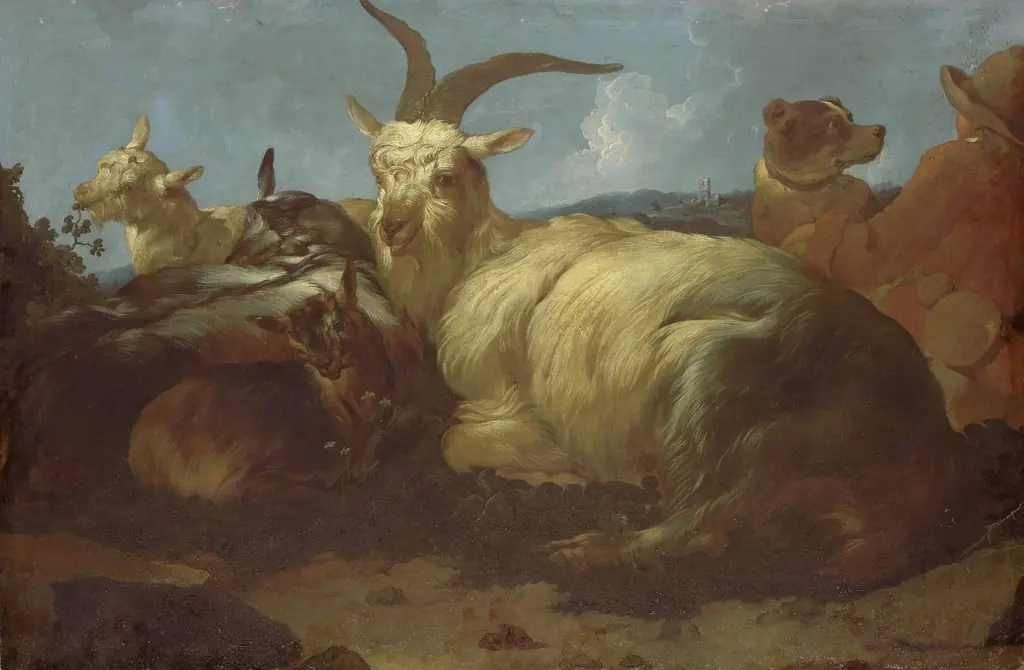 A Goatherd Watching his Animals
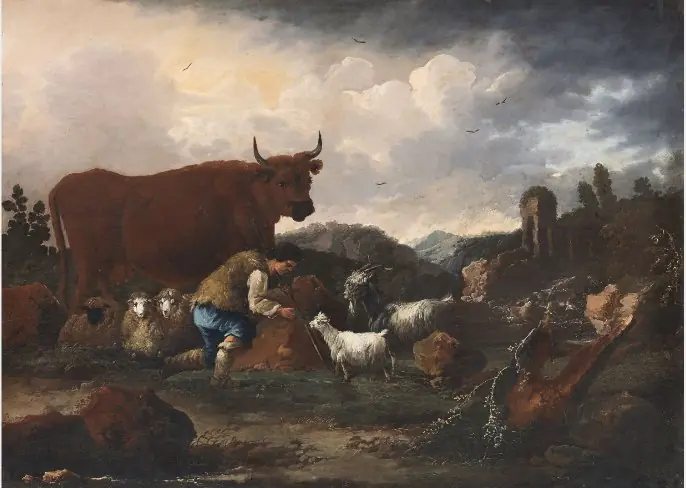 Landscape with Cattle
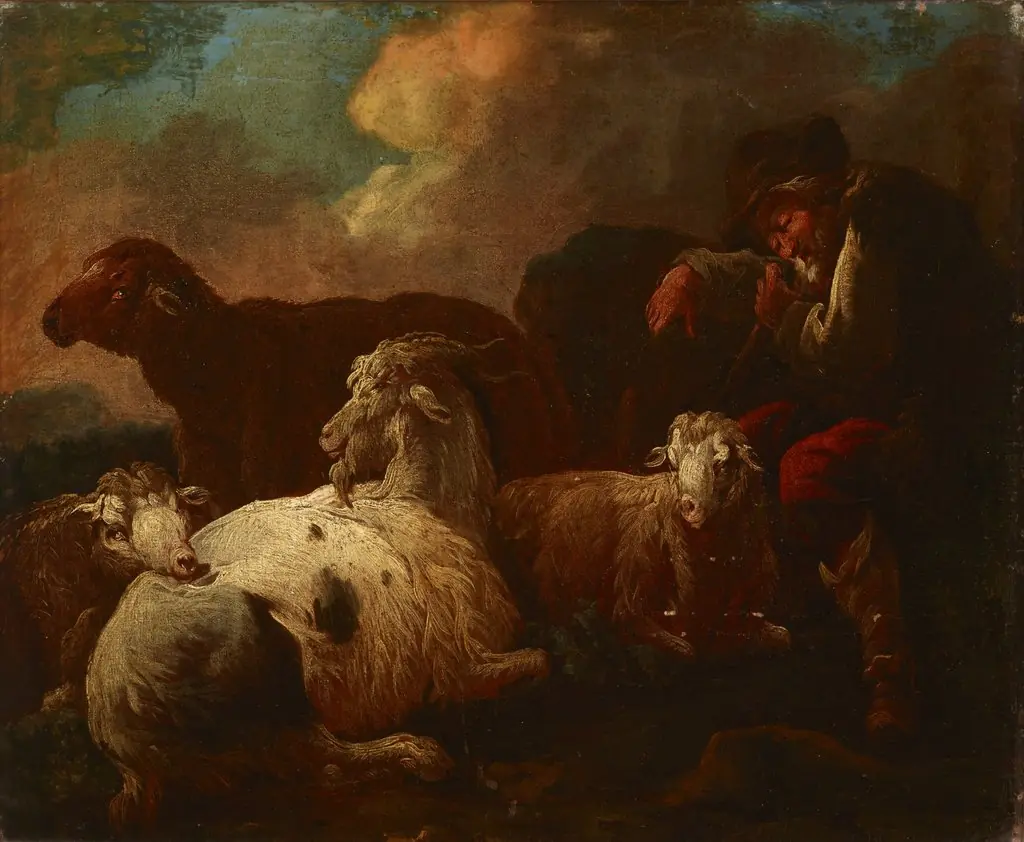 Goats and Sheep
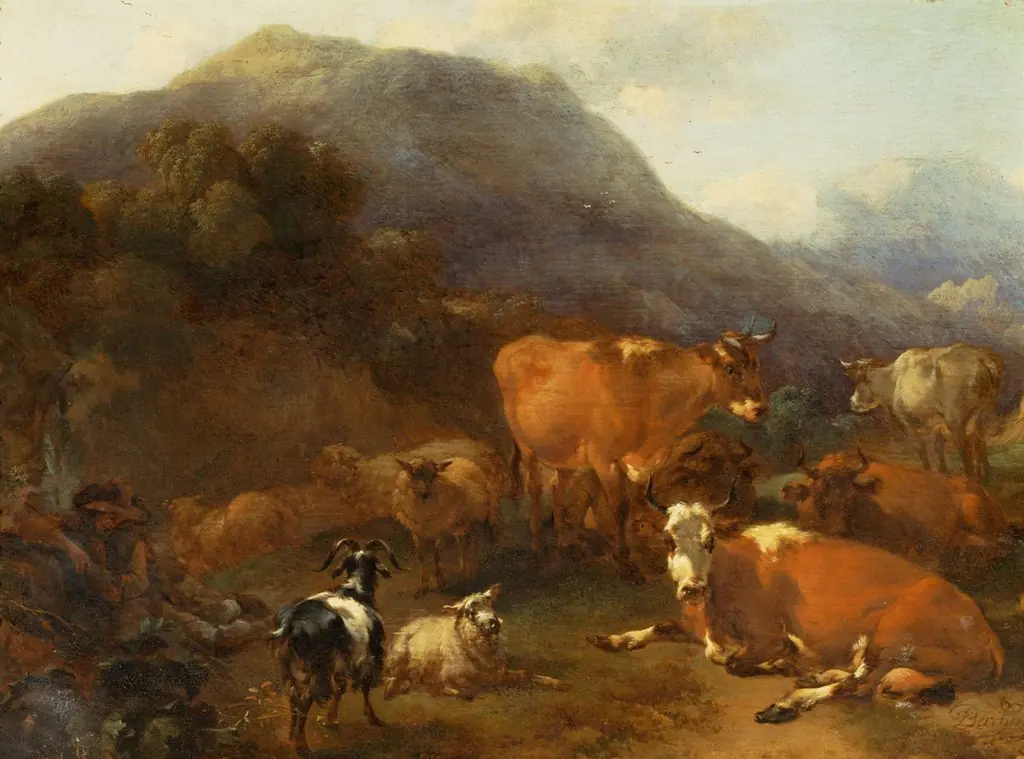 Landscape with cattle and shepherds
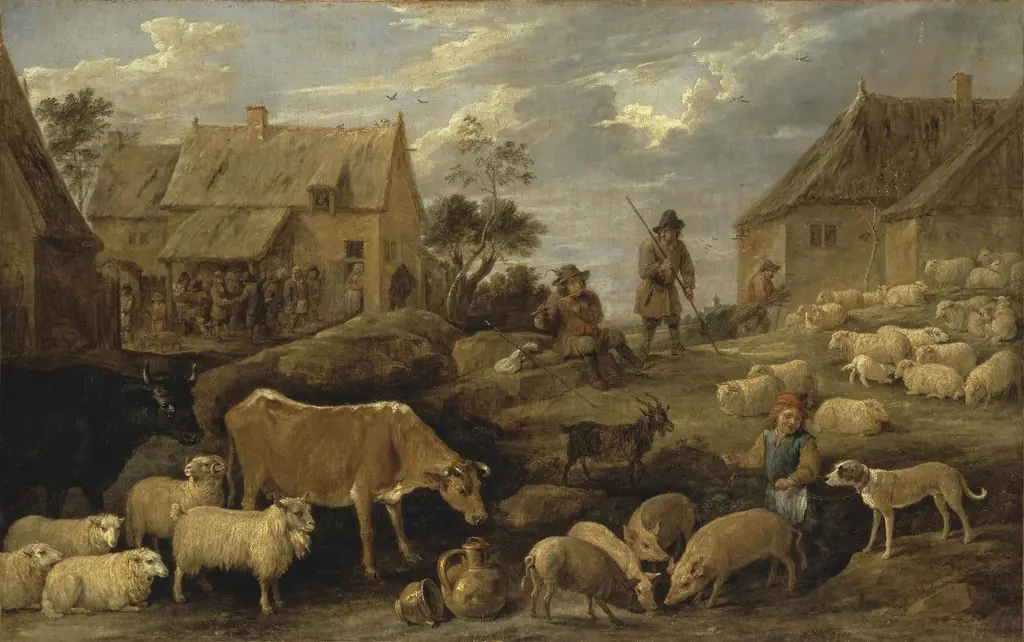 Landscape with shepherds and a flock
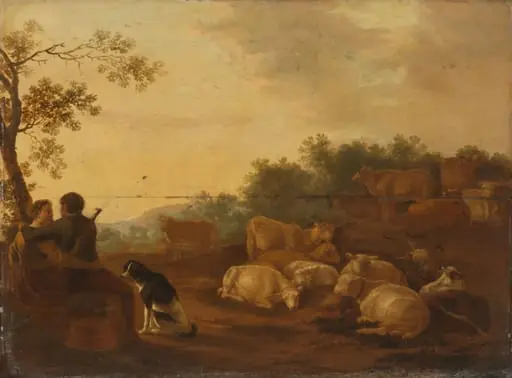 Landscape with sheperd, sheperdess and cattle
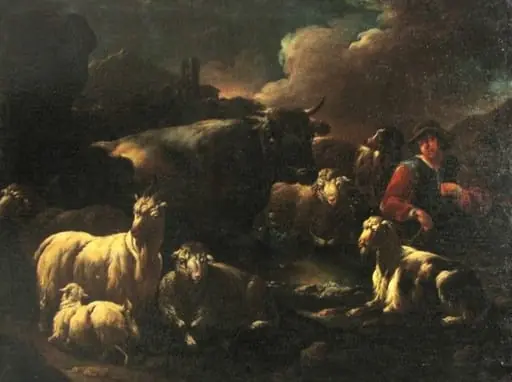 Peisaj cu vite
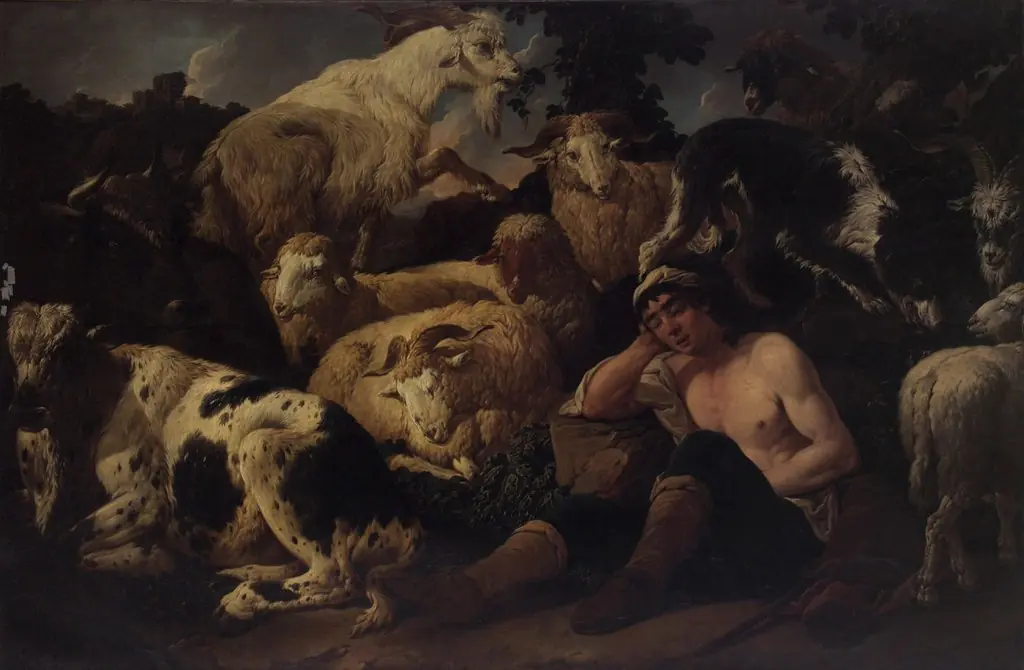 Herde mit schlafenden Hirten
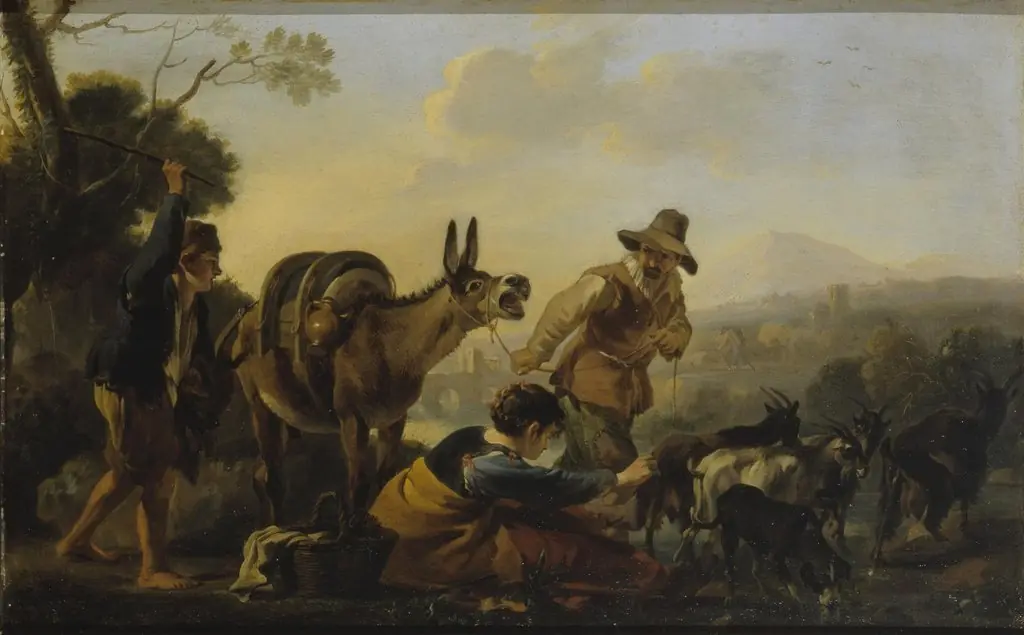 Genre Scene
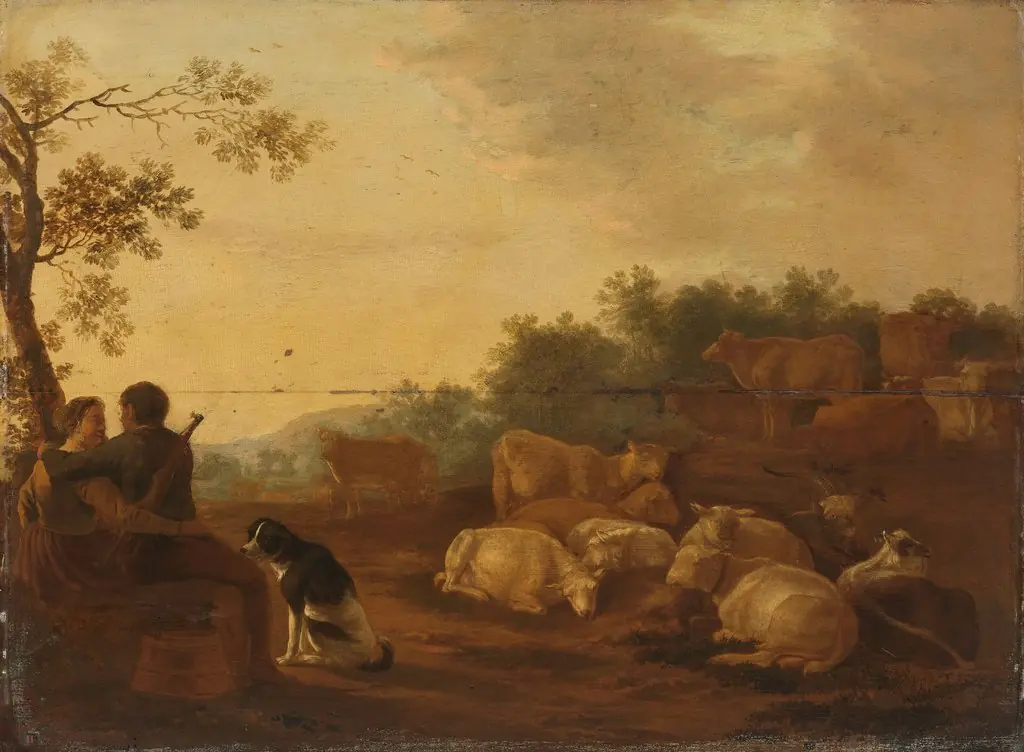 Landscape with sheperd, sheperdess and cattle
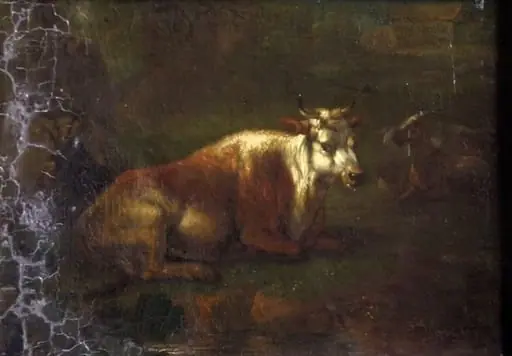 Mică turmă în peisaj păduros ; pandant: Peisaj cu vite