Artwork
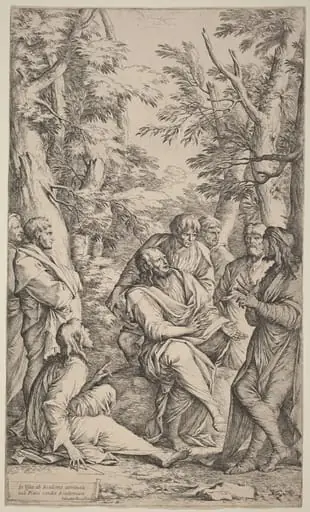
Diogenes Casting away his Bowl
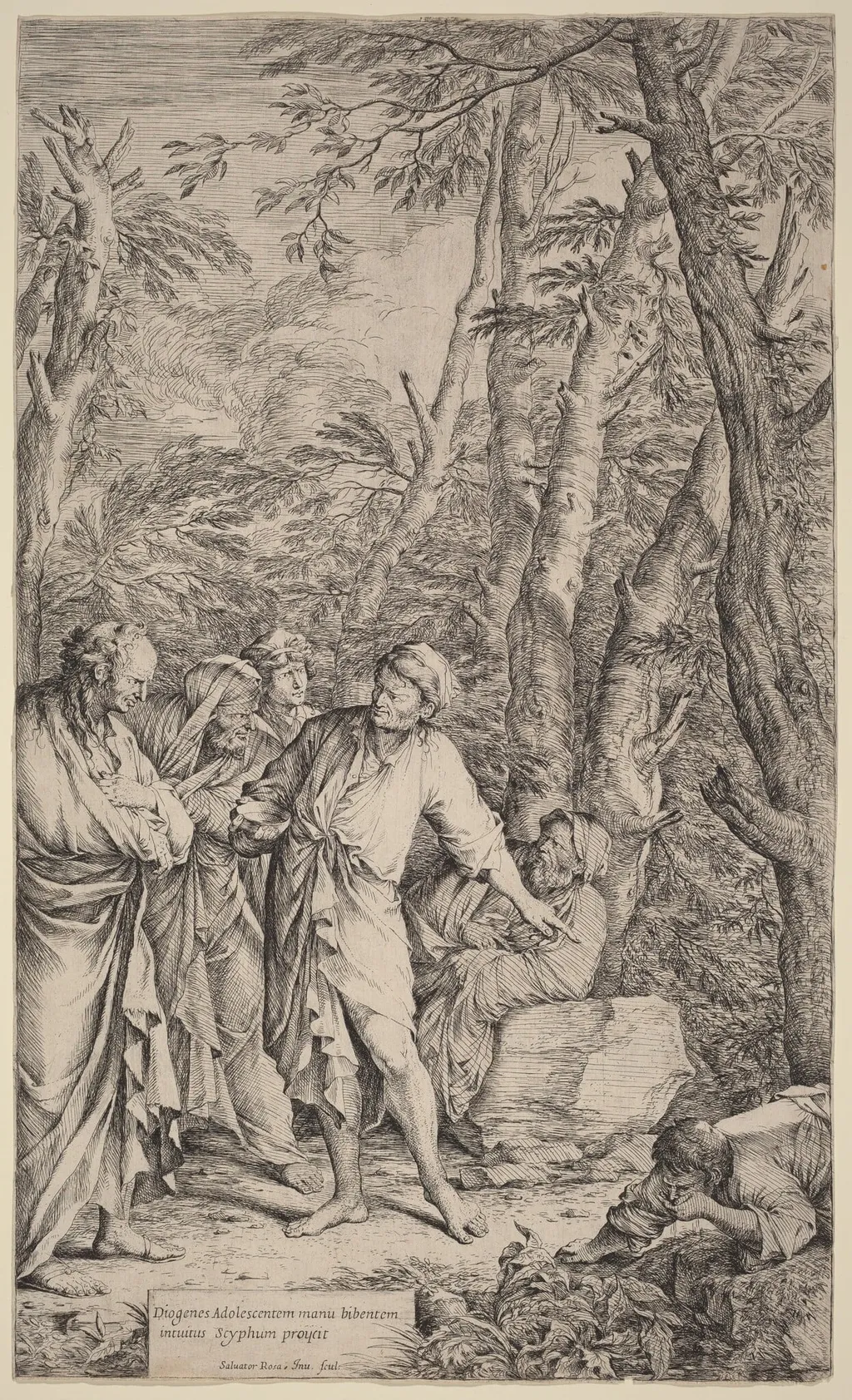
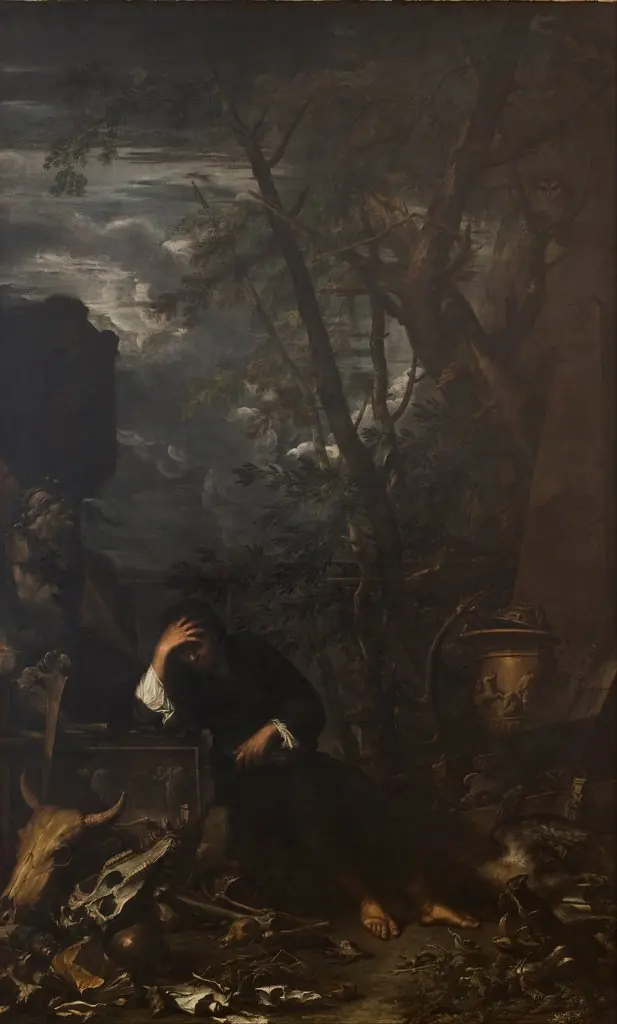
Diogenes Casting away his Bowl is an ink print by the Baroque artist Salvator Rosa. It dates from 1662 and is held in the collection of the National Gallery of Art.
About this work
Overview
Diogenes Casting away his Bowl is a 1662 etching by Salvator Rosa, a multifaceted Italian Baroque artist known for his work in painting, poetry, satire, and printmaking. Created during a period of activity across Naples, Rome, and Florence, this print exemplifies Rosa's technical skill in etching.
Subject & Meaning
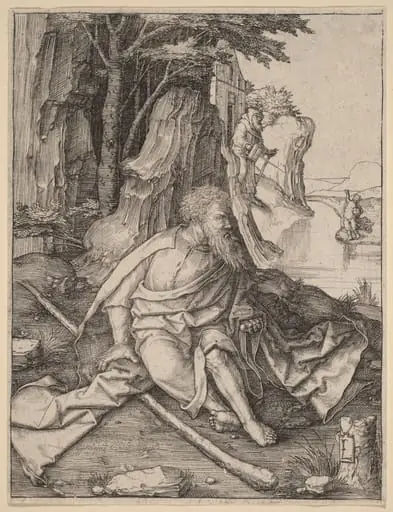
The etching depicts the ancient Cynic philosopher Diogenes in the act of discarding his bowl, symbolizing his rejection of material comforts. This gesture aligns with Rosa's exploration of ascetic themes and the natural world.
Technique & Style
Rosa employed fine etching lines to achieve detailed textures, evident in the rendering of trees and clothing. The composition, set amidst tall, wild trees, reflects his penchant for dramatic, untamed settings.
History & Provenance
While specific provenance details are not provided, the etching is dated to 1662, placing it within Rosa's active period across major Italian artistic centers.
Context
This work sits within the broader Italian Baroque movement, characterized by dramatic intensity. Rosa's engagement with philosophical subjects like Diogenes underscores the era's interest in classical themes and moral commentary.
Legacy
Diogenes Casting away his Bowl contributes to Rosa's legacy as a versatile Baroque artist. The etching technique, highlighting his printmaking prowess, remains a notable aspect of his artistic output.
Artist & collection
Artist
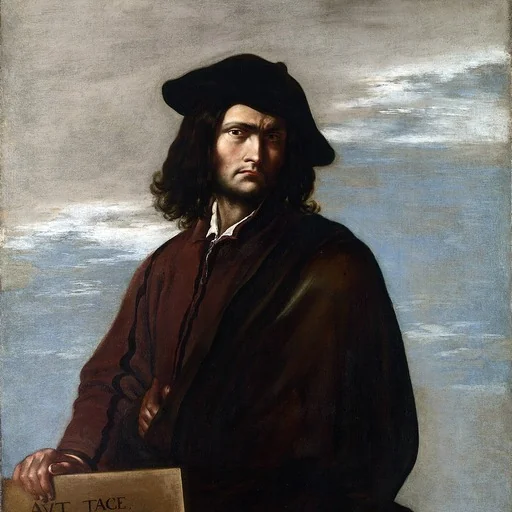
Salvator Rosa (1615 – 15 March 1673) is best known today as an Italian Baroque painter, whose romanticised landscapes and history paintings, often set in dark and untamed nature, exerted considerable influence from the 17th century into…