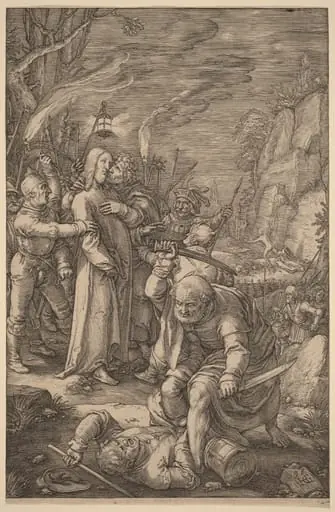
Artwork
Christ on the Mount of Olives
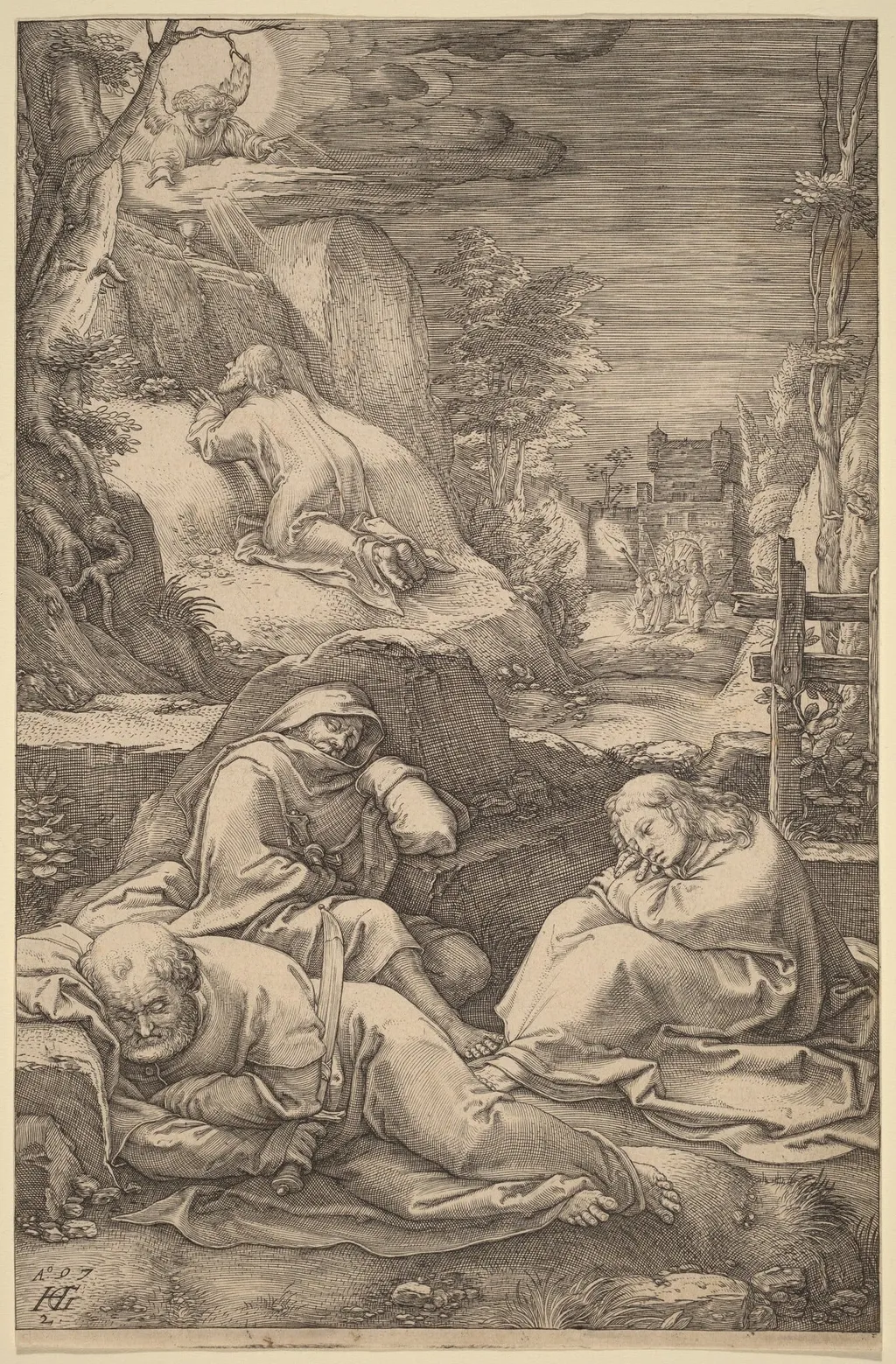
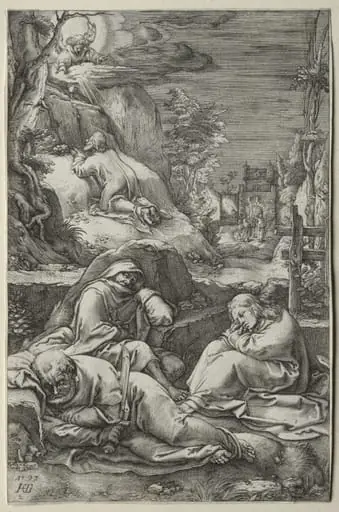
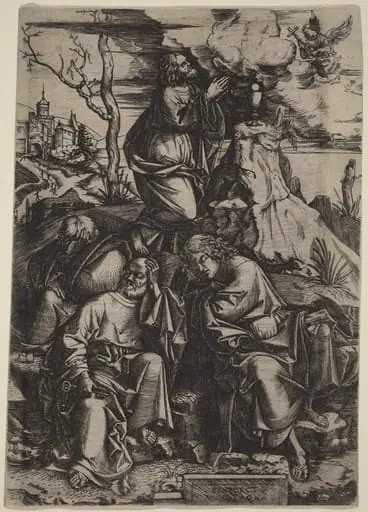
Christ on the Mount of Olives is an ink print by the Renaissance artist Hendrik Goltzius. It dates from 1597 and is held in the collection of the National Gallery of Art.
About this work
Overview
Hendrick Goltzius, a Dutch printmaker of German origin, produced the engraving *Christ on the Mount of Olives* in 1597. Executed as a metal‑plate print, the work exemplifies the intricate line work for which Goltzius was renowned during the early Baroque and Northern Mannerist period.
Subject & Meaning
The image portrays the biblical episode of Christ’s prayer on the Mount of Olives. Jesus is shown kneeling on a craggy hill, hands clasped in supplication, while an angel hovers nearby holding a cup. Three of his disciples are depicted asleep, underscoring the theme of abandonment and divine foreknowledge.
Technique & Style
Goltzius employed the traditional engraving process, incising fine lines into a copper plate that were then inked and pressed onto paper. The composition relies on dense cross‑hatching and stark chiaroscuro, creating deep shadows that dominate the scene and emphasize the solemn mood.
History & Provenance
Created toward the end of the 16th century, the print reflects Goltzius’s mature period when he was considered the pre‑eminent Dutch engraver. It circulated among collectors of devotional prints and contributed to his reputation for technical virtuosity.
Context
The work belongs to a broader trend of Northern European artists rendering biblical narratives with heightened emotional intensity. Goltzius’s rendering aligns with the Mannerist fascination for complex compositions and exaggerated gestures, while also anticipating the dramatic lighting that would characterize later Baroque art.
Artist & collection
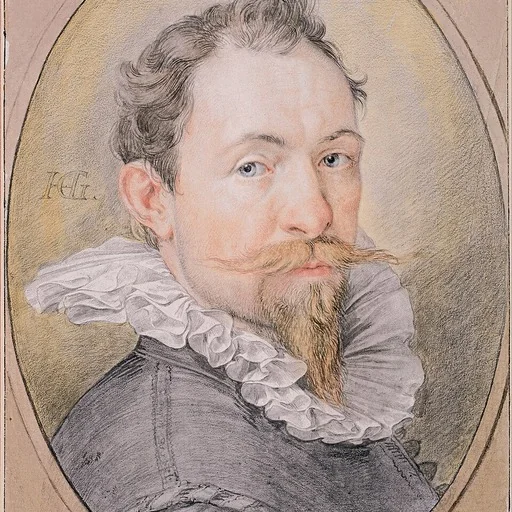
Artist
Hendrick Goltzius (German: , Dutch: ; né Goltz; January or February 1558 – 1 January 1617) was a German-born Dutch printmaker, draftsman, and painter.