Artwork
Glaucus and Scylla
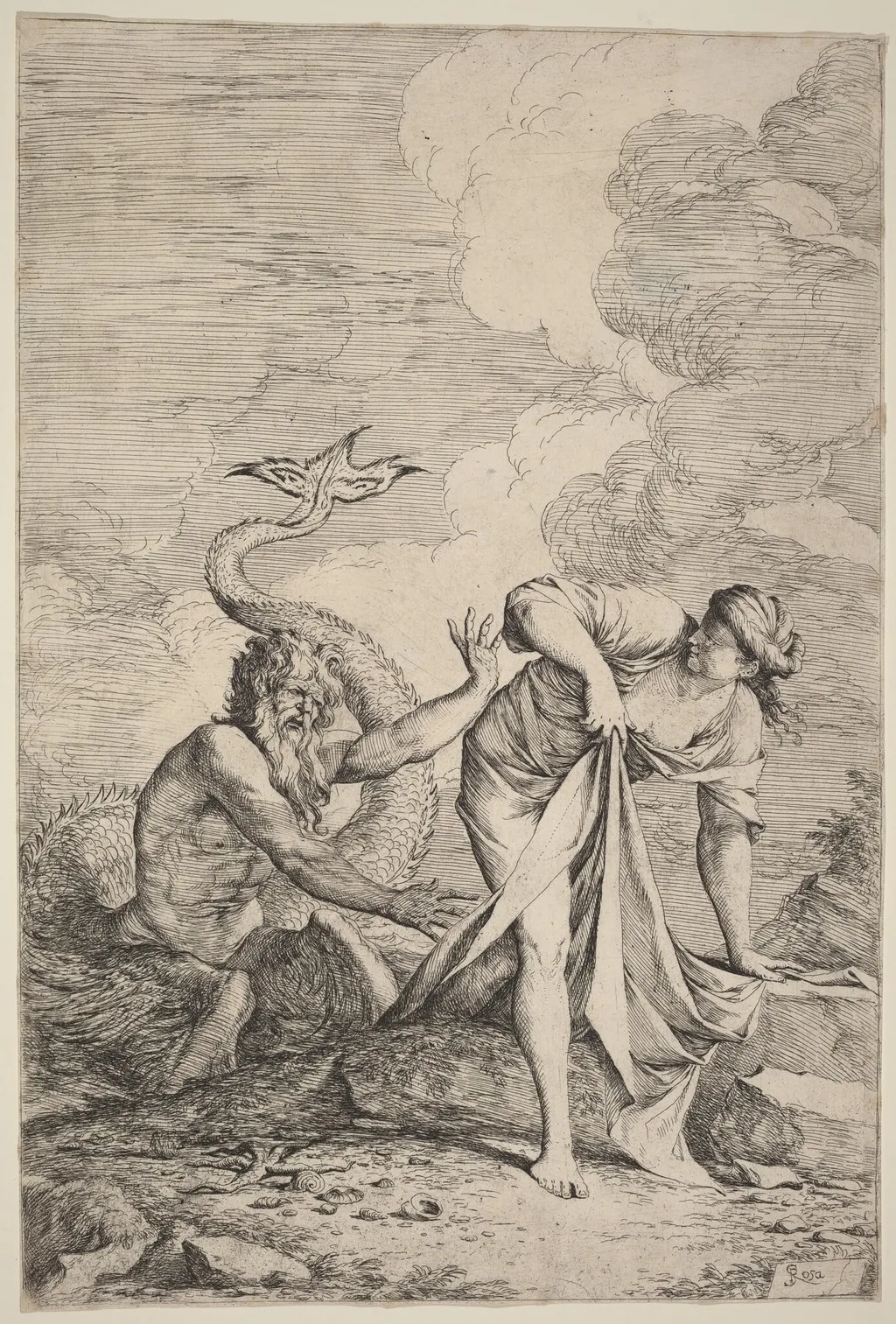
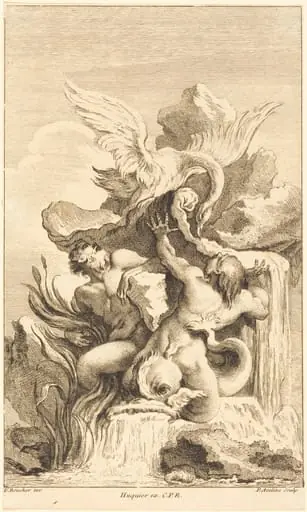
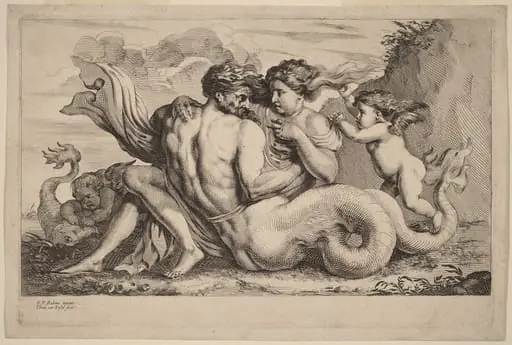
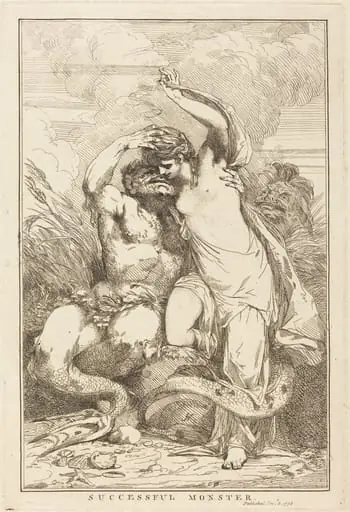
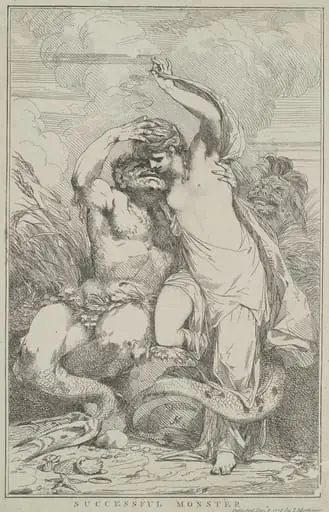
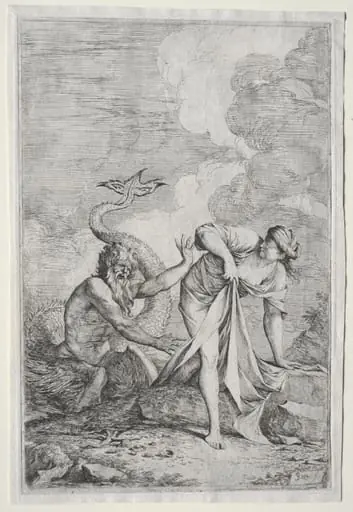
Glaucus and Scylla is an ink print by the Baroque artist Salvator Rosa. It dates from 1615 and is held in the collection of the National Gallery of Art. Created in 1615, this etching portrays the mythic encounter between the sea deity Glaucus and the nymph Scylla.
About this work
Overview
Created in 1615, this etching portrays the mythic encounter between the sea deity Glaucus and the nymph Scylla. The composition centers on a bearded figure kneeling amid craggy rocks, clutching a serpentine fish, while two female forms react dramatically on his right. A turbulent sky and jagged foliage frame the scene, emphasizing the stormy atmosphere that defines the narrative.
Subject & Meaning
The work visualizes the ancient tale in which Glaucus, transformed into a half‑human, half‑fish being, confronts the monstrous Scylla. The kneeling figure’s grasp on the elongated, tentacle‑like fish suggests the perilous transformation of sea life, while the women’s gestures—one reaching outward, the other recoiling—convey fear and awe, underscoring the myth’s themes of danger and metamorphosis.
Technique & Style
Executed with fine needle work on copper, the etching demonstrates Rosa’s command of line and chiaroscuro to render texture and movement. Cross‑hatching creates the storm‑clouded sky and the rugged bark of trees, while delicate incisions define the fish’s scaled tail. The dramatic lighting and theatrical composition reflect the Baroque penchant for dynamic, emotionally charged scenes.
History & Provenance
The print originates from the workshop of Salvator Rosa, an Italian Baroque painter renowned for his dramatic landscapes and satirical poetry.
The print originates from the workshop of Salvator Rosa, an Italian Baroque painter renowned for his dramatic landscapes and satirical poetry. Rosa produced prints while active in Naples, Rome and Florence, often courting controversy with his irreverent subjects. This particular etching was part of his early print series, circulating among collectors interested in mythological and theatrical subjects.
Context
Rosa’s interest in mythological narratives aligns with the broader Baroque fascination with dramatic storytelling and naturalistic detail. His dual reputation as painter and poet informed the work’s literary allusion, while his use of etching allowed wider dissemination of his imaginative visions beyond the confines of fresco or canvas.
Artist & collection
Artist
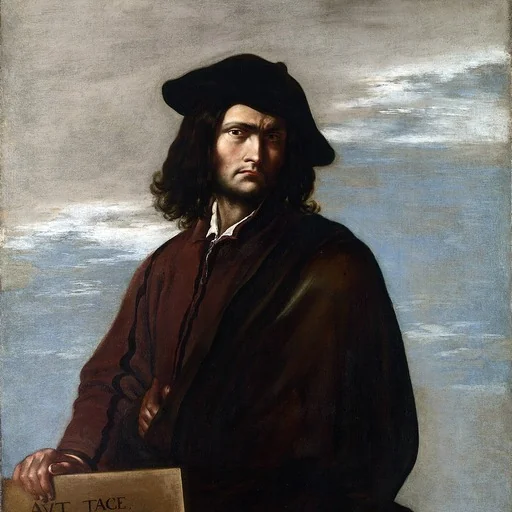
Salvator Rosa (1615 – 15 March 1673) is best known today as an Italian Baroque painter, whose romanticised landscapes and history paintings, often set in dark and untamed nature, exerted considerable influence from the 17th century into…