Artwork
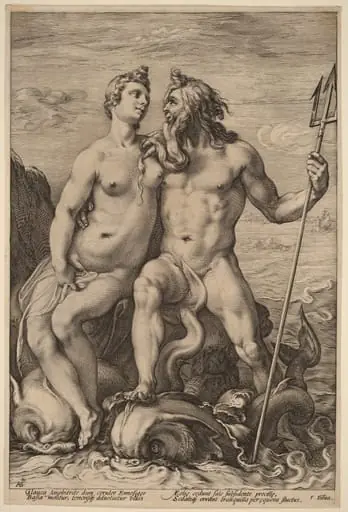
Siren and Triton
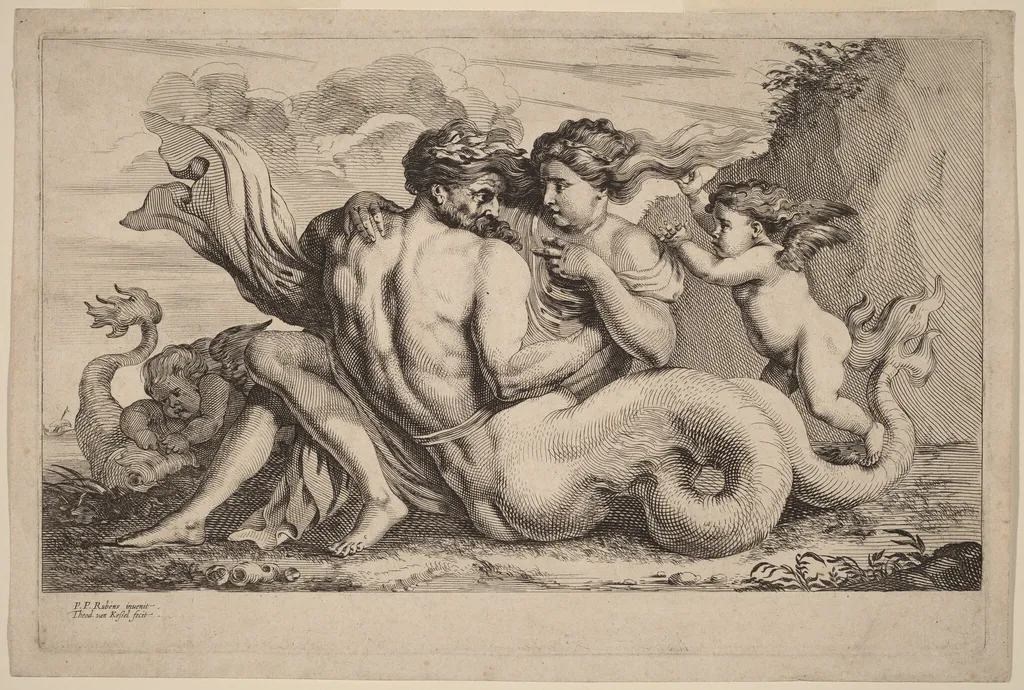
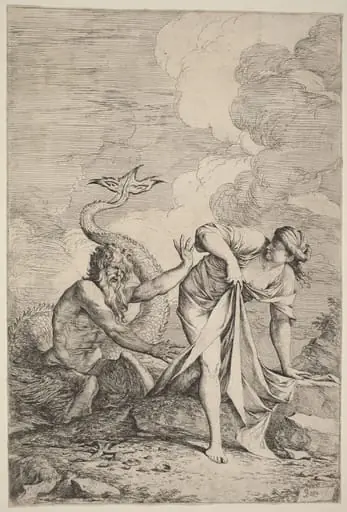
Siren and Triton is an ink print by the Baroque artist Theodor van Kessel. It dates from 1640 and is held in the collection of the National Gallery of Art.
About this work
Overview
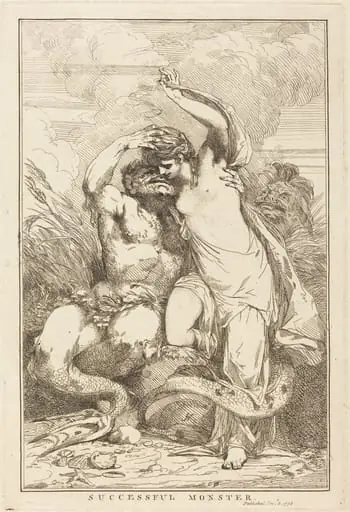
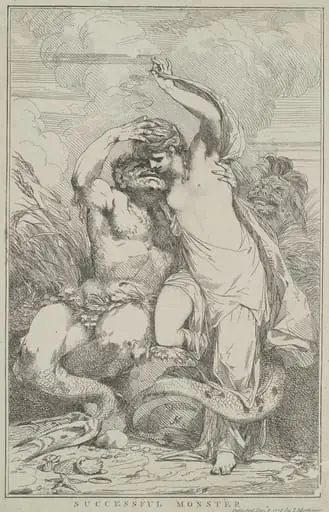
Siren and Triton is a 1640 engraving by Theodor van Kessel, executed on laid paper. The composition depicts a powerful male figure astride a large marine beast, flanked by two women who cling to him. The scene unfolds against a turbulent sea and distant rocky coastline, conveying movement and mythic tension through intricate line work.
Subject & Meaning
The figures likely reference classical maritime mythology, with the central male form interpreted as Triton, a sea god, and the women as sirens. Their entwined poses suggest a narrative of capture or divine procession, though the exact story remains ambiguous. The imagery evokes the perilous allure of the sea, blending human vulnerability with supernatural force.
Technique & Style
Van Kessel employed fine cross-hatching to model volume and texture, using layered parallel lines to define musculature, hair, and wave surfaces. The precision of the lines creates a sense of depth and weight, while the dense patterning enhances the dramatic contrast between the figures and the churning sea. The paper’s laid texture subtly interacts with the ink, adding tactile richness.
History & Provenance
The engraving was produced in 1640 during van Kessel’s active period in the Southern Netherlands. Few documented early owners are known, and the work survives primarily in institutional collections. Its survival suggests it was circulated among collectors of mythological prints, though it never achieved widespread fame during its time.
Context
Created in the mid-17th century, the print reflects the enduring European fascination with classical myths, particularly those involving sea deities.
Created in the mid-17th century, the print reflects the enduring European fascination with classical myths, particularly those involving sea deities. Van Kessel’s style aligns with Northern Mannerist traditions, where intricate detail and dynamic compositions were favored. The work stands apart from more narrative-driven prints of the era by emphasizing atmospheric tension over clear storytelling.
Legacy
Though not widely reproduced or studied today, Siren and Triton remains a representative example of Dutch-Flemish engraving at its most technically refined. It contributes to the understanding of how mythological themes were visually sustained in print culture beyond major artistic centers, revealing the reach of specialized printmakers in provincial networks.
Artist & collection