Artwork
Virgin and Child
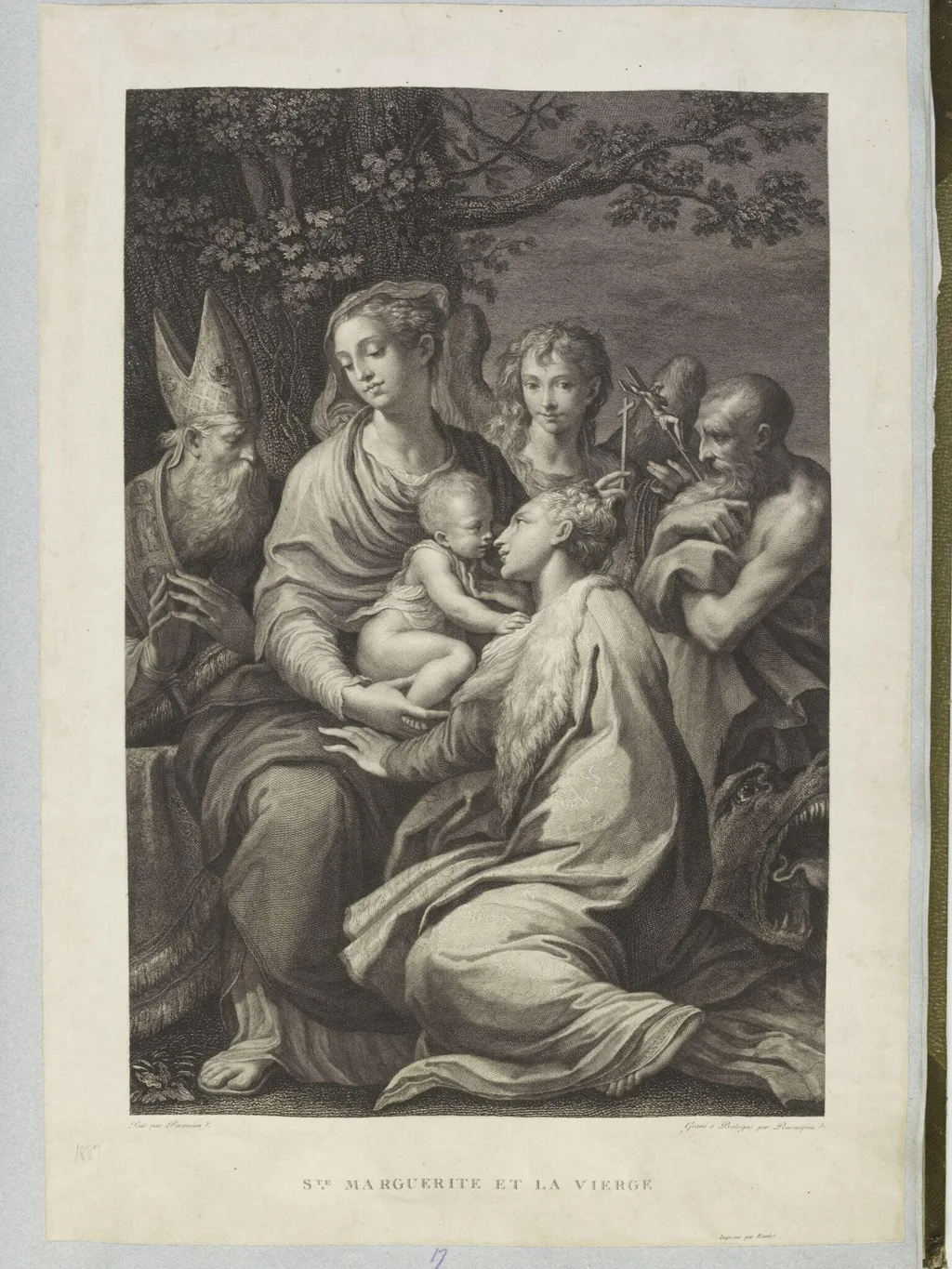
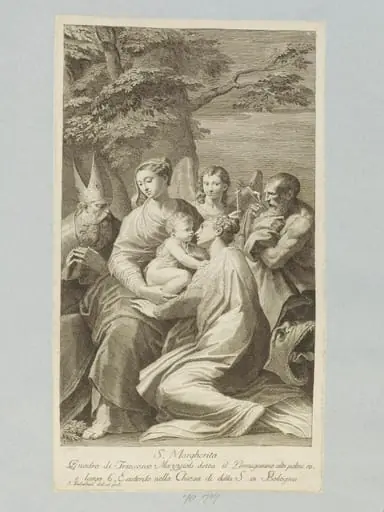
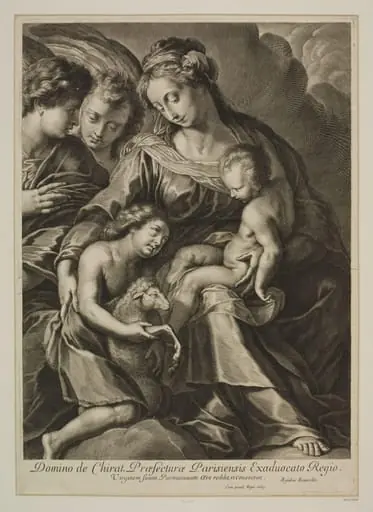
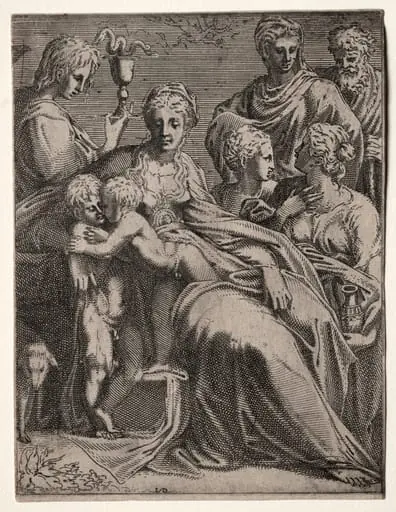
Virgin and Child is a print by Francesco Rosaspina. It is held in the collection of the Victoria and Albert Museum. This black-and-white print portrays the Virgin Mary with the Christ Child, flanked by Saint Margaret and two male saints.
About this work
Overview
Executed in chiaroscuro, the composition emphasizes volume and emotional intensity through stark contrasts of light and shadow.
This black-and-white print portrays the Virgin Mary with the Christ Child, flanked by Saint Margaret and two male saints. Executed in chiaroscuro, the composition emphasizes volume and emotional intensity through stark contrasts of light and shadow. The scene is rendered with fine linear detail, suggesting its origin as a reproductive print after a painted model. The figures are arranged in a compact, intimate grouping against a dark, indistinct landscape.
Subject & Meaning
The Virgin and Child are central, symbolizing divine maternity and grace. Saint Margaret, often associated with protection and deliverance, kneels in reverence, her gesture bridging the sacred and the earthly. The two male saints, identifiable by traditional attributes, likely represent martyrdom and spiritual authority. Together, the group forms a devotional tableau meant to inspire contemplation and intercession.
Technique & Style
The artist employs chiaroscuro to model forms with dramatic precision, using deep blacks and delicate gradations to define drapery and facial features. Lines are controlled yet expressive, capturing the texture of fabric and the softness of skin. The background recedes into shadow, directing focus to the figures’ gestures and expressions. The print’s tonal range suggests mastery of etching or engraving techniques common in 16th-century reproductive printmaking.
History & Provenance
The composition derives from a painting by Parmigianino, a Mannerist master known for elongated forms and refined elegance. This print likely dates to the mid- to late 1500s, produced by a skilled engraver to disseminate the image beyond the original’s limited audience. The French title, 'St. Marguerite et la Vierge,' indicates its circulation in Francophone regions, possibly for private devotion or educational use.
Context
In the decades following the Protestant Reformation, Catholic devotional imagery remained vital in regions like Italy and France. Prints like this served as accessible tools for piety, reinforcing traditional iconography amid religious upheaval. The inclusion of Saint Margaret, a popular intercessor against peril, reflects contemporary spiritual needs, particularly among women and the faithful seeking protection.
Legacy
As a reproductive print, this work contributed to the spread of Parmigianino’s aesthetic beyond painting, influencing how his compositions were perceived across Europe. Though not attributed to the master himself, its technical quality and faithful rendering preserved his style for generations. Such prints helped standardize devotional imagery in both ecclesiastical and domestic settings well into the 17th century.
Artist & collection