Artwork
Natură moartă
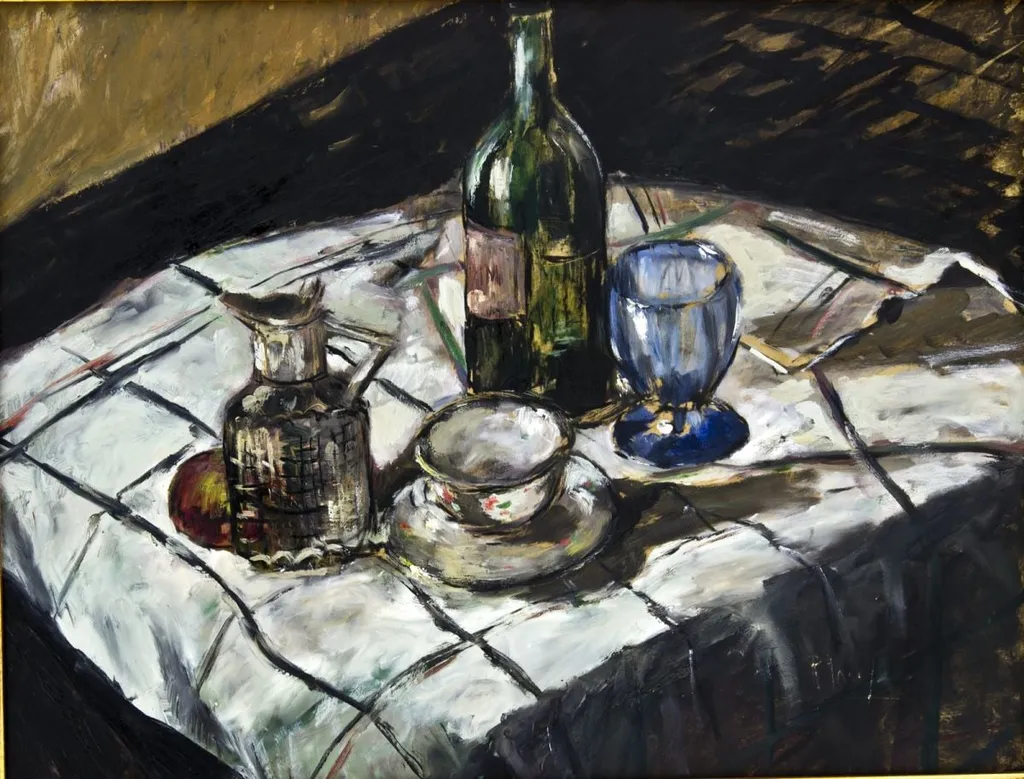
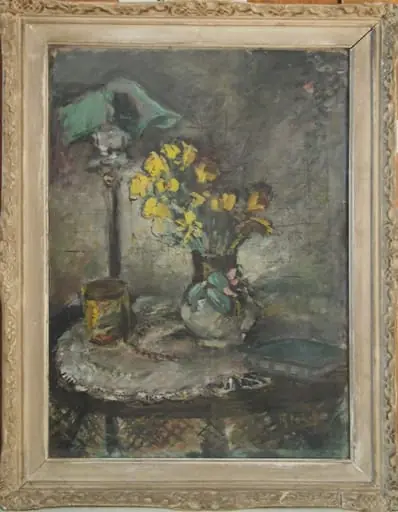
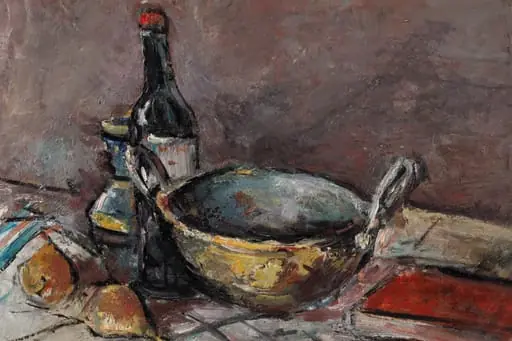
Natură moartă is a print by Iosif Rosenblut. It dates from 1935 and is held in the collection of the National Museum of Art of Romania.
About this work
Overview
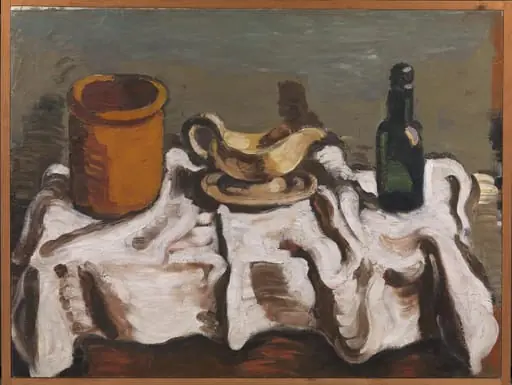
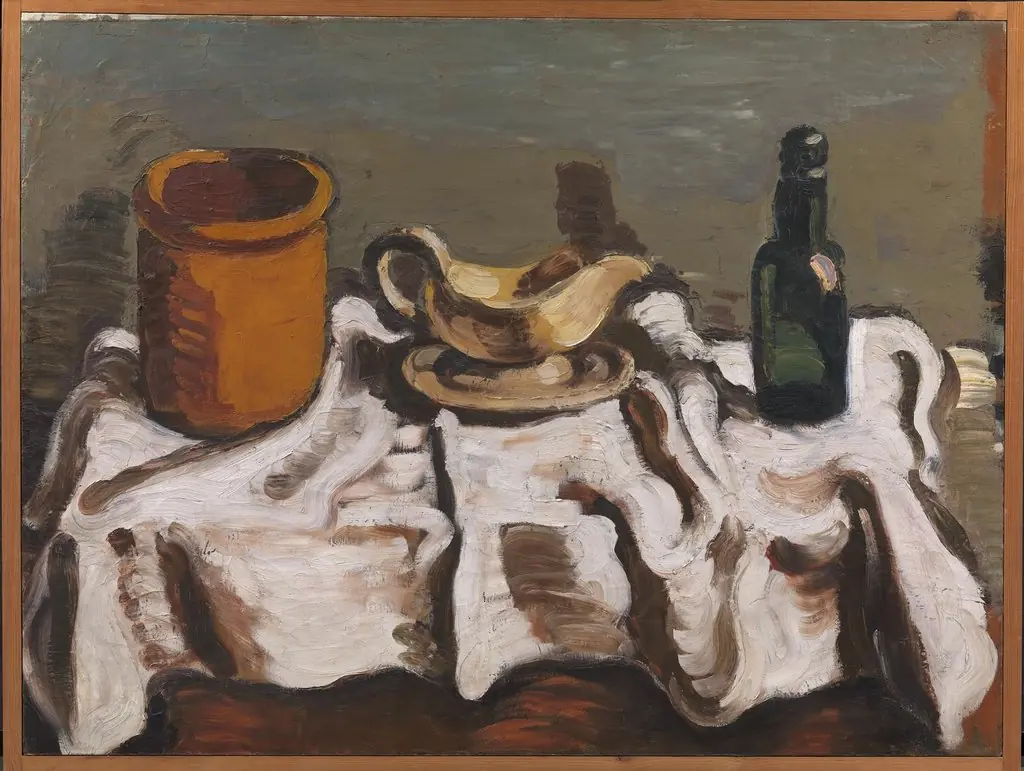
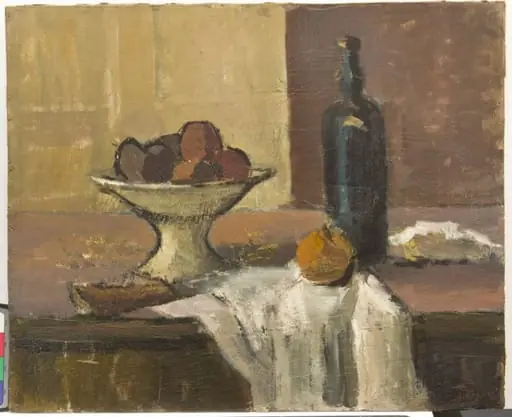
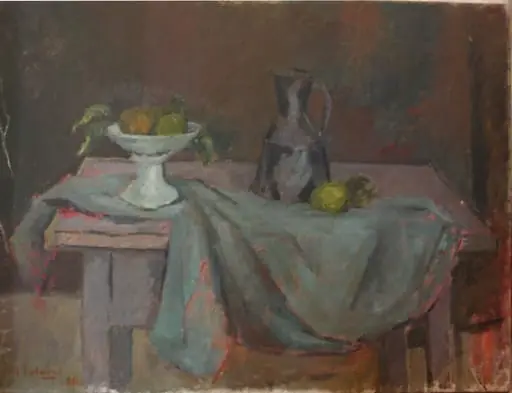
The composition is restrained, focusing on a green glass bottle, a polished metal pitcher, a shallow bowl containing a red apple, and a transparent glass.
Painted in 1935 by Iosif Rosenblut, this still life presents a modest arrangement of household items on a checkered cloth. The composition is restrained, focusing on a green glass bottle, a polished metal pitcher, a shallow bowl containing a red apple, and a transparent glass. The scene avoids ornamentation, emphasizing quiet observation over narrative. The interplay of light and shadow suggests a single source illuminating the objects from one side.
Subject & Meaning
The objects depicted are ordinary, unremarkable items of daily use, chosen for their form and material rather than symbolic value. The red apple, the only vivid color, draws attention without overt metaphor. The arrangement invites contemplation of texture, weight, and presence rather than storytelling. There is no indication of human activity beyond the implied act of setting the table, leaving interpretation open to the viewer’s perception of stillness and time.
Technique & Style
Rosenblut employs loose, visible brushwork that captures the essence of each object without polished refinement. The surfaces of the bottle and pitcher respond to light with subtle highlights and deep shadows, creating volume through contrast. The checkered cloth is rendered with simplified geometry, its pattern suggesting texture rather than detailed replication. The overall approach leans toward expressive realism, where form is suggested through tone and gesture rather than precise delineation.
History & Provenance
Created in 1935, the painting originates from Rosenblut’s early period in Romania, during a time when still life was a common subject for artists exploring modernist tendencies within traditional frameworks. No documented exhibition or ownership history is widely recorded prior to its inclusion in public collections. Its survival and preservation suggest it was retained within private or institutional circles, though its path to current custody remains largely untraced.
Context
In mid-1930s Romania, artists like Rosenblut were navigating between academic traditions and emerging modernist influences. Still lifes offered a safe space to experiment with light, form, and materiality without political or social demands. This work reflects a quiet engagement with European realism, particularly the tonal approaches of post-impressionist and early 20th-century painters, while retaining a distinctly local sensibility in its restraint and domestic focus.
Legacy
Rosenblut’s still life contributes to a broader Romanian interwar practice that valued quiet observation over dramatic expression. While not widely reproduced or studied internationally, it remains a representative example of how local artists adapted European visual languages to intimate, everyday subjects. Its endurance in collections underscores its role as a modest but thoughtful document of artistic inquiry during a period of cultural transition.
Artist & collection
Artist
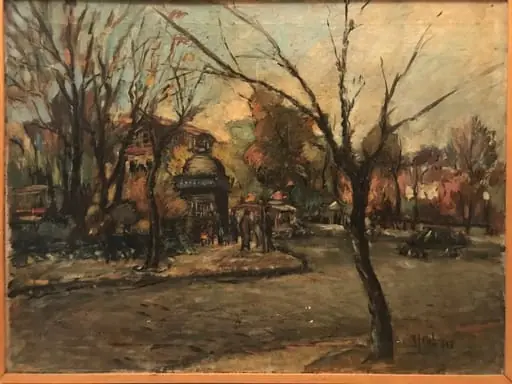
Iosif Rosenblut painted still lifes and city scenes in mid-20th-century Bucharest.