Artwork
Still Life with a Jar, a Sauceboat and a Bottle
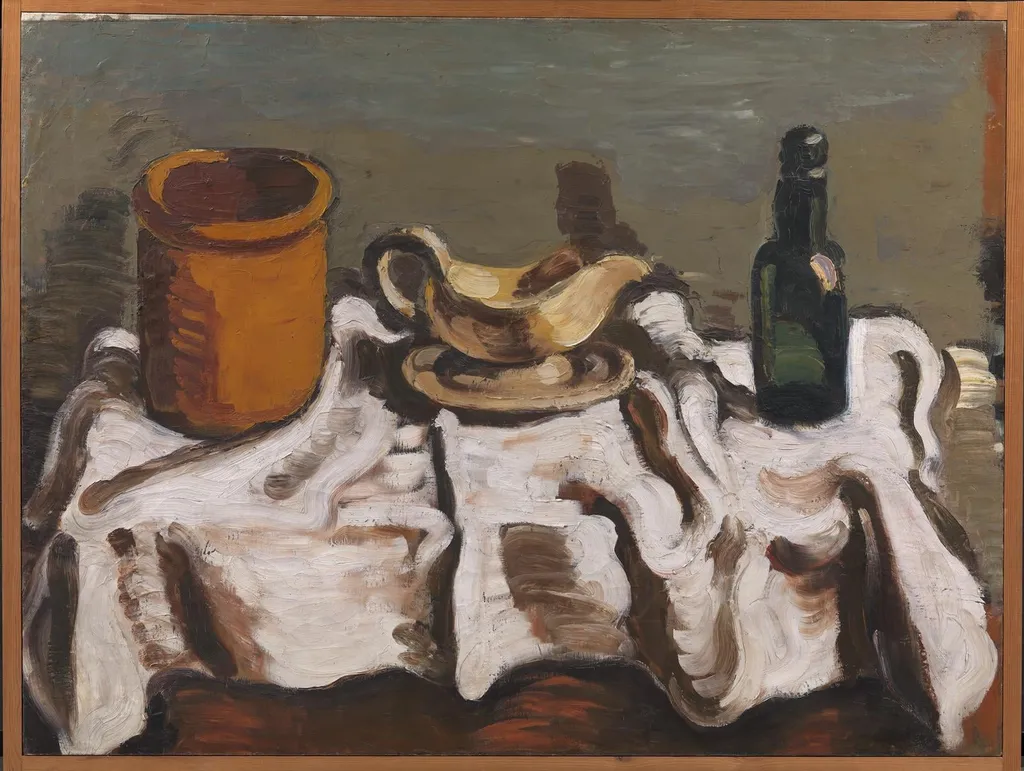
Still Life with a Jar, a Sauceboat and a Bottle is an unspecified painting by Unknown. It dates from 1920 and is held in the collection of the Statens Museum for Kunst.
About this work
Overview
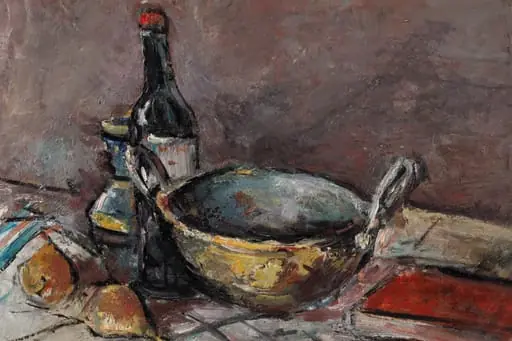
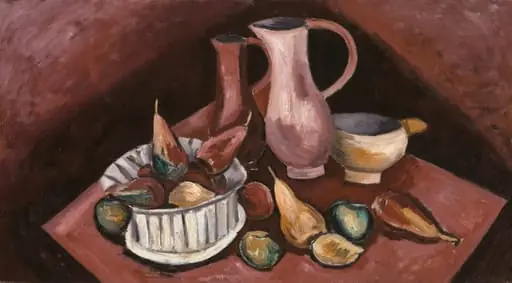
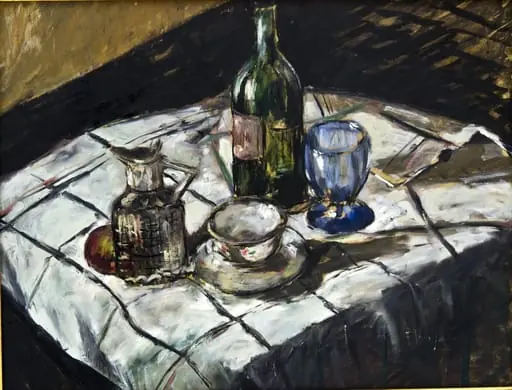
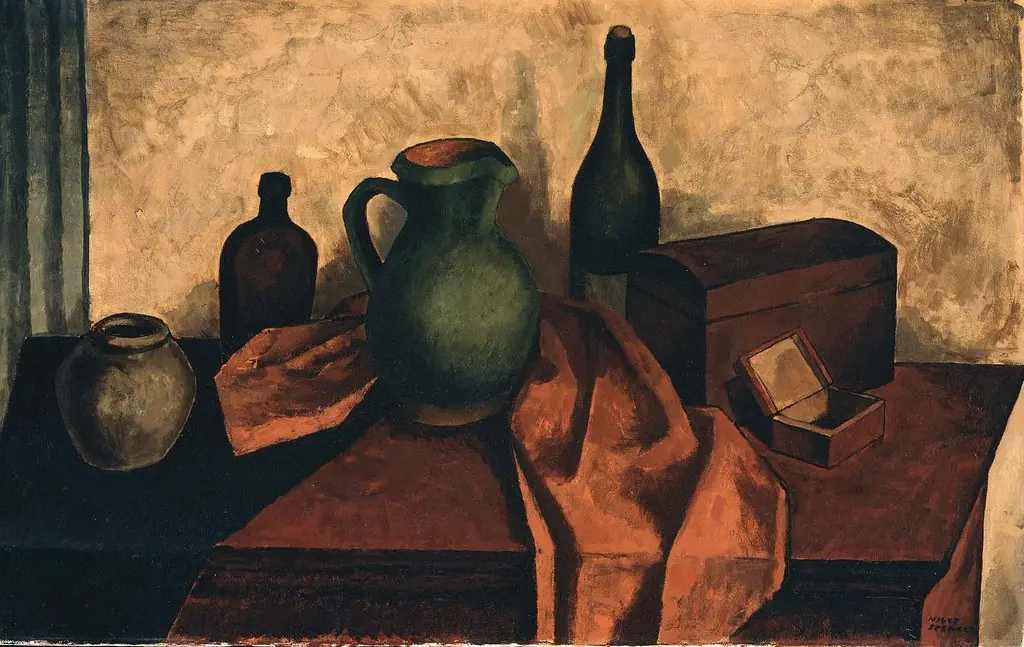
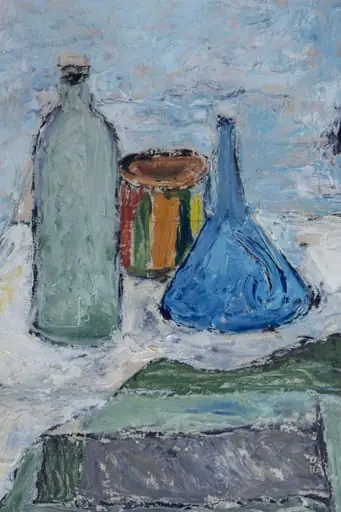
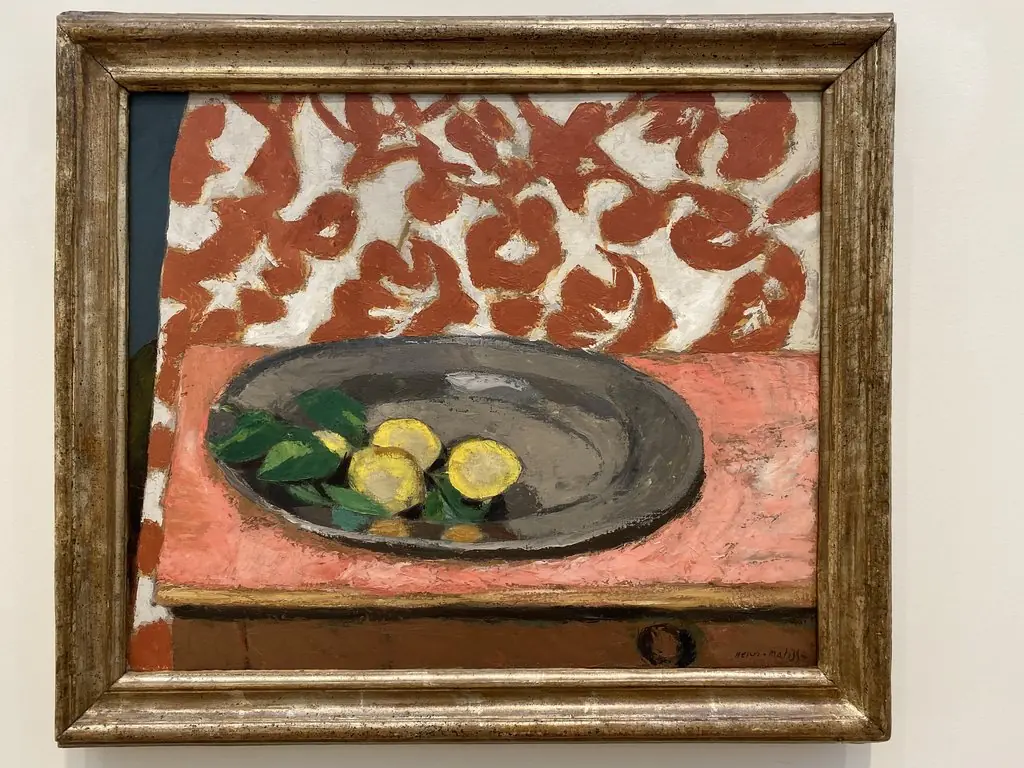
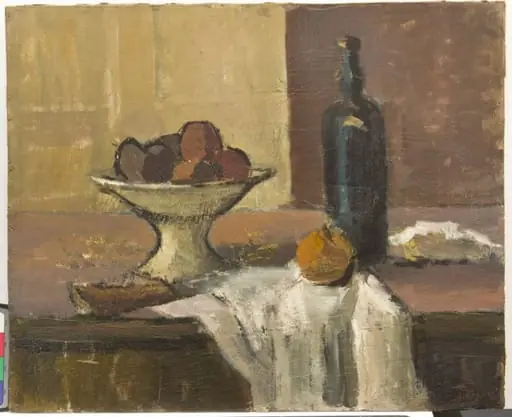
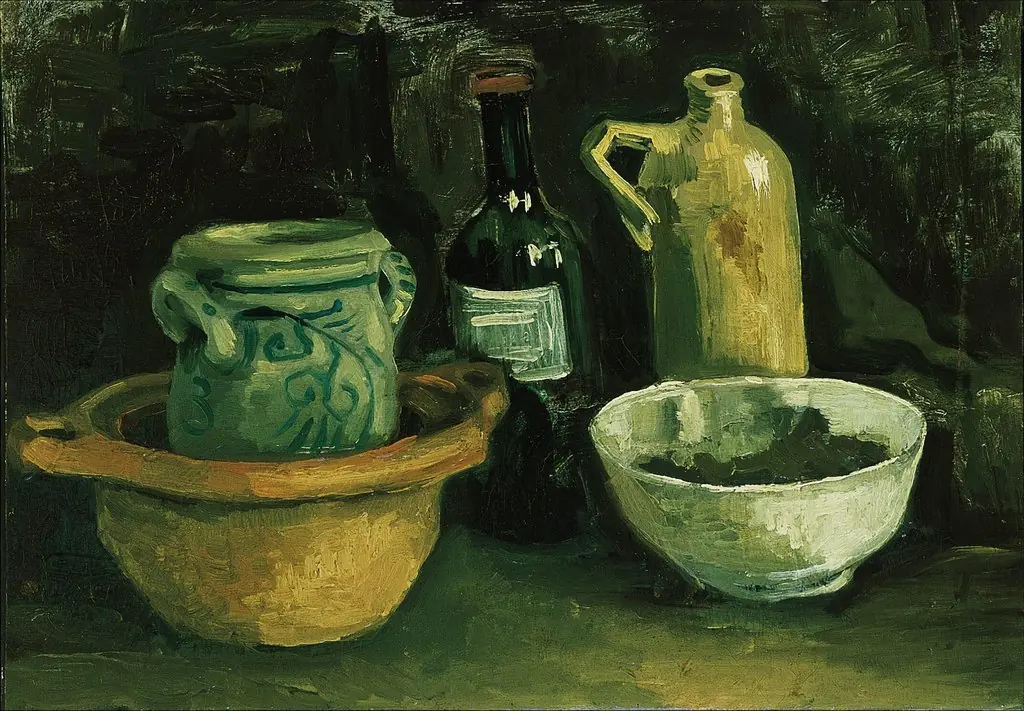
Painted in 1920, this still life features a clay jar, a green bottle with a visible label, and a white dish containing a spoon and a partially peeled lemon.
Painted in 1920, this still life features a clay jar, a green bottle with a visible label, and a white dish containing a spoon and a partially peeled lemon. The composition is deliberately sparse, arranged on a dark, textured surface beneath a muted green backdrop. The work is held in the collection of the Museum of Ethnography, where it is presented as an example of early 20th-century domestic still life painting.
Subject & Meaning
The objects depicted—everyday kitchen items—are rendered without symbolic embellishment, suggesting an interest in the quiet dignity of ordinary things. The half-peeled lemon introduces a subtle sense of motion and transience, as if the act of preparation has just been interrupted. This casual realism avoids grand narrative, focusing instead on the quiet presence of domestic life.
Technique & Style
Thick, uneven brushwork characterizes the surface, particularly on the jar and lemon rind, creating a tactile quality through impasto. Bold hues of orange, green, and white contrast sharply with the subdued background, enhancing the objects' physical presence. The roughness of the paint and the unpolished handling suggest a deliberate rejection of smooth academic finish in favor of material immediacy.
History & Provenance
The painting entered the Museum of Ethnography’s collection shortly after its creation, likely through direct acquisition or donation. Its placement in an ethnographic context, rather than a fine arts institution, reflects an early 20th-century interest in documenting vernacular culture through visual artifacts. No significant changes in ownership are documented prior to its museum acquisition.
Context
Created during a period when many artists turned away from idealized forms toward raw, unadorned subjects, this work aligns with broader European trends favoring material honesty over decorative precision. Its inclusion in an ethnographic museum suggests a contemporaneous blurring of boundaries between art and cultural record, where domestic objects were seen as expressions of lived experience.
Legacy
Though not widely exhibited outside its home institution, the painting remains a quiet example of how early modernist sensibilities transformed still life into a study of texture and presence. Its emphasis on ordinary materials and unrefined technique influenced later artists interested in the poetic potential of the mundane, particularly within regional art circles.
Artist & collection

 Domestic Scene
 Giacomo and Cardinal Marco, investing Andrea, Abbot of San Zeno, with his Benefice
 The Nymph of Fontainebleau
 Portrait of a Woman
 Madonna and Child with Saints in the Enclosed Garden
 Venus and Minerva
 Family Group of Four on Sofa
 Wall painting from Room H of the Villa of P. Fannius Synistor at Boscoreale