Artwork
Charles Balthazar Julien Févret de Saint-Mémin
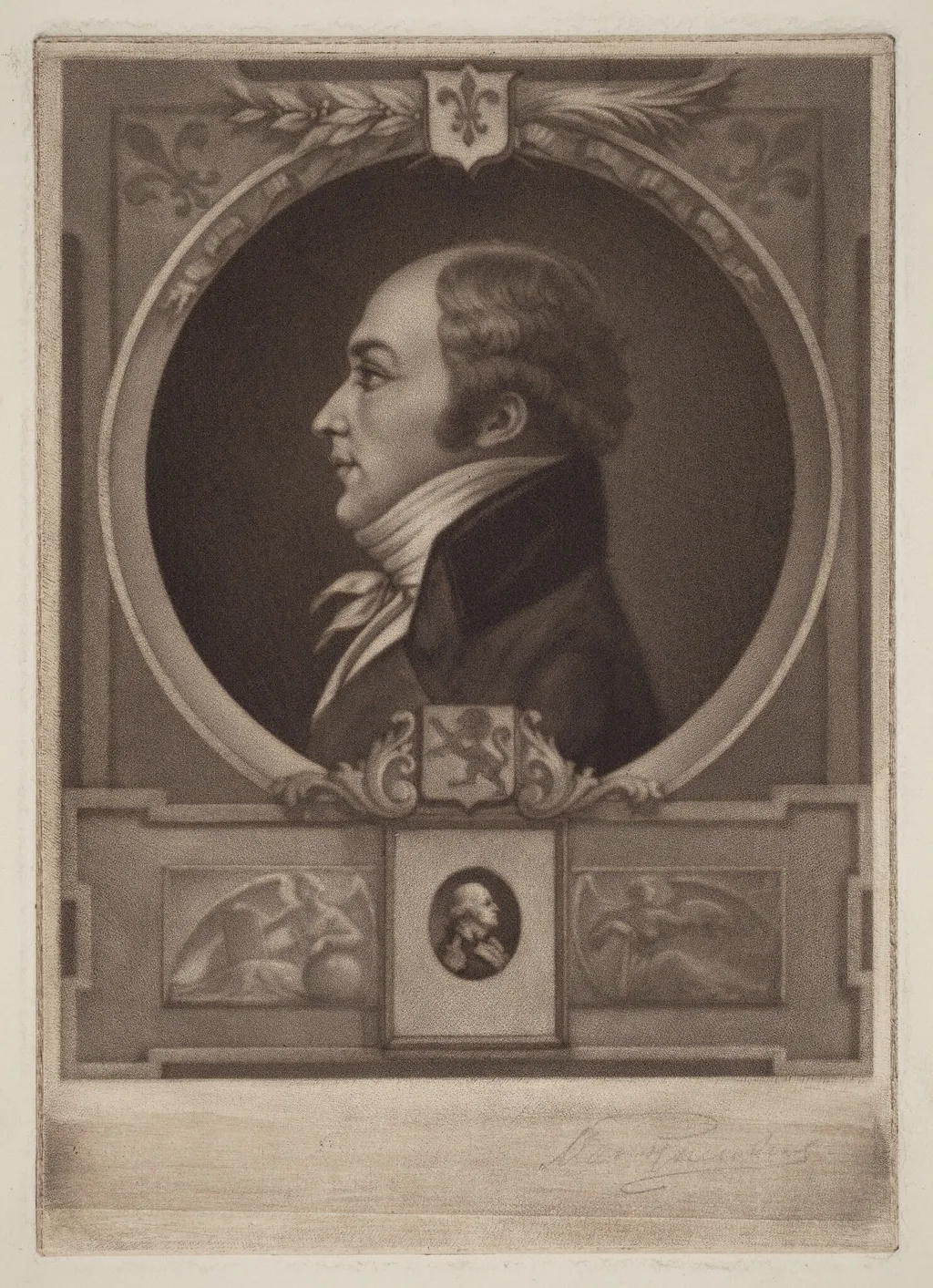
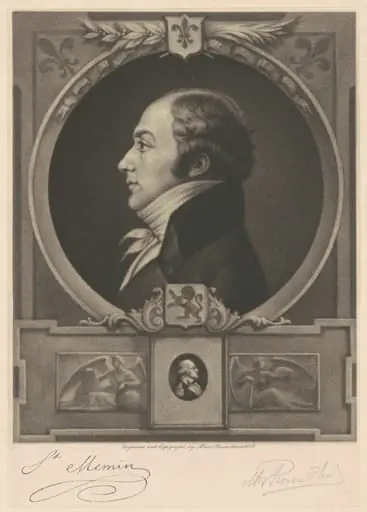
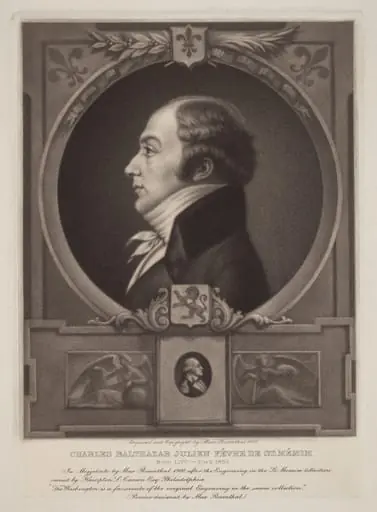
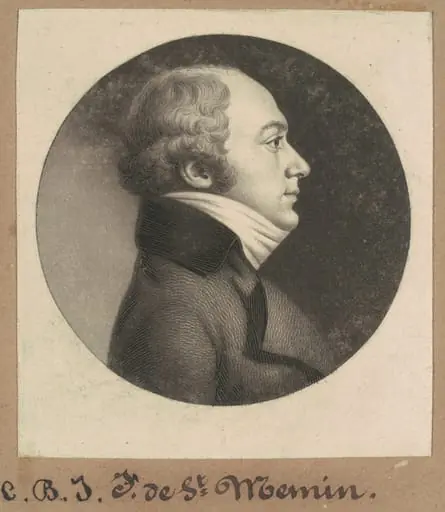
Charles Balthazar Julien Févret de Saint-Mémin is an ink print by Max Rosenthal. It dates from 1900 and is held in the collection of the National Gallery of Art. This 1900 mezzotint, executed in black on chine collé, presents a portrait of Charles Balthazar Julien Févret de Saint‑Mín.
About this work
Overview
This 1900 mezzotint, executed in black on chine collé, presents a portrait of Charles Balthazar Julien Févret de Saint‑Mín. The work, signed by the American engraver Max Rosenthal, exemplifies the late‑19th‑century revival of the mezzotint technique for fine portraiture.
Subject & Meaning
The sitter, a French nobleman, is depicted with a rounded face, curly hair, and a dignified bearing. He wears a dark high‑collared coat and a white cravat, conveying the formal attire of his era. The composition suggests a restrained elegance, emphasizing the individual's social standing without overt symbolism.
Technique & Style
Rosenthal employed the mezzotint process, a labor‑intensive method that creates rich tonal gradations through a textured copper plate. The image’s delicate shading and subtle transitions give the portrait a three‑dimensional presence, while the surrounding oval frame, adorned with a fleur‑de‑lis and a miniature repeat of the sitter, adds a decorative, almost heraldic touch.
History & Provenance
Created at the turn of the twentieth century, the print reflects Rosenthal’s interest in commemorating notable figures through print media. While the original ownership trail is not fully documented, the work has appeared in several collections of American printmaking, underscoring its relevance to both French and American artistic exchanges of the period.
Context
Mezzotint, once popular in the eighteenth century for reproducing oil paintings, experienced a modest resurgence among American artists like Rosenthal, who sought to apply its tonal richness to contemporary portraiture. This piece aligns with that trend, merging European subject matter with an American technical revival.
Legacy
The portrait stands as a representative example of cross‑Atlantic artistic dialogue, illustrating how American printmakers adopted and adapted European techniques to honor historical personalities. Its continued presence in museum collections highlights the enduring appreciation for the mezzotint’s capacity to render nuanced, dignified likenesses.
Artist & collection