Artwork
Landscape with figures, sheep and goats
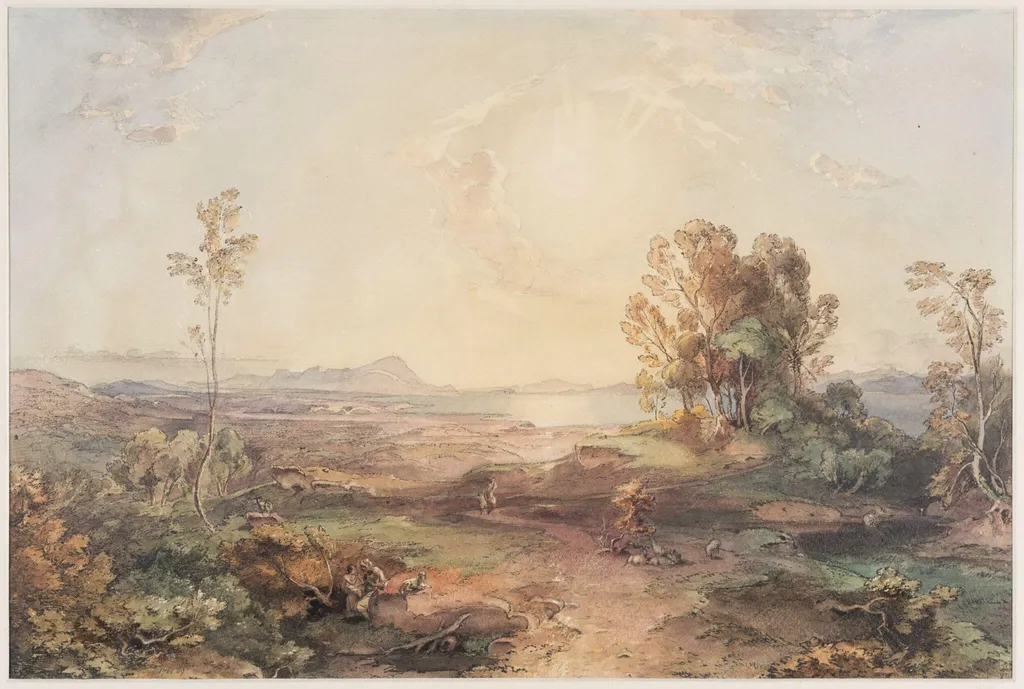
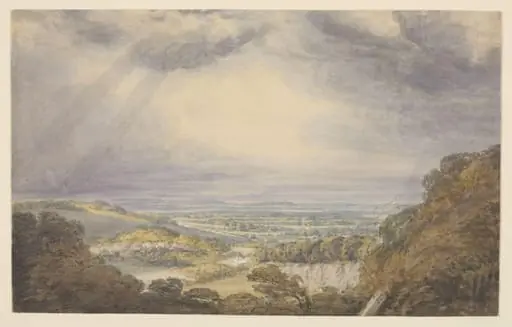
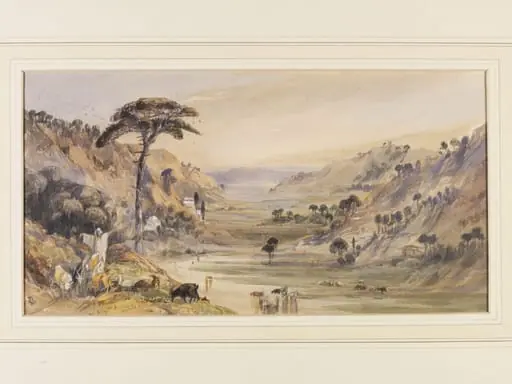
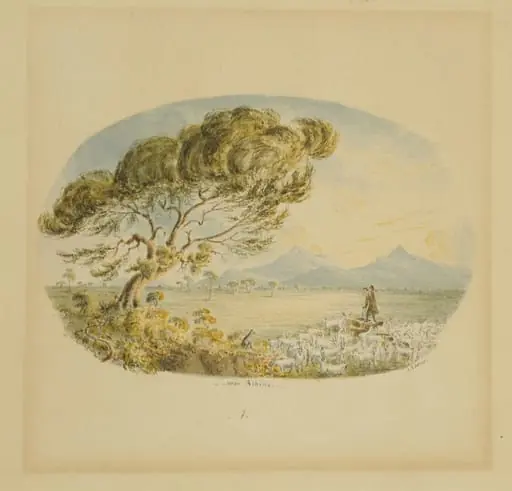
Landscape with figures, sheep and goats is a watercolor work on paper by the Romanticist artist Carl Rottmann. It dates from 1838 and is held in the collection of the Victoria and Albert Museum. Created in 1838, this watercolour by Rottmann presents a tranquil rural scene in the German-speaking regions of Europe.
About this work
Overview
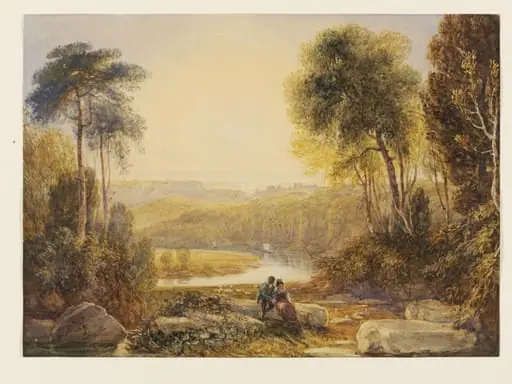
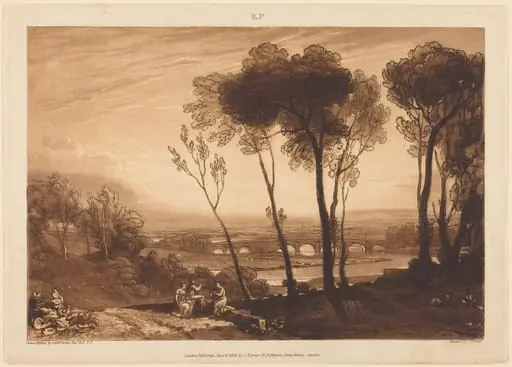
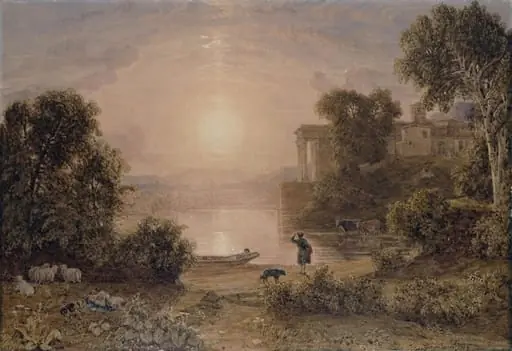
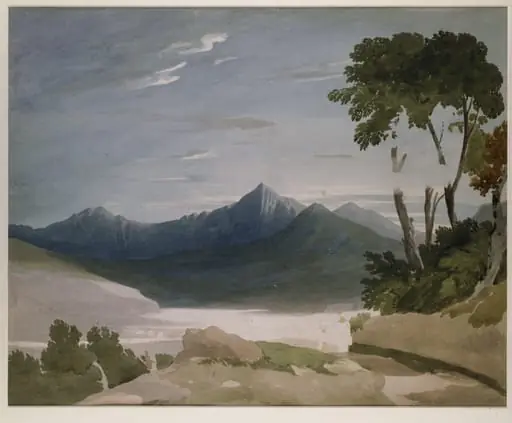
Created in 1838, this watercolour by Rottmann presents a tranquil rural scene in the German-speaking regions of Europe. The composition centers on a quiet path winding through low hills, with livestock being guided by figures in the foreground. A distant mountain range and a faintly reflected lake frame the horizon, while the sky, softly rendered in pale tones, suggests a calm, overcast day.
Subject & Meaning
Figures tend to sheep and goats along a dirt track, their movements subtle and unhurried.
The painting captures everyday rural life without narrative drama. Figures tend to sheep and goats along a dirt track, their movements subtle and unhurried. The absence of architecture or human dwellings emphasizes nature’s quiet dominance. The scene conveys harmony between human activity and the landscape, reflecting a 19th-century appreciation for pastoral stillness rather than grandeur or symbolism.
Technique & Style
Rottmann employed transparent watercolour washes to build subtle gradations of light and texture. Earthy ochres, muted greens, and soft greys dominate, with minimal contrast to preserve the scene’s serenity. Bare trees and autumnal foliage are suggested with light strokes, while the distant mountains fade into the sky through diluted pigment, demonstrating mastery of atmospheric perspective.
History & Provenance
The work was completed during Rottmann’s early career, before his large-scale mythological landscapes gained wider recognition. It remained in private collections until acquired by the Victoria and Albert Museum, where it is held as part of their 19th-century British and European watercolour collection. Its modest scale and subject suggest it was likely a study or personal exercise rather than a commissioned piece.
Context
In the 1830s, German artists increasingly turned to intimate natural scenes as a counterpoint to Romantic grandeur. Rottmann’s focus on quiet pastoral life aligns with broader trends in landscape painting that valued observation over drama. This work reflects a growing interest in regional topography and the rhythms of rural existence, distinct from the heroic landscapes of his later career.
Legacy
Though not among Rottmann’s most widely exhibited works, this watercolour exemplifies his early sensitivity to light and atmosphere. It contributes to understanding his development as a landscape artist and illustrates the quiet, observational mode that underpinned his later, more monumental compositions. Its preservation in a major museum ensures continued access for study of 19th-century watercolour practice.
Own this work as a print
Artist & collection
Artist
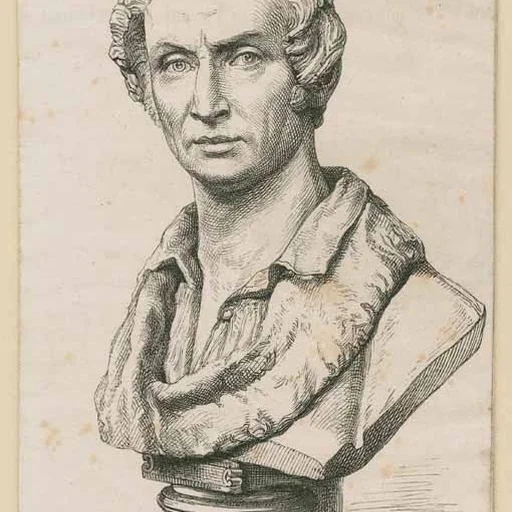
Carl Anton Joseph Rottmann (11 January 1797, in Handschuhsheim (today a part of Heidelberg) – 7 July 1850, in Munich) was a German landscape painter and the most famous member of the Rottmann family of painters.