Artwork
A Gleamy Effect—Hollidaysburg, Pennsylvania
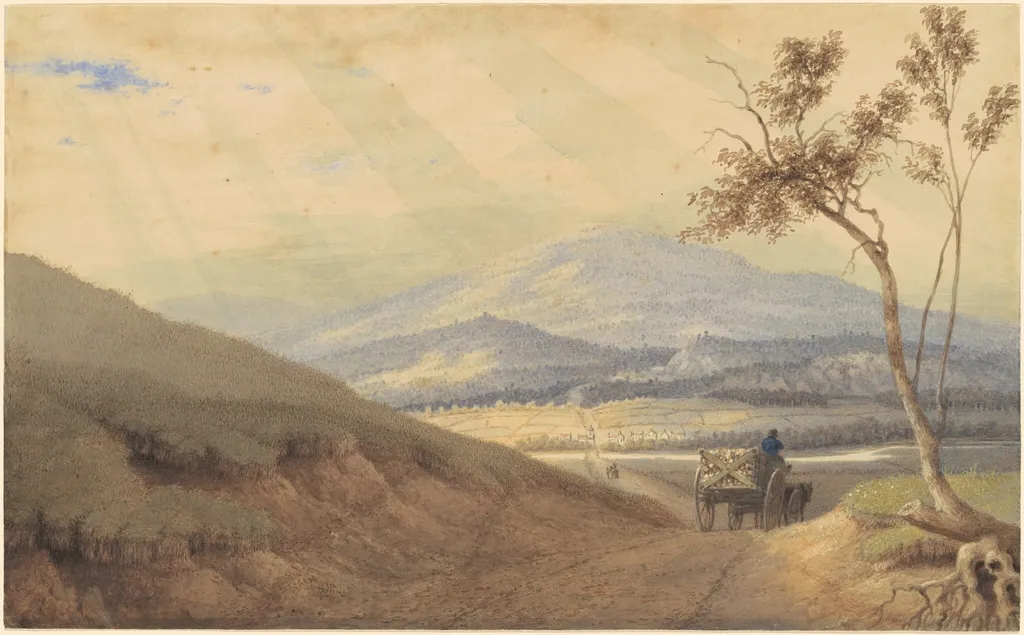
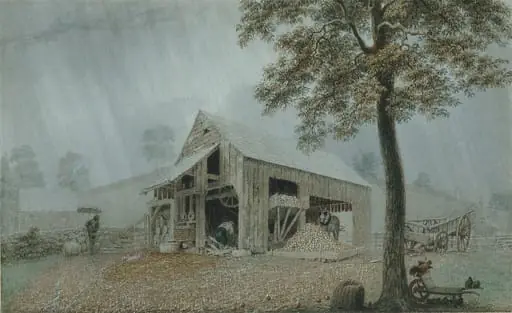
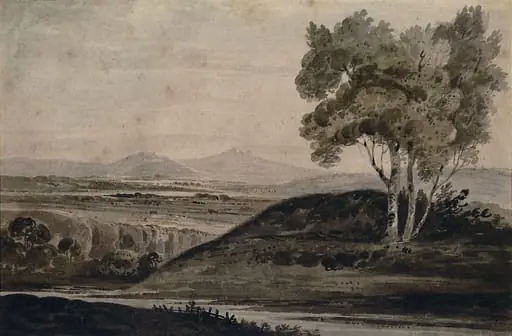
A Gleamy Effect—Hollidaysburg, Pennsylvania is a gouache drawing by the Romanticist artist George Harvey. It dates from 1838 and is held in the collection of the National Gallery of Art.
About this work
Overview
George Harvey’s 1838 work titled A Gleamy Effect—Hollidaysburg, Pennsylvania is a small-scale drawing executed on wove paper. The piece combines watercolor and gouache applied over an initial graphite sketch, resulting in a muted, atmospheric composition that captures a quiet moment in a rural setting.
Subject & Meaning
The image presents a tranquil landscape dominated by a solitary tree on the right edge and a distant horse‑drawn carriage moving along a low road. Soft, hazy mountains rise in the background beneath a light sky, suggesting a serene, uninhabited environment where human presence is limited to the passing vehicle.
Technique & Style
Harvey employs both watercolor and opaque gouache to achieve a delicate balance between transparency and solidity. The underlying graphite drawing provides structural guidance, while the layered pigments create a gentle, dream‑like effect characteristic of early 19th‑century Romantic landscape practices.
History & Provenance
Created in 1838, the drawing is attributed to George Harvey, an American artist active during the period when Romantic sensibilities influenced visual art. The work has been catalogued under the title A Gleamy Effect—Hollidaysburg, Pennsylvania and remains documented as part of his early oeuvre.
Own this work as a print
Artist & collection

Artist
Sir George Frederick Harvey (1 February 1806 – 22 January 1876) was a Scottish painter and President of the Royal Scottish Academy.

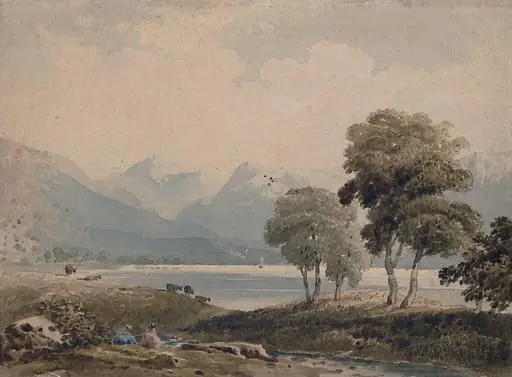 Landscape with lake and mountains
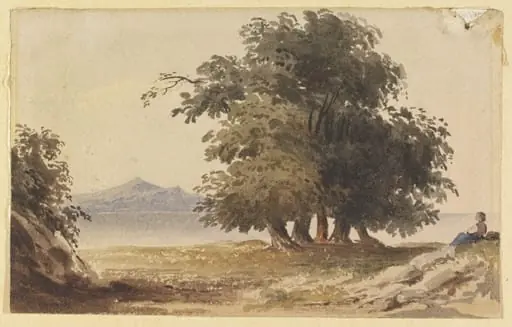 Landscape, probably in Greece or Turkey
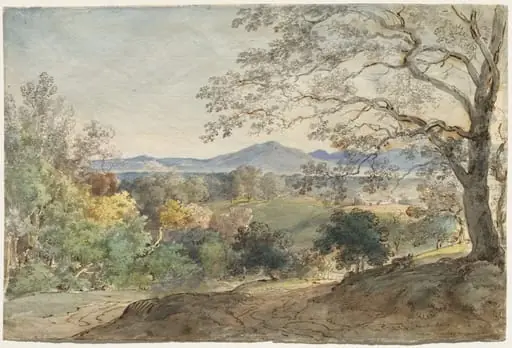 A View across the Inn Valley to the Alps and Neubeuern
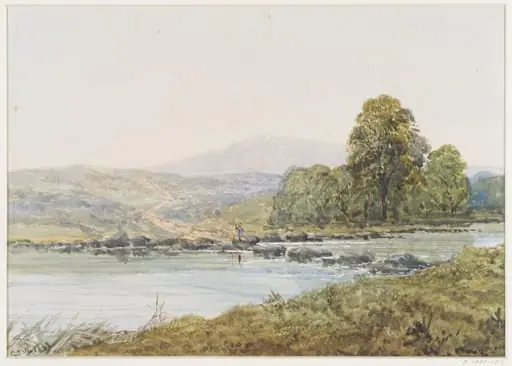 The Stepping-stones near Bettws-y-Coed, North Wales
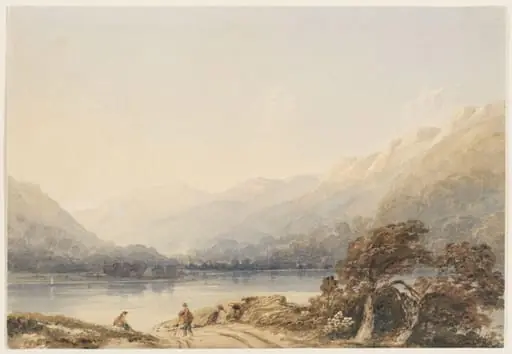 Lake scene with mountains
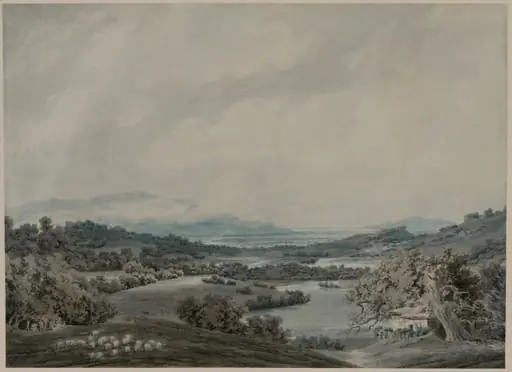 Italian Landscape
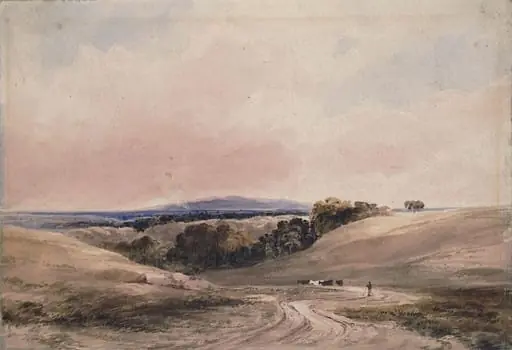 Landscape
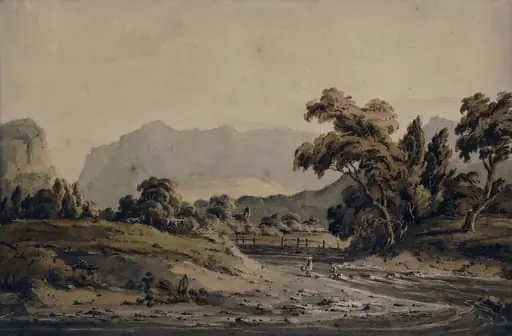 Rydal Head, Ambleside, Westmorland
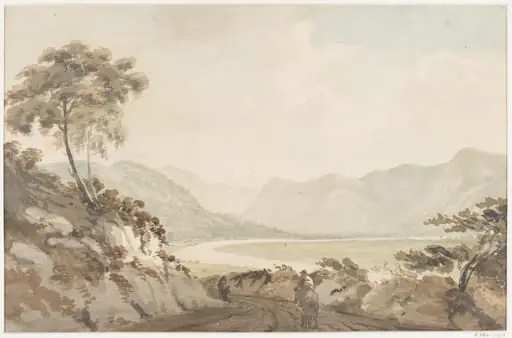 The Vale of Conway, near Llanrwst, North Wales.
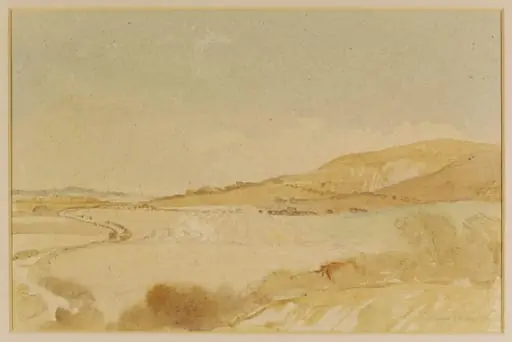 The Southdown, Underhill Road; Clayton to Westmeston
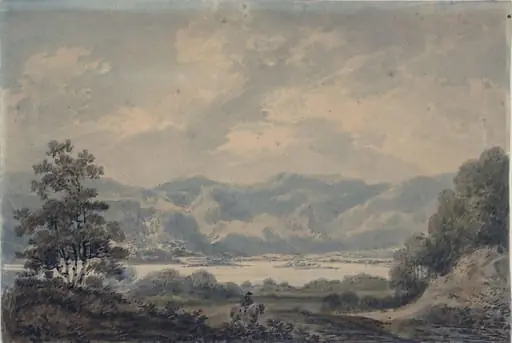 Windermere
 Landscape, evening effect