Artwork
The Bridge in Middle Distance
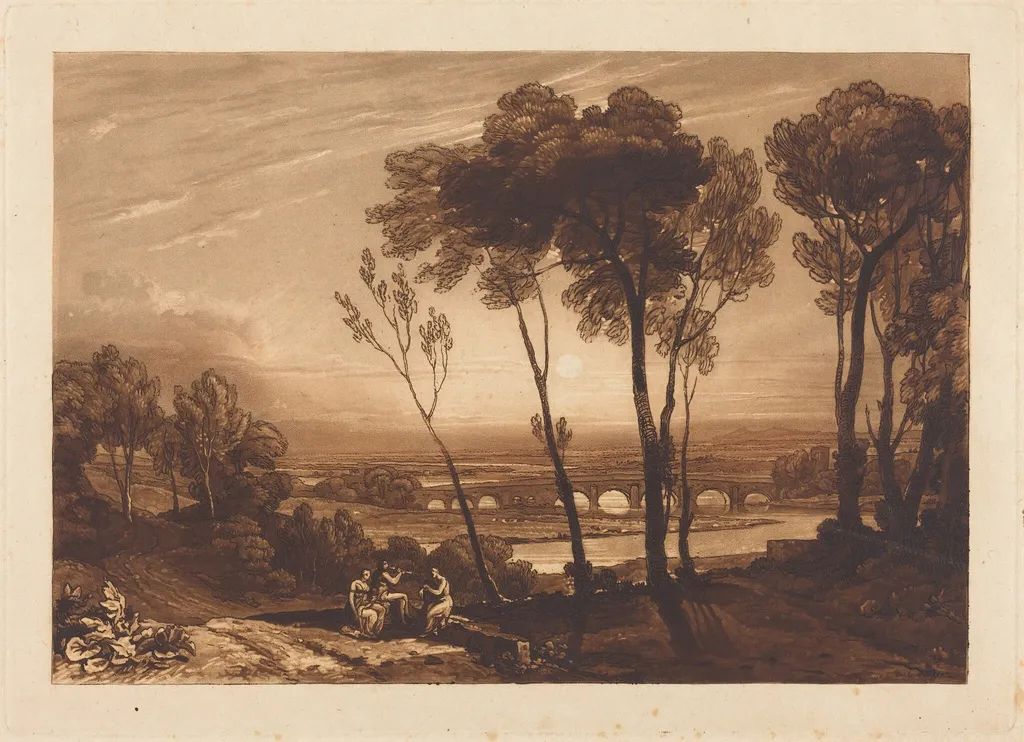
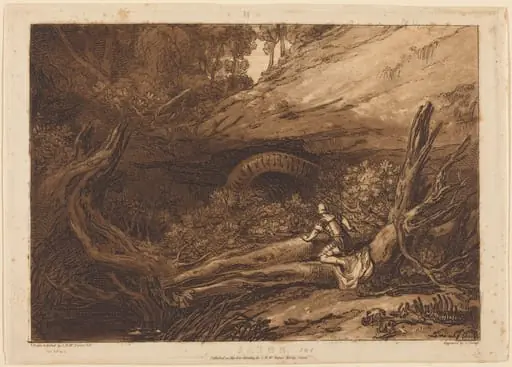
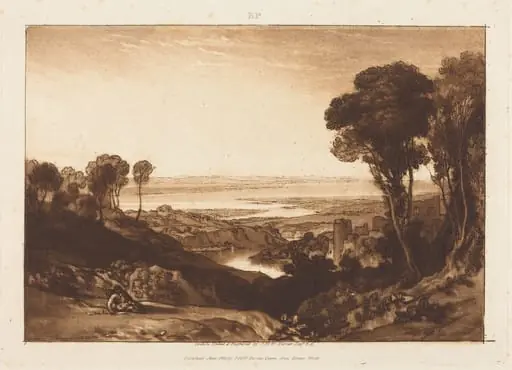
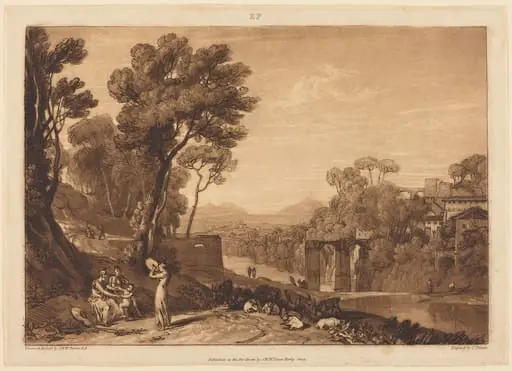
The Bridge in Middle Distance is an ink print by the Romanticist artist Charles Turner. It dates from 1808 and is held in the collection of the National Gallery of Art.
About this work
Overview
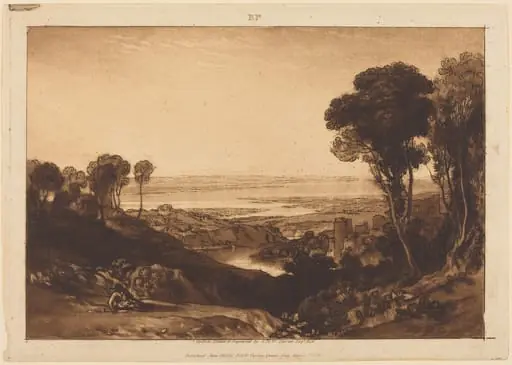
The Bridge in Middle Distance is a print created by English engraver and draughtsman Charles Turner in 1808, combining etching, aquatint, and mezzotint techniques. The work captures a serene riverside scene, characterized by a mid-ground bridge, figures on a bank, and a soft, hazy atmosphere.
Subject & Meaning
The print depicts a tranquil riverside setting with three individuals seated on a grassy bank, a stone bridge arcing over the water, and tall, shadow-like trees. The overall mood is dreamy and calm, evoking a peaceful afternoon scene.
Technique & Style
Charles Turner employed layered intaglio processes—etching for details, aquatint for tonal ranges, and mezzotint for smooth shading—to achieve depth and texture. The interplay of light on water and bridge, and the shadowy rendering of trees, exemplify his mastery of these techniques.
History & Provenance
Created in 1808, this work reflects the printmaking innovations and artistic collaborations of early 19th-century England. Notably, Charles Turner collaborated with J.M.W. Turner on the *Liber Studiorum* project, though this piece's specific provenance is not detailed here.
Context
The Bridge in Middle Distance situates itself within the broader context of English Romantic-era printmaking, characterized by explorations of landscape, light, and mood. Turner's use of multiple intaglio techniques was emblematic of the period's technical advancements.
Legacy
While specific lasting impacts of *The Bridge in Middle Distance* on subsequent art movements are not highlighted, it contributes to the understanding of Charles Turner's contributions to English printmaking and his role in the artistic exchanges of his time.
Own this work as a print
Artist & collection
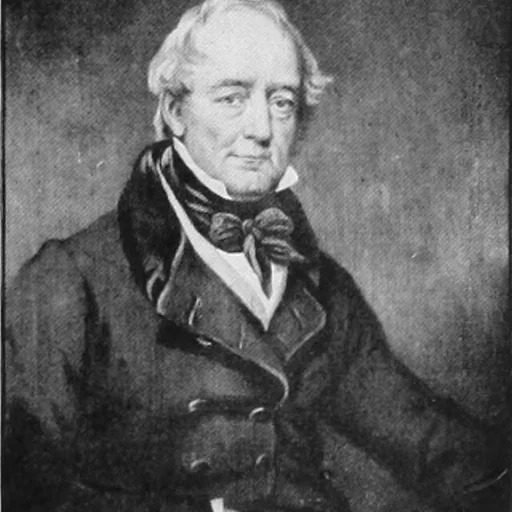
Artist
Charles Turner (31 August 1774 – 1 August 1857) was an English engraver and draughtsman who specialised in portraiture. He collaborated with J. M. W. Turner (to whom he was not related) on the early plates of the same's Liber Studiorum.