Artwork
Le vautour (The Vulture)
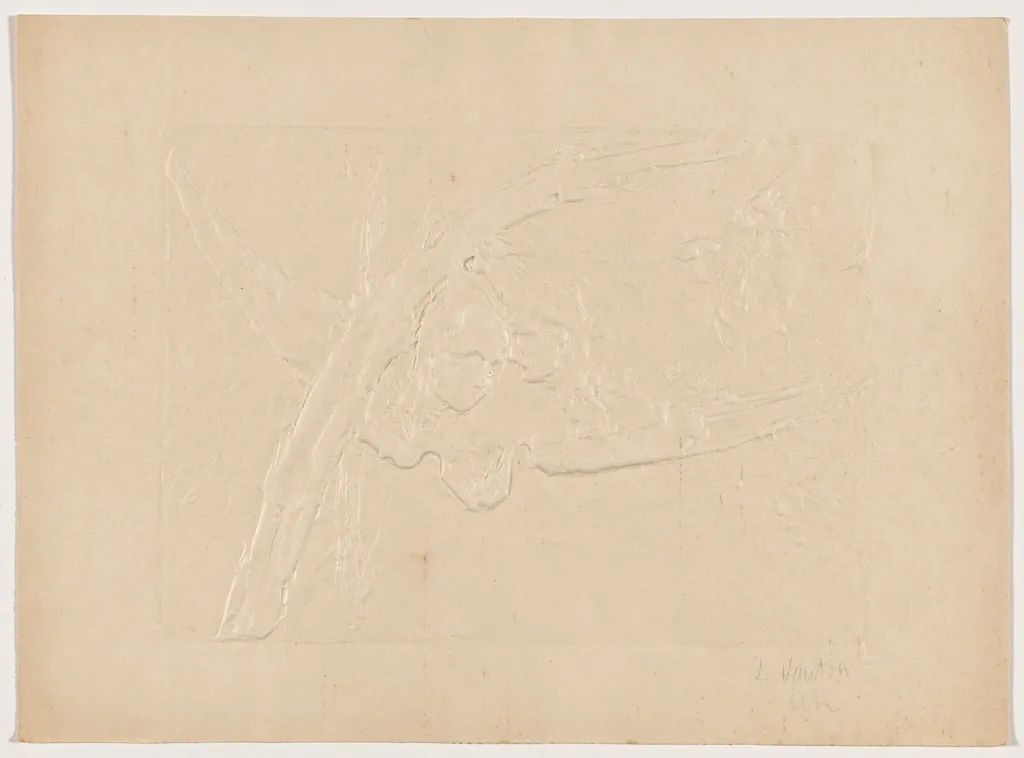
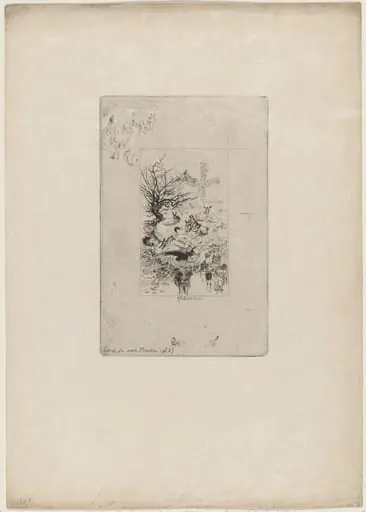
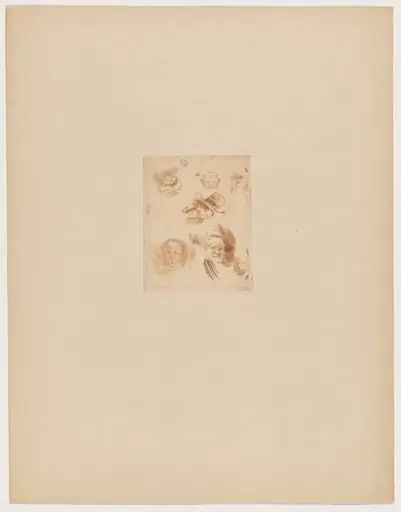
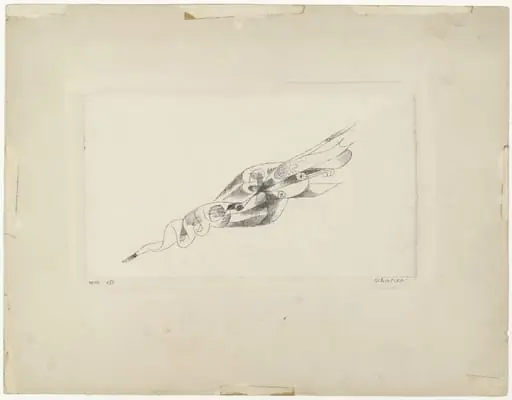
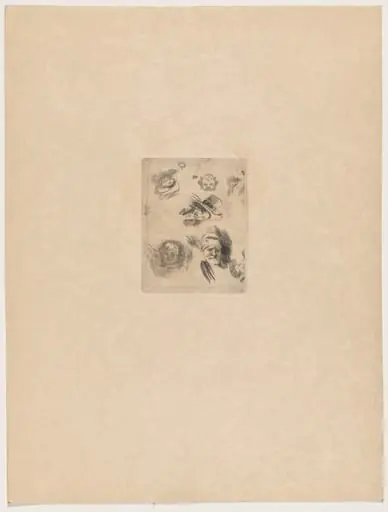
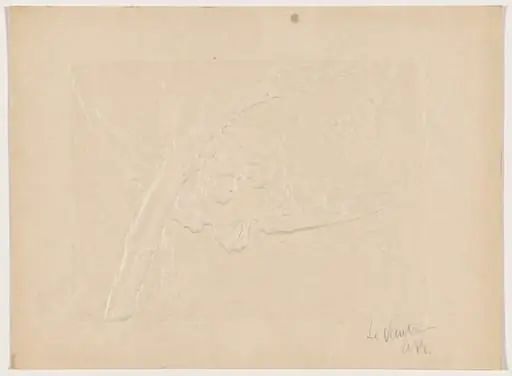
Le vautour (The Vulture) is an ink print by the Impressionist artist Aristide Rouseaud. It dates from 1895 and is held in the collection of the National Gallery of Art.
About this work
Overview
Aristide Rouseaud's Le vautour (The Vulture), dated 1895, is a print executed in cerograph, an inkless embossment technique, on heavy Japan paper. The work depicts a solitary vulture perched on a branch, characterized by its sparse, expressive rendering.
Subject & Meaning
The subject, a lone vulture, is portrayed in a state of quiet contemplation, with no overt narrative or symbolic context provided beyond its isolated presence. The bird's form, suggested through rapid, rough linework with intentional blank areas, conveys a sense of immediacy.
Technique & Style
Rouseaud employed cerograph, a rare technique involving inkless lines pressed into the paper to create a raised, tactile image. This method, combined with the sparse composition and unfinished appearance, results in a piece that feels like a rapid, intimate study.
History & Provenance
Created in 1895, specific details regarding the work's history and ownership prior to its current location are not provided.
Context
Le vautour reflects Rouseaud's affinity for bold, simple drawings, as seen in his broader oeuvre. The use of cerograph adds a unique, textured dimension to the work.
Legacy
The work's legacy is intertwined with Rouseaud's overall artistic reputation, emphasizing simplicity and expressive line work, though its specific impact within his corpus or on broader artistic trends is not detailed here.
Artist & collection

![Sketch for the Flight into Egypt [verso], by Giovanni Domenico Tiepolo](https://artifactworldgallery.com/img/giovanni-domenico-tiepolo--sketch-for-the-flight-into-egypt-verso--c1883479f90269fc-w320.webp)