Artwork
Quelques croquis
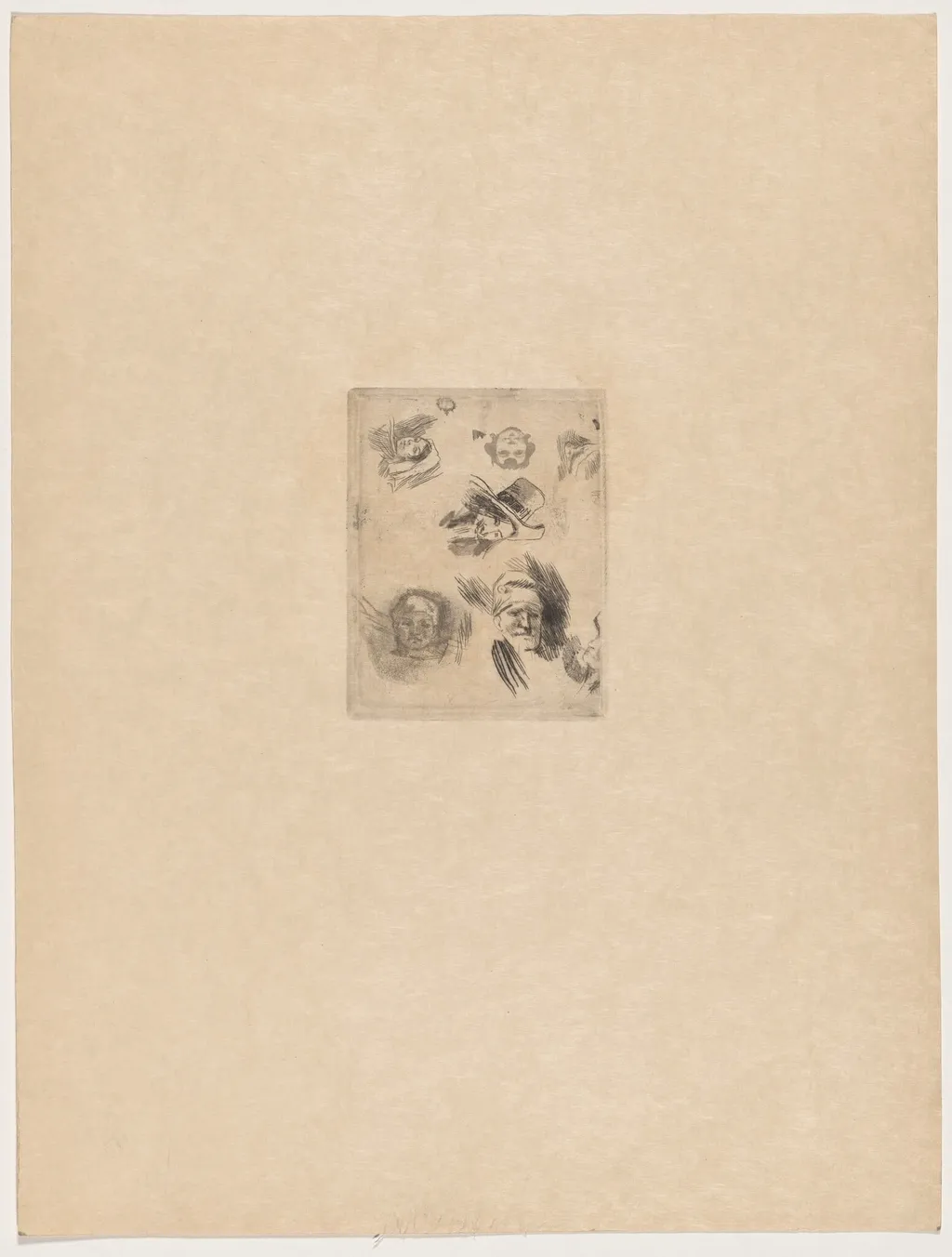
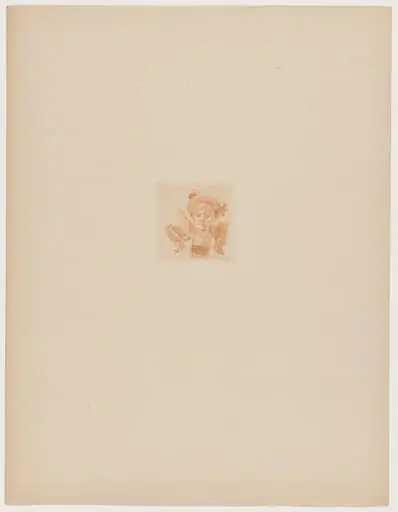
Quelques croquis is an ink print by the Impressionist artist Félicien Rops. It dates from 1895 and is held in the collection of the National Gallery of Art.
About this work
The artist used a technique that lets ink sit on top of the plate, creating soft, smudged lines.
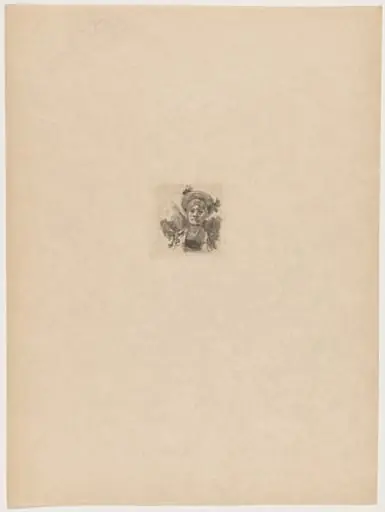
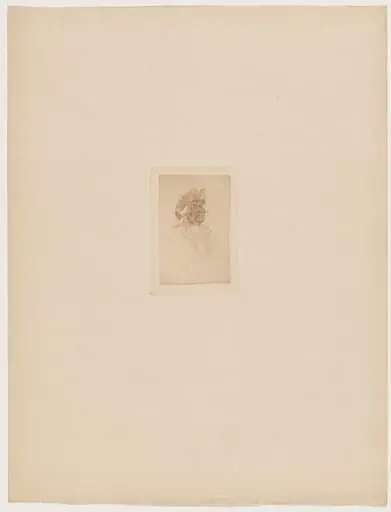
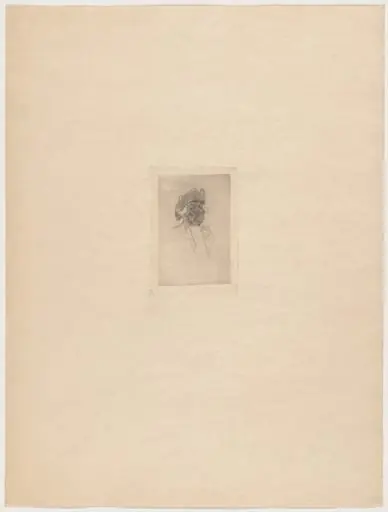
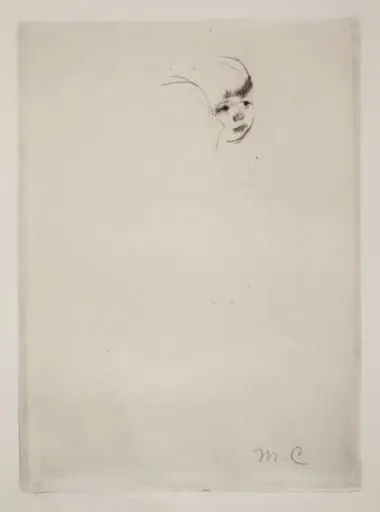
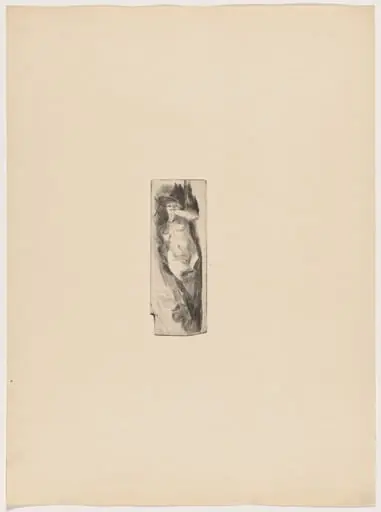
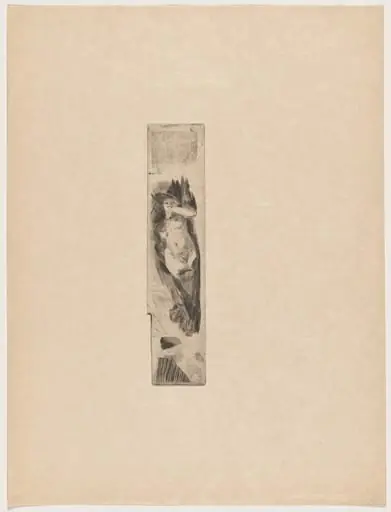
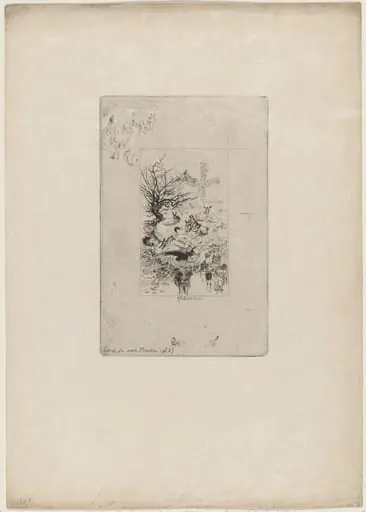
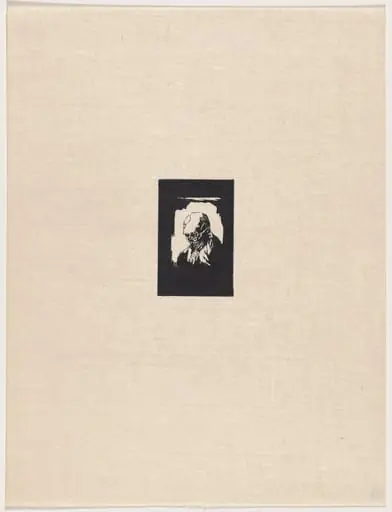
This sketch shows quick, loose drawings of three faces and a hat. The lines are rough, almost like scribbles, with some shading for shadows. The paper has a warm, off-white tone, and the whole piece feels unfinished.
The artist used a technique that lets ink sit on top of the plate, creating soft, smudged lines. This was done in 1895, when artists were playing with new ways to print images.
Next, look up etching to see how this method works.
Overview
Created in 1895, *Quelques croquis* is a small-scale print by Belgian artist Félicien Rops, executed in softground etching and drypoint on heavy Japan paper. The work belongs to a series of intimate, experimental drawings that Rops translated into print, favoring tactile immediacy over polished finish. Its modest size and raw execution reflect a private, observational mode rather than a public statement, aligning with Rops’s broader interest in the ephemeral and the personal within printmaking.
Subject & Meaning
The print depicts three loosely rendered faces and a single hat, rendered without narrative context or symbolic intent. The figures appear as fleeting impressions—perhaps studies of passersby or imagined portraits—captured in a spontaneous, almost casual manner. Their anonymity and lack of detail suggest an interest in the transient nature of human presence, consistent with Rops’s fascination with the psychological undercurrents of everyday life during the fin de siècle.
Technique & Style
Rops employed softground etching to achieve soft, blurred lines and drypoint for dense, scratchy shadows, allowing ink to pool unevenly on the paper’s surface. The heavy Japan paper, with its warm off-white tone, absorbed the ink subtly, enhancing the sketchlike quality. The resulting marks resemble rapid pencil strokes, emphasizing process over precision. This technical approach prioritized tactile immediacy and atmospheric effect, distinguishing Rops’s prints from more formal intaglio traditions.
History & Provenance
Produced in 1895, *Quelques croquis* emerged during a period when Rops was deeply engaged with literary circles in Paris and Brussels, illustrating works by Symbolist poets. Though not widely exhibited, such prints circulated among private collectors and fellow artists. The work’s survival in institutional collections suggests it was valued by contemporaries for its experimental character, even if it never entered mainstream public discourse.
Context
In the mid-1890s, European artists increasingly turned to printmaking as a space for personal exploration, rejecting academic conventions. Rops, though associated with Symbolism and Decadence, used etching to pursue informal, introspective imagery. His work intersected with contemporaries like Whistler and Degas, who also embraced the sketch as a legitimate artistic form. *Quelques croquis* reflects this broader shift toward valuing process, imperfection, and the artist’s hand in printed media.
Legacy
Though never widely reproduced or celebrated in his lifetime, Rops’s experimental prints like *Quelques croquis* have since been recognized for their influence on modern printmaking’s embrace of spontaneity. The work exemplifies how intaglio techniques could be adapted to convey immediacy rather than permanence, paving the way for later artists who prioritized expressive gesture over technical finish in graphic arts.
Artist & collection
Artist
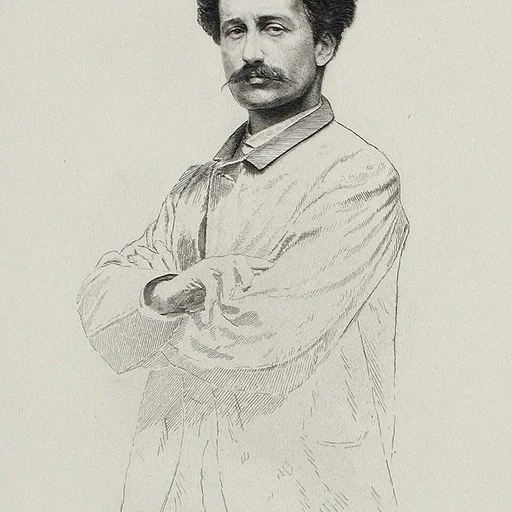
Félicien Victor Joseph Rops (French: ; 7 July 1833 – 23 August 1898) was a Belgian artist associated with Symbolism, Decadence, and the Parisian fin de siècle, and was a member of the Les XX group.