Artwork
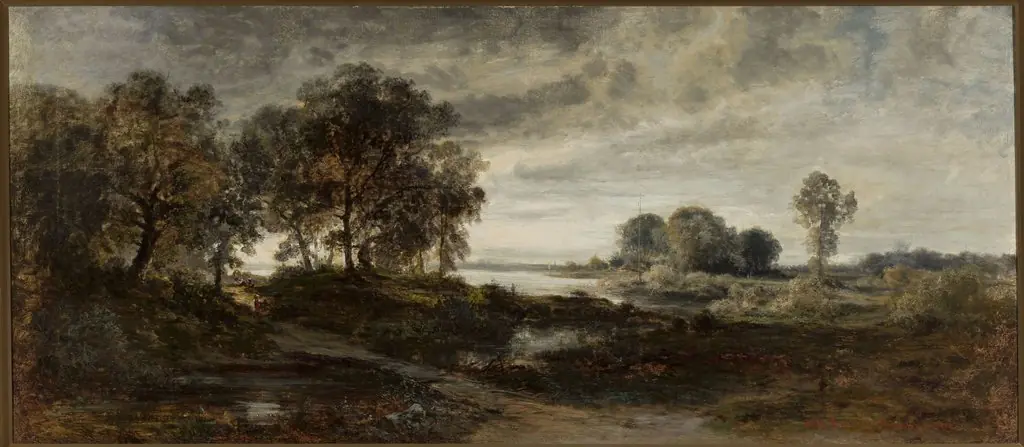
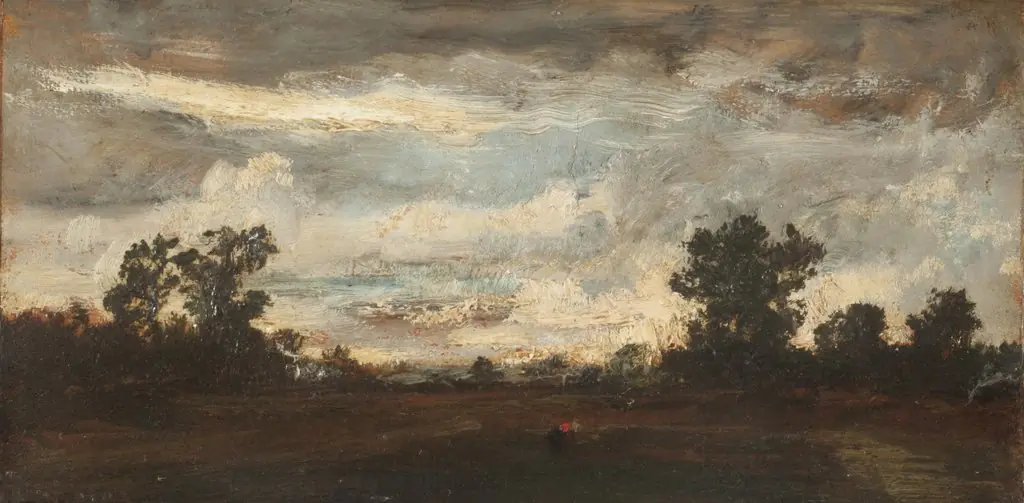
Landscape with a Stormy Sky
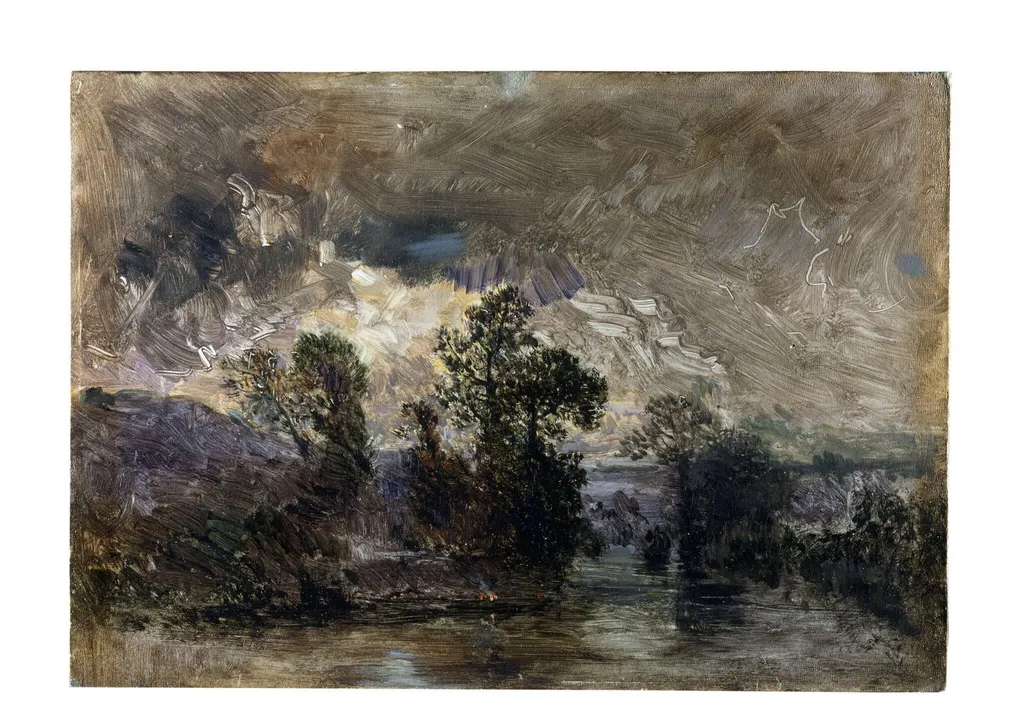
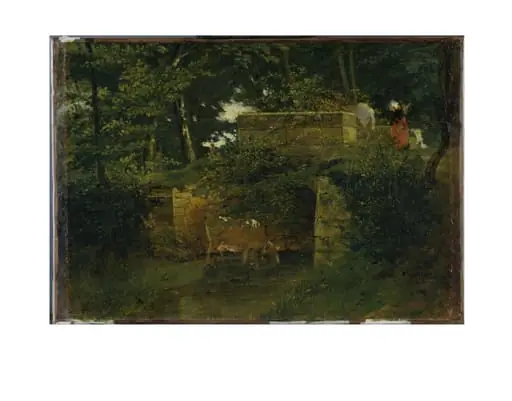
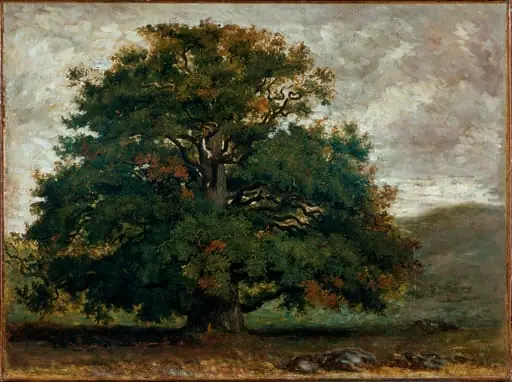
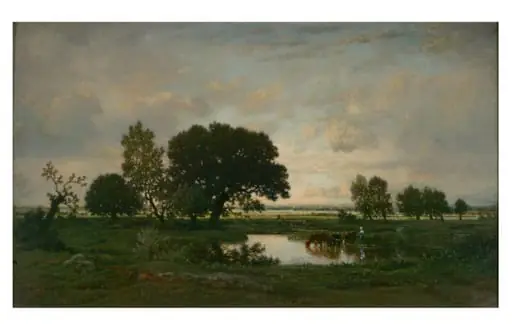
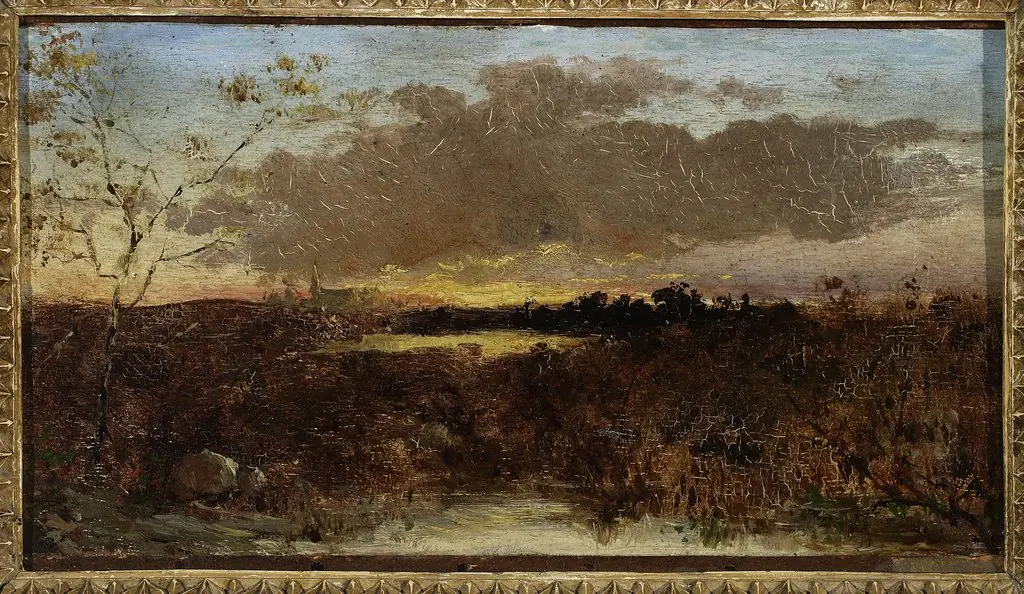
Landscape with a Stormy Sky is an oil painting by the Barbizon school artist Pierre-Etienne-Théodore Rousseau. It dates from 1842 and is held in the collection of the Victoria and Albert Museum.
About this work
Overview
Théodore Rousseau, a central figure in the Barbizon school, developed a distinctive approach to landscape painting rooted in direct observation of nature.
Théodore Rousseau, a central figure in the Barbizon school, developed a distinctive approach to landscape painting rooted in direct observation of nature. Active in the mid-19th century, he resisted academic conventions by painting outdoors, particularly in the Forest of Fontainebleau. This work, executed in oil, reflects his commitment to capturing transient atmospheric conditions, distinguishing him from contemporaries who idealized nature in studios.
Subject & Meaning
The painting depicts a vast, turbulent sky dominating a quiet, distant landscape. Tiny human figures, almost negligible in scale, emphasize nature’s overwhelming presence. The storm’s energy is not portrayed as destructive but as an intrinsic force of the natural world. Rousseau’s focus on weather as a subject reflects a philosophical shift toward nature’s autonomy, away from human-centered narratives.
Technique & Style
Rousseau applied oil paint with textured brushwork to convey the movement of wind and cloud. The composition’s vertical emphasis heightens the sky’s dominance, while subtle gradations from deep blue to pale gray suggest shifting light. Originally painted on paper and later transferred to canvas, the work reveals his experimental process and dedication to capturing immediate impressions under changing conditions.
History & Provenance
Created during the 1840s or early 1850s, this painting emerged from Rousseau’s time living near Fontainebleau, where he and fellow artists formed the Barbizon circle. Despite early rejection by the Paris Salon, his reputation grew through persistent outdoor practice and eventual official recognition. He was named Officer of the Légion d’honneur in 1867, shortly before his death, affirming his influence on French landscape painting.
Context
In an era when academic art favored idealized historical or mythological scenes, Rousseau’s focus on unembellished natural phenomena was radical. His plein air method aligned with emerging scientific interest in meteorology and environmental observation. The Barbizon artists, including Rousseau, challenged the Salon’s authority by valuing personal experience over institutional taste.
Legacy
Rousseau’s dedication to painting nature as it appeared, without romantic embellishment, paved the way for later movements like Impressionism. His emphasis on atmosphere, light, and direct observation influenced generations of landscape painters. Though his work was once dismissed, it is now recognized as foundational to modern approaches to naturalism in art.
Own this work as a print
Artist & collection
Artist
Pierre-Etienne-Théodore Rousseau
French landscape painter of the 1820s–1850s, Rousseau built mood from weather and woodland.