Artwork
Chenes de Roche (Rock Oaks)
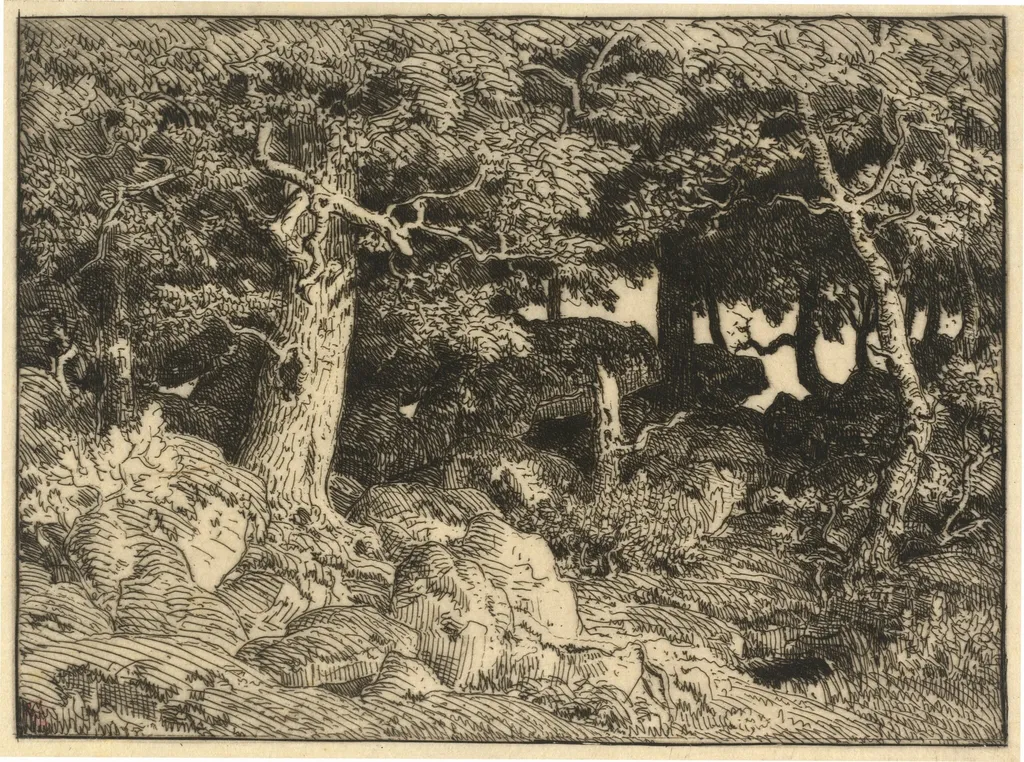
Chenes de Roche (Rock Oaks) is an ink print by the Impressionist artist Théodore Rousseau. It dates from 1861 and is held in the collection of the National Gallery of Art.
About this work
Overview
Théodore Rousseau’s 1861 print Chenes de Roche (Rock Oaks) is an etching executed on Japan pelure, a fine, translucent paper prized for its smooth surface. The work presents a dense woodland scene rendered in stark black and white, where the interplay of light and shadow emphasizes the rugged texture of bark and foliage.
Technique & Style
Rousseau employed traditional etching, incising lines into a metal plate that were then inked and pressed onto the delicate Japanese paper. The resulting marks are uneven and scratchy, producing a sense of immediacy; the high contrast between deep inked areas and the paper’s whiteness accentuates the forest’s atmospheric depth.
Subject & Meaning
The composition depicts a thicket of mature oaks, their trunks thick and interlaced with tangled underbrush. By focusing on the raw, unrefined surfaces of the trees, Rousseau conveys the enduring solidity of nature, inviting viewers to contemplate the quiet persistence of the forest environment.
History & Provenance
Created during the height of Rousseau’s involvement with the Barbizon school, the print reflects his dedication to direct observation of the French landscape. Original impressions were likely issued in limited numbers, typical of 19th‑century French printmaking, and have since entered museum collections and private holdings specializing in 19th‑century graphic art.
Artist & collection




 Mouldering Tree Trunk
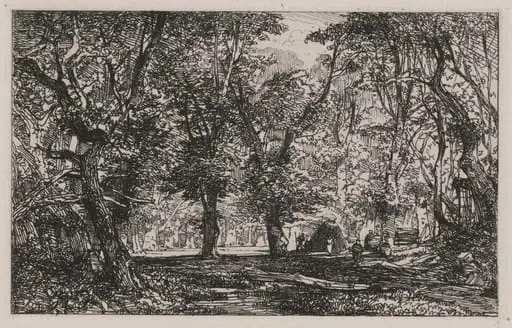 View from a Forest Stream Into a Clearing
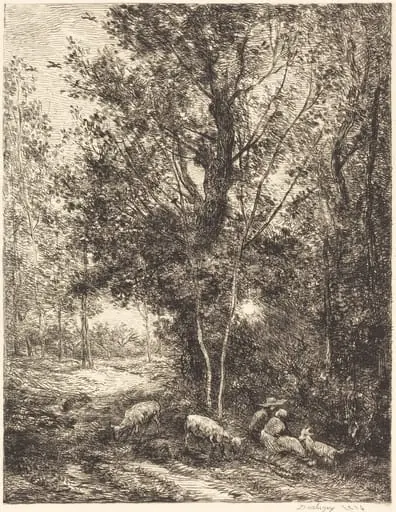 Shepherd and Shepherdess (Le Berger et la bergere)
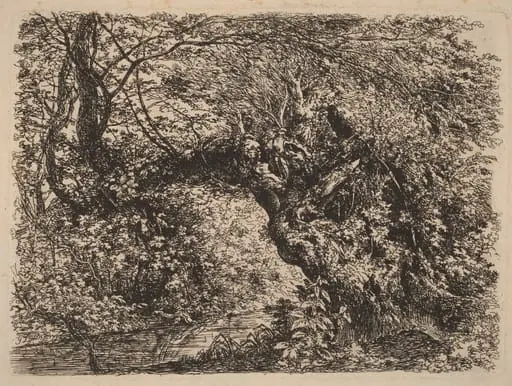 An Old Willow by a Stream
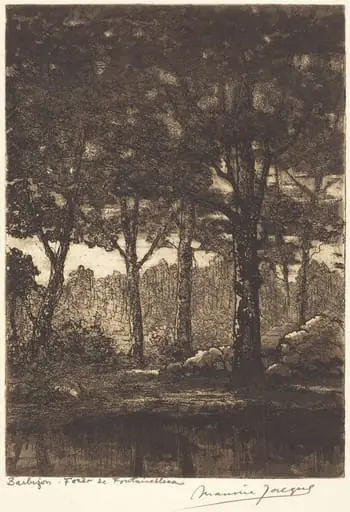 Barbizon: Foret de Fontainbleau
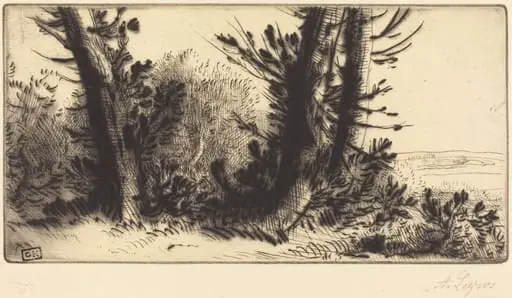 Across Country (A travers champ)
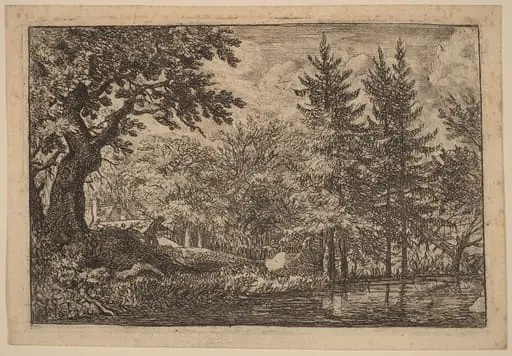 Fir Trees at the Water
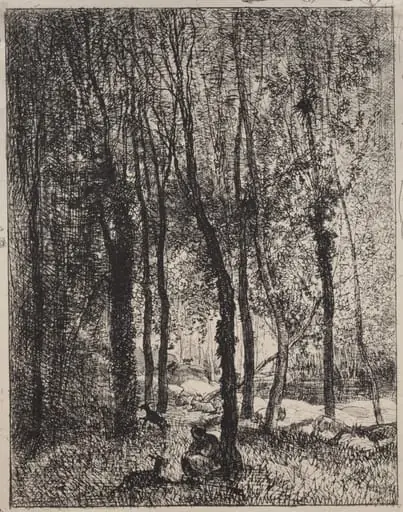 The Goatherd Girl
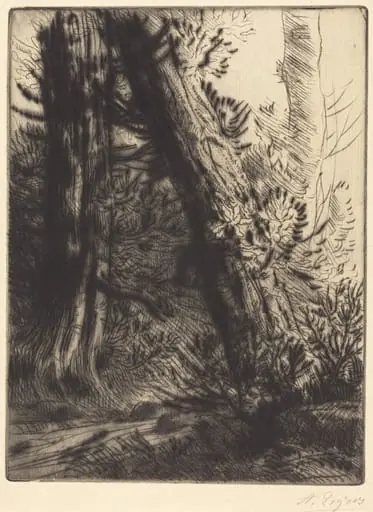 Edge of a Brook (Bord de ruisseau)
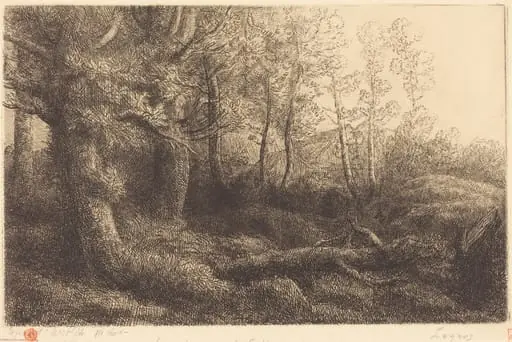 In the Forest (Lisiere de foret)
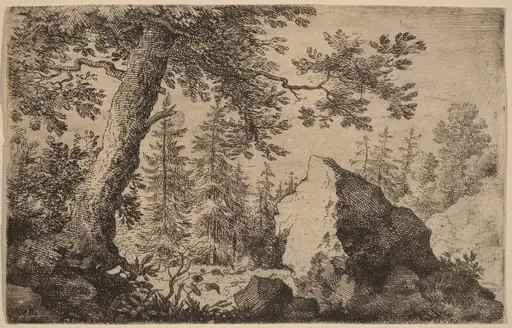 Boulder in the Woods
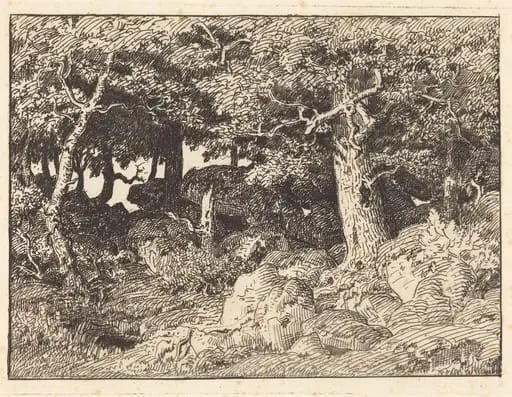 Rock Oaks