Artwork
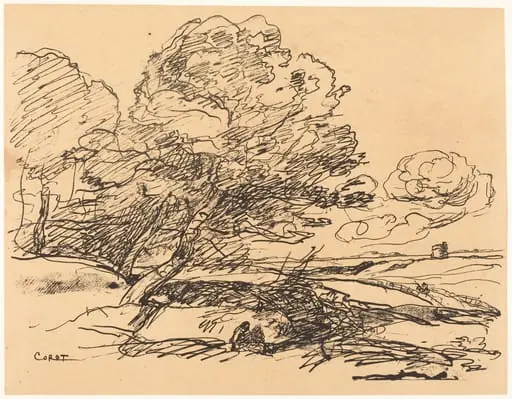
Landscape I
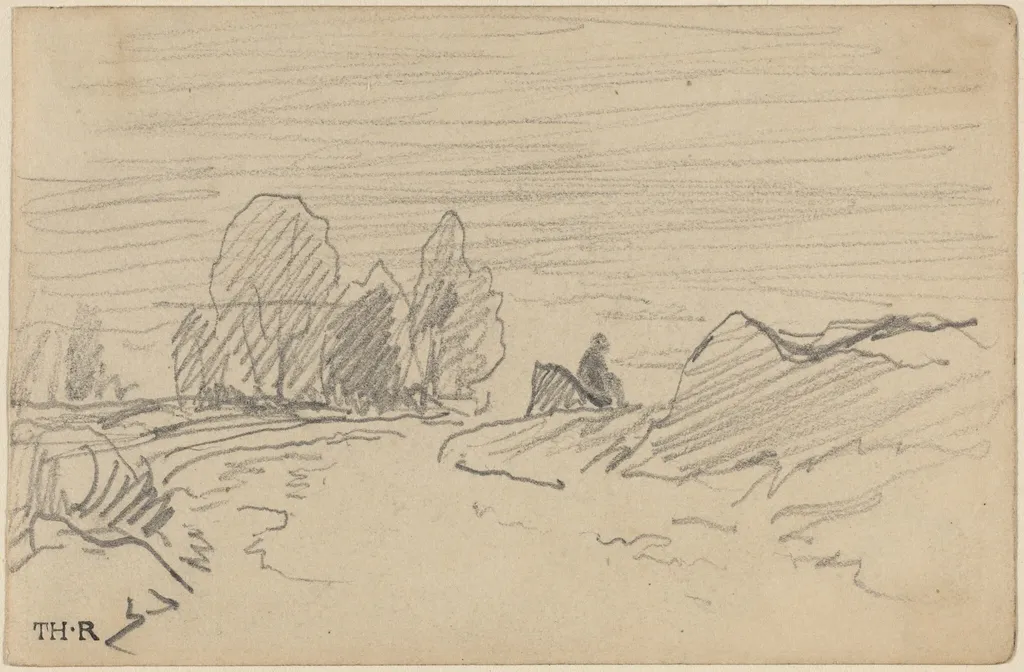
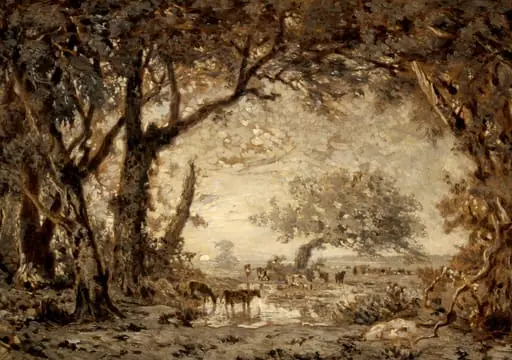
Landscape I is a graphite drawing by the Romanticist artist Théodore Rousseau. It dates from 1840 and is held in the collection of the National Gallery of Art.
About this work
Overview
The work titled Landscape I is a graphite drawing executed on wove paper by French painter Théodore Rousseau in 1840. As a single-sheet study, it captures a tranquil outdoor scene through the artist’s hand‑drawn marks, offering a glimpse into his early landscape practice during the Romantic period.
Subject & Meaning
The composition depicts a quiet countryside view where a modest cluster of trees recedes into the distance. The sparse arrangement and subdued atmosphere evoke a sense of stillness, encouraging contemplation of nature’s calm and the fleeting qualities of light and space.
Technique & Style
Rousseau employed graphite to render delicate lines and soft shading, allowing tonal transitions that suggest depth without harsh contrast. The texture of the wove paper remains visible in the foreground, adding a tactile dimension that enhances the drawing’s gentle, dream‑like quality while reflecting the artist’s precise yet expressive hand.
History & Provenance
Created in 1840, the drawing belongs to Rousseau’s early output before his mature forest scenes. Its provenance traces back to private collections before entering the museum’s holdings, where it serves as an example of the artist’s preparatory work and his contribution to the Romantic landscape tradition.
Artist & collection


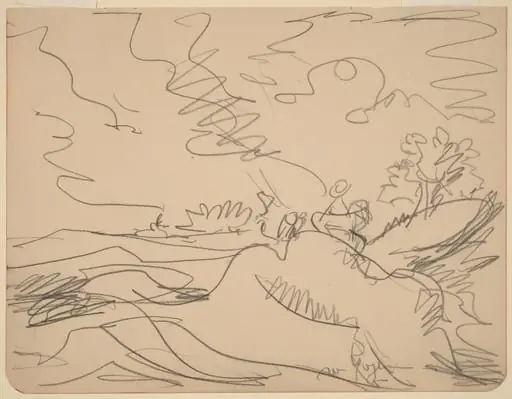 Landscape in the Taunus
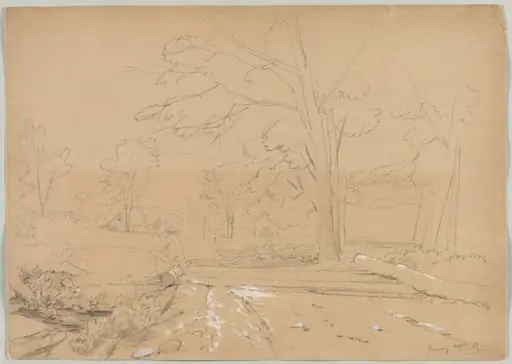 Landscape with Man Fishing, Conway, New Hampshire
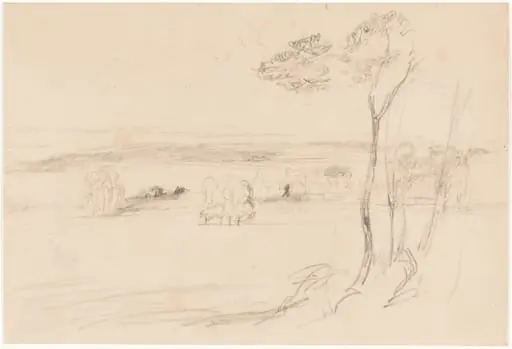 Trouville-sur-Mer
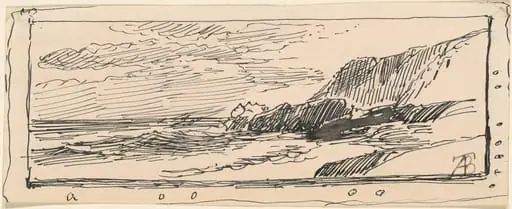 Rocky Coast
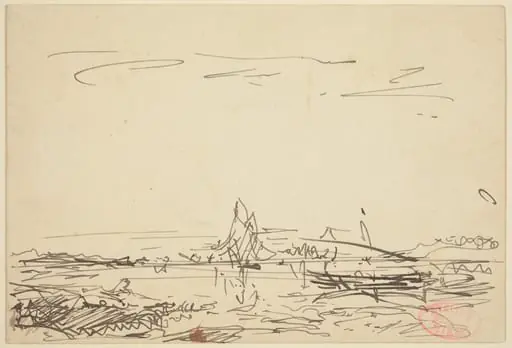 A Cove with a Sailboat
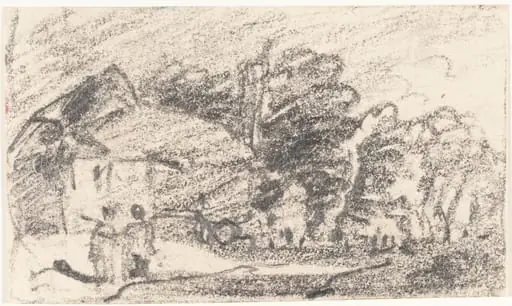 Two Figures on a Country Road
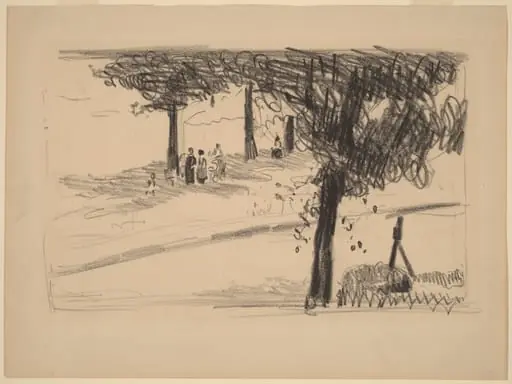 Under the Trees
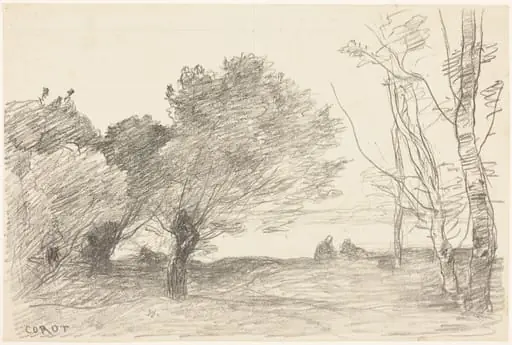 Willows and White Poplars (Saules et peupliers blancs)
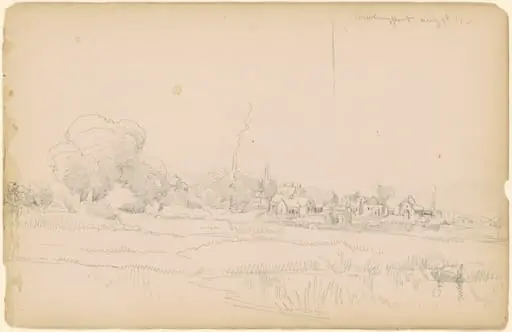 Newburyport
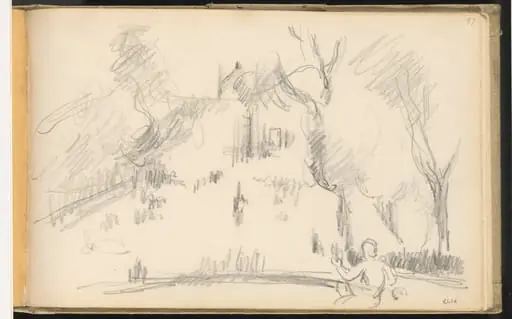 House in a Park
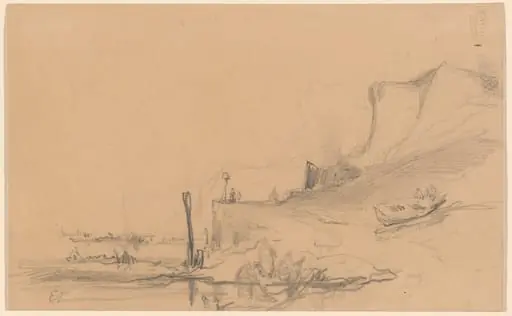 A Coast Road with Cliffs in the North of France
 The Lonely Tower (La Tour isolee)