Artwork
Landscape in the Taunus
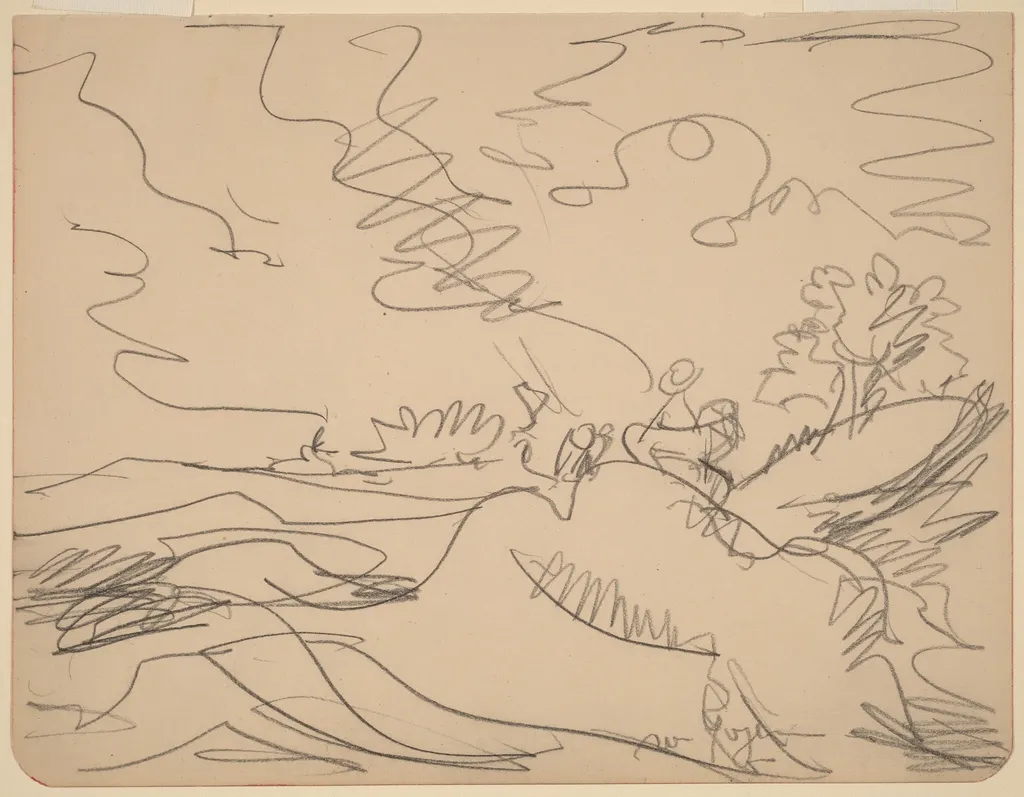
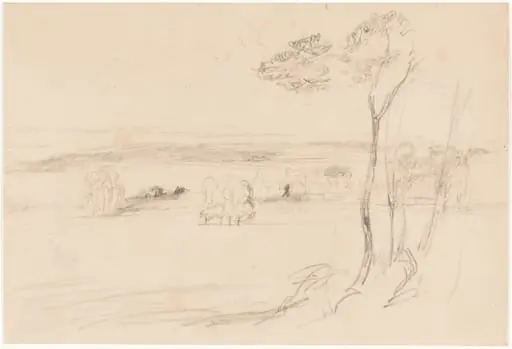
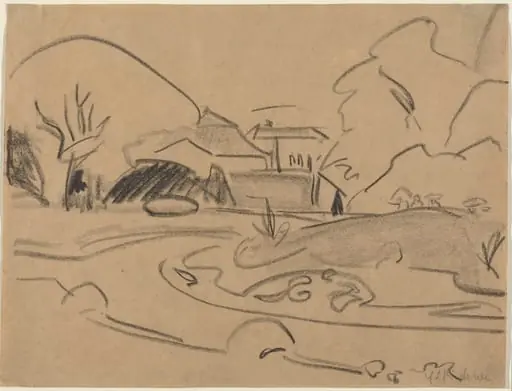
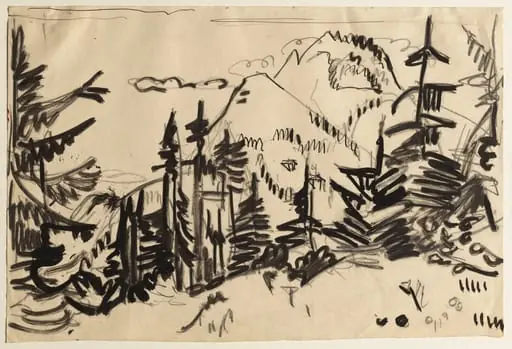
Landscape in the Taunus is a graphite drawing by Ernst Ludwig Kirchner. It dates from 1916 and is held in the collection of the National Gallery of Art.
About this work
Overview
Created in 1916, *Landscape in the Taunus* is a graphite drawing on wove paper by Ernst Ludwig Kirchner, a founding member of the German Expressionist group Die Brücke. The work exemplifies the movement’s emphasis on subjective feeling over realistic depiction, presenting a stylised view of a rural setting in the Taunus region.
Subject & Meaning
The composition suggests a countryside scene of hills, trees and possible pathways, rendered in a tangled, rhythmic arrangement. Rather than documenting a specific vista, Kirchner’s lines convey the atmosphere and emotional resonance of the landscape, inviting viewers to sense the terrain’s vitality rather than its precise geography.
Technique & Style
Executed with graphite, the drawing employs loose, wavering strokes that vary from faint to densely shaded areas. Kirchner abandons conventional perspective, allowing forms to interlock and overlap in a dynamic, almost kinetic manner. The sketch‑like quality reflects a rapid, gestural approach typical of his expressive line work.
History & Provenance
The piece belongs to Kirchner’s wartime output, a period when he turned increasingly to drawing as a means of immediate expression. Though specific ownership details are limited, the work is catalogued among his early 20th‑century drawings and is held in public collections that document the evolution of Die Brücke’s aesthetic.
Artist & collection
Artist
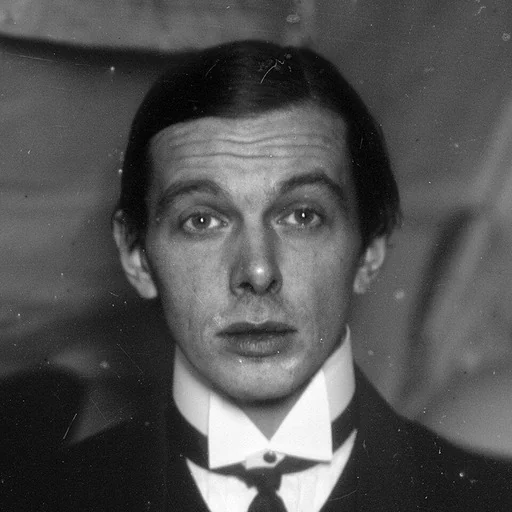
Ernst Ludwig Kirchner (6 May 1880 – 15 June 1938) was a German expressionist painter and printmaker.

![Dance Hall Bellevue [obverse], by Ernst Ludwig Kirchner](https://artifactworldgallery.com/img/ernst-ludwig-kirchner--dance-hall-bellevue-obverse--d1e14aac4297c69e-w320.webp)
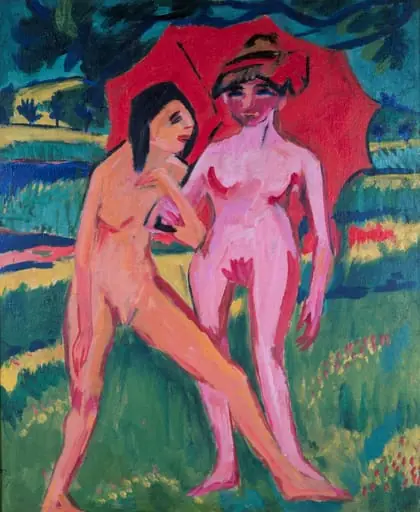
![Nude Figure [reverse], by Ernst Ludwig Kirchner](https://artifactworldgallery.com/img/ernst-ludwig-kirchner--nude-figure-reverse--4b135f0364753e98-w320.webp)
![Two Nudes [obverse], by Ernst Ludwig Kirchner](https://artifactworldgallery.com/img/ernst-ludwig-kirchner--two-nudes-obverse--eb3914183f0bc96d-w320.webp)
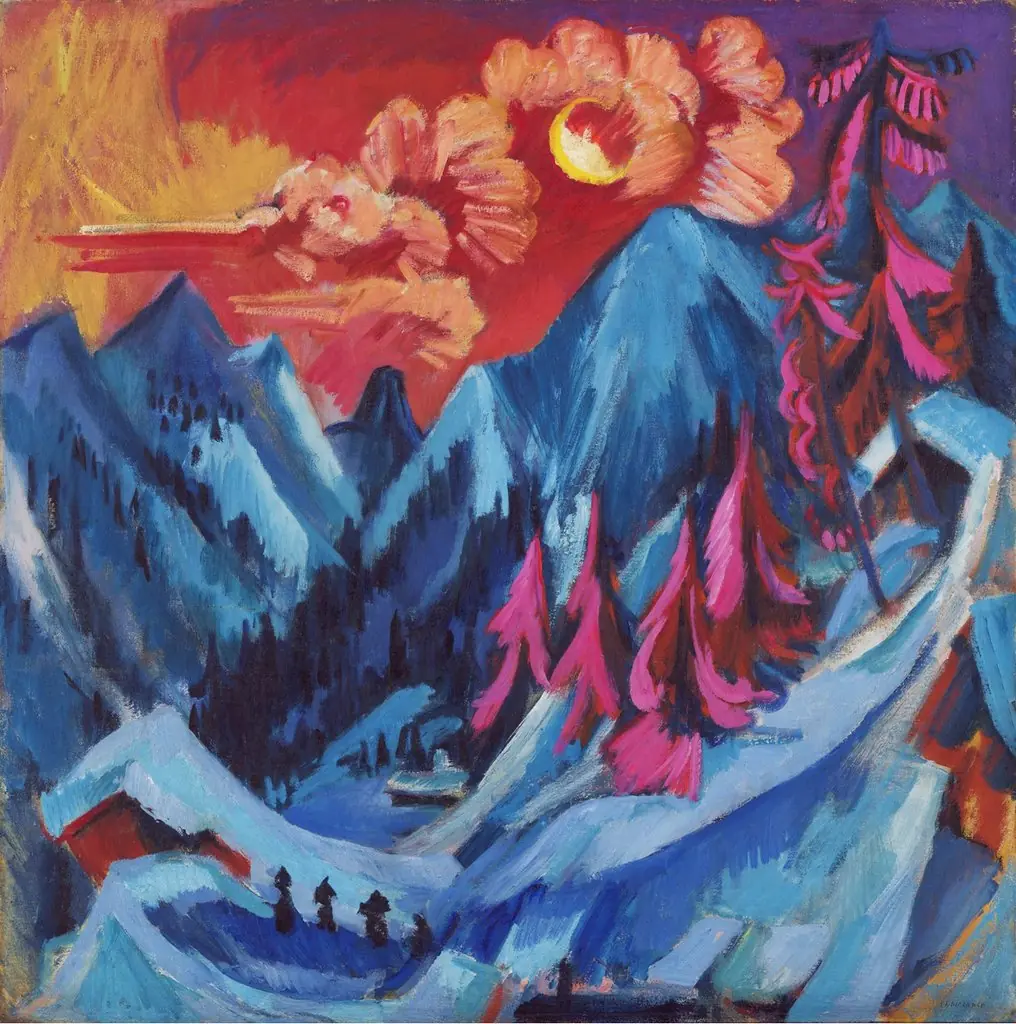
![Dancing Couple in the Snow [reverse], by Ernst Ludwig Kirchner](https://artifactworldgallery.com/img/ernst-ludwig-kirchner--dancing-couple-in-the-snow-reverse--87ca007d7c05b553-w320.webp)