Artwork
H Beard Print Collection
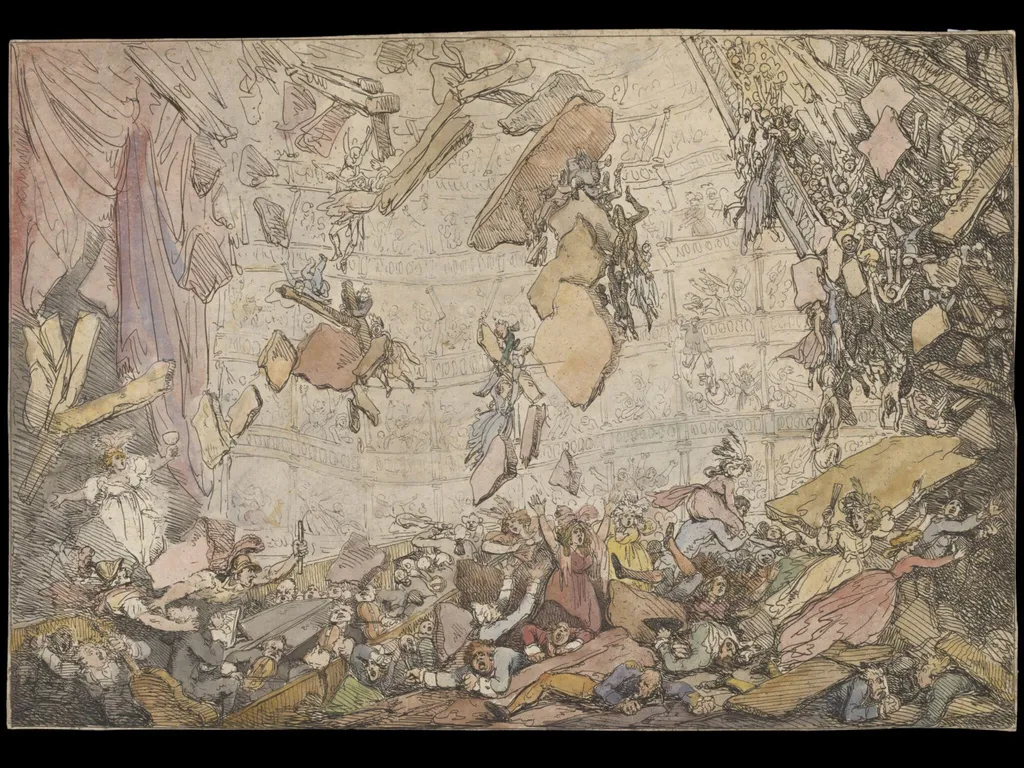
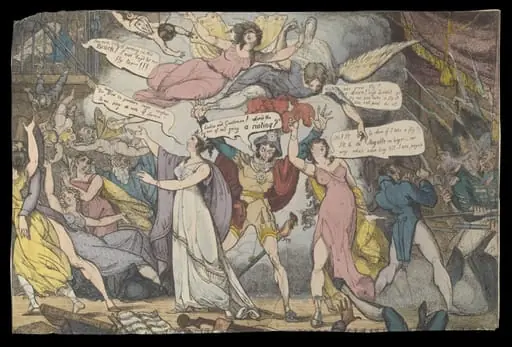
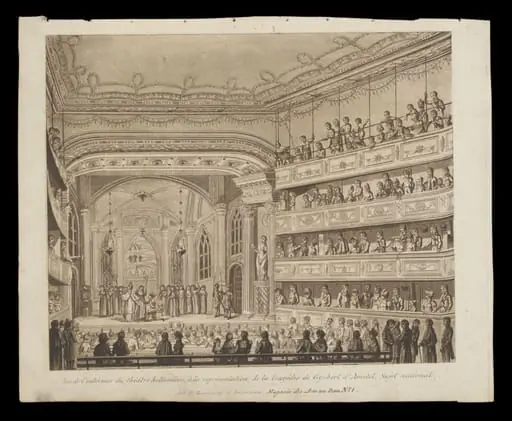
H Beard Print Collection is a print by the Romanticist artist Thomas Rowlandson. It dates from 4 and is held in the collection of the Victoria and Albert Museum. This print depicts the interior of Drury Lane Theatre in the midst of structural collapse during a live performance.
About this work
The print is a satire on the demolition of the theatre for rebuilding, which happened after the last performance in 1791.
The painting shows the interior of Drury Lane Theatre collapsing during a performance.
It's a chaotic scene with people running and debris falling.
The print is a satire on the demolition of the theatre for rebuilding, which happened after the last performance in 1791.
The artist made this print to comment on the change.
You can learn more about this style by looking at the work of artist: Rowlandson, Thomas.
Overview
This print depicts the interior of Drury Lane Theatre in the midst of structural collapse during a live performance. Created as a satirical commentary, it imagines the building’s destruction before the actual demolition in 1791. Published by S.W. Fores in London, it blends theatrical chaos with architectural decay, using exaggeration to critique the impending loss of a cultural landmark.
Subject & Meaning
The scene portrays actors, audience members, and stagehands fleeing as beams and plaster fall around them. The title, 'Chaos Is Come Again,' alludes to Shakespearean disorder, framing the theatre’s demolition as a dramatic collapse of tradition. Rather than mourning the loss, the print mocks the spectacle of progress, suggesting that the new building might not honor the old one’s cultural weight.
Technique & Style
Executed in the tradition of late 18th-century British caricature, the print uses exaggerated figures, dynamic lines, and dense composition to heighten the sense of disorder. Details like flailing limbs and tumbling props are rendered with sharp, incisive etching, typical of the period’s satirical prints. The style echoes the work of Thomas Rowlandson, known for his witty, socially observant engravings.
History & Provenance
The print was issued in 1791 by S.W. Fores, a prominent London publisher of political and theatrical satires. It appeared shortly before the final performance at the old Drury Lane Theatre on June 4 of that year, when the building was slated for demolition to make way for a larger, modernized structure. Its timing suggests it was intended as both a memento and a critique of urban renewal.
Context
In the late 18th century, London’s theatre district underwent rapid modernization. Drury Lane, once the heart of British drama, was being replaced to accommodate growing audiences and newer stage technologies. This print reflects public ambivalence—admiration for progress tempered by nostalgia for the intimate, ornate spaces of the past.
Legacy
The print survives as a visual record of shifting attitudes toward cultural heritage in an era of industrial change. Though not widely reproduced today, it remains a key example of how satire was used to engage with architectural transformation. Its imagery continues to inform historical interpretations of how societies negotiate loss in the name of progress.
Artist & collection
Artist
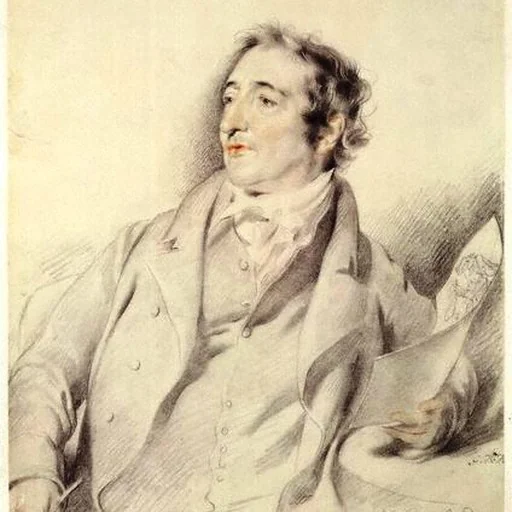
Thomas Rowlandson (; 13 July 1757 – 21 April 1827) was an English artist and caricaturist of the Georgian Era, noted for his political satire and social observation.