Artwork
The Peep Show
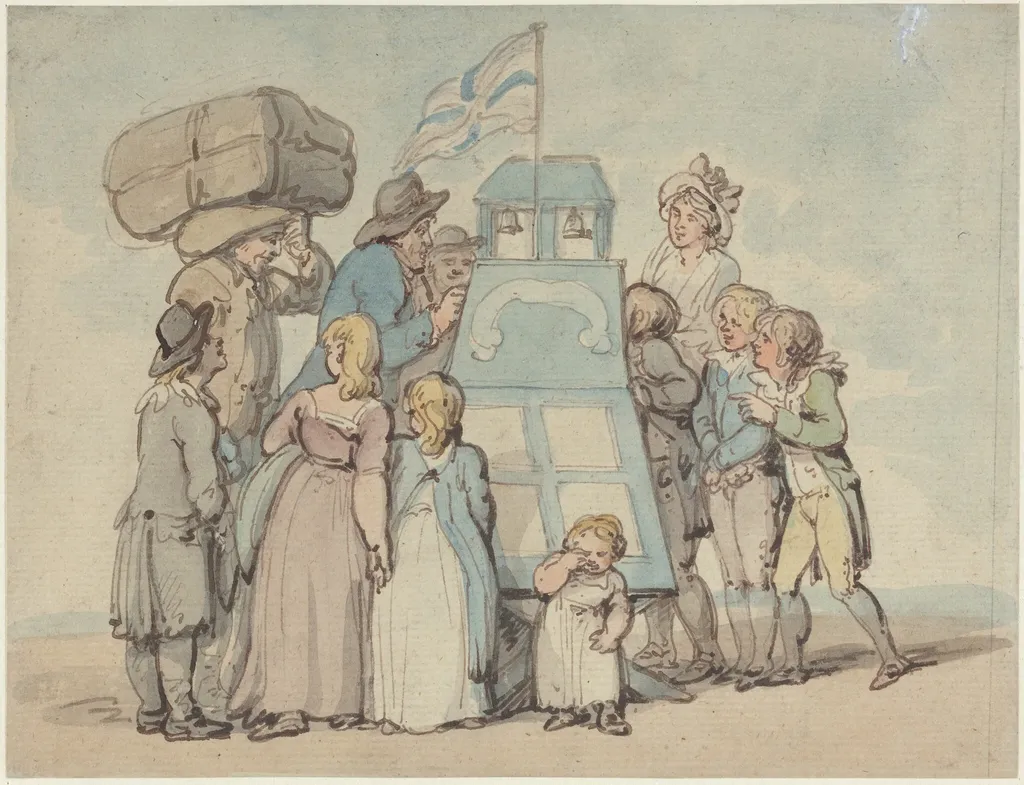
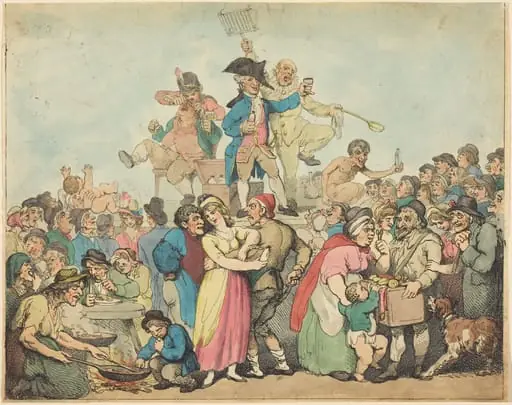
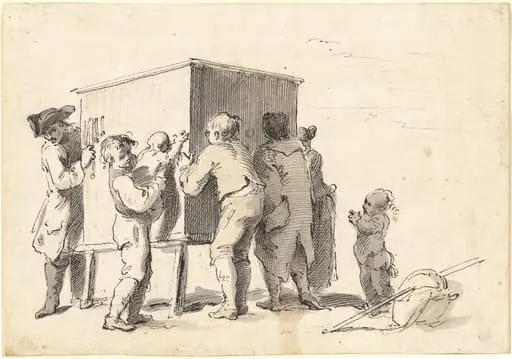
The Peep Show is an ink drawing by the Romanticist artist Thomas Rowlandson. It dates from 1792 and is held in the collection of the National Gallery of Art.
About this work
Overview
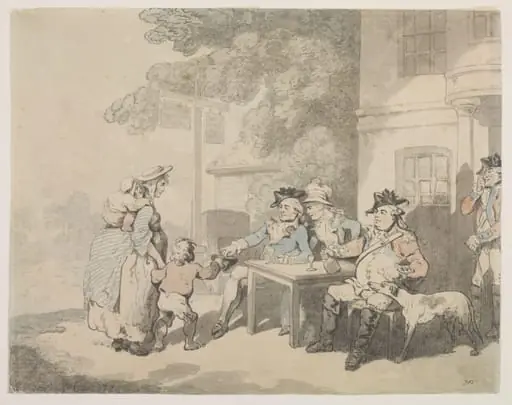
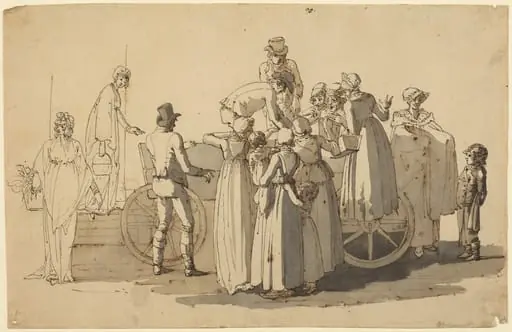
The Peep Show is a drawing by Thomas Rowlandson, created in 1792 using pen and brown ink, watercolor, and graphite on laid paper. It depicts a lively scene of people gathered around a peep show box.
Subject & Meaning
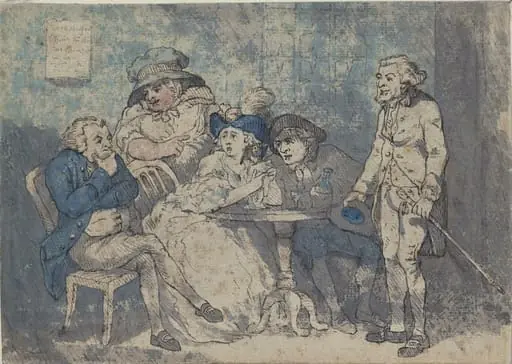
The drawing captures a moment of public entertainment, with a diverse crowd of all ages leaning in to view the peep show's contents. The scene conveys a sense of communal curiosity and everyday life in Georgian England, with subtle social commentary characteristic of Rowlandson's work.
Technique & Style
Rowlandson employed loose, quick lines to convey movement and energy, blending humor with sharp observation. The mix of media—pen, ink, watercolor, and graphite—adds depth and vibrancy to the narrative-driven illustration.
History & Provenance
Created in 1792, The Peep Show exemplifies Rowlandson's Georgian Era caricatures, which often targeted power figures and societal norms with witty, detailed imagery. Provenance details are not specified in available information.
Context
As a work by a prominent English caricaturist, The Peep Show reflects the societal satire and observational humor prevalent in late 18th-century British art, capturing the essence of public life and entertainment.
Legacy
The Peep Show contributes to Rowlandson's legacy as a keen observer of Georgian society, influencing subsequent caricaturists and satirists with its blend of wit, detail, and commentary on everyday life.
Artist & collection
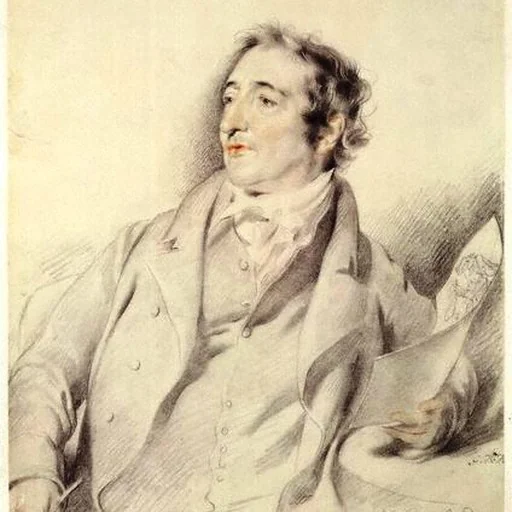
Artist
Thomas Rowlandson (; 13 July 1757 – 21 April 1827) was an English artist and caricaturist of the Georgian Era, noted for his political satire and social observation.