Artwork
Drovers with a Pair of Rearing Horses
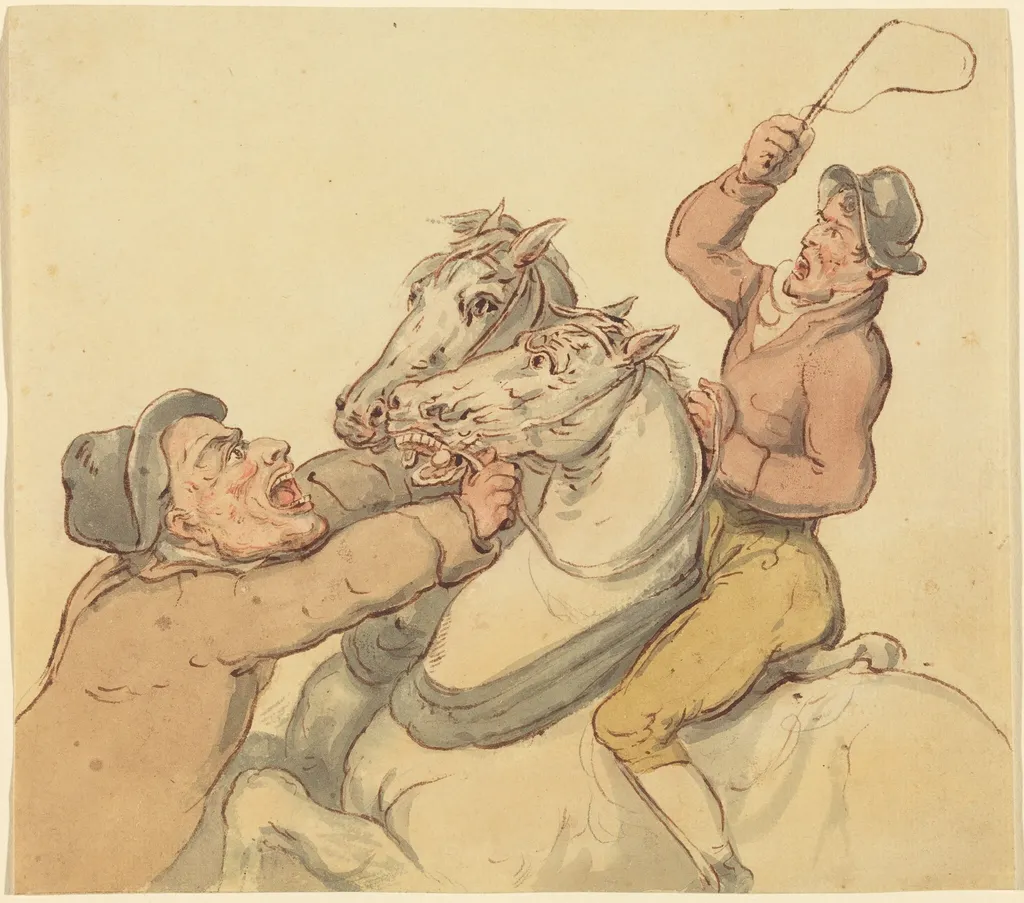
Drovers with a Pair of Rearing Horses is an ink drawing by the Romanticist artist Thomas Rowlandson. It dates from 1792 and is held in the collection of the National Gallery of Art.
About this work
Overview
Drovers with a Pair of Rearing Horses is a drawing by Thomas Rowlandson, created in 1792 using pen, brown ink, watercolor, and graphite on laid paper. Characteristic of the artist's style, it captures a dynamic scene with expressive figures.
Subject & Meaning
The drawing depicts a dramatic moment with two powerful horses rearing up, their muscles tense, as a drover in a tricorn hat struggles to maintain control of the reins. The subject reflects Rowlandson's penchant for capturing everyday life with a potential hint of satire or observation on the challenges of animal handling.
Technique & Style
Rowlandson executed the work with quick, expressive strokes, indicative of his rapid working style. The combination of pen, brown ink, and graphite provides detailed underpinnings, while watercolor glazing adds a glossy, shining effect to the horses' coats, enhancing their vitality.
History & Provenance
Created in 1792, this piece aligns with Rowlandson's period of prolific production of illustrations for novels and humorous books, though its specific commission or publication context is not detailed here.
Context
As part of Rowlandson's oeuvre, the drawing sits within the broader context of Georgian Era art, reflecting the artist's dual role in political satire and social observation, often through robust or humorous scenes.
Legacy
While not individually highlighted as a landmark work, *Drovers with a Pair of Rearing Horses* contributes to Rowlandson's legacy as a master of capturing dynamic, everyday scenes with a touch of satire, influencing subsequent generations of caricaturists and illustrators.
Artist & collection
Artist
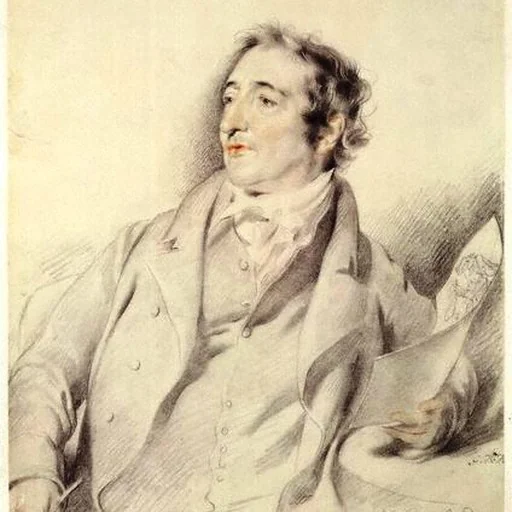
Thomas Rowlandson (; 13 July 1757 – 21 April 1827) was an English artist and caricaturist of the Georgian Era, noted for his political satire and social observation.

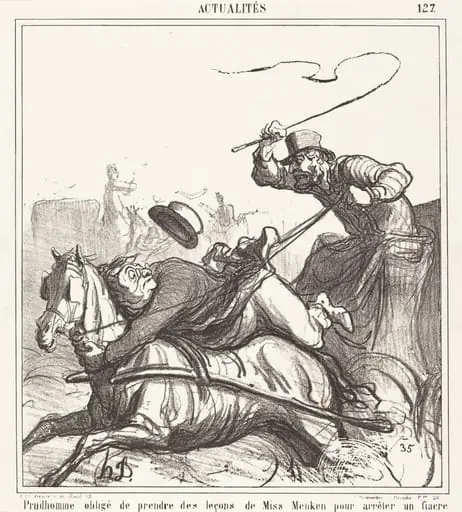 Prudhomme obligé de prendre des leçons...
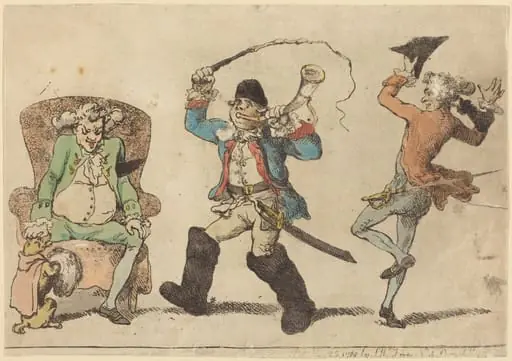 A Frenchman in November
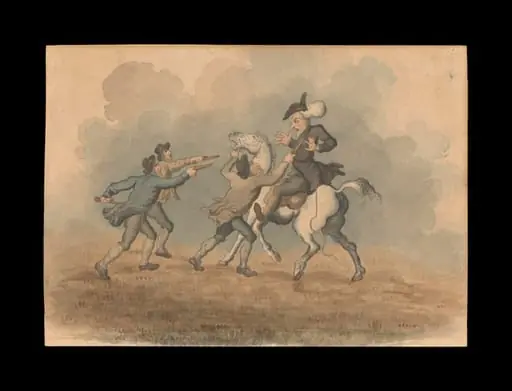 Dr Syntax Stopped by Highwaymen
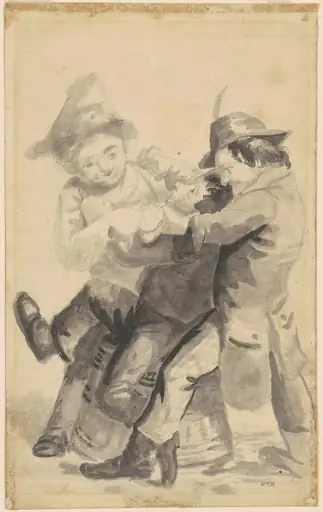 Tooth Extraction
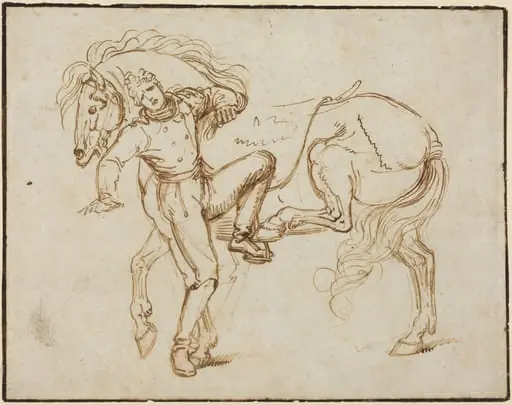 Cavalryman Mounting a Horse
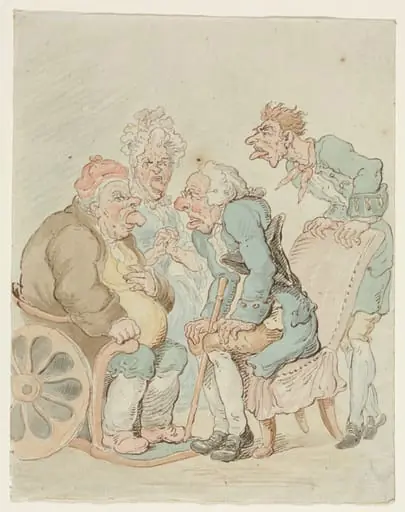 Doctor
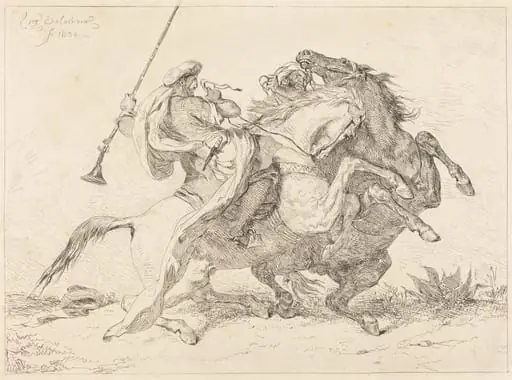 Encounter of the Moorish Horsemen (Rencontre de Cavaliers Maures)
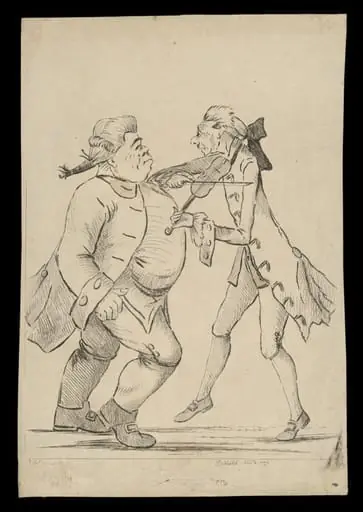 H Beard Print Collection
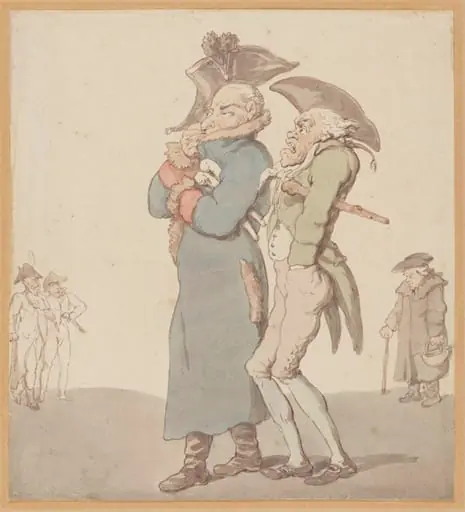 Duellists
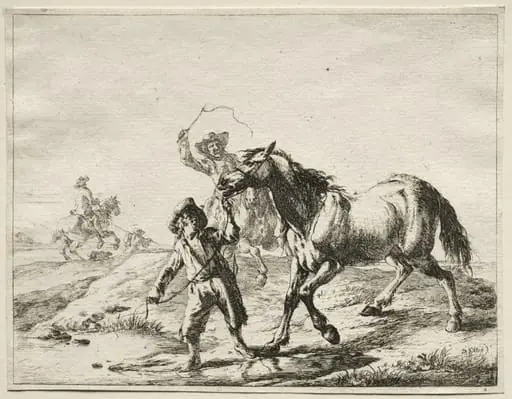 A boy taking a horse to drink
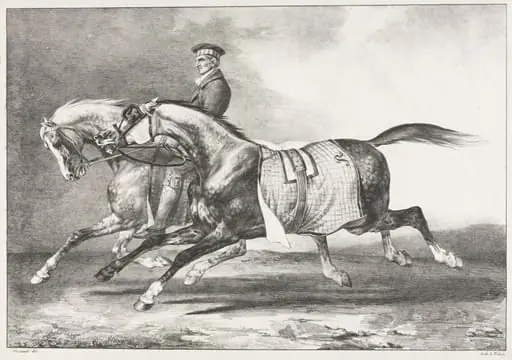 Two Dappled Horses Exercising