Artwork
Untitled
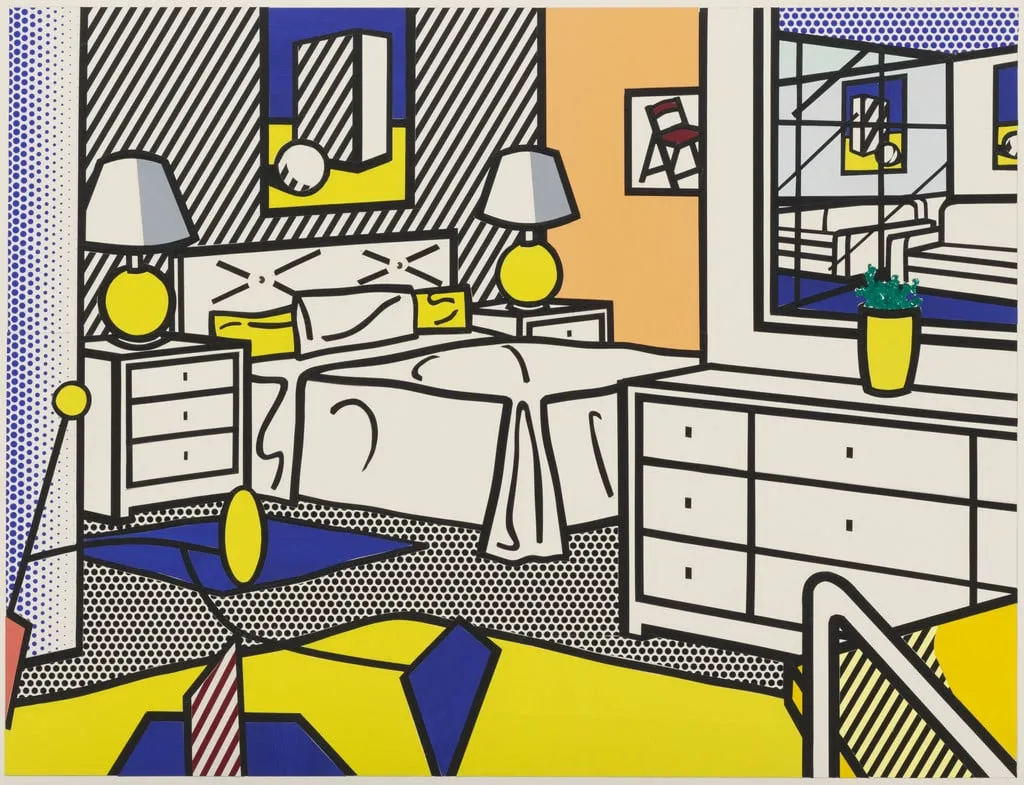
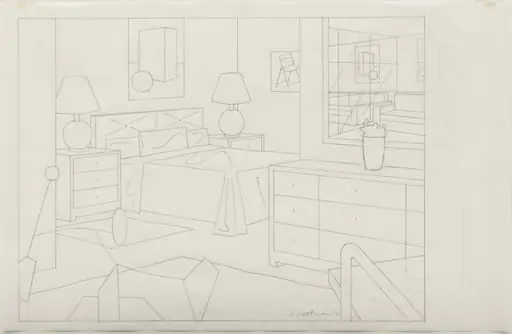
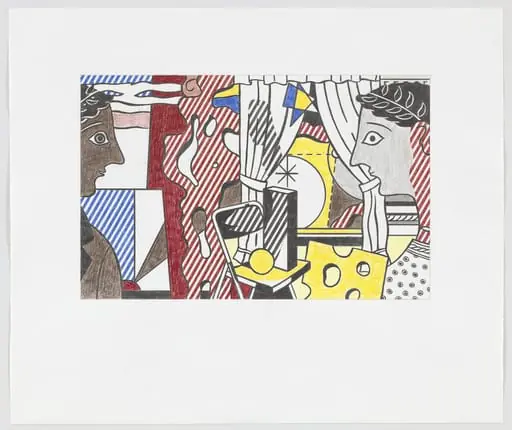
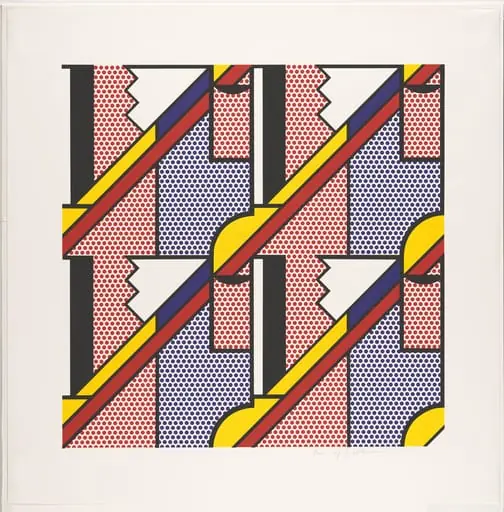
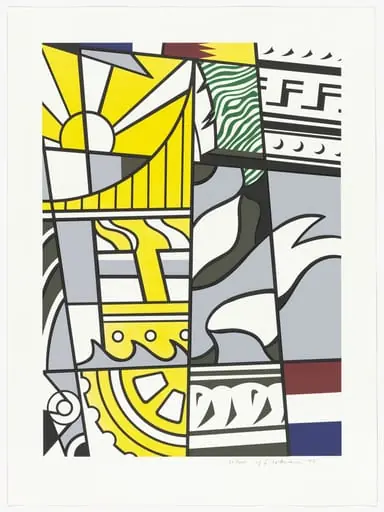
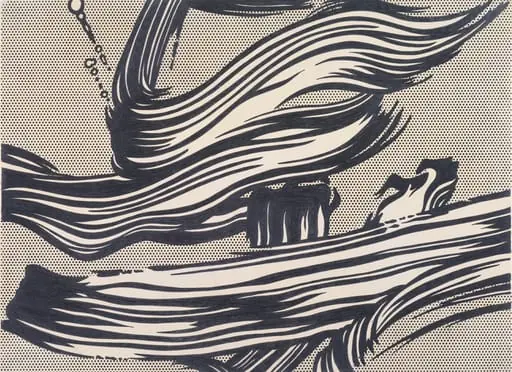
Untitled is a paint drawing by Roy Lichtenstein. It dates from 1992 and is held in the collection of the Museum of Modern Art.
About this work
Overview
Though often associated with his painted compositions, this piece relies on industrial materials to achieve its precise, mechanical appearance.
Created in 1992, this work by Roy Lichtenstein is a drawing composed of adhesive tape and painted or printed paper mounted on board. Though often associated with his painted compositions, this piece relies on industrial materials to achieve its precise, mechanical appearance. It is part of the collection at The Museum of Modern Art, reflecting the artist’s continued engagement with graphic conventions in the final decade of his career.
Subject & Meaning
The scene depicts a sparse interior—a bed centered between two nightstands, a dresser in the background, and a window framing a secondary space with a chair and plant. The arrangement suggests domestic quietude, yet the stylized geometry and absence of human presence evoke detachment. The room becomes a diagram of modern living, stripped of narrative and rendered as a structured composition of forms.
Technique & Style
Lichtenstein employed tape and pre-painted paper to construct clean, hard-edged shapes without brushwork. Colors are flat and unmodulated; lines are sharp and uniform. Patterns on walls and floors mimic commercial printing techniques, echoing comic strip aesthetics. The result is an impersonal precision that contrasts with traditional notions of artistic handcraft, emphasizing reproduction over expression.
History & Provenance
This work was made in 1992, near the end of Lichtenstein’s life, during a period when he revisited interior themes with renewed formal rigor. It entered The Museum of Modern Art’s collection shortly after its creation, recognized as part of his late exploration of domestic space and graphic systems. Its materials reflect his longstanding interest in mechanical reproduction as both subject and method.
Context
Lichtenstein’s use of tape and printed paper aligns with his broader critique of mass-produced imagery. In the 1990s, he increasingly turned to interiors and abstracted environments, distancing himself from his earlier comic sources while retaining their visual language. This piece continues his dialogue with advertising, design, and the aesthetics of reproduction in postwar American culture.
Legacy
The work exemplifies Lichtenstein’s enduring influence on how drawing and print are understood in contemporary art. By rejecting brushwork in favor of fabricated surfaces, he challenged hierarchies between fine art and commercial design. His late pieces like this one remain touchstones for artists examining the intersection of technique, reproduction, and visual culture.
Artist & collection
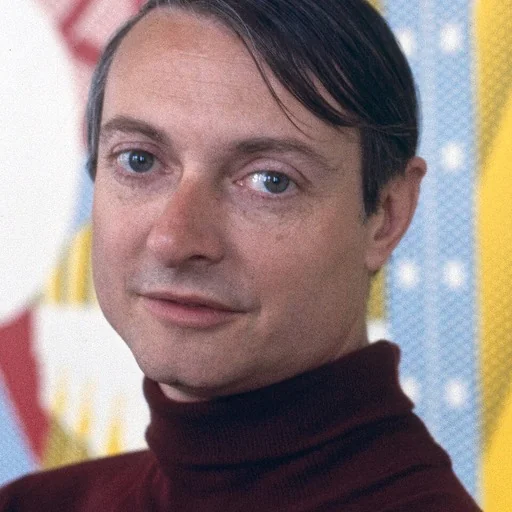
Artist
Roy Fox Lichtenstein was an American artist. A leading figure of the Pop Art movement, he is best known for his large-scale paintings inspired by comic books, advertisements, and mass-produced imagery. Lichtenstein's…