Artwork
Kreuzigung Christi
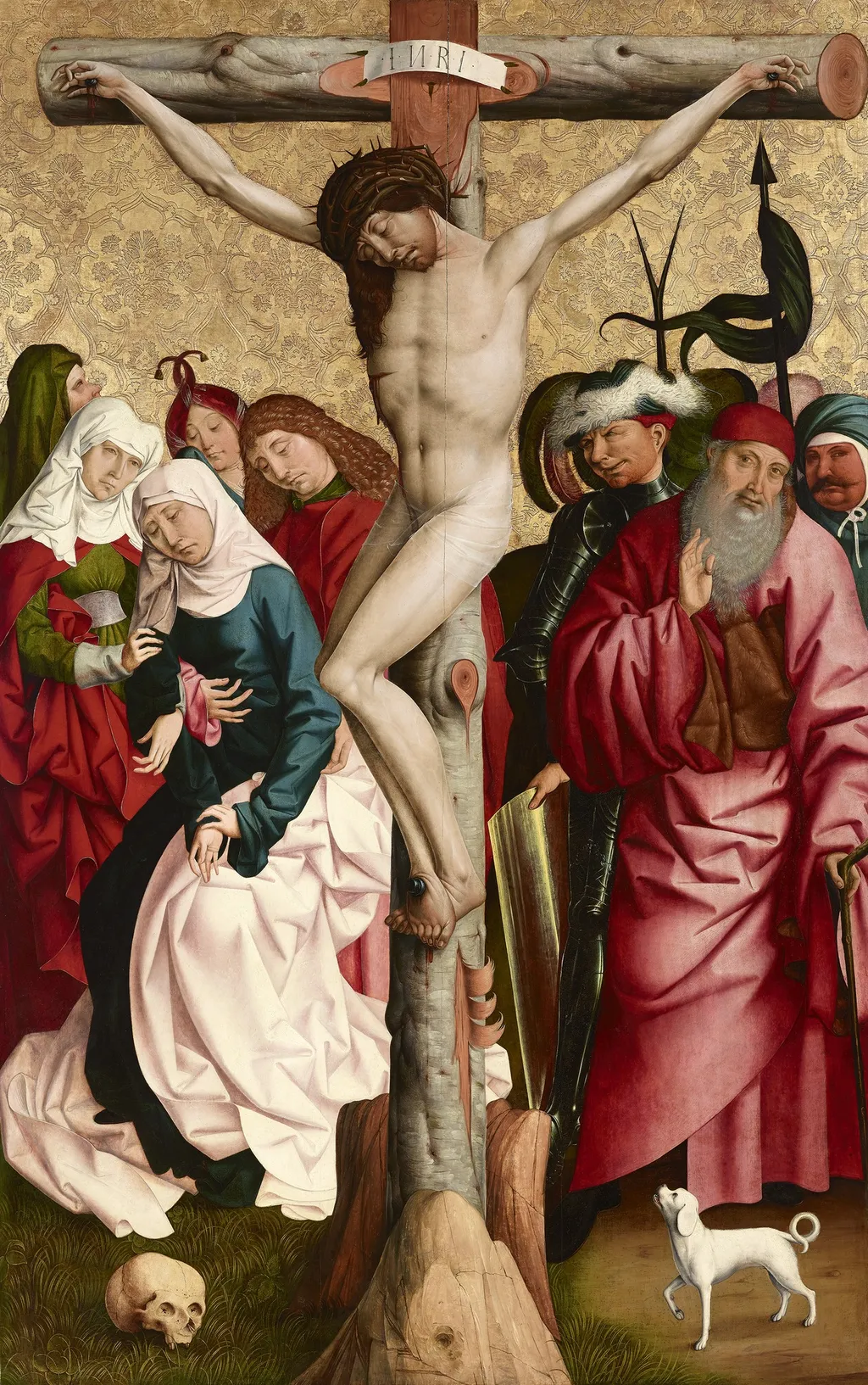
Kreuzigung Christi is an unspecified painting by the Northern Renaissance artist Rueland Frueauf the Elder. It dates from 1496 and is held in the collection of the Kunsthistorisches Museum.
About this work
Overview
This panel, dated 1496, is attributed to Rueland Frueauf the Elder, a painter active in late-medieval Austria. It presents a devotional image of the Crucifixion, executed in tempera and oil on wood. The work forms part of the holdings of the Kunsthistorisches Museum in Vienna, where it remains a representative example of Central European religious art from the turn of the fifteenth century.
Subject & Meaning
Above his head, the titulus reads “INRI,” abbreviating the Latin inscription imposed by Roman authorities.
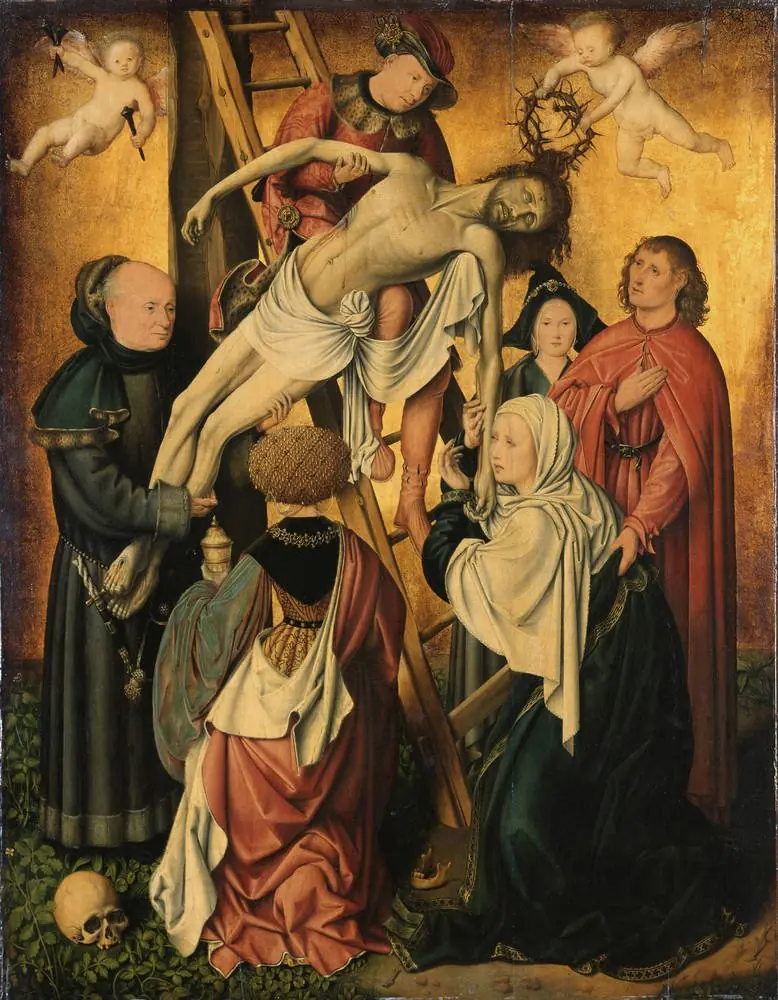
The painting centers on the crucified Christ, his pallid body marked by wounds and crowned with thorns. Above his head, the titulus reads “INRI,” abbreviating the Latin inscription imposed by Roman authorities. Six mourners, differentiated by dress and gesture, encircle the cross; their expressions and postures—pointing heavenward, clasping hands, or holding a lance—direct the viewer’s attention toward the Passion’s theological significance.
Technique & Style
Frueauf employs a restrained palette dominated by earth tones and gold, the latter applied as a flat, patterned backdrop that flattens spatial depth. Figures are modeled with delicate hatching, while drapery folds follow late-Gothic conventions of angular linearity. The small white dog at the lower right introduces a note of quotidian realism within an otherwise hieratic composition.
History & Provenance
The panel entered the Kunsthistorisches Museum’s collection in the nineteenth century, though its earlier ownership remains undocumented. Dendrochronological analysis of the support confirms a felling date consistent with the inscribed year of 1496. No preparatory drawings or workshop variants have been securely linked to the painting, leaving its production context partially obscure.
Context
Created during a period of heightened Marian and Passion piety in Central Europe, the image reflects devotional practices promoted by mendicant orders and lay confraternities. Its modest scale suggests private rather than public display, catering to patrons who sought intimate meditation on Christ’s sacrifice. The inclusion of contemporary dress among the mourners bridges sacred narrative and the viewer’s own world.
Own this work as a print
Artist & collection
Artist
Rueland Frueauf the Elder (1440–1507) was an artist, born in Obernberg am Inn.

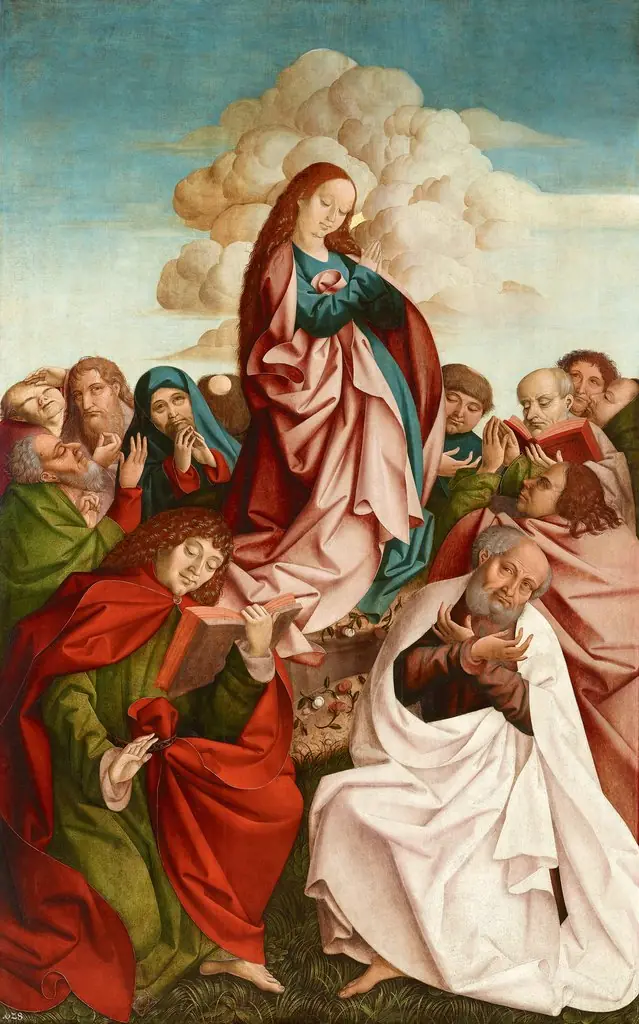
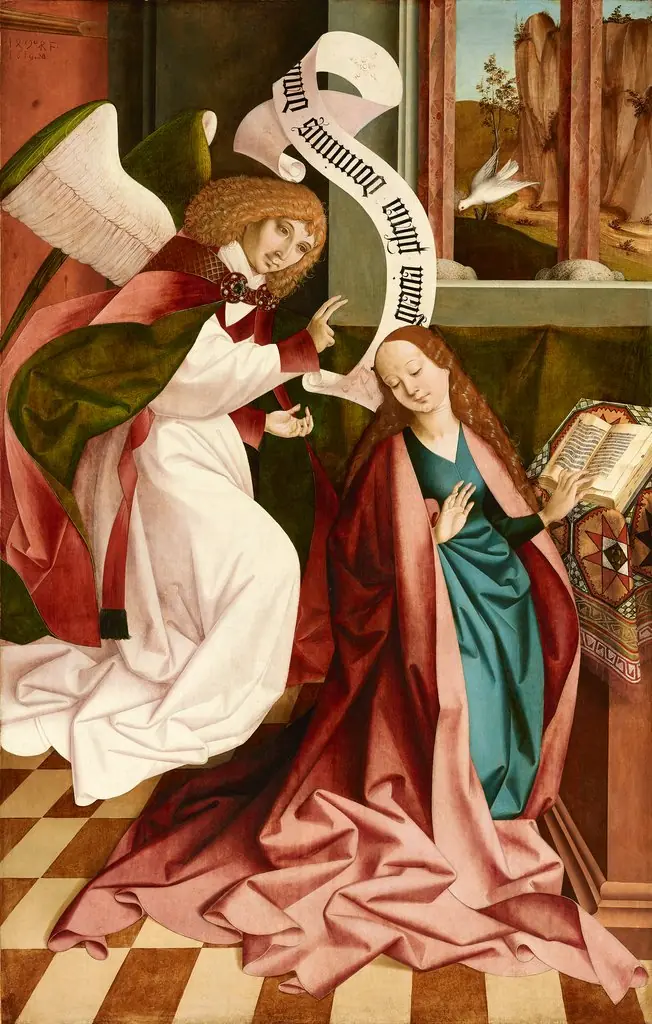
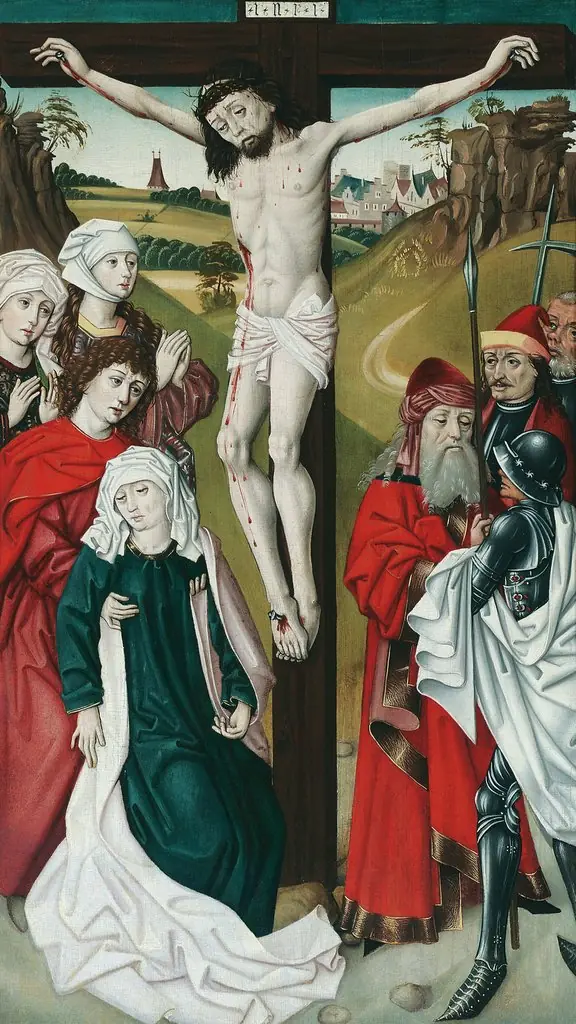 Kreuzigung Christi
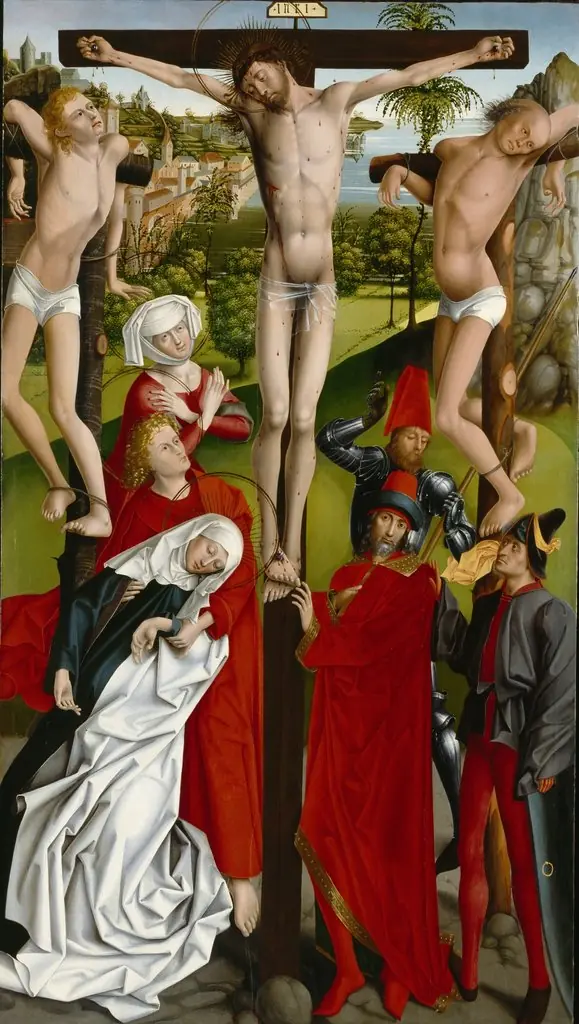 The Crucifixion
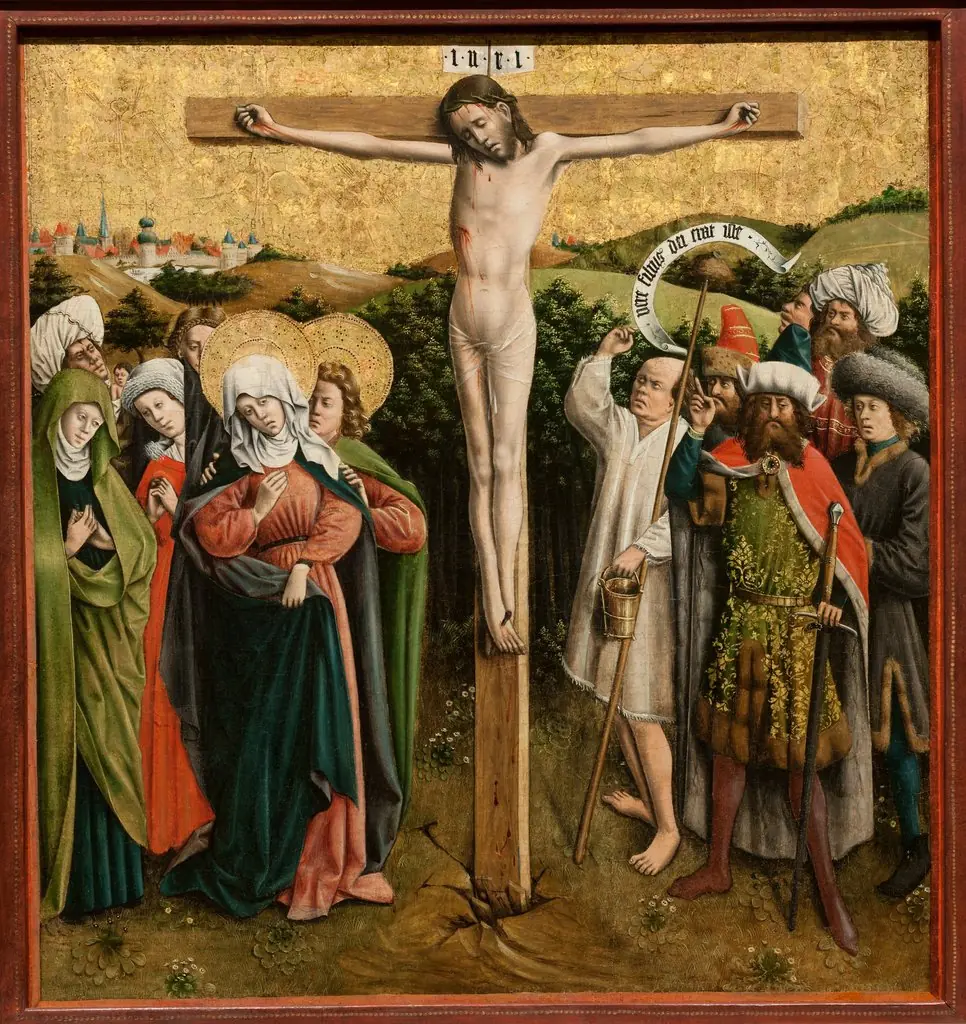 Altarpiece with The Passion of Christ
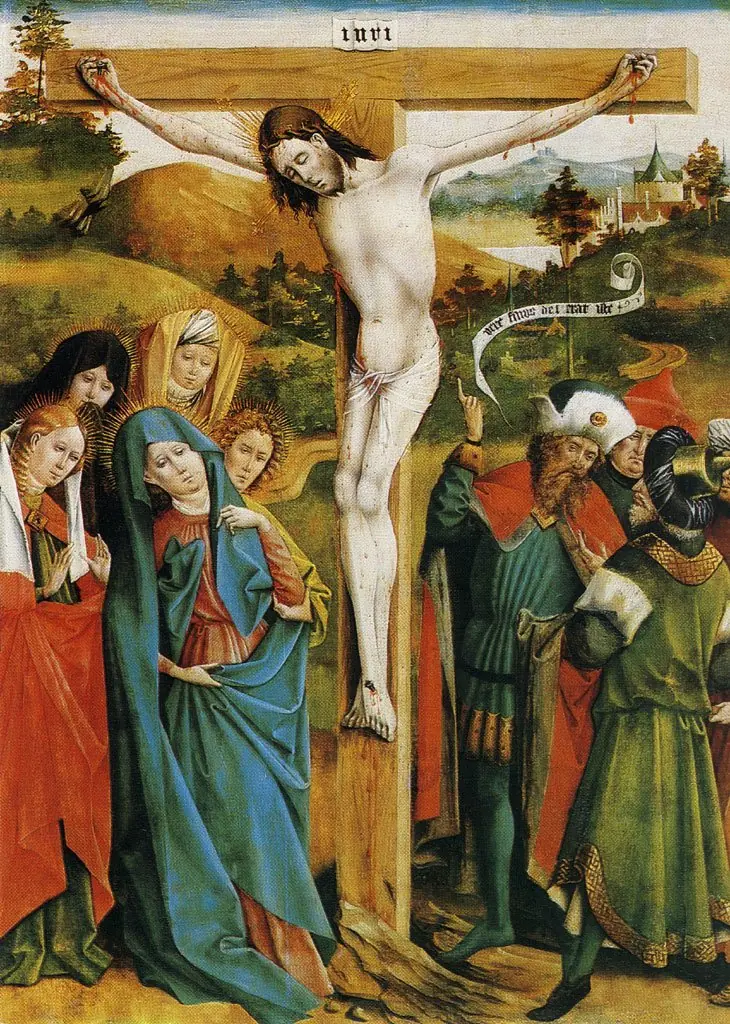 Crucifixion of Christ
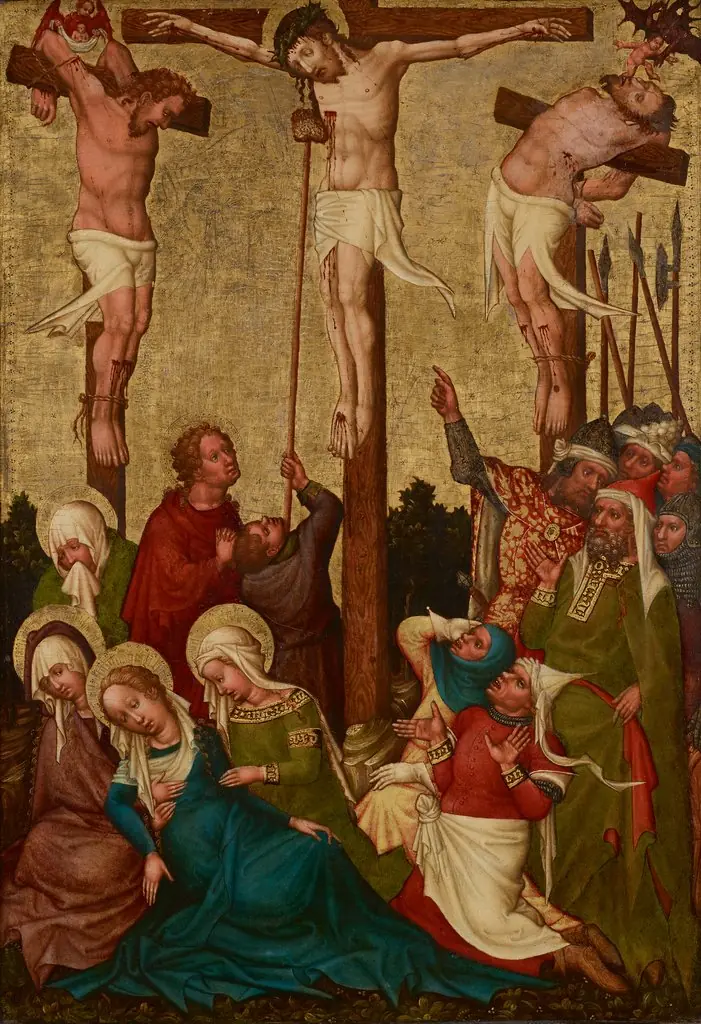 Crucifixion
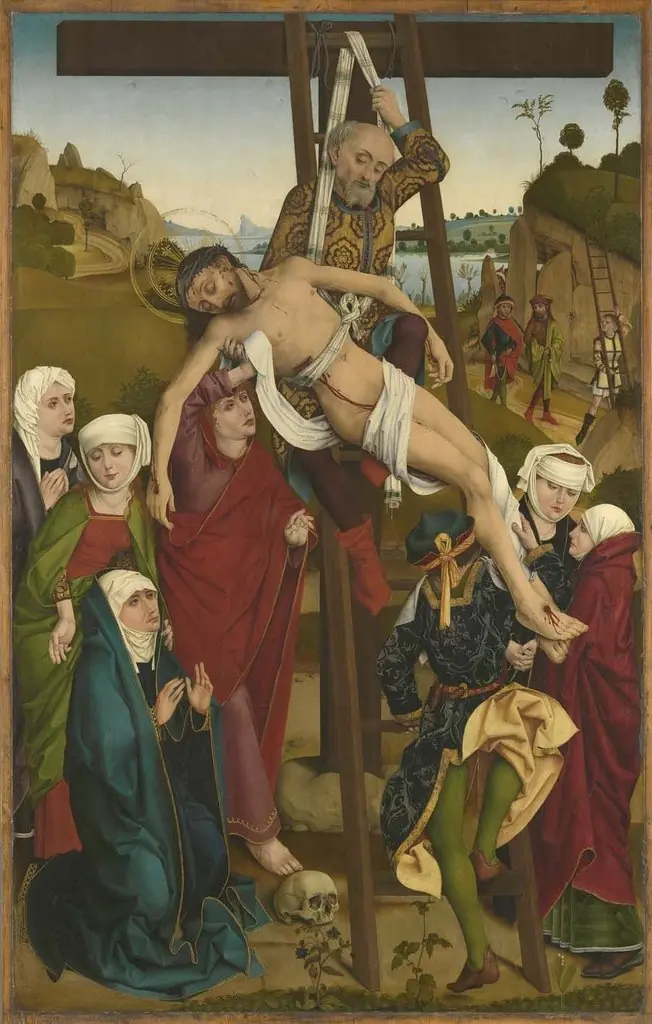 Hofer Altar: Kreuzabnahme Christi (Rückseite: Geburt Christi)
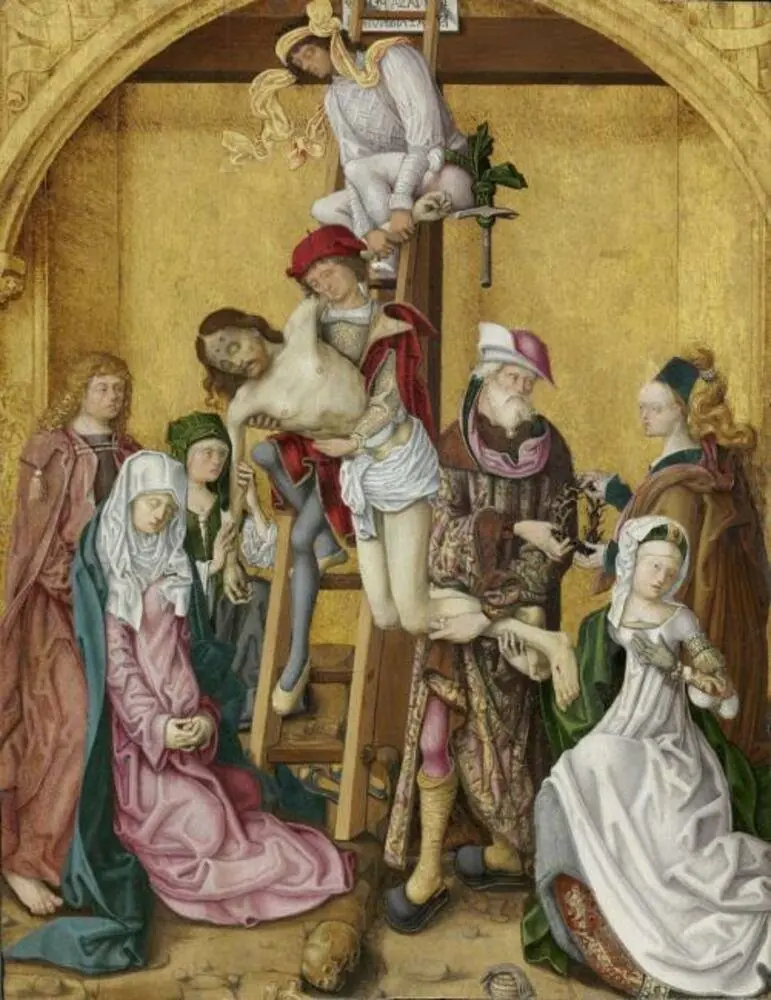 The Descent from the Cross
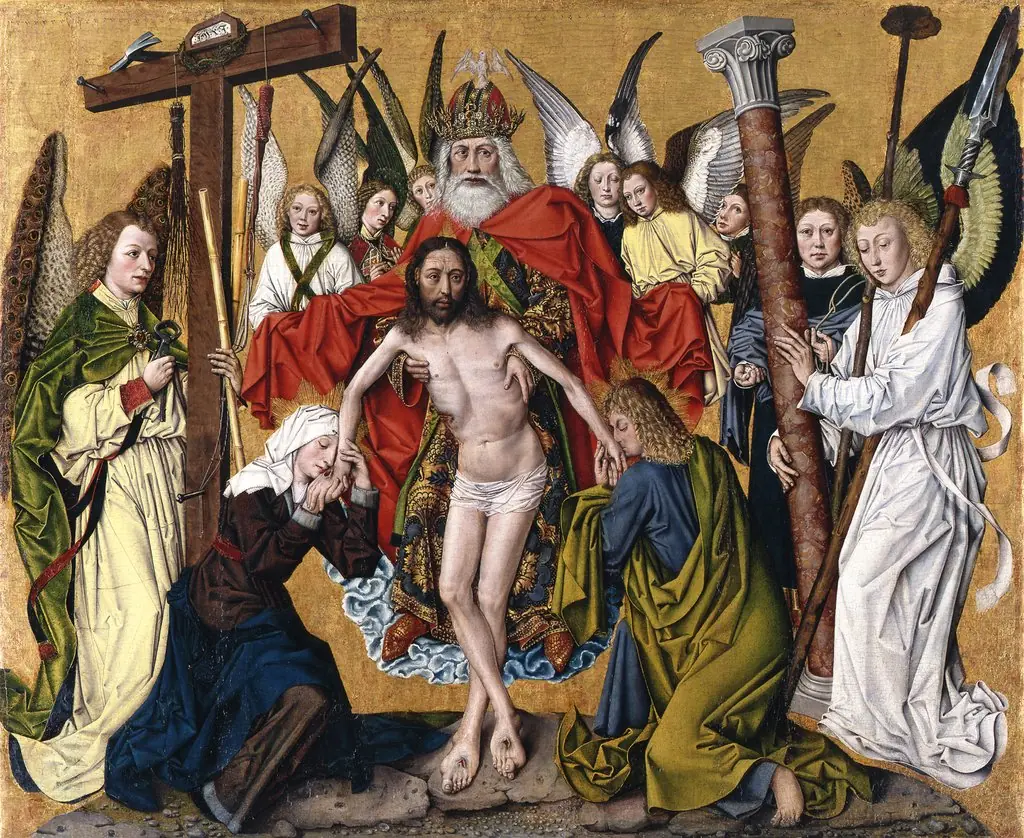 The Throne of Mercy with the Virgin, St. John, and Angels with the Arma Christi
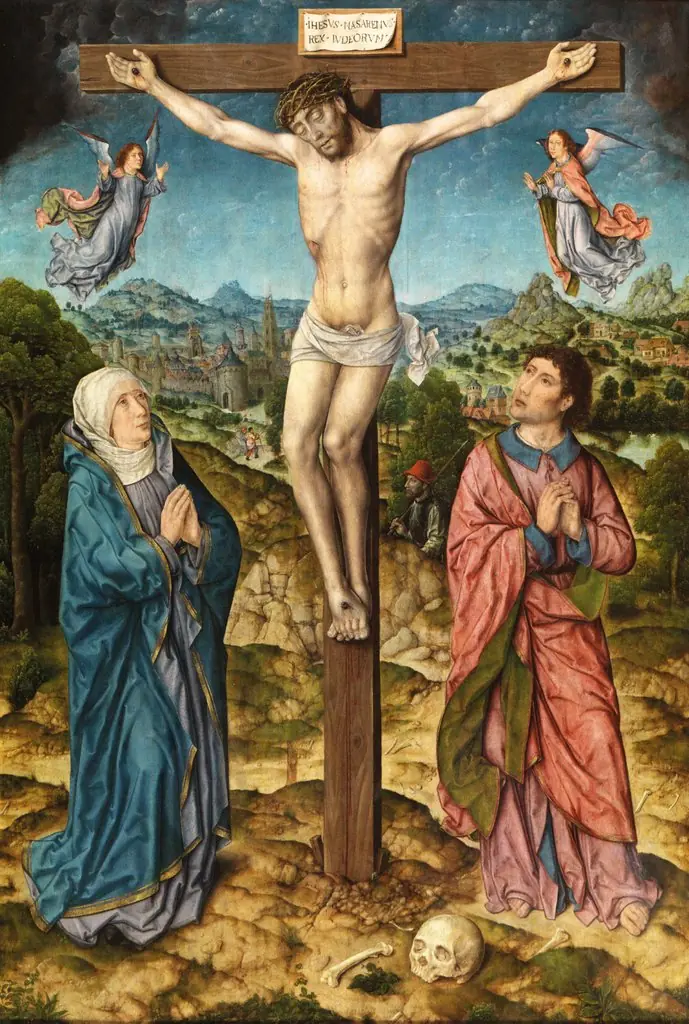 The Crucifixion
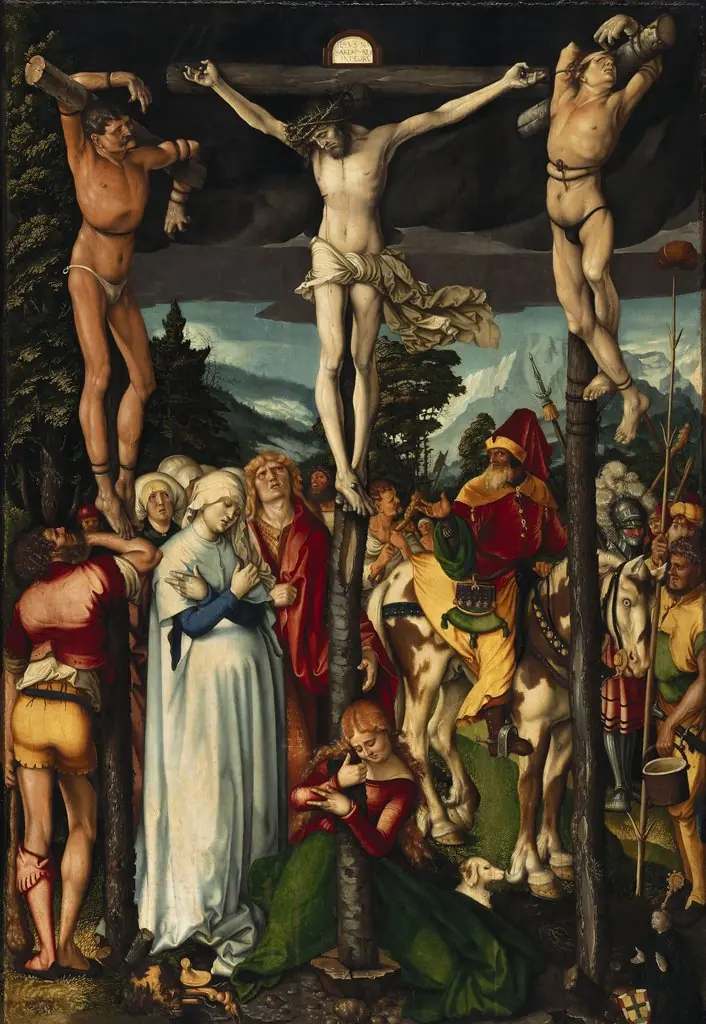 The Crucifixion of Christ
 Kreuzabnahme