Artwork
Loïe Fuller
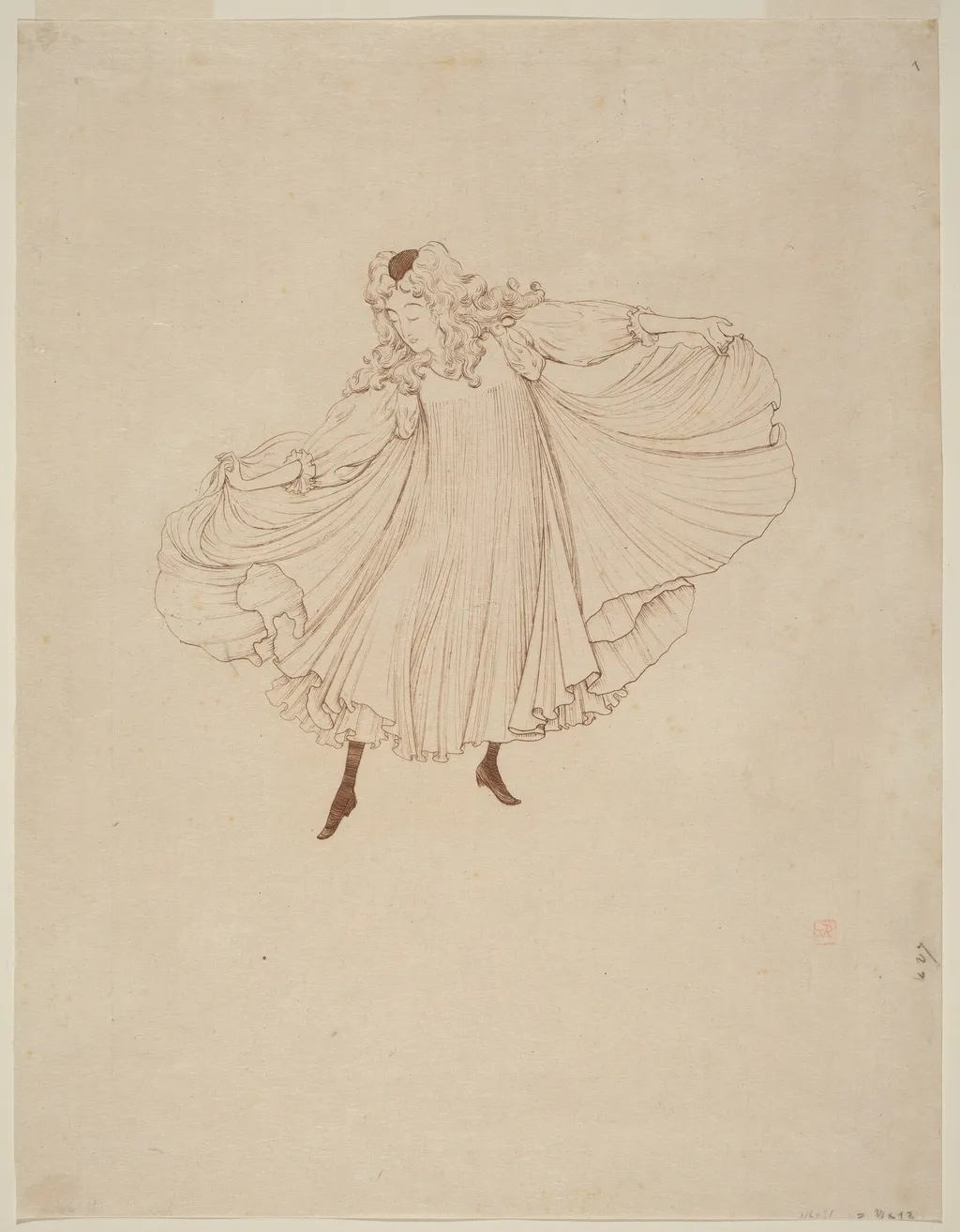
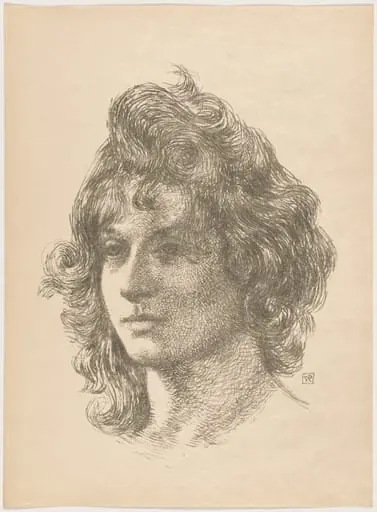
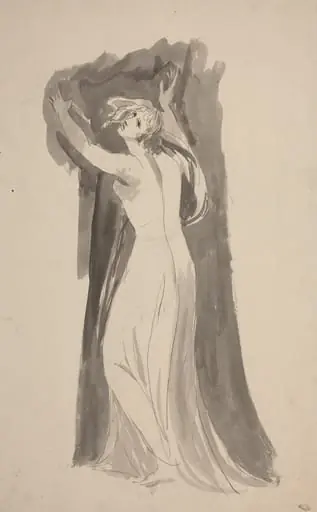
Loïe Fuller is an ink print by the Impressionist artist Théo van Rysselberghe. It dates from 1893 and is held in the collection of the National Gallery of Art.
About this work
Overview
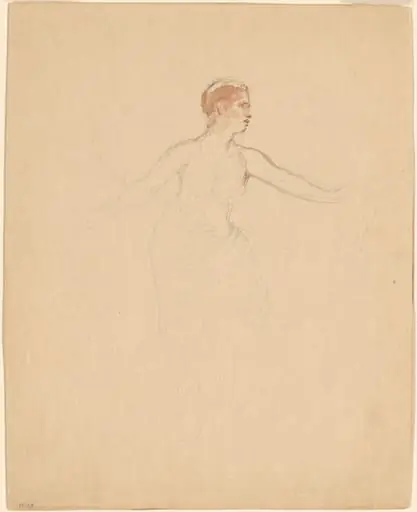
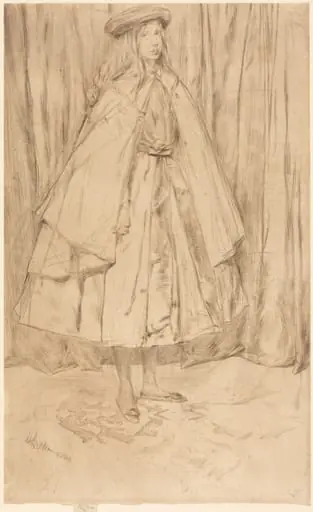
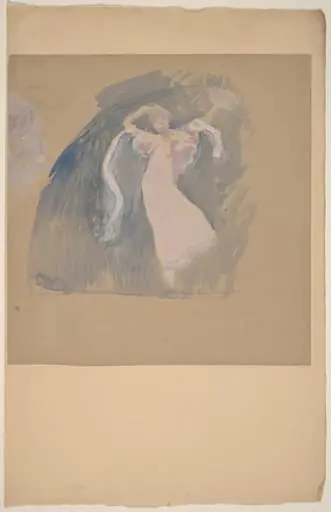
Théo van Rysselberghe’s 1893 etching titled “Loïe Fuller” presents a solitary female figure captured in a moment of motion. Executed on Japan paper with a single brown ink, the print emphasizes the fluidity of the dancer’s silhouette rather than detailed realism, offering a concise yet expressive study of movement.
Subject & Meaning
The composition depicts a woman with her arms extended, her hair lifted, and a voluminous dress unfurling around her as she spins. The swirling fabric and the figure’s poised posture suggest a performance, likely referencing the famed dancer Loïe Fuller, whose innovative use of light and fabric in the late nineteenth century made her a symbol of modern theatrical expression.
Technique & Style
Van Rysselberghe employed traditional intaglio methods, incising the design onto a metal plate and printing it with brown ink onto delicate Japan paper.
Van Rysselberghe employed traditional intaglio methods, incising the design onto a metal plate and printing it with brown ink onto delicate Japan paper. The lines are rendered with a soft, sketch-like quality, avoiding sharp contours in favor of flowing curves that convey kinetic energy. The limited palette focuses attention on form and gesture, characteristic of the artist’s restrained, impressionistic approach to printmaking.
History & Provenance
Created in 1893, the etching belongs to a period when van Rysselberghe explored portraiture and performance subjects within the broader Symbolist and Neo-Impressionist movements. While specific ownership records are scarce, the work has been documented in catalogues of the artist’s prints and appears in collections that emphasize late‑19th‑century European graphic art.
Artist & collection