Artwork
Standing Female Figure
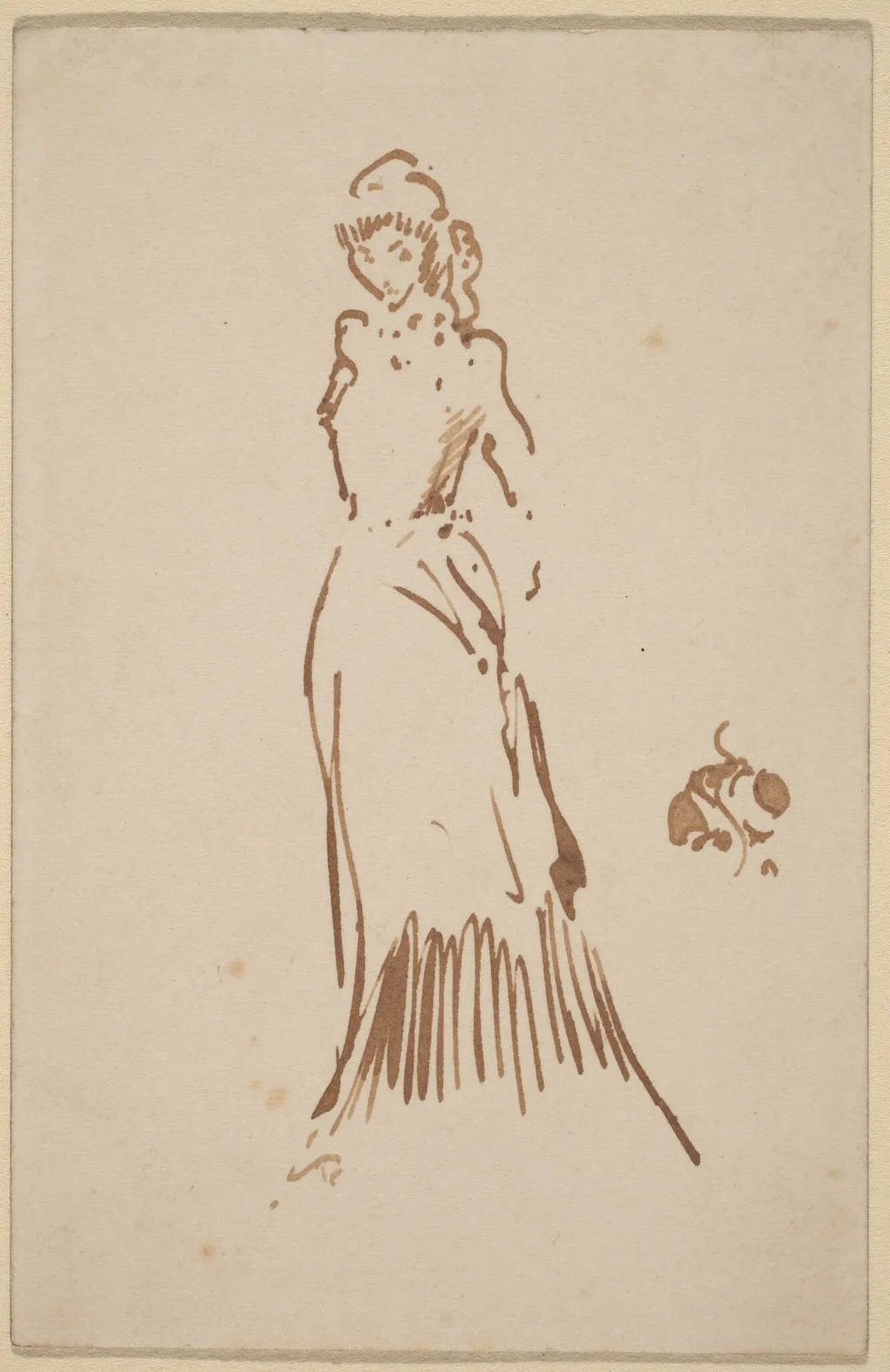
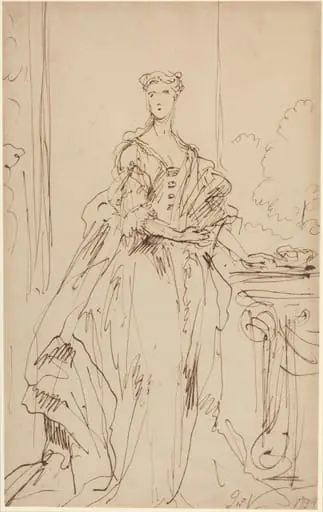
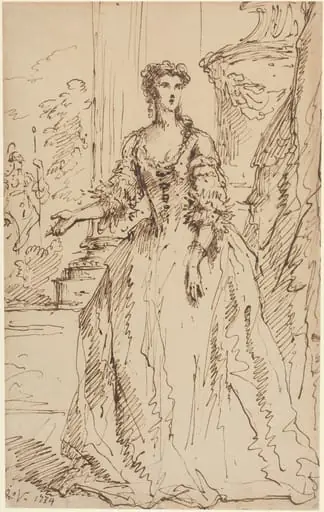
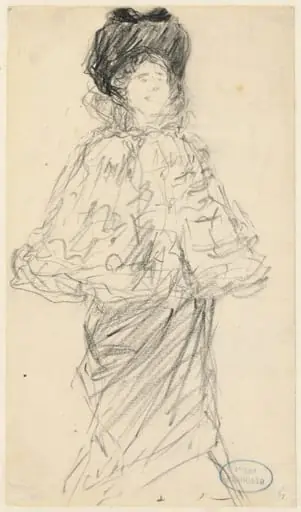
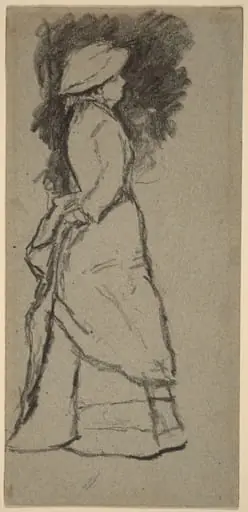
Standing Female Figure is an ink drawing by the Impressionist artist James McNeill Whistler. It dates from 1883 and is held in the collection of the National Gallery of Art.
About this work
Overview
Created circa 1883, the drawing titled *Standing Female Figure* is executed in pen and brown ink on the reverse side of a printed calling card that once bore the address of Mrs. Henry B. Callander, 72 Cadogan Place. The work is a quick, informal sketch rather than a polished composition, its loose lines capturing a solitary woman in profile.
Subject & Meaning
The figure is shown in a three‑quarter turn, her torso rendered with swift strokes, a wide‑skirted dress split along the side, and a small object clasped in her left hand. The composition offers no narrative context, reflecting the artist’s preference for visual harmony over storytelling.
Technique & Style
Whistler employed a single brown ink pen, allowing the underlying faint imprint of the card’s printed address to remain visible. The drawing relies on rapid, gestural lines and subtle cross‑hatching to suggest form and tonal variation, exemplifying his economical, sketch‑like approach.
History & Provenance
The piece originates from Whistler’s period of activity in the United Kingdom, when he was establishing his reputation as a painter and printmaker. The butterfly‑shaped signature, a recurring emblem in his work of the early 1880s, appears on the drawing, confirming its authorship.
Context
During the late nineteenth century Whistler emphasized aesthetic refinement, often eschewing overt narrative or moral content. This informal study, executed on a discarded calling card, illustrates his practice of repurposing everyday materials for spontaneous artistic exploration.
Artist & collection
Artist
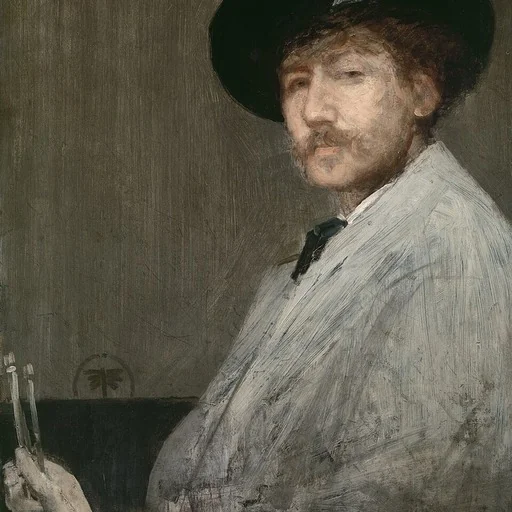
James Abbott McNeill Whistler was an American painter in oils and watercolor, and printmaker, active during the American Gilded Age and based primarily in the United Kingdom.

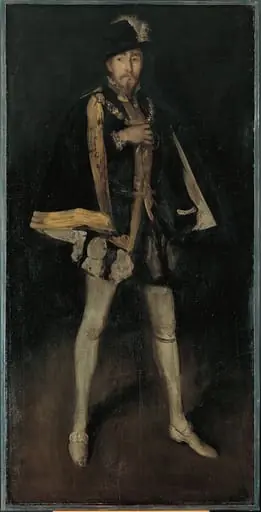 Arrangement in Black, No. 3: Sir Henry Irving as Philip II of Spain
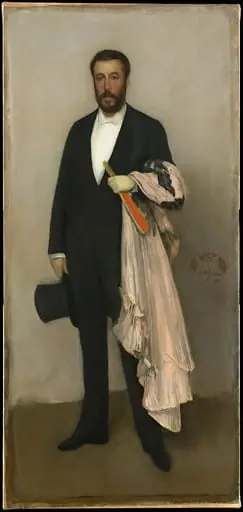 Arrangement in Flesh Colour and Black: Portrait of Theodore Duret
 Gold and Brown: Self-Portrait
 Edward Guthrie Kennedy
 Harmony in Yellow and Gold: The Gold Girl—Connie Gilchrist
 George W. Vanderbilt
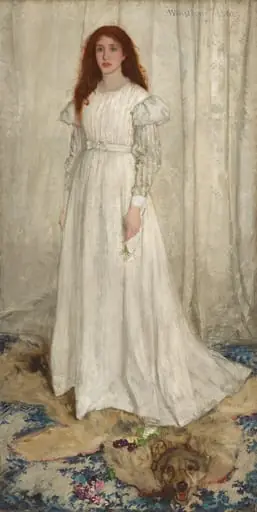 Symphony in White, No. 1: The White Girl
 Henry Irving as Philip II of Spain