Artwork
Untitled
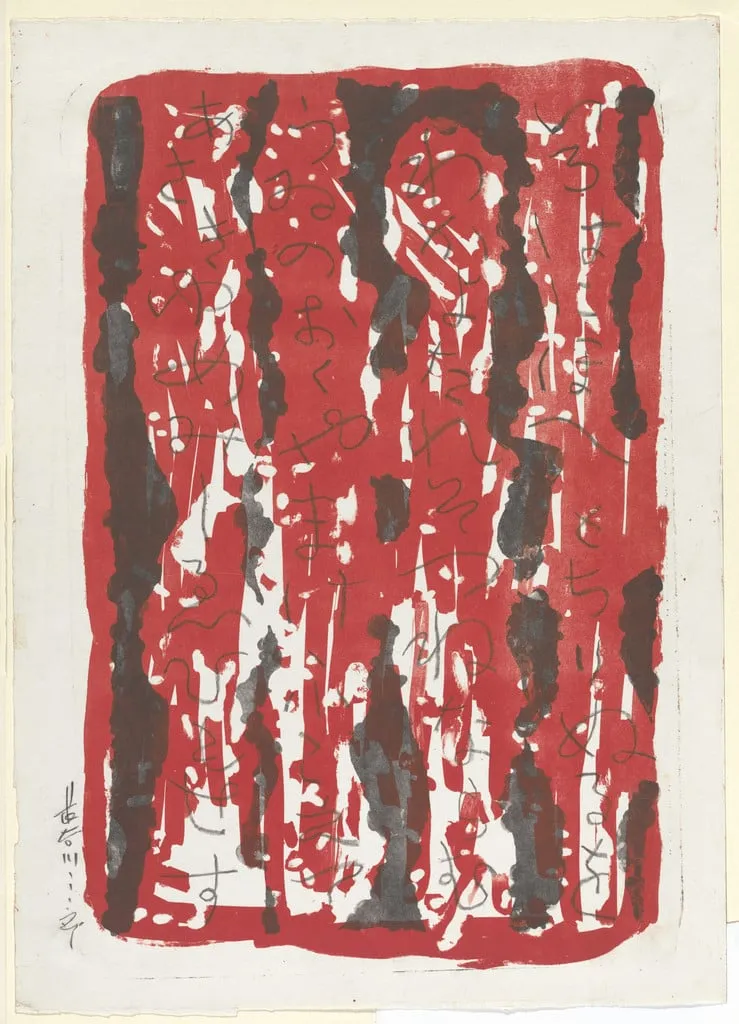
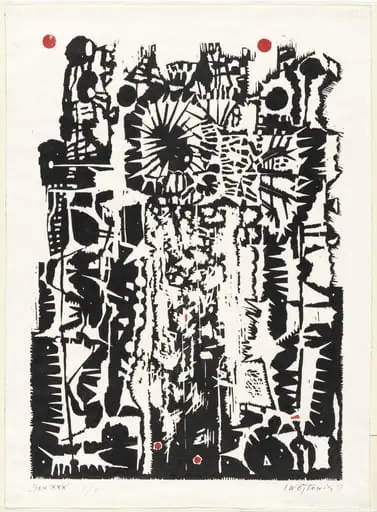
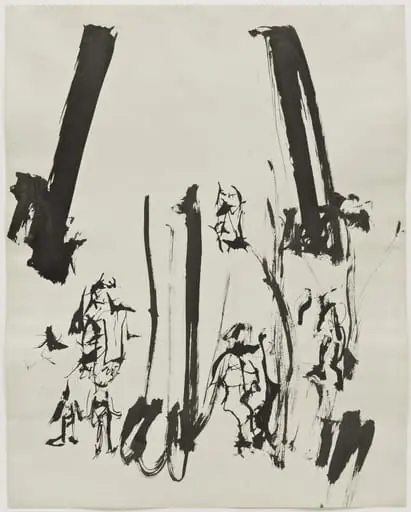
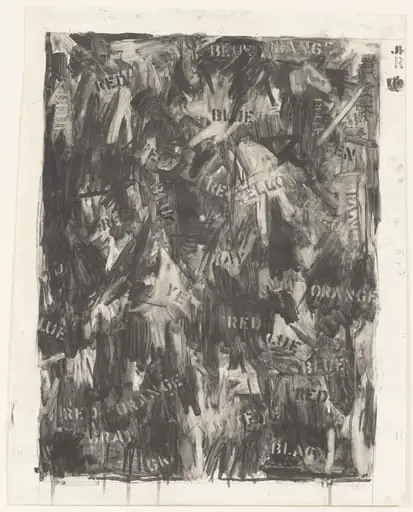
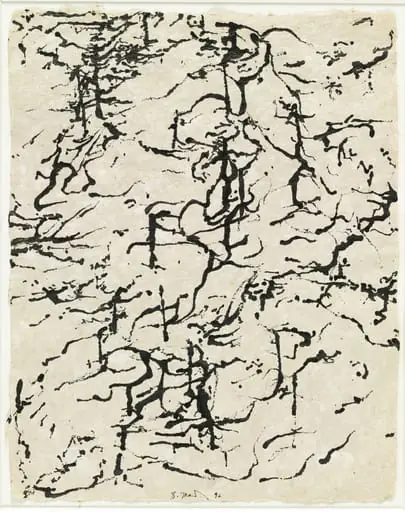
Untitled is an ink print by Saburo Hasegawa. It dates from 1954 and is held in the collection of the Museum of Modern Art.
About this work
Overview
The piece resides in the collection of The Museum of Modern Art, reflecting its significance in postwar transnational art dialogues.
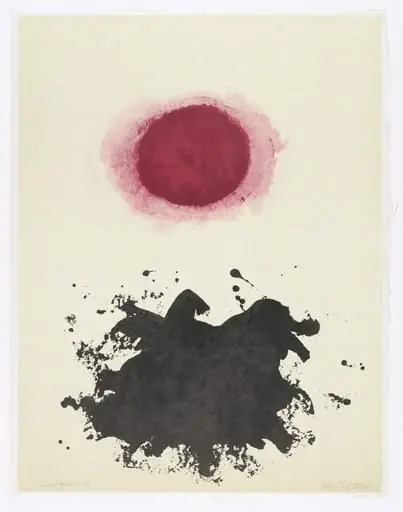
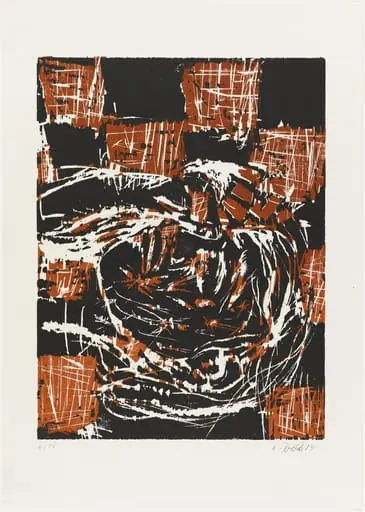
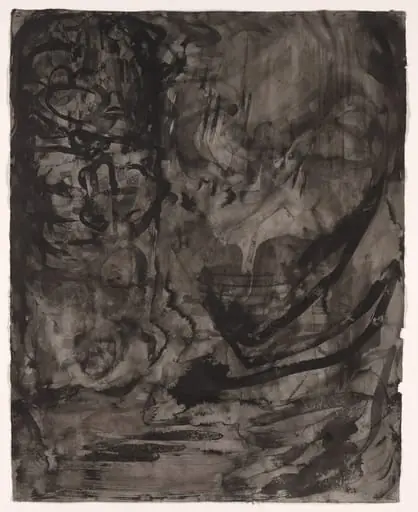
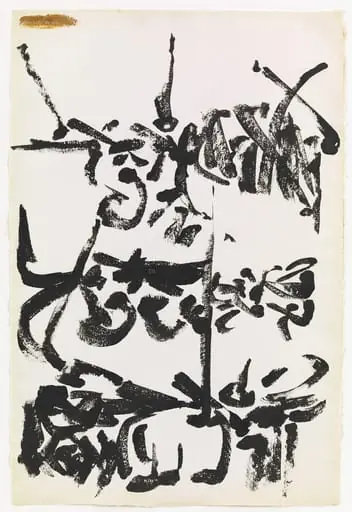
Created in 1954, this lithograph by Saburō Hasegawa is a non-representational work that merges the spontaneity of abstract expressionism with the rhythmic sensibilities of East Asian ink traditions. Executed in a single, energetic session, it balances controlled gesture with organic disorder. The piece resides in the collection of The Museum of Modern Art, reflecting its significance in postwar transnational art dialogues.
Subject & Meaning
The work resists literal interpretation, instead evoking a sense of inner motion and spiritual residue. The black marks—some calligraphic, others gestural—suggest the trace of thought or breath rather than depiction. White voids punctuate the red field like pauses in a chant, echoing Zen principles of emptiness and impermanence. Meaning emerges through presence, not narrative.
Technique & Style
Hasegawa employed lithography to achieve a direct, tactile quality, allowing the artist’s hand to imprint clearly on the stone. The red background is uniformly saturated yet visually active, while the black forms vary in density and edge—some sharp, others blurred. The irregular contours and uneven framing reinforce a sense of immediacy, aligning the print’s process with the spontaneity of ink brushwork.
History & Provenance
Hasegawa produced this work during a period of intense cultural exchange between Japan and the United States, following his relocation to California in the early 1950s. The lithograph was acquired by The Museum of Modern Art soon after its creation, positioning it within early institutional recognition of Japanese artists contributing to global abstraction. Its preservation reflects its role in bridging postwar artistic movements.
Context
In postwar Japan, Hasegawa stood at the intersection of traditional aesthetics and avant-garde experimentation. While Western abstract painters emphasized individual expression, he grounded his gestures in the discipline of calligraphy and Zen meditation. This lithograph exemplifies his effort to reconcile Eastern meditative practices with the formal language of Western modernism without assimilating one into the other.
Legacy
Hasegawa’s work influenced later generations of Japanese artists seeking to transcend cultural binaries in their practice. This lithograph remains a touchstone for its quiet assertion that abstraction need not abandon spiritual or cultural depth. Its inclusion in major collections affirms its role in expanding the global narrative of mid-century printmaking beyond Euro-American frameworks.
Artist & collection
Artist
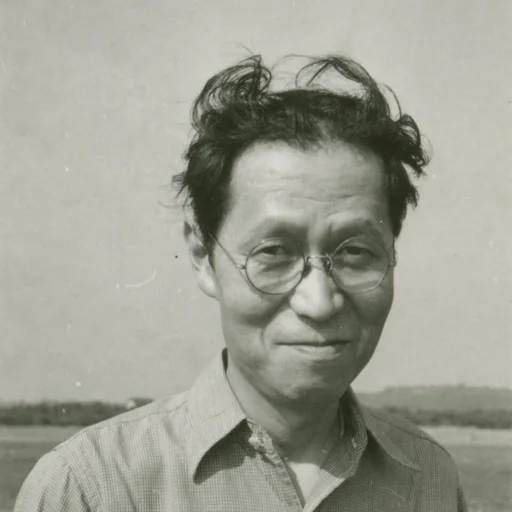
Saburō Hasegawa (長谷川 三郎, Hasegawa Saburō; 6 September 1906 – 11 March 1957) was a Japanese-born American calligrapher, painter, art writer, curator, and teacher.