Artwork
The Charlatan (Le charlatan)
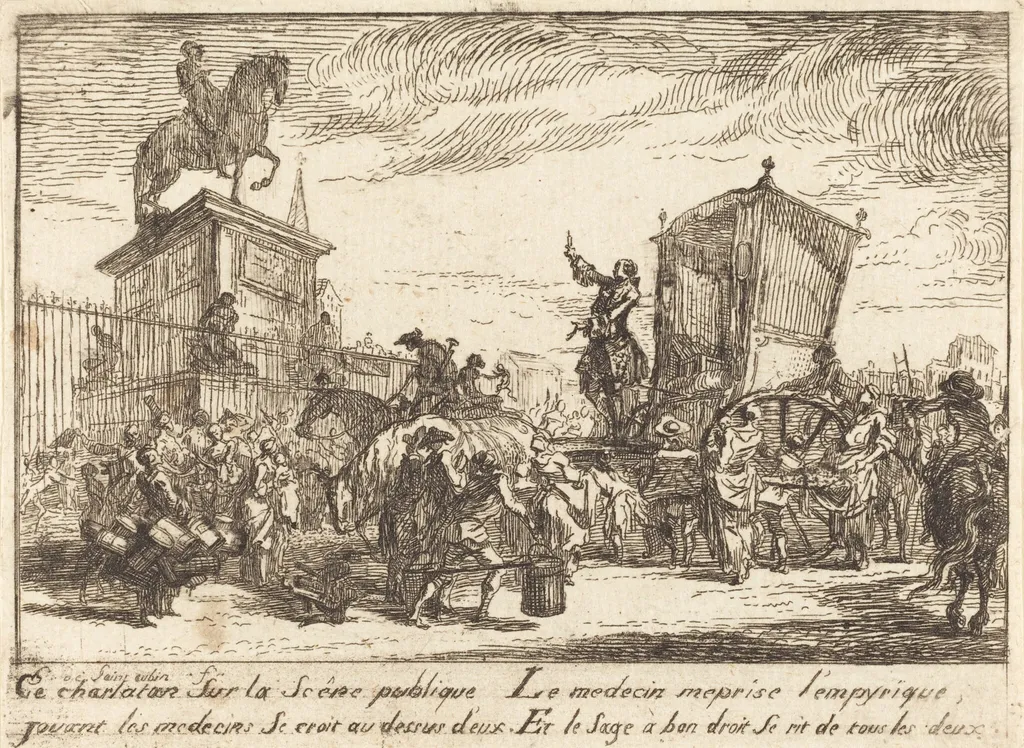
The Charlatan (Le charlatan) is an ink print by the Romanticist artist Gabriel de Saint-Aubin. It dates from 1760 and is held in the collection of the National Gallery of Art.
About this work
Overview
Saint-Aubin’s precise line work conveys both movement and social hierarchy, offering a quiet critique of public gullibility.
Created around 1760, The Charlatan is an etching by French artist Gabriel de Saint-Aubin. Rendered on laid paper, the work captures a bustling urban moment in Paris, where a crowd gathers around a makeshift stage. The scene centers on a figure posing as a healer, drawing attention with theatrical gestures. Saint-Aubin’s precise line work conveys both movement and social hierarchy, offering a quiet critique of public gullibility.
Subject & Meaning
The scene depicts a charlatan, likely a quack physician, performing for an audience on a raised platform. Onlookers include curious townspeople, mounted riders, and vendors, each reacting with varying degrees of skepticism or belief. The inclusion of tools, bags, and varied attire suggests a market atmosphere where deception thrives. The work subtly questions the boundaries between genuine care and performance in public life.
Technique & Style
Saint-Aubin employed fine, controlled etching lines to render intricate details of clothing, facial expressions, and architectural textures. The sky is filled with swirling, atmospheric strokes that suggest motion and depth without color. The composition is densely packed yet carefully balanced, guiding the viewer’s eye from the central figure outward through layers of activity. The medium’s sharpness enhances the clarity of each figure’s posture and gesture.
History & Provenance
The etching was produced during Saint-Aubin’s active years in mid-18th century Paris, a time when printmaking flourished as a means of documenting everyday life. While its early ownership is undocumented, it entered institutional collections in the 19th century, valued for its social observation. It remains part of major print repositories, including the Louvre and the British Museum, where it is studied for its insight into pre-Revolutionary urban culture.
Context
In 1760s Paris, public healers and traveling showmen were common figures in markets and fairs, often exploiting the poor and uneducated. Saint-Aubin, known for his keen eye for social nuance, recorded these scenes with neither overt satire nor moralizing. His work reflects a broader artistic interest in documenting the city’s informal economies and the performative nature of public interaction during the Enlightenment.
Legacy
The Charlatan endures as a precise record of 18th-century street life and the persistence of medical fraud. It influenced later artists interested in social realism and the depiction of ordinary crowds. Though not widely exhibited, it remains a key example of French printmaking’s capacity to capture fleeting moments of public behavior with quiet authority and observational depth.
Artist & collection

Artist
Gabriel de Saint-Aubin was a French draftsman, printmaker, etcher and painter.


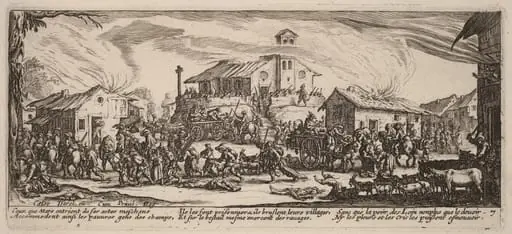 Plundering and Burning a Village
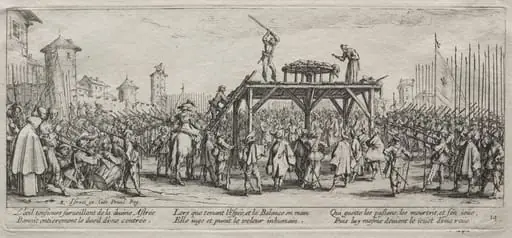 The Large Miseries of War: Execution on the Wheel
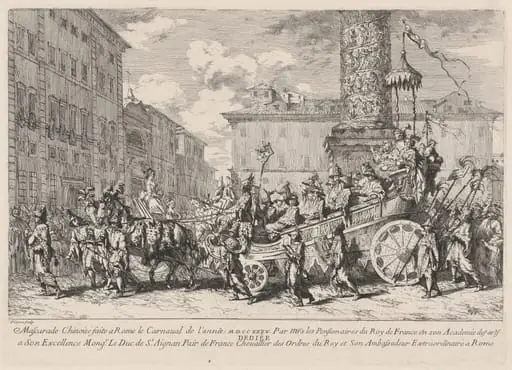 Mascarade Chinoise faite a Rome (Chinese Masquerade)
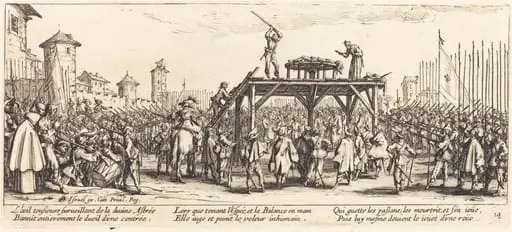 The Wheel
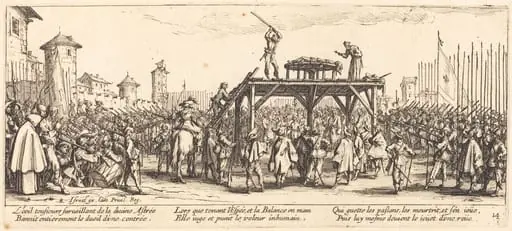 The Wheel
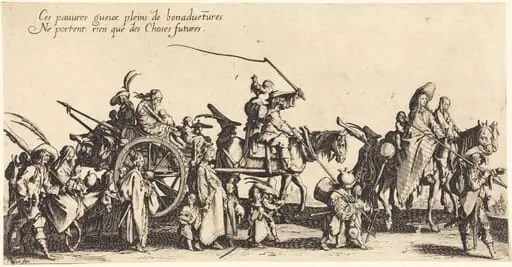 The Bohemians Marching: The Rear Guard
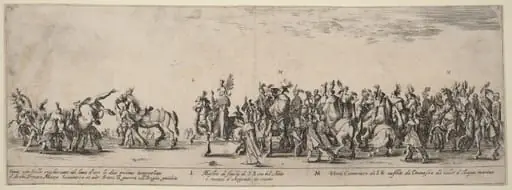 Master of His Excellency's Stables and Twenty Servants
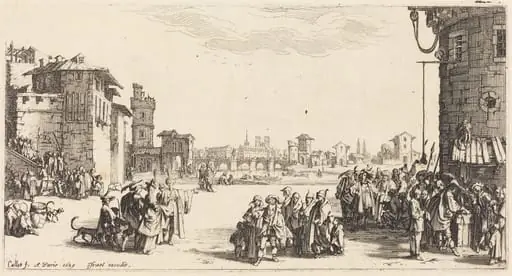 The Slave Market
 The Hospital
 The Bohemians Marching: The Rear Guard