Artwork
Mascarade Chinoise faite a Rome (Chinese Masquerade)
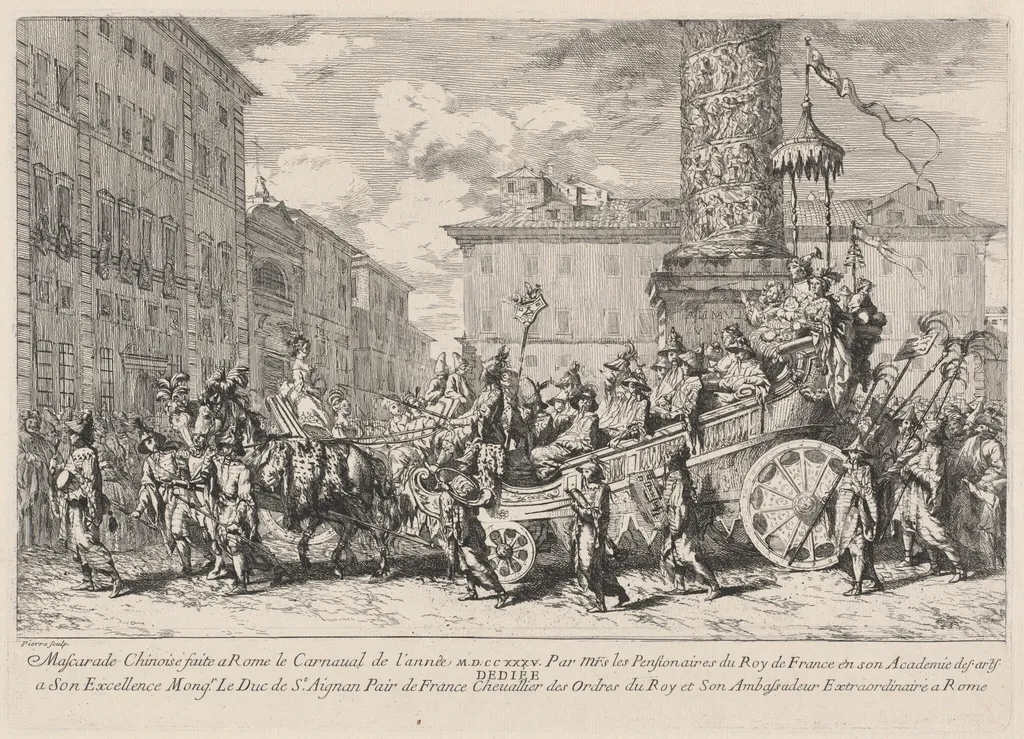
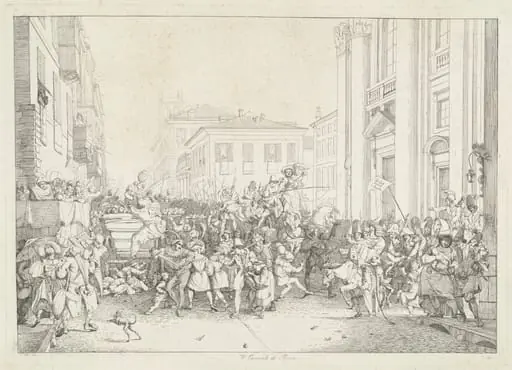
Mascarade Chinoise faite a Rome (Chinese Masquerade) is an ink print by the Baroque artist Jean-Baptiste-Marie Pierre. It dates from 1735 and is held in the collection of the National Gallery of Art.
About this work
Overview
Mascarade Chinoise faite a Rome (Chinese Masquerade) is an etching created by Jean-Baptiste-Marie Pierre in 1735, depicting a vibrant street procession in Rome with a blend of cultural influences.
Subject & Meaning
The etching illustrates a 'Chinese Masquerade' in Rome, featuring a parade with elaborately costumed figures in mixed European and Asian attire, accompanied by a decorated wagon, flags, lanterns, and distant architectural elements.
Technique & Style
Pierre employed etching techniques to achieve detailed, layered compositions, utilizing lines and shading to convey a sense of depth, crowding, and liveliness in the scene.
History & Provenance
Created in 1735 by Jean-Baptiste-Marie Pierre, specific provenance details are not provided in the available information.
Context
The work reflects 18th-century European fascination with Asian cultures, manifesting in the fusion of European and Asian elements in the masquerade's depiction.
Legacy
While the broader impact of 'Mascarade Chinoise faite a Rome' is not detailed in the provided sources, it exemplifies the artistic expression of cross-cultural curiosity during its time.
Artist & collection