Artwork
Edmund Pendleton Gaines
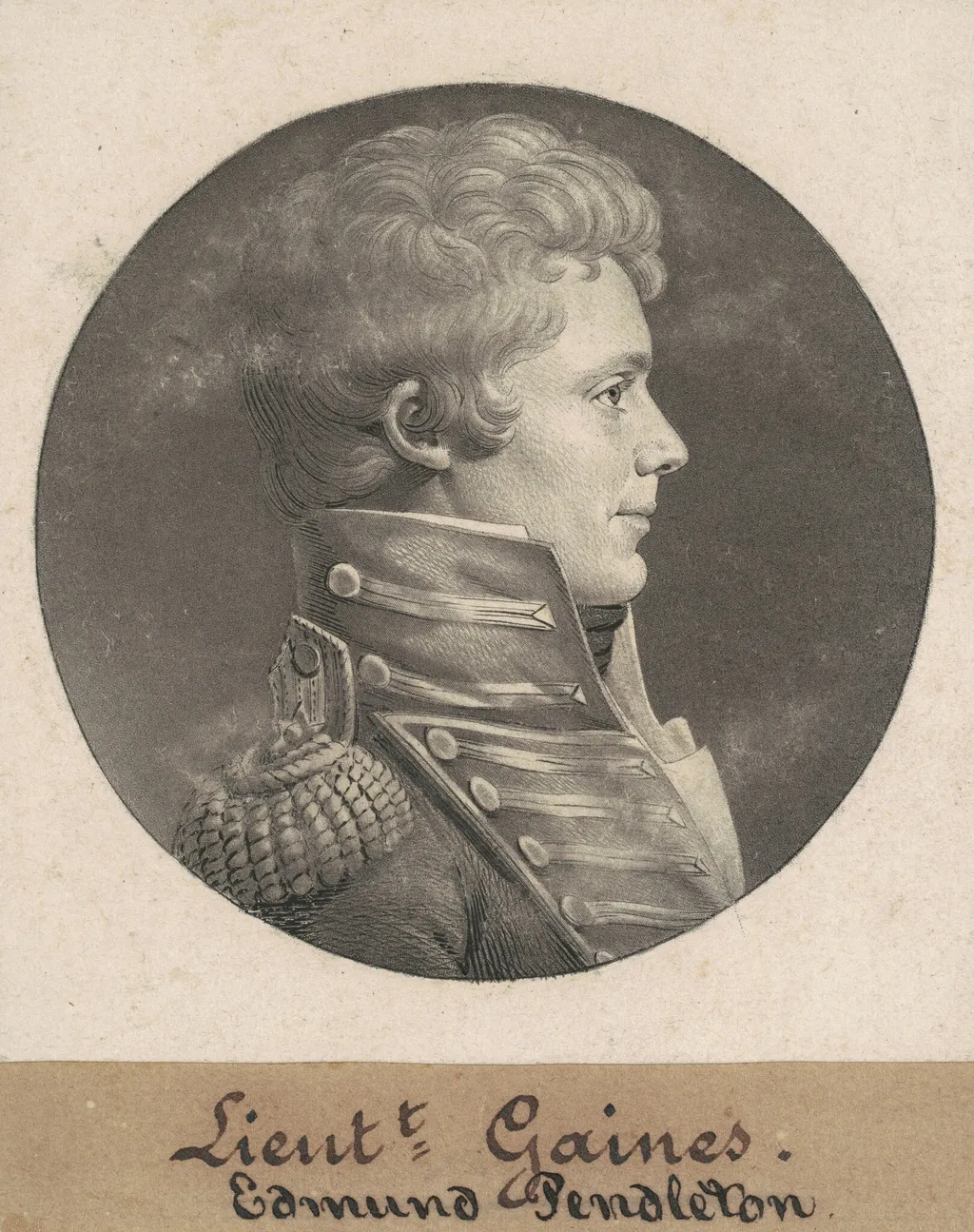
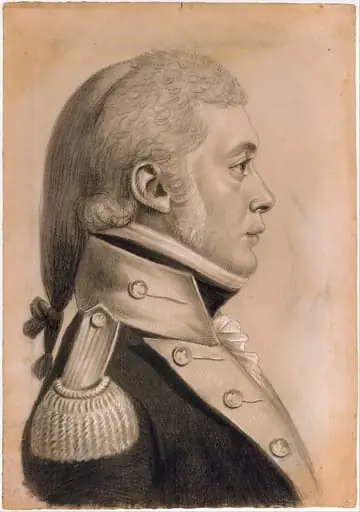
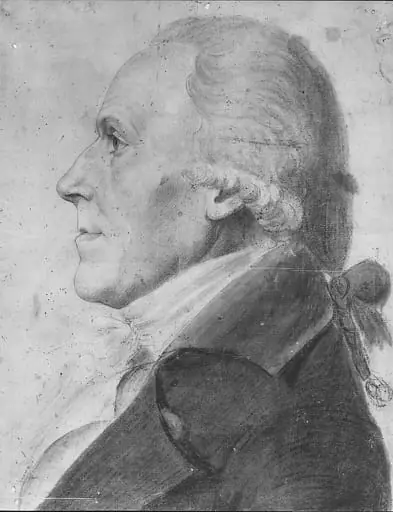
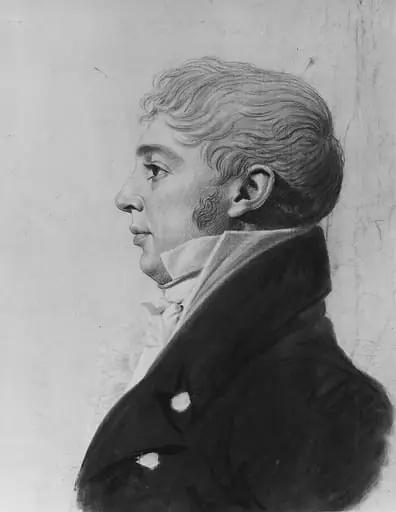
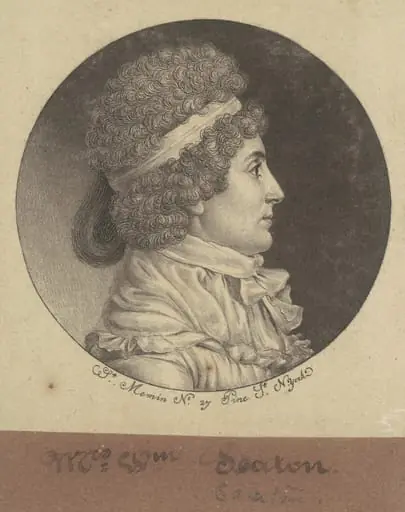
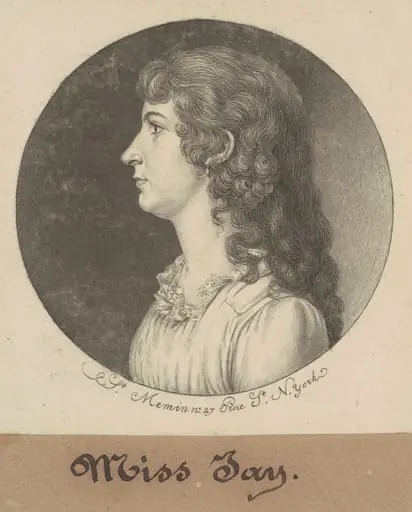
Edmund Pendleton Gaines is an ink print by the Romanticist artist Charles Balthazar Julien Févret de Saint-Mémin. It dates from 1808 and is held in the collection of the National Gallery of Art. Around 1808, Charles B.
About this work
Overview
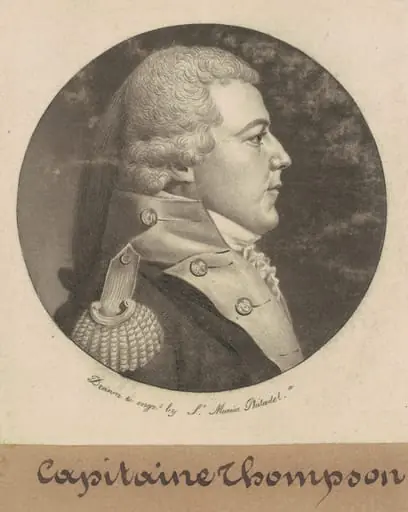
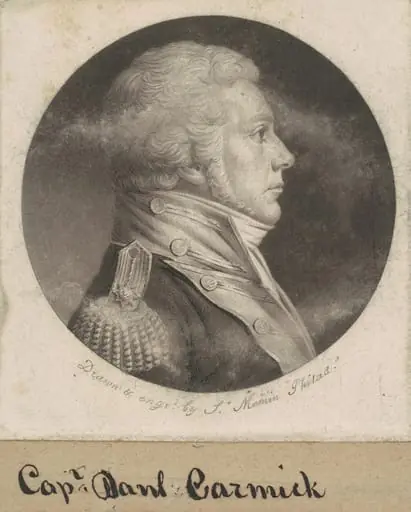
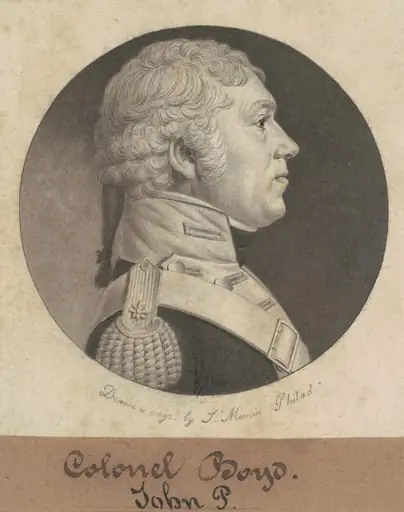
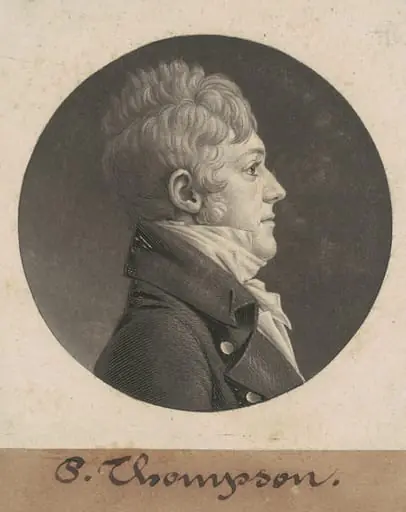
Around 1808, Charles B. J. Févret de Saint‑Mémin produced a black‑and‑white portrait of the American officer Edmund Pendleton Gaines. Executed as a mezzotint combined with engraving on wove paper, the image is mounted on a second sheet of brown wove paper, typical of the period’s printmaking practices.
Subject & Meaning
The work presents Gaines in full military dress, his profile turned to the right. The high‑collared coat, shoulder epaulettes and neatly curled hair identify him as a senior officer, conveying both rank and the decorum expected of a public figure in the early nineteenth‑century United States.
Technique & Style
Saint‑Mémin employed the mezzotint process to achieve rich tonal gradations, while fine engraving lines define the uniform’s texture and facial features. The combination allows subtle shading that models the subject’s face and fabric, creating a sense of depth within the flat paper surface.
History & Provenance
The portrait was likely commissioned shortly after Gaines’s service in the War of 1812, when his reputation as a military leader was at its height. It entered private collections in the United States before being acquired by a museum, where it remains part of the institution’s holdings of early American portraiture.
Context
Mezzotint and engraving were popular media for disseminating images of notable individuals before photography. Saint‑Mémin, a French émigré active in Washington, D.C., specialized in such portraits, providing a visual record of the new nation’s political and military elite.
Artist & collection

Artist
Charles Balthazar Julien Févret de Saint-Mémin
Charles Balthazar Julien Févret de Saint-Mémin (French pronunciation: ; 1770–1852) was a French portrait painter and museum director.