Artwork
Nicholas Van Dyke
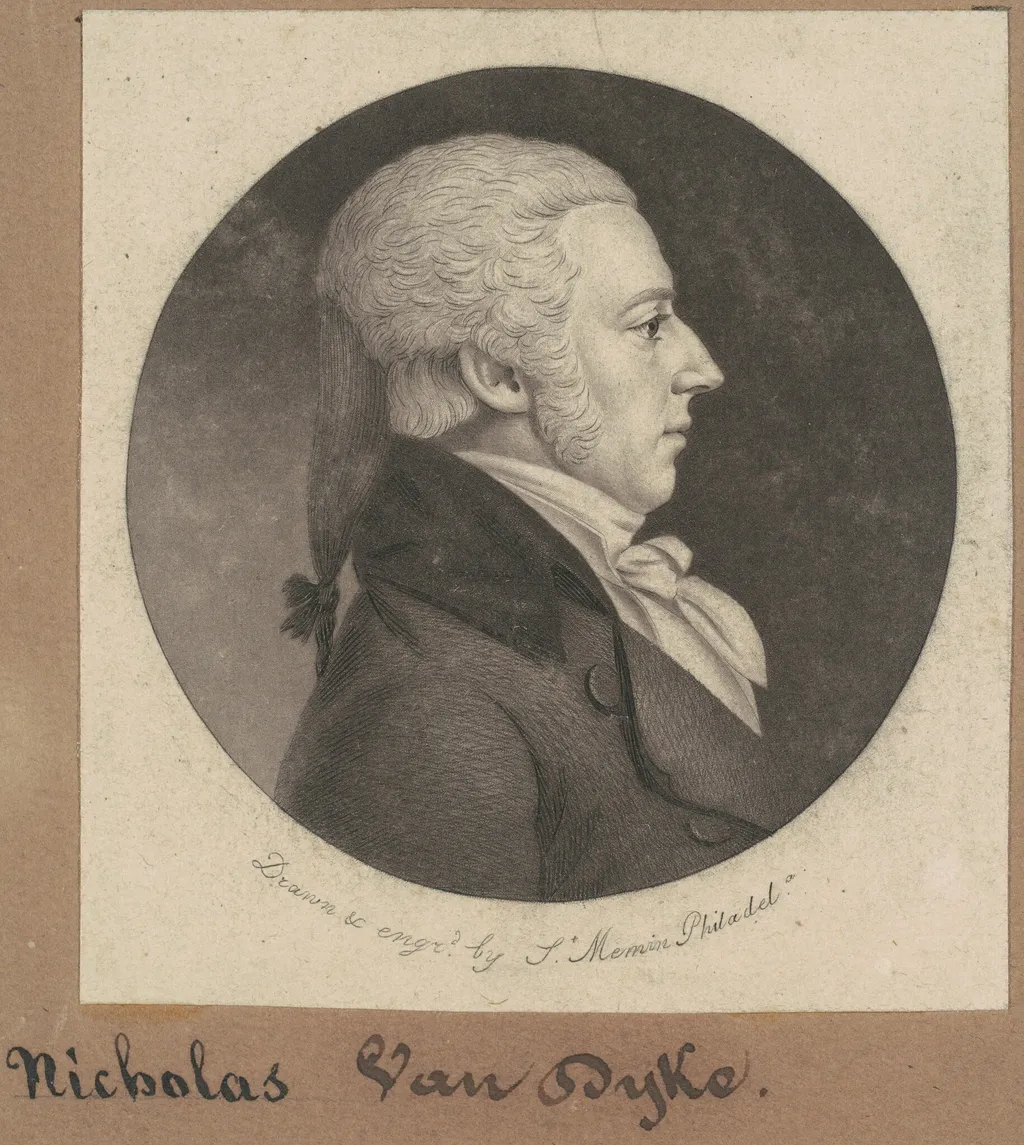
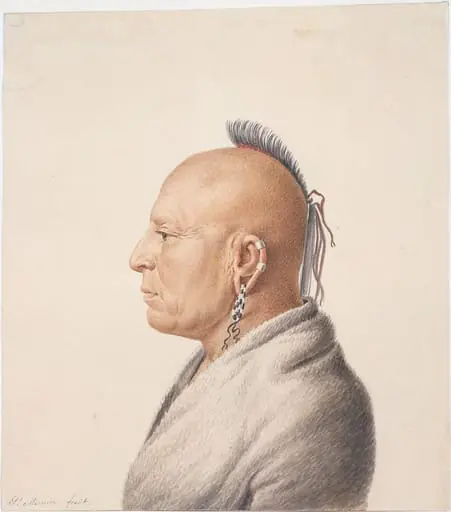
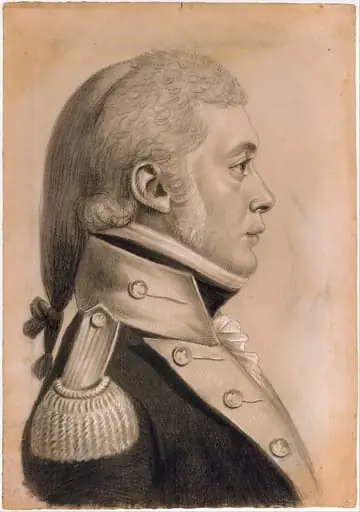
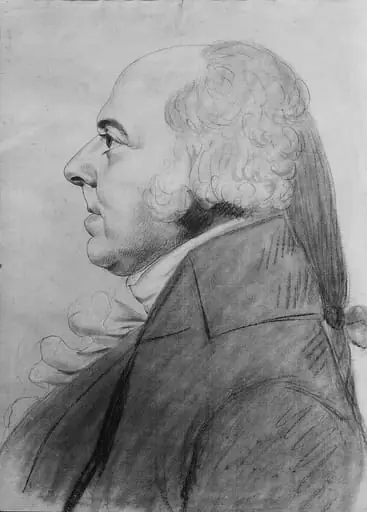
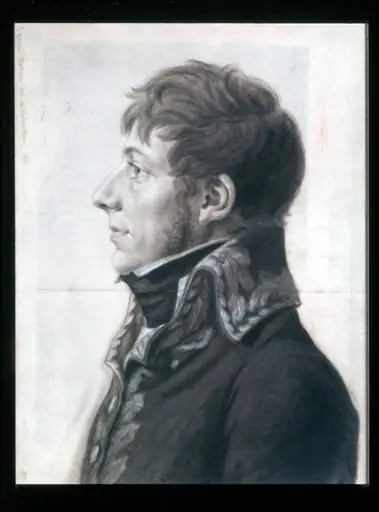
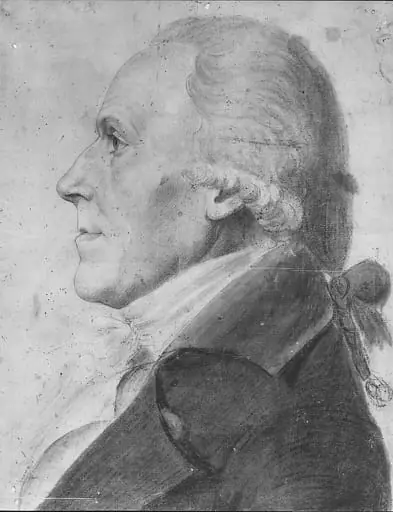
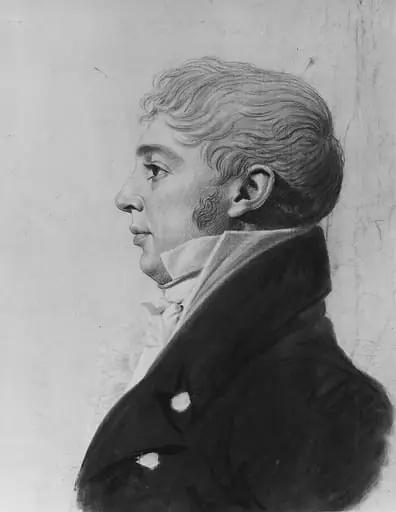
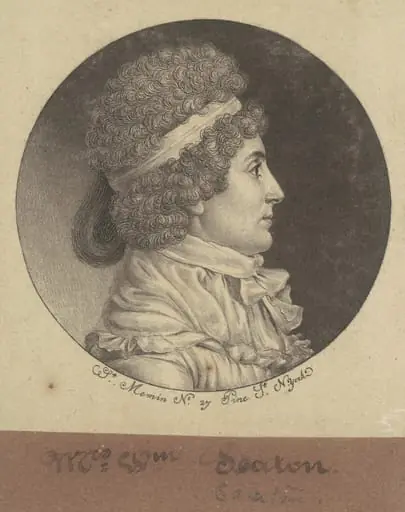
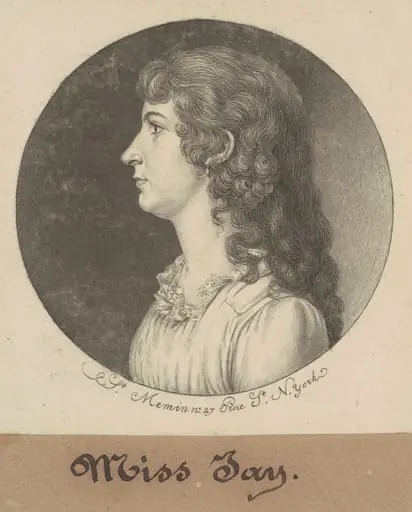
Nicholas Van Dyke is an ink print by the Romanticist artist Charles Balthazar Julien Févret de Saint-Mémin. It dates from 1802 and is held in the collection of the National Gallery of Art.
About this work
Overview
Févret de Saint-Mémin, it combines mezzotint and engraving techniques on wove paper, mounted to a brown wove support.
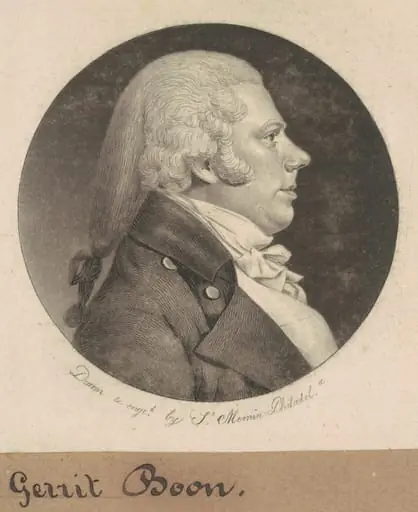
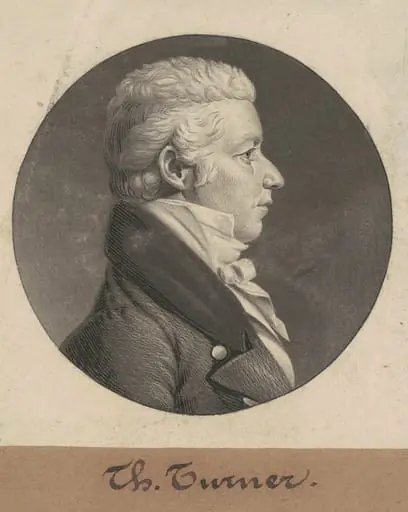
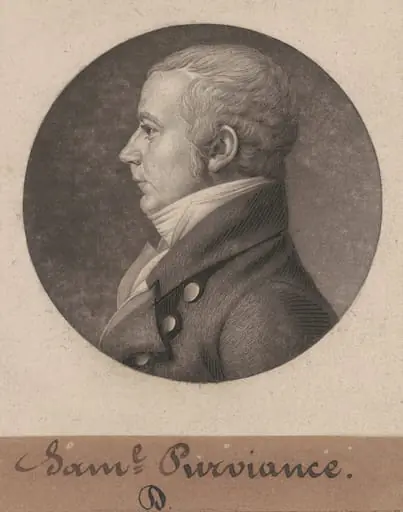
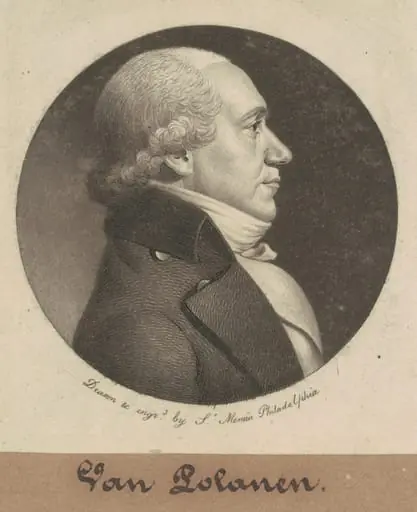
This small portrait, executed in 1802, depicts Nicholas Van Dyke, a Delaware politician and jurist. Created by Charles B. J. Févret de Saint-Mémin, it combines mezzotint and engraving techniques on wove paper, mounted to a brown wove support. Measuring just over five and a half centimeters square, the work exemplifies the intimate scale typical of early American portrait miniatures produced through printmaking.
Subject & Meaning
Nicholas Van Dyke is portrayed with a composed, solemn expression, reflecting his public role as a legal figure. His attire—high collar, dark coat, and powdered hair—aligns with late 18th-century formal dress, signaling status and civic duty. The portrait serves not as personal embellishment but as a record of identity, consistent with the era’s use of portraiture for institutional and familial documentation.
Technique & Style
Saint-Mémin employed mezzotint to achieve subtle tonal gradations and engraving for sharp linear detail, a method he refined in the United States. The small format demanded exceptional precision; each line and shadow was carefully incised to convey texture and volume within minimal space. The result is a tightly controlled image, where light and form are rendered with restraint, emphasizing clarity over ornamentation.
History & Provenance
The print was made during Saint-Mémin’s time in America, when he produced numerous portraits of prominent figures using his patented physiognotrace device to trace profiles, later enhancing them with hand engraving. This portrait of Van Dyke was likely part of a series commissioned by patrons or institutions. Its survival in museum collections reflects its role in documenting early American leadership.
Context
In the early 1800s, portraiture in the U.S. was transitioning from painted likenesses to more accessible printed forms. Saint-Mémin’s technique allowed for multiple impressions, making likenesses of public figures available beyond elite circles. This print aligns with a broader cultural shift toward visual documentation of civic identity in the young republic.
Legacy
Saint-Mémin’s portraits, including this one, remain key examples of early American printmaking. His fusion of mechanical aid and hand craftsmanship influenced how portraiture was produced and disseminated. Though small in scale, these works contributed to a visual archive of the nation’s founding generation, preserving faces and forms for historical study.
Artist & collection

Artist
Charles Balthazar Julien Févret de Saint-Mémin
Charles Balthazar Julien Févret de Saint-Mémin (French pronunciation: ; 1770–1852) was a French portrait painter and museum director.