Artwork
Perpignan
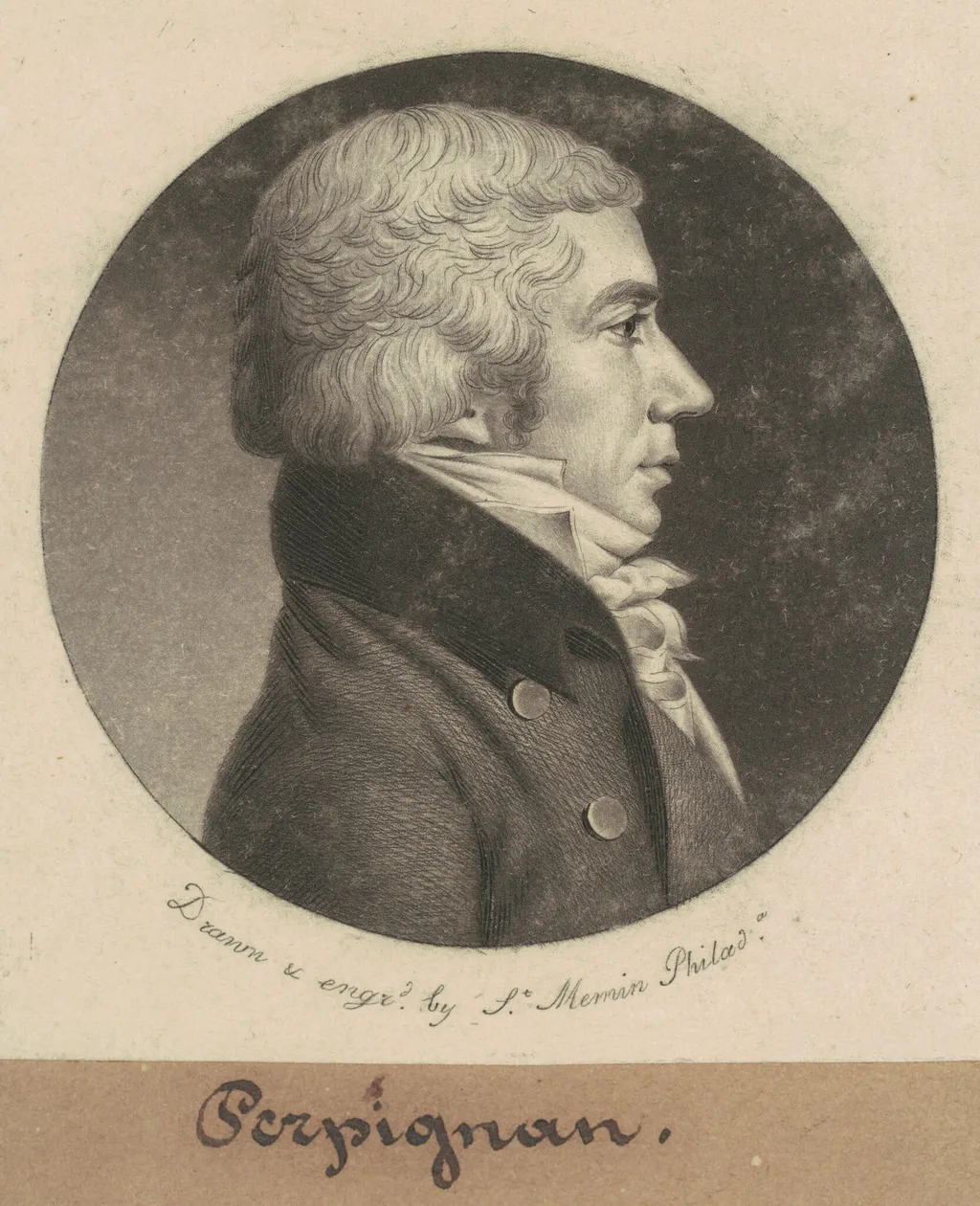
Perpignan is an ink print by the Romanticist artist Charles Balthazar Julien Févret de Saint-Mémin. It dates from 1800 and is held in the collection of the National Gallery of Art. Created in 1801 by Charles B.
About this work
Overview
Its intimate scale and tonal subtlety reflect the artist’s focus on quiet observation rather than grand narrative.
Created in 1801 by Charles B. J. Févret de Saint-Mémin, this small print depicts a quiet street in Perpignan, France. Executed in mezzotint and engraving on wove paper, it is mounted on a brown wove support. Measuring just over five and a half centimeters square, the work belongs to the Corcoran Collection. Its intimate scale and tonal subtlety reflect the artist’s focus on quiet observation rather than grand narrative.
Subject & Meaning
The scene captures a narrow urban alley in Perpignan, lined with modest stone buildings and a cobblestone roadway. No figures are present, emphasizing stillness and solitude. The soft play of light across weathered walls suggests a moment between day and dusk. The absence of human activity invites contemplation of place and atmosphere, aligning with early 19th-century interests in topographical detail and quiet realism.
Technique & Style
Saint-Mémin employed mezzotint to achieve a range of subtle grays, using a rocker tool to texture the plate with fine dots that hold ink. Engraved lines define architectural edges and cobblestones with precision. The combination creates a hazy, atmospheric effect, where shadows melt into midtones. This technique, rare in small-scale topographical works, lends the image a quiet luminosity and tactile depth uncommon in contemporary prints.
History & Provenance
The print was produced in 1801 during Saint-Mémin’s time in France, before his move to the United States. It entered the Corcoran Collection in Washington, D.C., through the museum’s acquisition of 19th-century American and European prints. Its small size and delicate condition suggest it was likely kept as a personal study or souvenir rather than a public display piece.
Context
In the early 1800s, mezzotint was primarily used for portraiture or reproductive prints. Saint-Mémin’s choice to apply it to a landscape scene was unconventional. His work reflects a broader European interest in documenting regional architecture and daily environments, influenced by the rise of topographical drawing and early travel literature during the post-Revolutionary period.
Legacy
Though not widely exhibited, this print exemplifies Saint-Mémin’s technical versatility and his interest in capturing place through tonal nuance. It stands as a quiet counterpoint to the more dramatic historical prints of his era. Today, it remains a rare example of mezzotint used for intimate urban observation, offering insight into the artist’s lesser-known contributions to printmaking beyond portraiture.
Artist & collection

Artist
Charles Balthazar Julien Févret de Saint-Mémin
Charles Balthazar Julien Févret de Saint-Mémin (French pronunciation: ; 1770–1852) was a French portrait painter and museum director.