Artwork
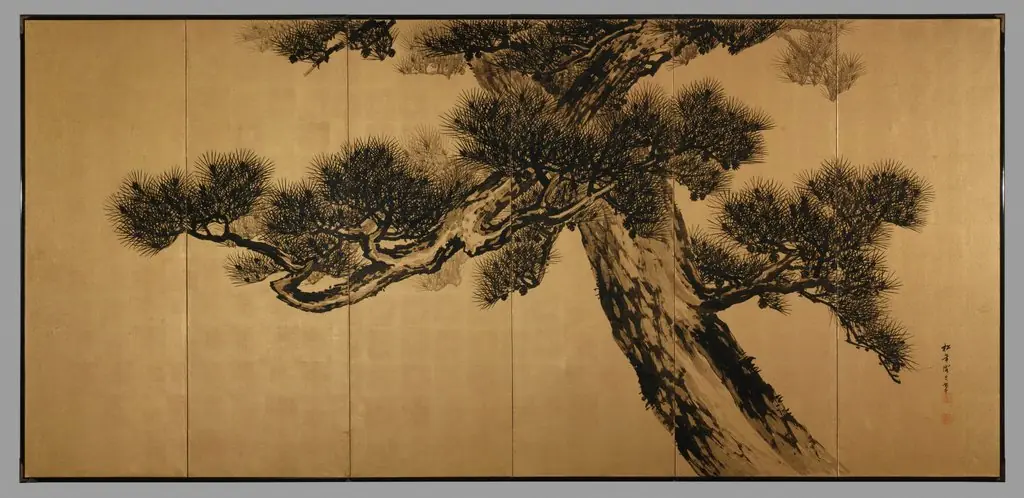
Triptych of the Seasons: Snow Clad Pine
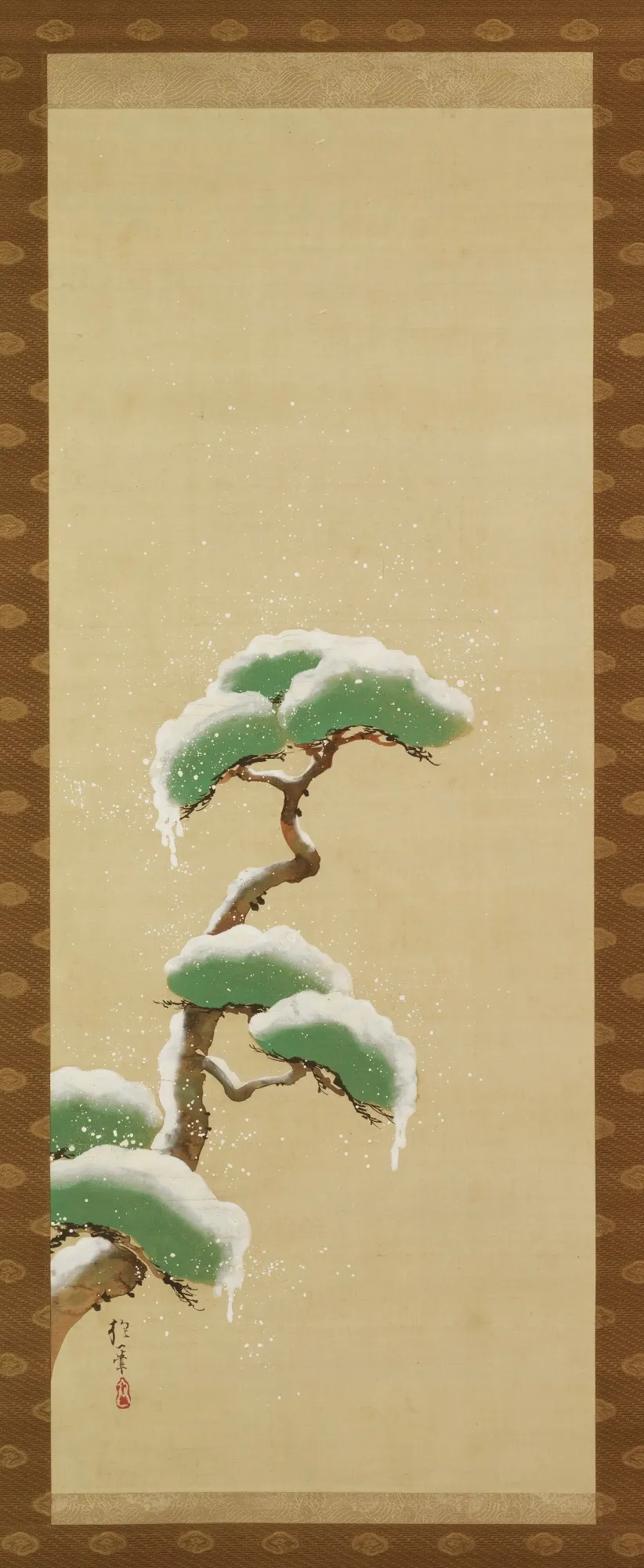
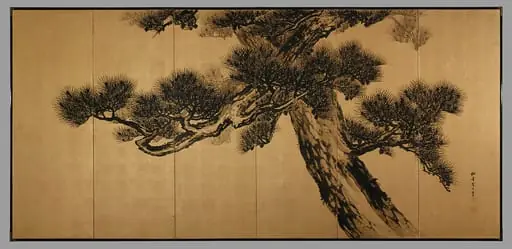
Triptych of the Seasons: Snow Clad Pine is an unspecified painting by the Nihonga artist Sakai Hōitsu. It dates from 1804 and is held in the collection of the Detroit Institute of Arts.
About this work
Overview
Created around 1804 by Sakai Hōitsu, this triptych panel titled Snow Clad Pine is one of three panels depicting seasonal themes. It is part of a larger series that reflects the Japanese aesthetic of observing nature’s cycles. The work is currently in the collection of the Detroit Institute of Arts, where it is displayed as a single panel from a once-unified composition.
Subject & Meaning
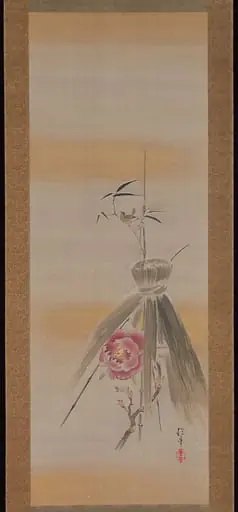
The painting centers on a pine tree burdened with snow, its evergreen needles visible beneath the white accumulation. The contrast between the persistent green and the seasonal snow evokes endurance and quiet resilience. The falling snowflakes suggest transient moments, aligning with traditional Japanese sensibilities that find beauty in impermanence and the subtle shifts of the natural world.
Technique & Style
Hōitsu employed ink and color on paper, using delicate brushwork to render the pine’s twisted branches and the soft fall of snow. The background is a muted brown, framed by a border of small oval motifs, a design element common in Edo-period decorative screens. The restrained palette and precise lines reflect the Rinpa school’s emphasis on stylized naturalism and refined composition.
History & Provenance
The triptych was likely commissioned as part of a seasonal set for a private residence or temple. It remained in Japanese collections until the early 20th century, when it entered Western hands through art dealers. The Detroit Institute of Arts acquired it in the mid-20th century, where it has since been studied as an example of Rinpa’s late evolution under Hōitsu’s leadership.
Context
Sakai Hōitsu was a key figure in reviving the Rinpa tradition during the Edo period, drawing inspiration from earlier artists like Ogata Kōrin.
Sakai Hōitsu was a key figure in reviving the Rinpa tradition during the Edo period, drawing inspiration from earlier artists like Ogata Kōrin. This triptych reflects a broader cultural interest in seasonal motifs, often used in poetry and visual arts to mark time and emotional states. The work aligns with contemporary literary and artistic circles that valued nature as a mirror for human experience.
Legacy
Hōitsu’s Snow Clad Pine exemplifies how Rinpa aesthetics endured into the 19th century through careful reinterpretation rather than innovation. Its preservation in a major Western institution has allowed broader recognition of Edo-period Japanese painting beyond ukiyo-e. The panel continues to inform scholarly understanding of how nature was visually codified in Japanese art during a period of relative isolation.
Artist & collection