Artwork
Bauernhof mit Taubenhaus
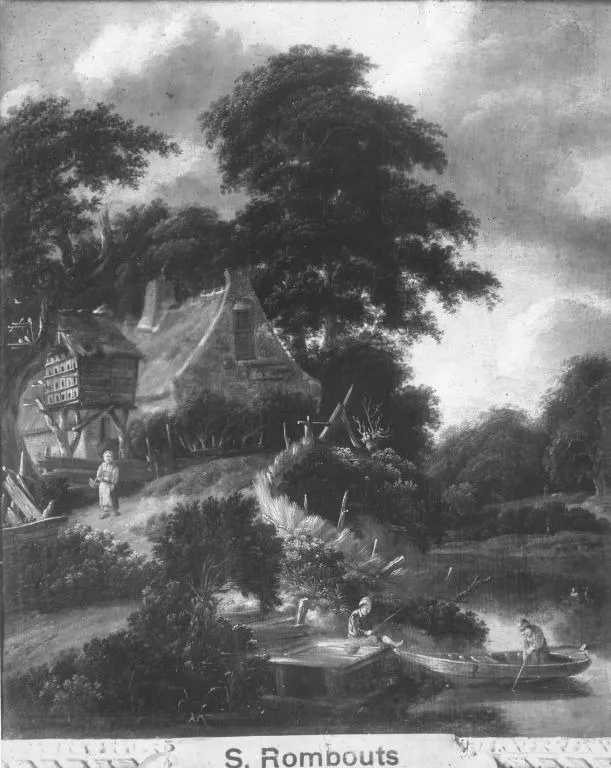
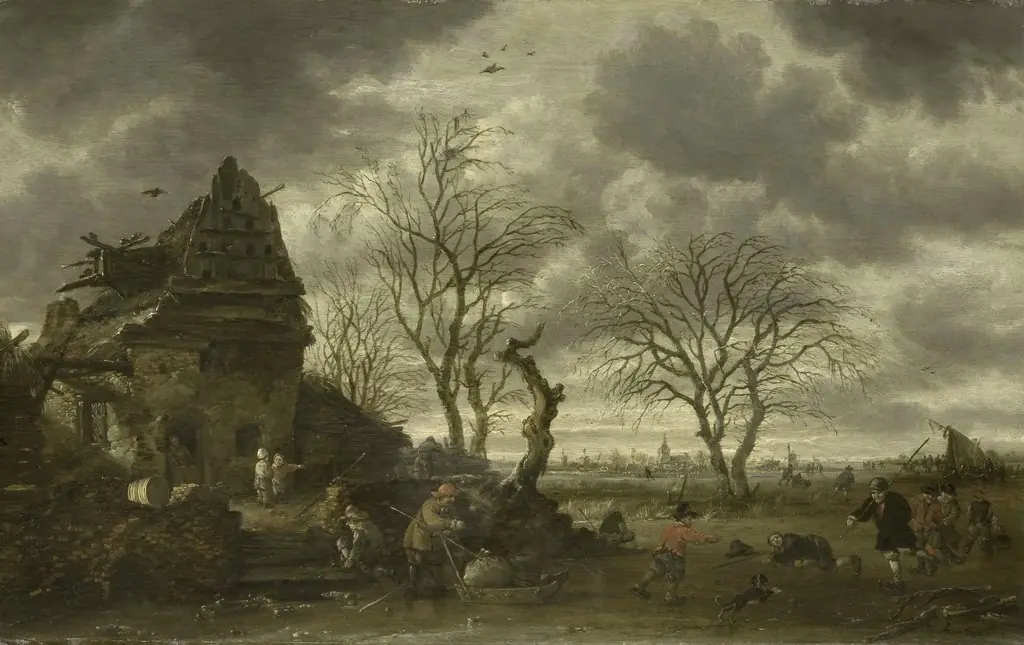
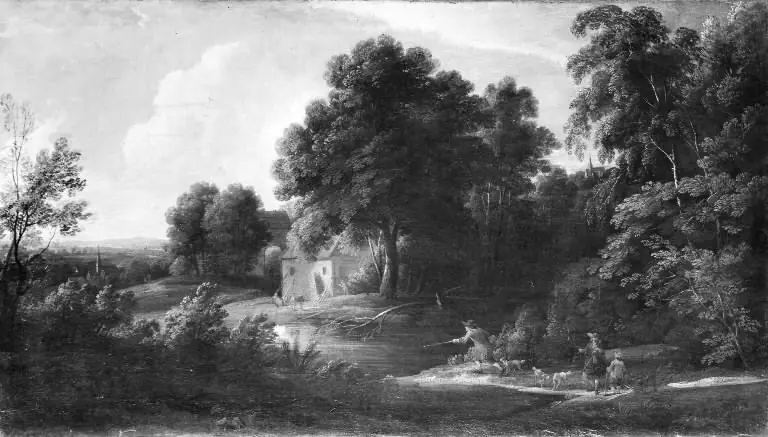
Bauernhof mit Taubenhaus is an unspecified painting by Salomon Rombouts. It dates from 1688 and is held in the collection of the Bavarian State Painting Collections.
About this work
Overview
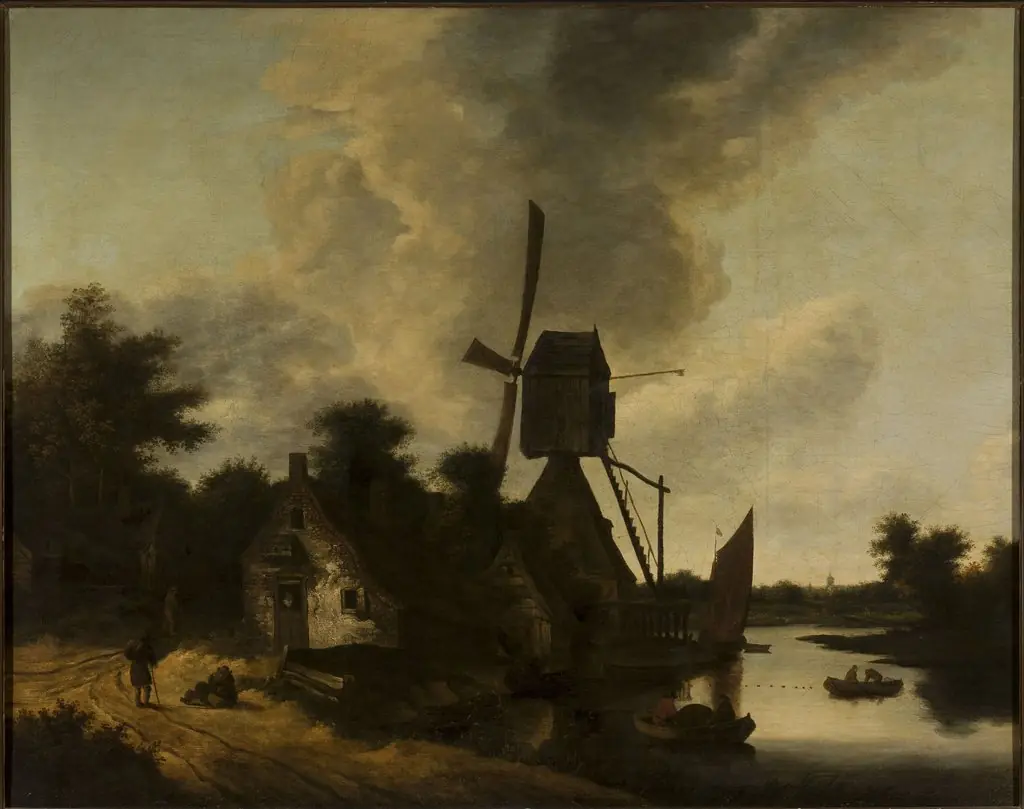
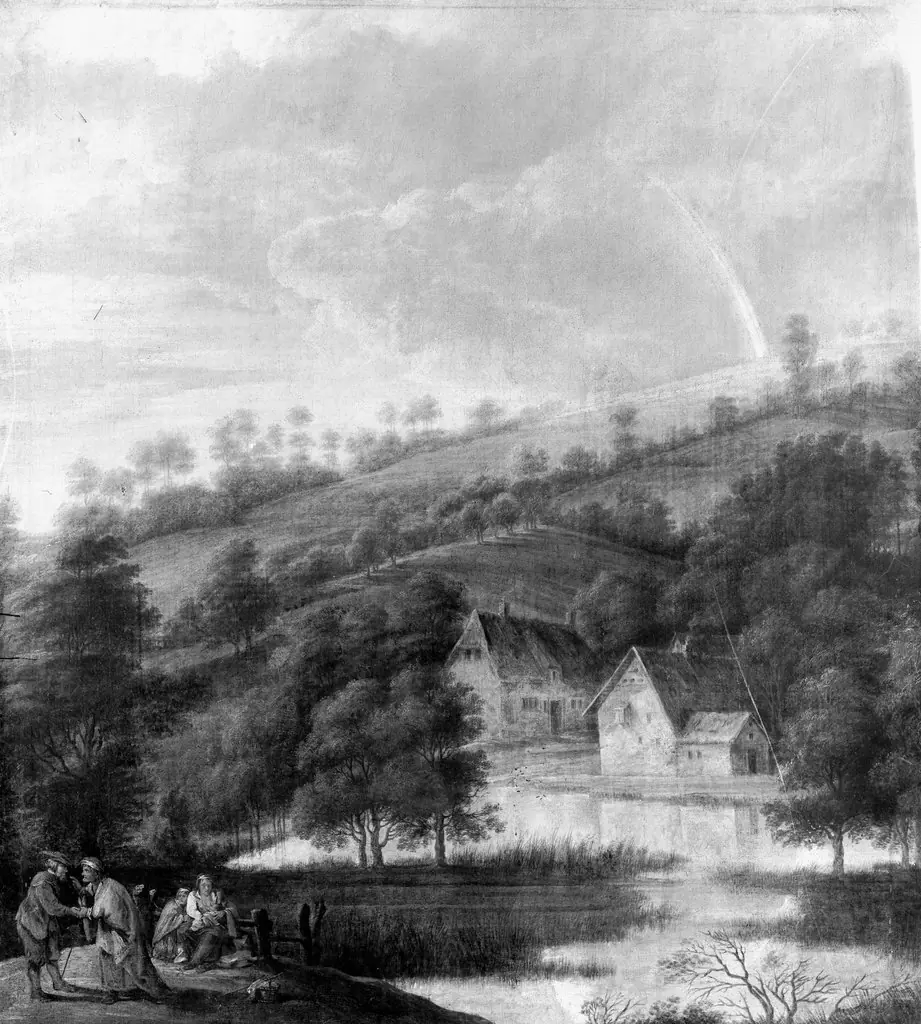
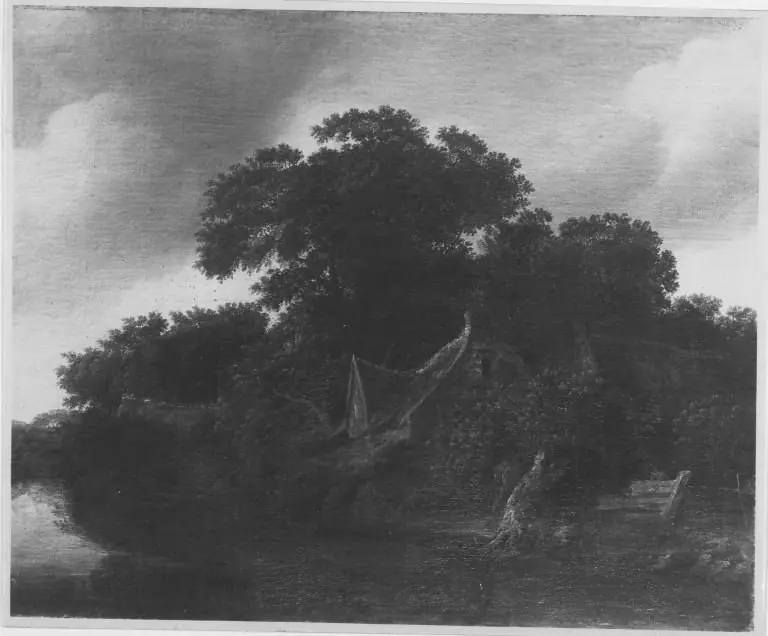
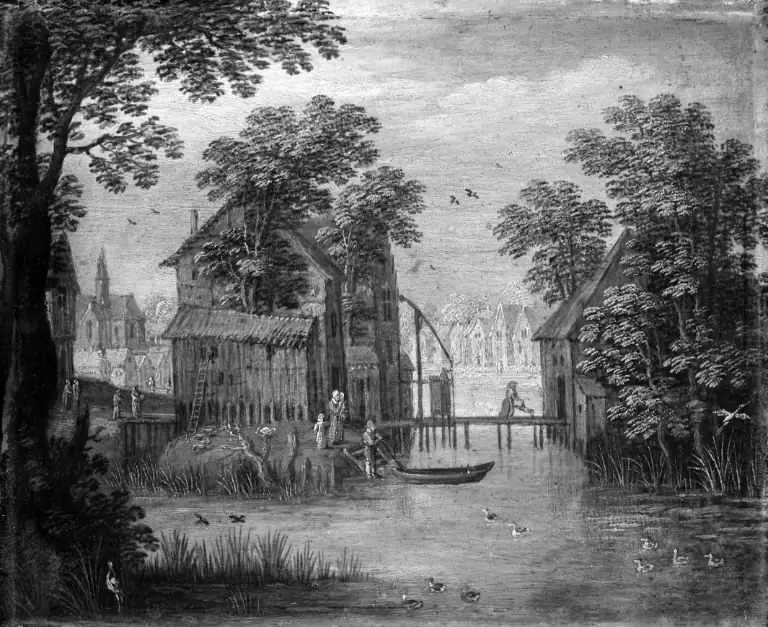
Painted around 1688 by Salomon Rombouts, this landscape depicts a quiet rural scene with a central tree, a modest farmhouse, and figures engaged in everyday tasks near water. The work resides in the Alte Pinakothek in Munich and exemplifies Dutch Golden Age genre painting, emphasizing naturalism and atmospheric detail over narrative drama.
Subject & Meaning
The painting portrays laborers in a pastoral setting: one stands on the bank, another sits in a boat, and a third rows toward shore. These figures suggest routine agricultural life, not idealized leisure. The presence of a dovehouse beside the farmhouse hints at domestic economy, reinforcing the theme of quiet, self-sustaining rural existence without overt symbolism.
Technique & Style
Rombouts employs subtle chiaroscuro to model forms and suggest depth, particularly in the foliage and the play of light across the water. Brushwork is restrained yet precise, with soft transitions between tones that enhance the hazy, overcast atmosphere. The composition directs attention toward the central tree, anchoring the scene in balanced, naturalistic space.
History & Provenance
The painting entered the Alte Pinakothek’s collection in the 19th century, likely through royal Bavarian acquisitions of Dutch and Flemish works. Its attribution to Rombouts is consistent with stylistic comparisons to his other known landscapes, though few of his works survive, making this piece a rare example of his mature style.
Context
Created during the later Dutch Golden Age, the painting reflects a shift toward intimate, unidealized rural scenes as urban patrons sought refuge in images of tranquil countryside life. Unlike grand historical or mythological subjects, this work values observation over drama, aligning with contemporary tastes for quiet, truthful depictions of nature and labor.
Legacy
Rombouts’s work remains a modest but significant contribution to Dutch landscape painting, illustrating how regional artists captured the rhythms of rural life with quiet precision. While not widely known today, his paintings contribute to the broader understanding of 17th-century Dutch visual culture beyond its more famous masters.
Artist & collection