Artwork
Landscape with a windmill
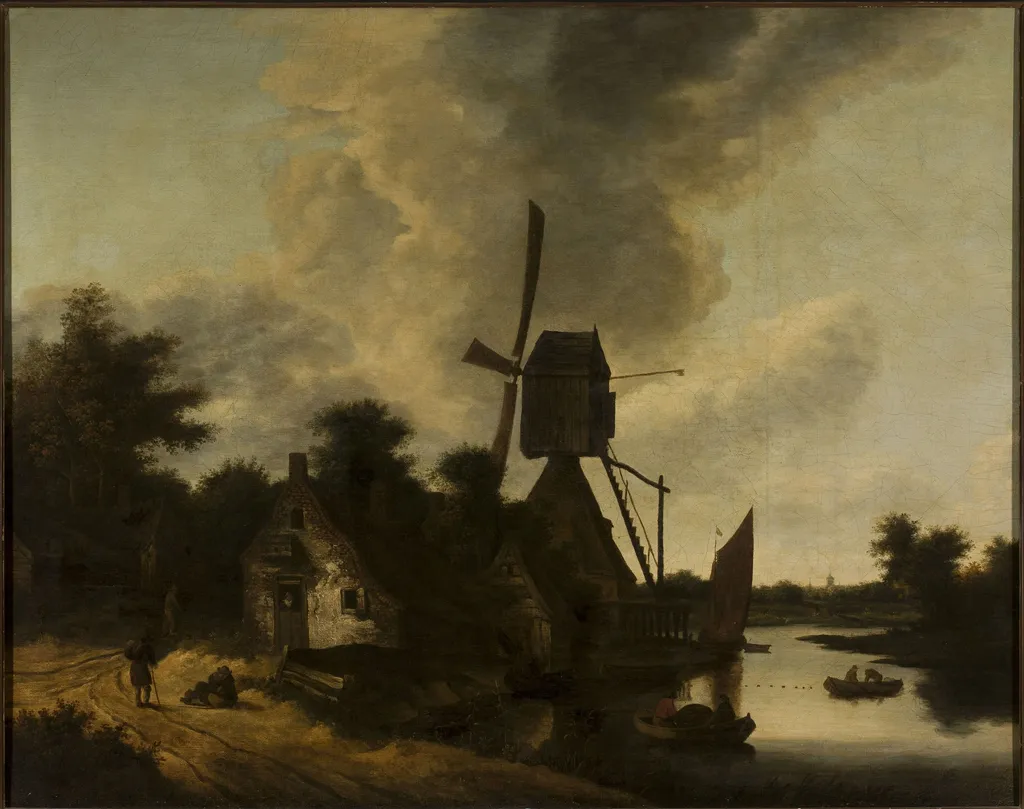
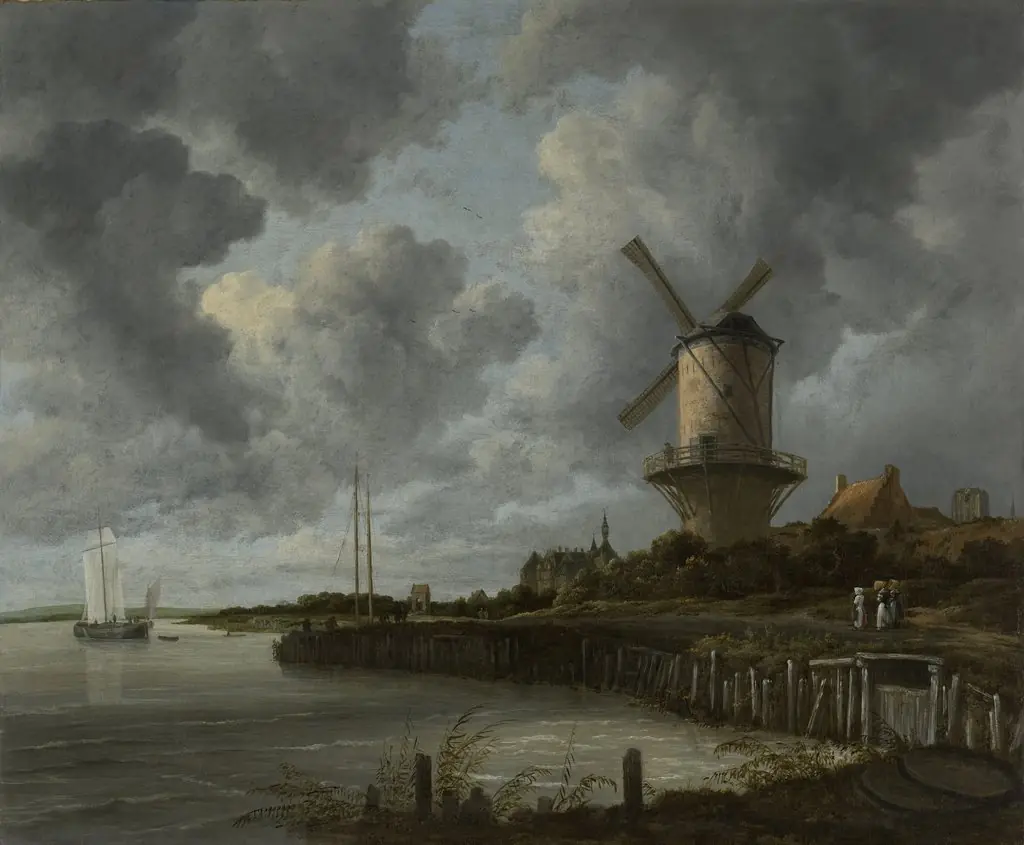
Landscape with a windmill is an oil painting by the Dutch Golden Age artist Salomon Rombouts. It dates from 1688 and is held in the collection of the National Museum in Warsaw.
About this work
Overview
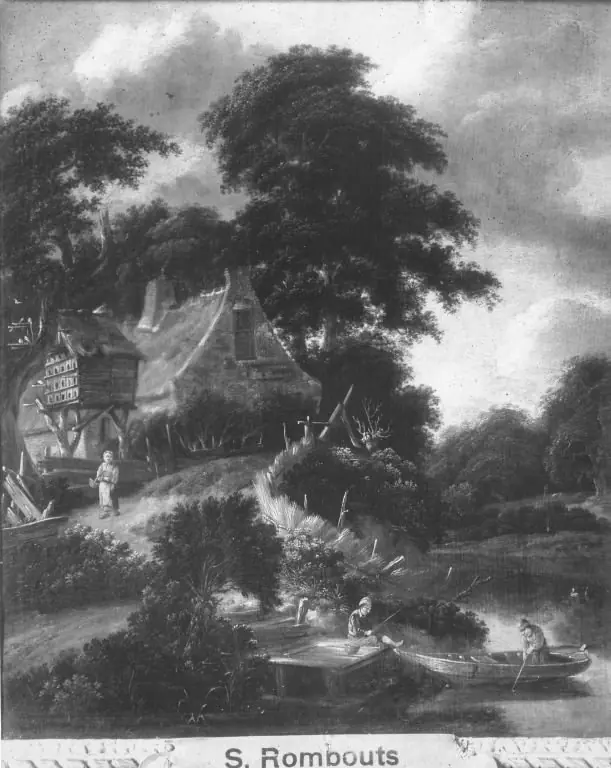
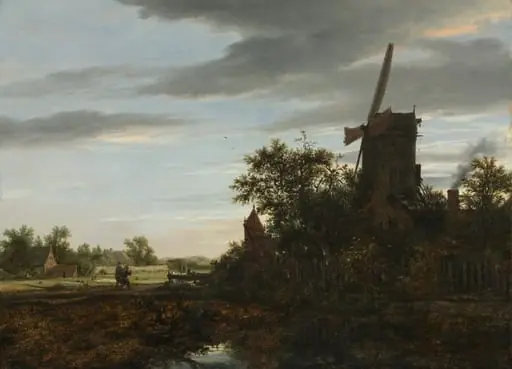
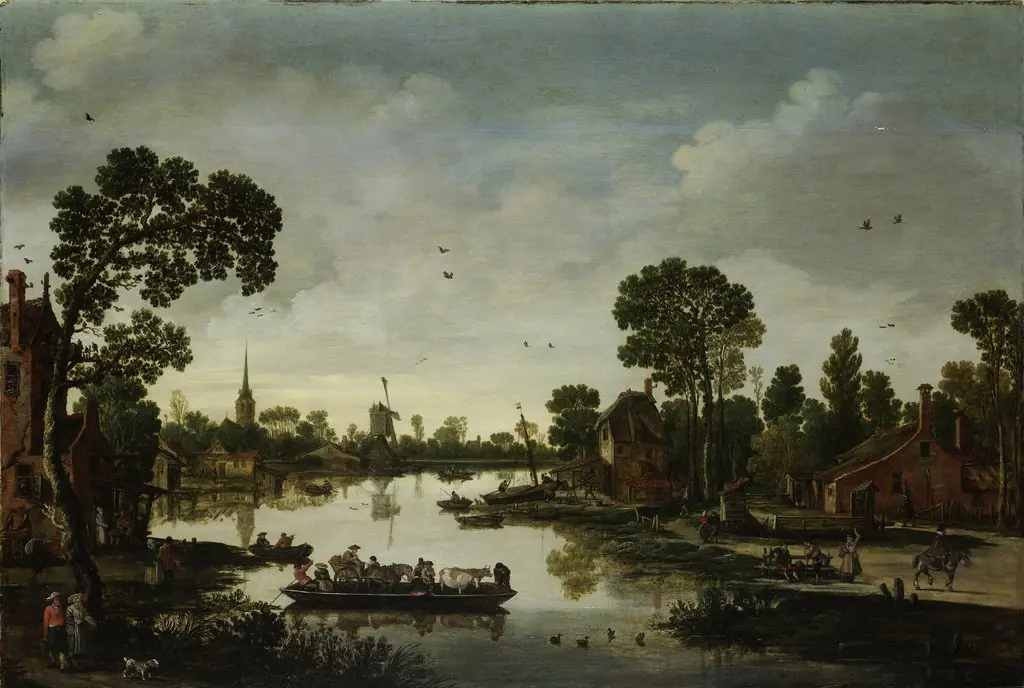
The composition includes a modest dwelling nearby and a few figures engaged in daily activities—one seated along the bank, another in a small boat.
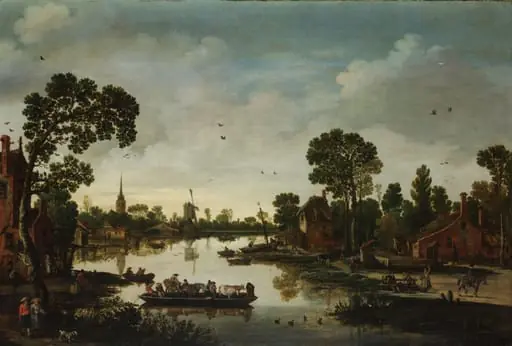
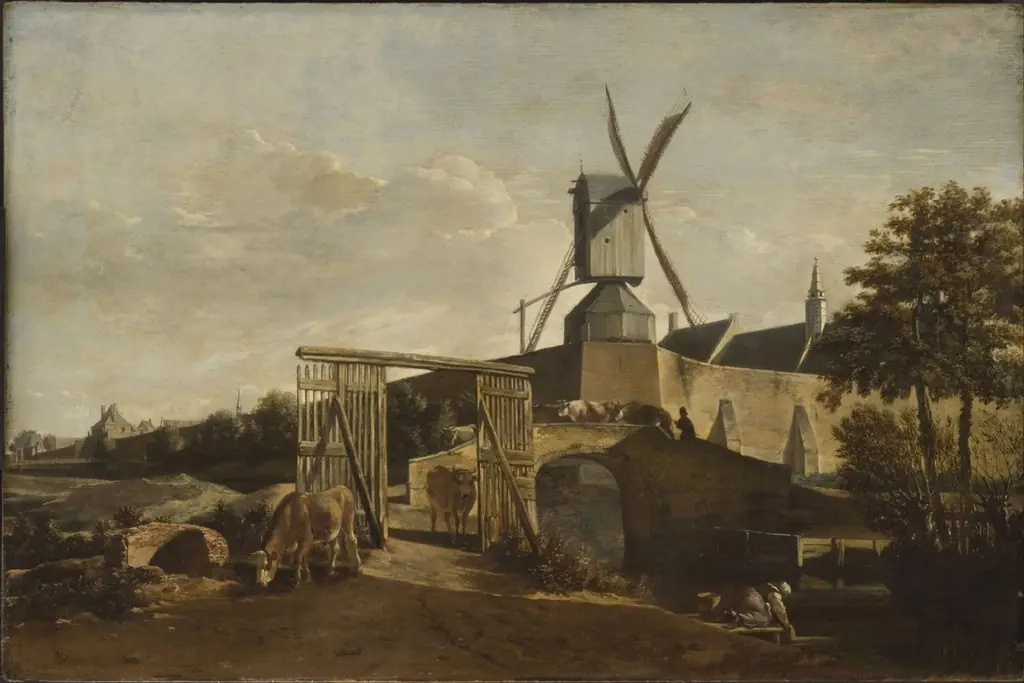
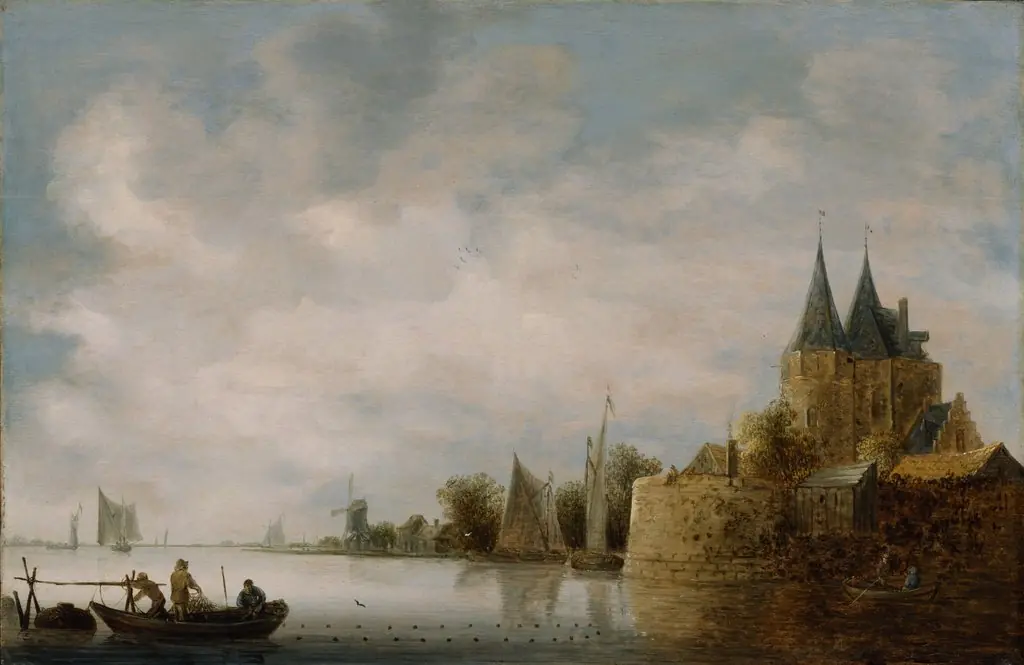
Painted around 1688, this oil-on-canvas landscape by Salomon Rombouts depicts a quiet riverside scene dominated by a timber windmill. The composition includes a modest dwelling nearby and a few figures engaged in daily activities—one seated along the bank, another in a small boat. The atmosphere is subdued, with overcast skies and a restrained palette of earth tones, emphasizing texture over color.
Subject & Meaning
The scene captures a routine moment in a rural Dutch landscape, focusing on the windmill as both functional structure and quiet sentinel. The presence of people suggests human interaction with the environment, not as dramatic events but as habitual acts—fishing, traveling, resting. The painting conveys stillness and continuity, reflecting the rhythm of everyday life in the late 17th-century countryside.
Technique & Style
Rombouts employs fine brushwork to render the weathered wood of the windmill and the rippling surface of the river. The muted tones—browns, grays, and muted greens—create a cohesive, somber mood. Atmospheric perspective is subtly used to recede the background, while detailed textures in foliage and architecture ground the scene in realism without idealization.
History & Provenance
The painting has been part of the National Museum in Warsaw’s collection since at least the mid-20th century. Its earlier provenance is not fully documented, but its style aligns with Dutch landscape traditions of the late 1600s. It likely entered the museum through acquisitions of Northern European works during the post-war reorganization of Polish collections.
Context
Created during the Dutch Golden Age’s later phase, the work reflects a shift from grandeur to quiet observation. While major cities flourished, artists like Rombouts turned to rural subjects, capturing the quiet dignity of agricultural life. This painting fits within a broader trend of intimate, unidealized landscapes favored by regional painters outside Amsterdam’s commercial centers.
Legacy
Rombouts is not among the most widely recognized Dutch landscape painters, but his works contribute to the understanding of regional variations within 17th-century Dutch art. This painting remains a quiet example of how everyday scenes were rendered with care and precision, preserving a sense of place and time without theatricality.
Artist & collection