Artwork
Beach at Scheveningen
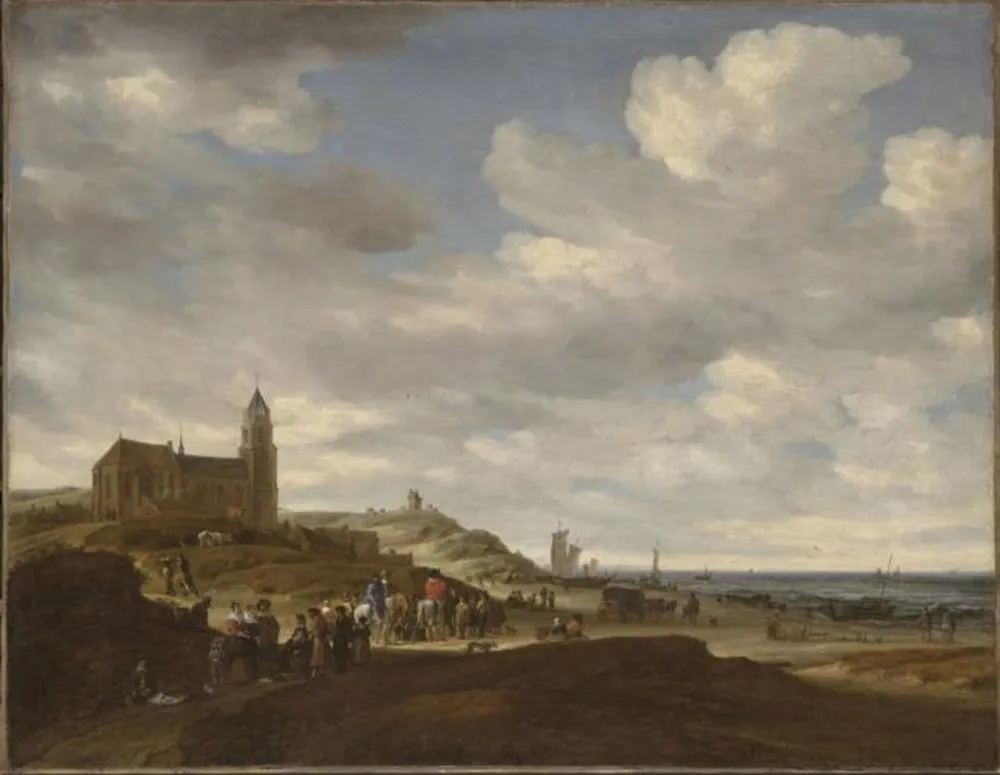
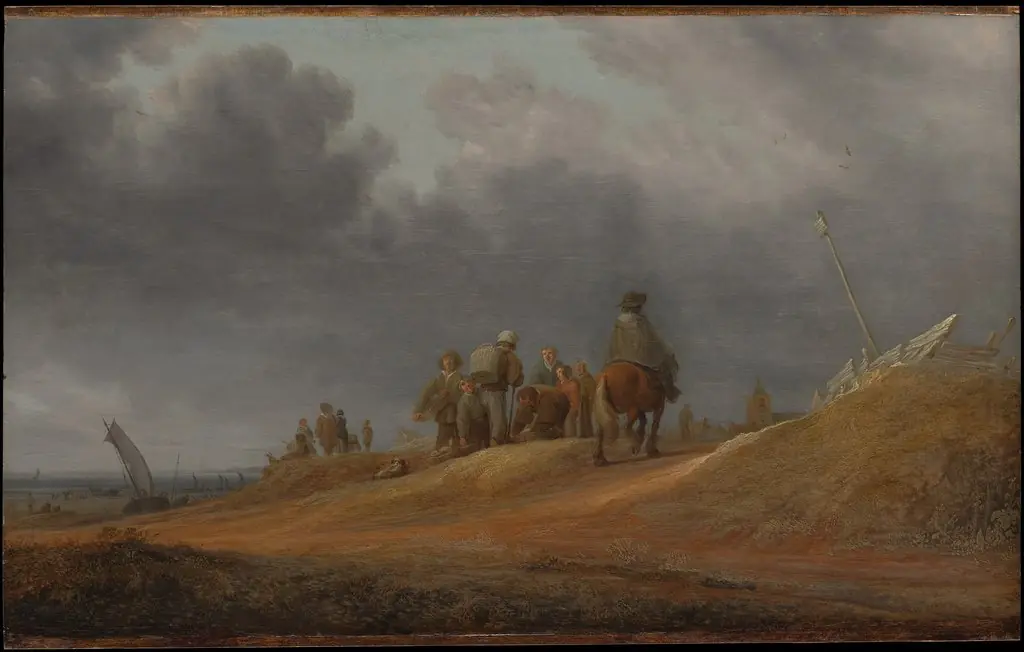
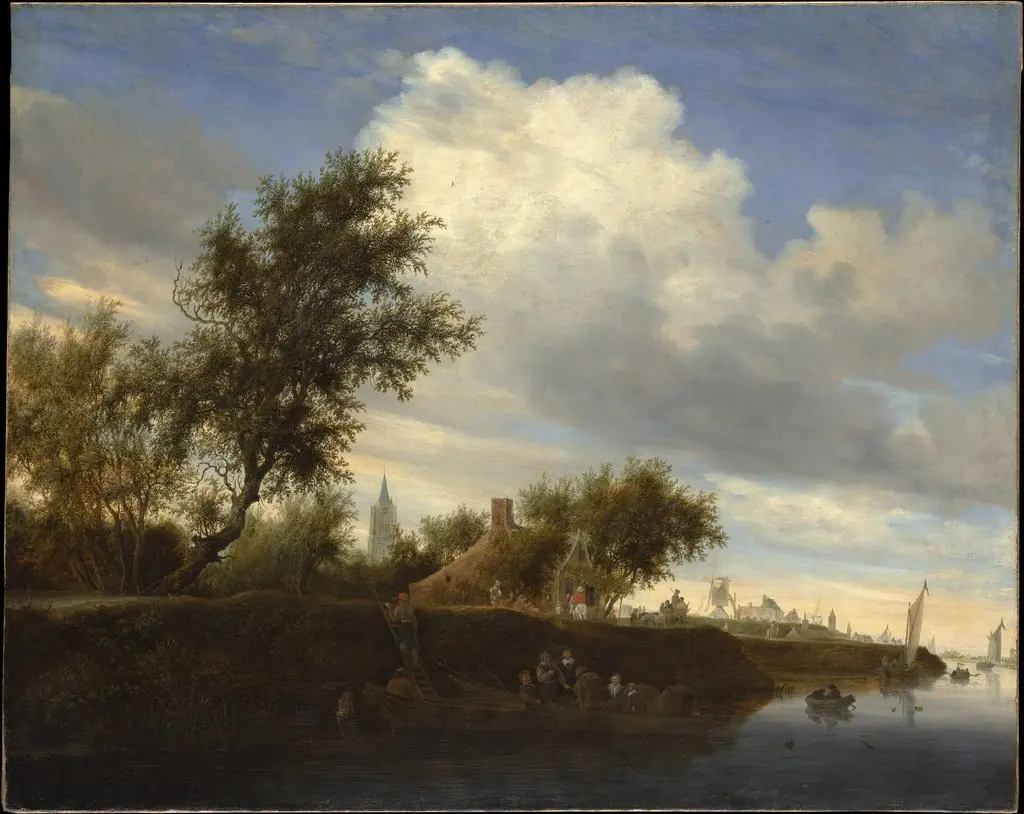
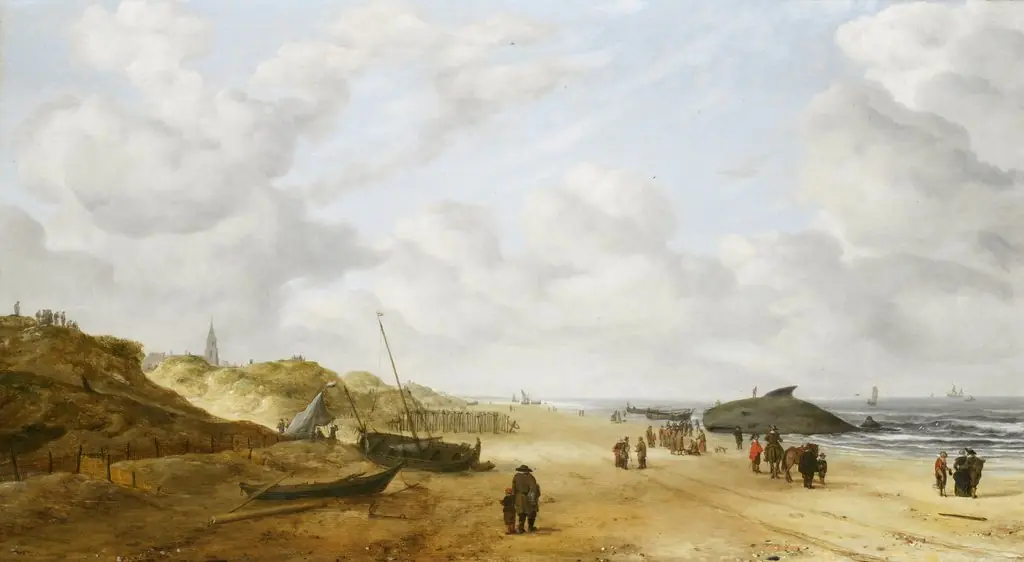
Beach at Scheveningen is an oil painting by the Dutch Golden Age artist Salomon van Ruysdael. It dates from 1665 and is held in the collection of the Philadelphia Museum of Art. Created in 1665, this oil painting portrays a tranquil shoreline at Scheveningen, a fishing settlement close to The Hague.
About this work
Overview
Created in 1665, this oil painting portrays a tranquil shoreline at Scheveningen, a fishing settlement close to The Hague. The composition balances a modest crowd of beachgoers with a distant church perched on a rise, while a stretch of water extends toward the right. The sky dominates the upper half, filled with expansive, billowy clouds that illuminate the scene.
Subject & Meaning
The work captures everyday life along the Dutch coast, emphasizing the relationship between human activity and the maritime landscape. The solitary figures suggest leisure or work, while the prominent church serves as a visual anchor, hinting at the community’s spiritual center. Together they convey a calm yet purposeful atmosphere typical of mid‑seventeenth‑century Dutch genre scenes.
Technique & Style
The artist employs chiaroscuro, contrasting bright sky illumination with deeper shadows on the sand and figures, which creates a sense of depth and three‑dimensionality. Loose yet precise brushwork renders the clouds and water, while the muted palette reflects the tonal restraint characteristic of the Dutch Golden Age landscape tradition.
History & Provenance
Painted by Salomon van Ruysdael, a noted landscape specialist and uncle of Jacob van Ruisdael, the canvas entered the Philadelphia Museum of Art’s collection, where it remains on view. Its provenance traces back to the artist’s workshop in the mid‑1600s, later passing through private hands before acquisition by the museum.
Artist & collection
Artist
Salomon van Ruysdael (c. 1602, Naarden – buried 3 November 1670, Haarlem) was a Dutch Golden Age landscape painter. He was the uncle of Jacob van Ruisdael.