Artwork
Castle on a River
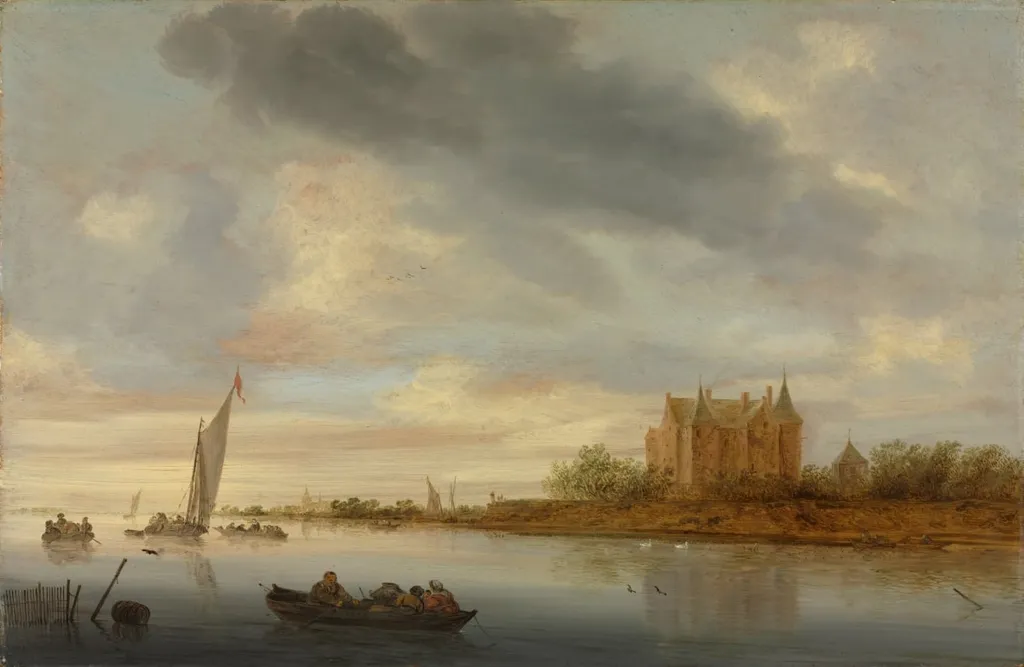
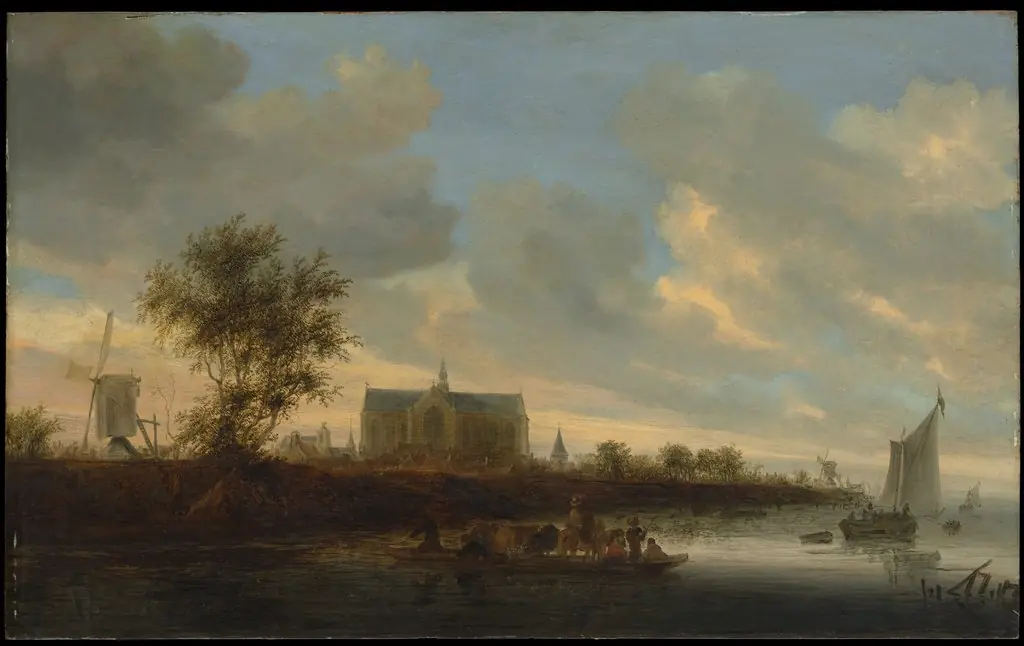
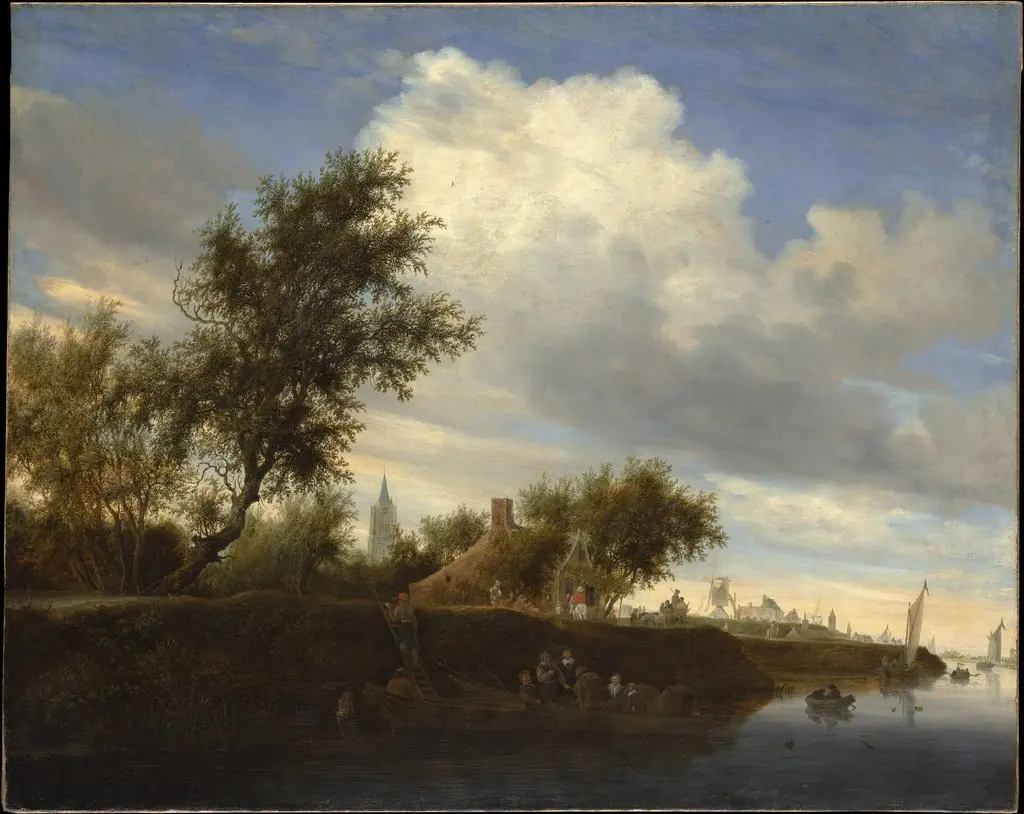
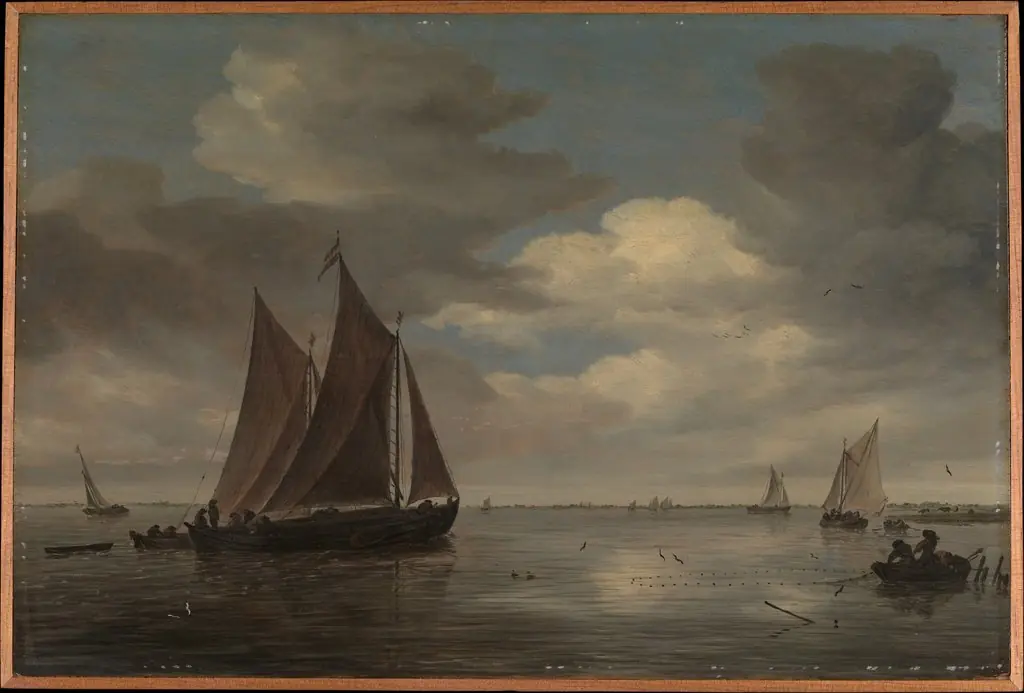
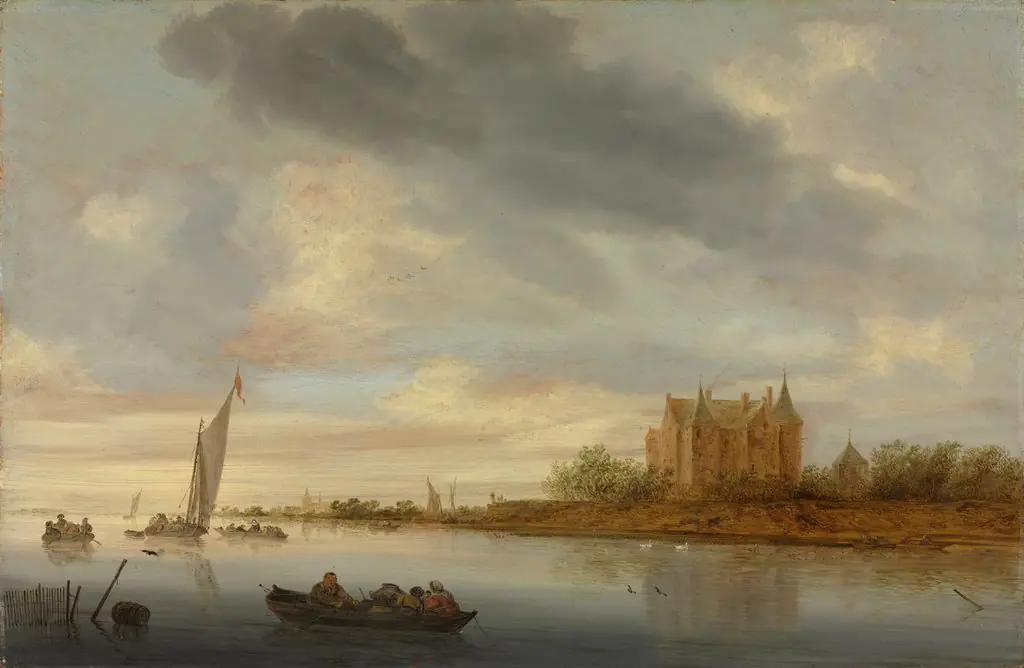
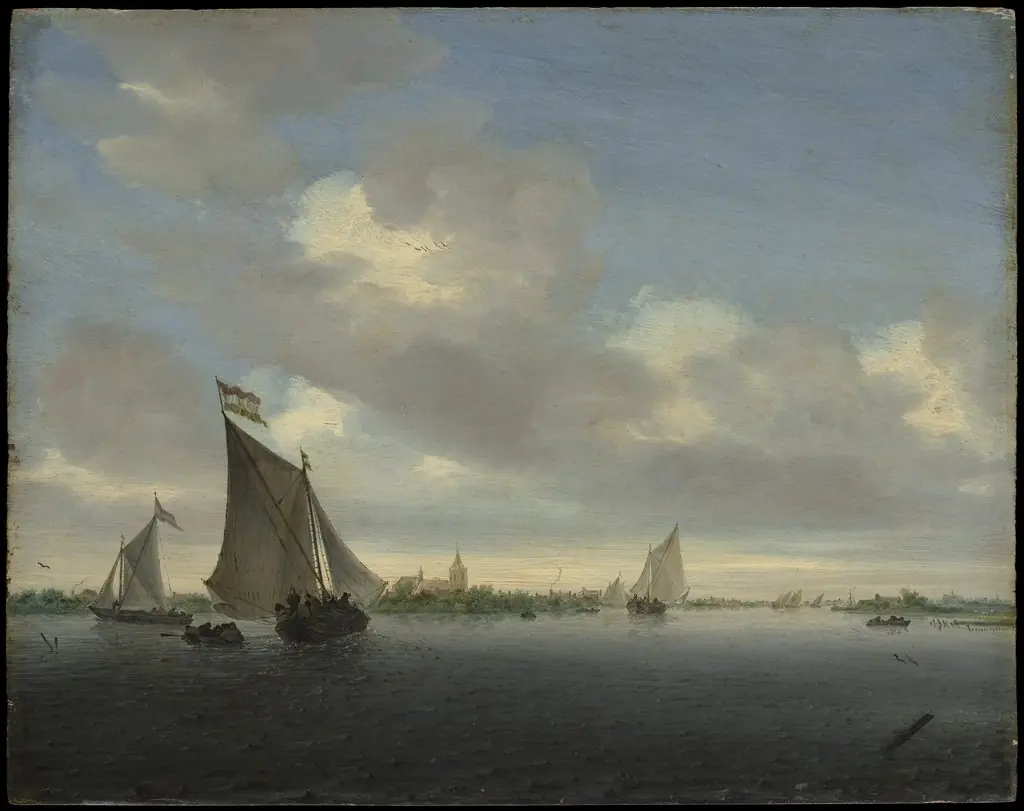
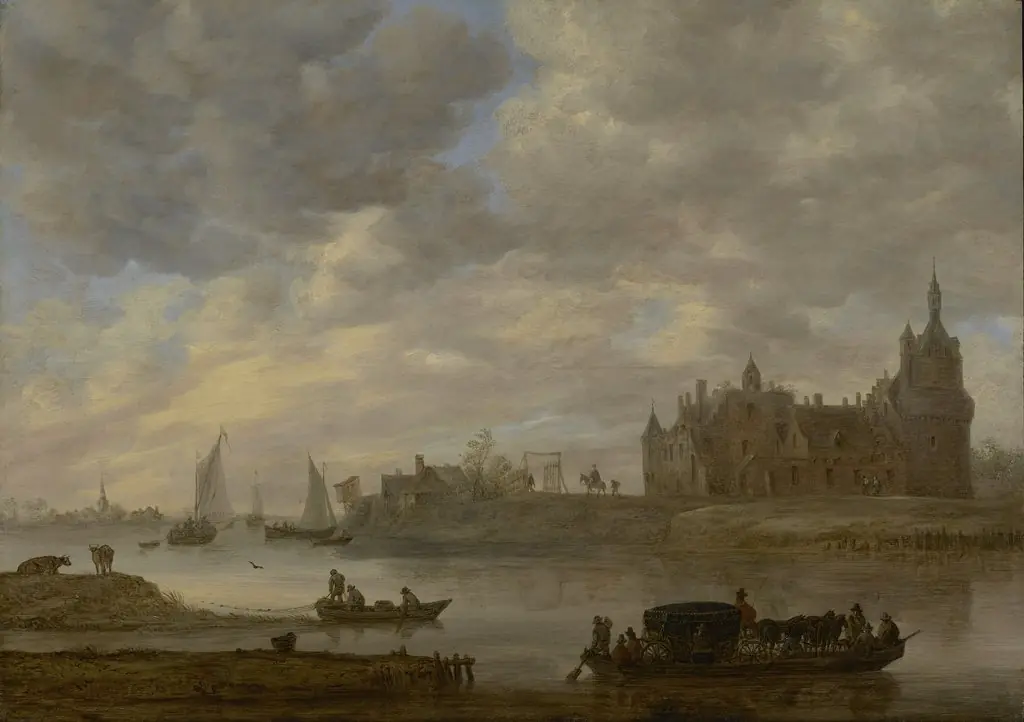
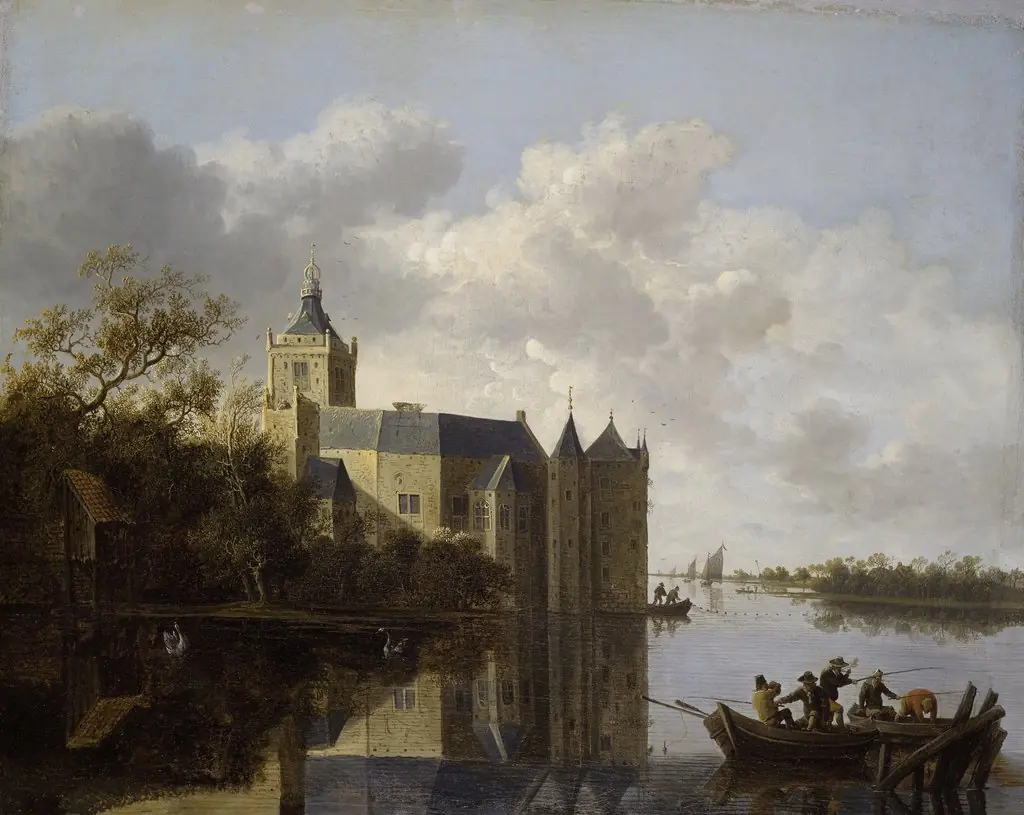
Castle on a River is an unspecified painting by the Baroque artist Salomon van Ruysdael. It dates from 1644 and is held in the collection of the Cleveland Museum of Art.
About this work
Overview
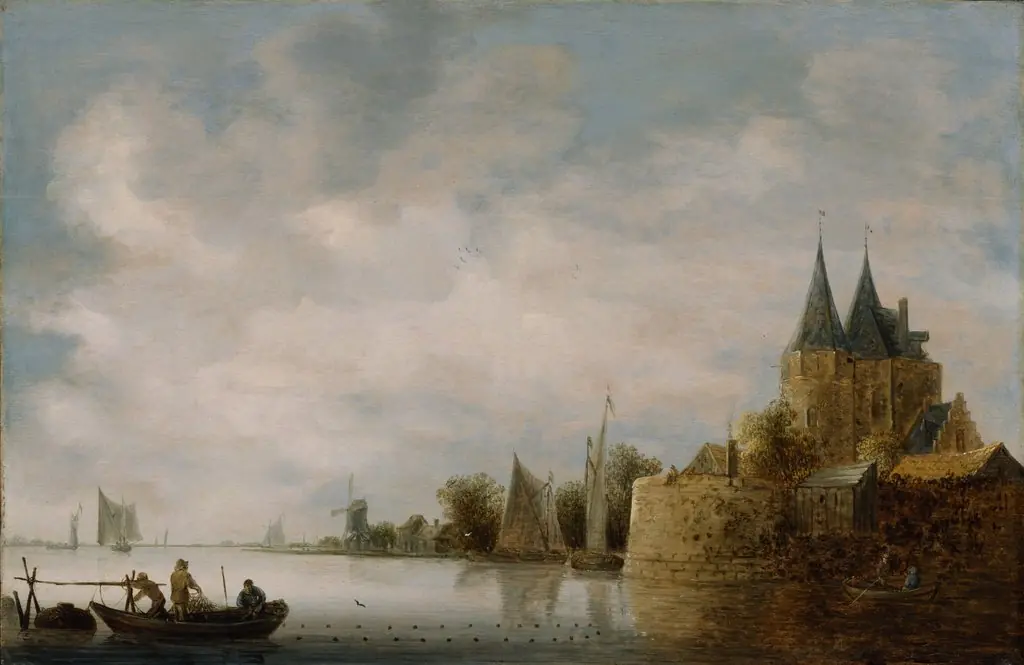
Salomon van Ruysdael’s painting depicts Castle Loevenstein, a fortified structure situated along a winding river. The scene includes modest boats, scattered trees, and soft atmospheric lighting, capturing a quiet moment in the Dutch landscape. Though rendered with naturalistic detail, the composition is not a strict topographical record but a thoughtful reimagining of a site of historical weight.
Subject & Meaning
By portraying it in a serene, sunlit setting, van Ruysdael subtly elevates its presence, transforming a symbol of authority into one of enduring stability.
Castle Loevenstein served as a state prison and strategic military post in the southern Netherlands. By portraying it in a serene, sunlit setting, van Ruysdael subtly elevates its presence, transforming a symbol of authority into one of enduring stability. The painting’s timing—just before Dutch independence from Spain—suggests it may have resonated as a quiet emblem of national identity and resilience.
Technique & Style
Van Ruysdael employs a restrained palette and delicate tonal gradations to unify the landscape. Light filters through the trees with a gentle diffusion, enhancing the sense of depth without dramatic contrast. His brushwork is precise yet unobtrusive, favoring atmospheric harmony over theatrical effect, aligning with the quiet realism characteristic of early Dutch landscape painting.
History & Provenance
The painting was created in the mid-1640s, during the final years of the Eighty Years’ War. While its early ownership is undocumented, its subject matter and timing imply it was commissioned or collected by someone with ties to the emerging Dutch Republic. The castle’s continued presence in the landscape after its military decline adds a layer of historical continuity to the work.
Context
In the decades before Dutch independence, landscape painting increasingly served as a vehicle for civic pride. Artists like van Ruysdael turned attention to real, politically significant sites, blending topography with symbolic resonance. This work reflects a broader cultural shift: the landscape as a mirror of national identity, not merely a backdrop for human activity.
Legacy
Though less celebrated than his nephew Jacob van Ruisdael, Salomon’s approach influenced the development of Dutch landscape painting by emphasizing quiet observation over grandeur. His treatment of Castle Loevenstein set a precedent for later artists who sought to convey historical weight through understated naturalism, anchoring national memory in the everyday appearance of the land.
Artist & collection
Artist
Salomon van Ruysdael (c. 1602, Naarden – buried 3 November 1670, Haarlem) was a Dutch Golden Age landscape painter. He was the uncle of Jacob van Ruisdael.