Artwork
Jason and the Dragon
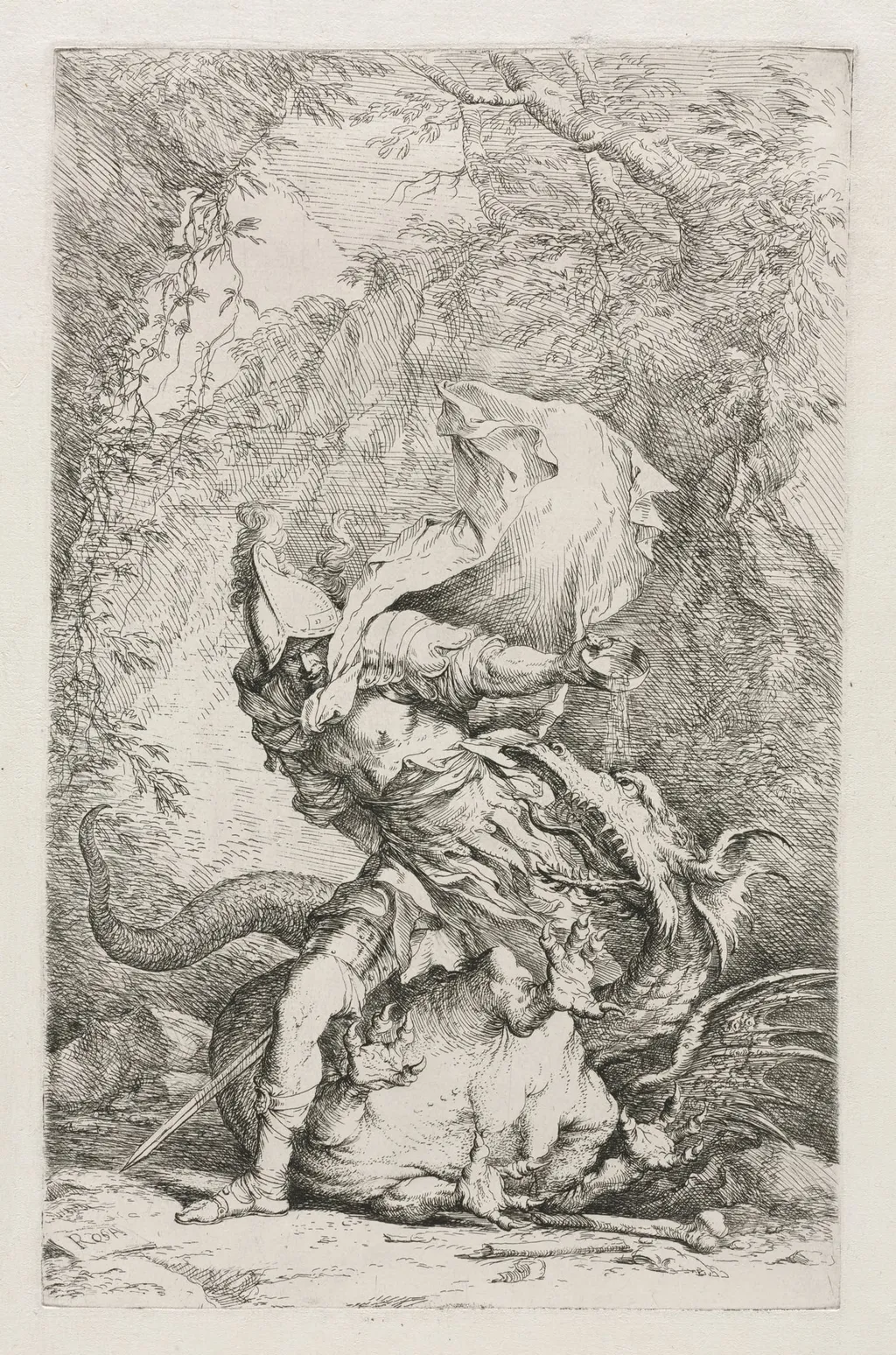
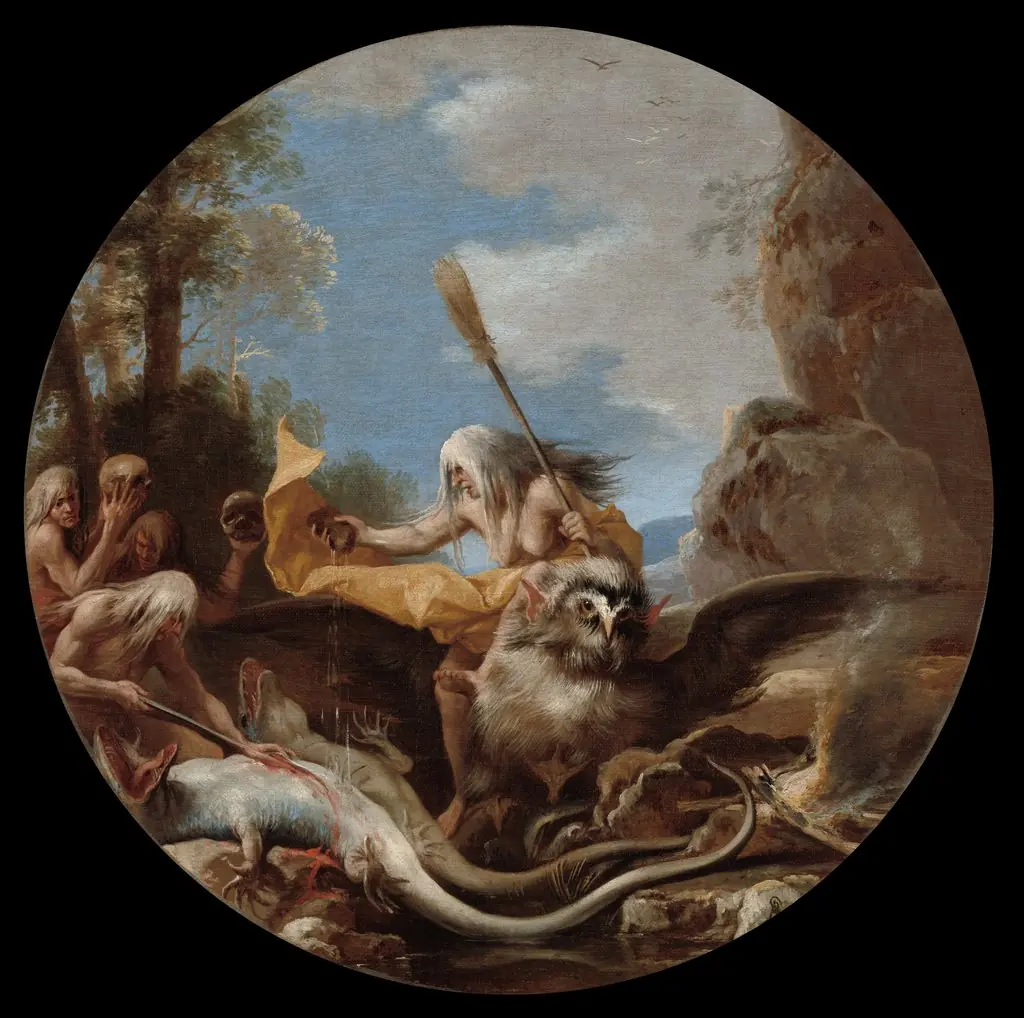
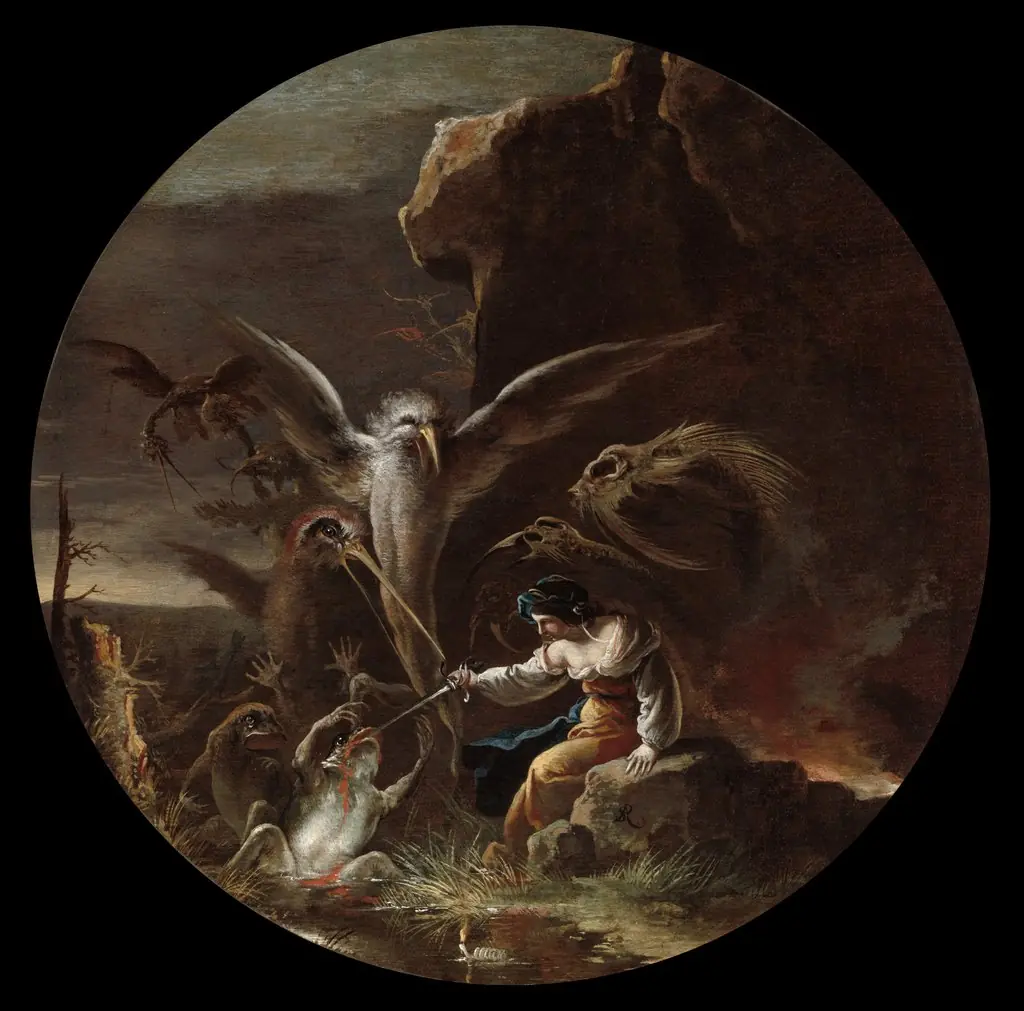
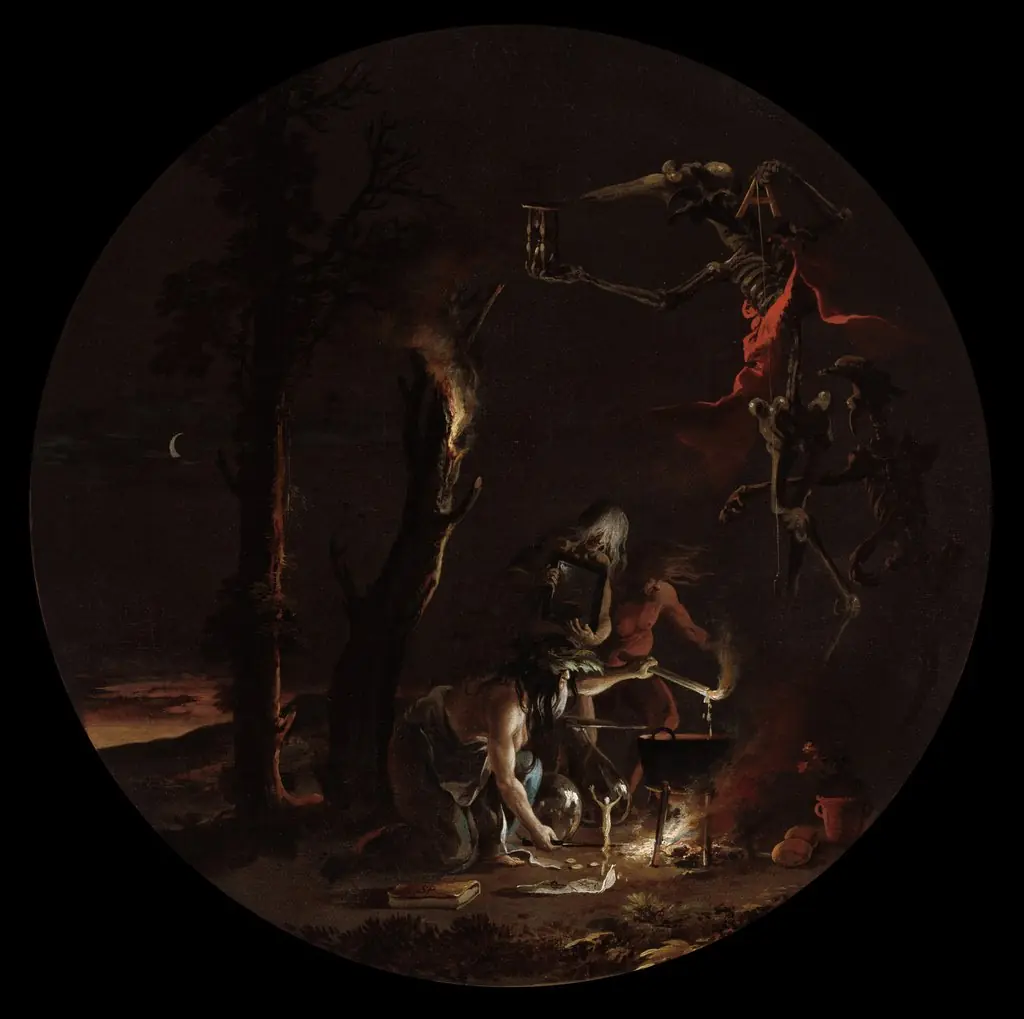
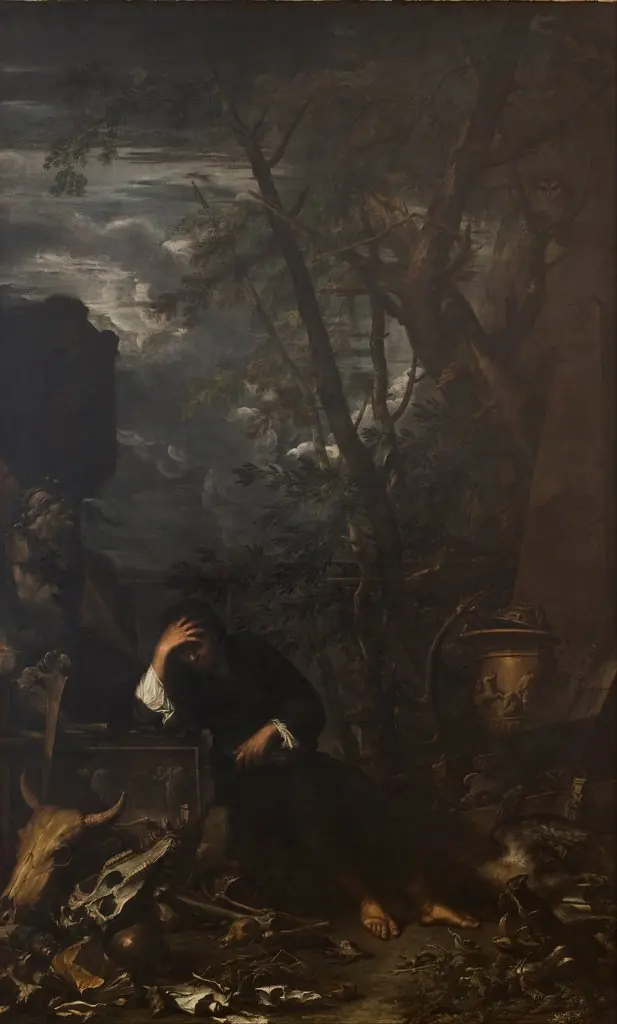
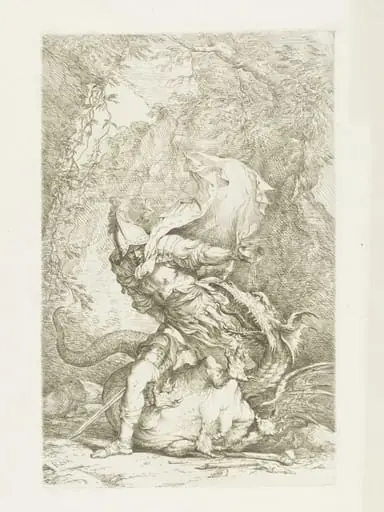
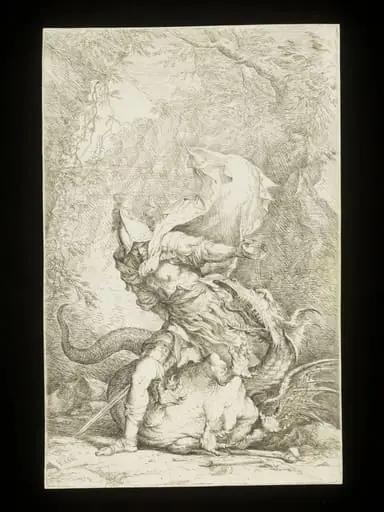
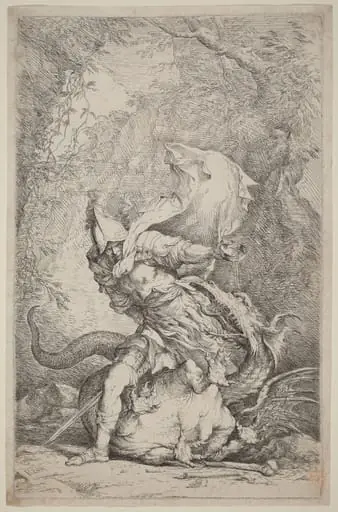
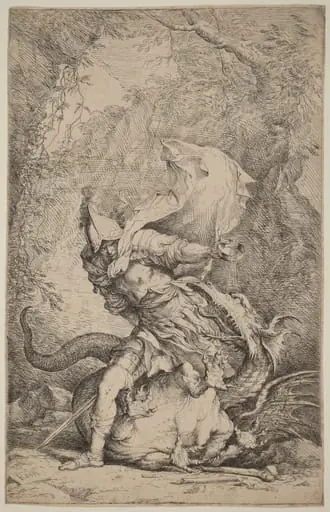
Jason and the Dragon is a print by the Baroque artist Salvator Rosa. It dates from 1663 and is held in the collection of the Cleveland Museum of Art.
About this work
Overview
Salvatore Rosa’s print depicts a moment from the myth of Jason and the Golden Fleece, focusing on the hero’s quiet act of drugging the guardian dragon.
Salvatore Rosa’s print depicts a moment from the myth of Jason and the Golden Fleece, focusing on the hero’s quiet act of drugging the guardian dragon. Unlike many contemporaries who favored battle scenes, Rosa chose this suspended instant of magic and tension. His interpretation diverges from classical heroism, emphasizing atmosphere over action. The work reflects his interest in obscure mythological episodes and his distinctive approach to narrative painting in the mid-17th century.
Subject & Meaning
The scene captures Jason, cloaked in ancient robes, kneeling beside the slumbering dragon as he prepares to administer a potion gifted by Medea. Rosa shifts focus from physical conquest to occult intervention, framing the act as a ritual rather than a feat of strength. The dragon’s stillness and the surrounding shadows suggest an unseen force at work, aligning the moment with themes of sorcery and fate. This choice underscores the moral ambiguity of Jason’s quest.
Technique & Style
Rosa employs bold, expressive lines and stark contrasts to convey unease. The composition is dominated by jagged rocks and twisted, barren trees that press inward, creating a sense of entrapment. Light falls selectively, illuminating Jason’s hand and the dragon’s scaled body while leaving much in shadow. The spontaneity of his draftsmanship enhances the raw, almost chaotic energy of the scene, reinforcing its mystical tone.
History & Provenance
Created in the 1640s, this print belongs to a series in which Rosa explored classical myths through a dark, romantic lens. It was likely produced as part of his broader effort to establish himself as a painter of intellectual, morally complex histories. The work entered the Cleveland Museum of Art’s collection in the 20th century, where it remains one of the few known printed versions of this specific mythological moment by Rosa.
Context
In 17th-century Italy, mythological subjects were often rendered with idealized clarity. Rosa resisted this norm, drawing instead from his earlier fascination with witches and the supernatural. His depiction of Jason aligns with a growing interest in psychological depth and atmospheric drama. By isolating this lesser-known episode, he positioned himself as an innovator who challenged conventional storytelling in art.
Legacy
Rosa’s treatment of Jason and the Dragon influenced later artists drawn to the eerie and the sublime. His emphasis on mood over narrative clarity prefigured Romantic sensibilities. Though not widely copied in his time, the print stands as a rare example of how classical myths could be reimagined through personal vision. It remains a key work in understanding Rosa’s contribution to the evolution of narrative printmaking.
Artist & collection
Artist
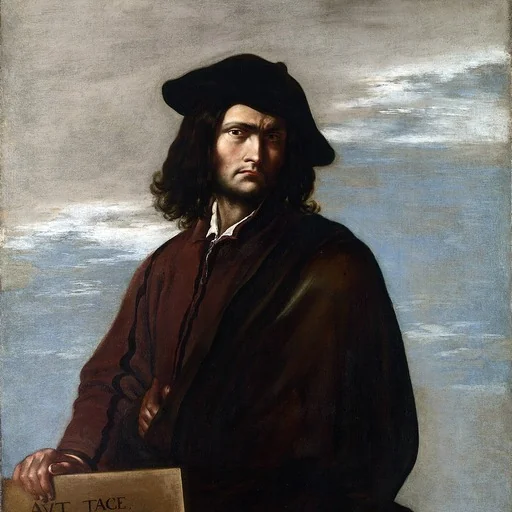
Salvator Rosa (1615 – 15 March 1673) is best known today as an Italian Baroque painter, whose romanticised landscapes and history paintings, often set in dark and untamed nature, exerted considerable influence from the 17th century into…