Artwork
Jason and the Dragon
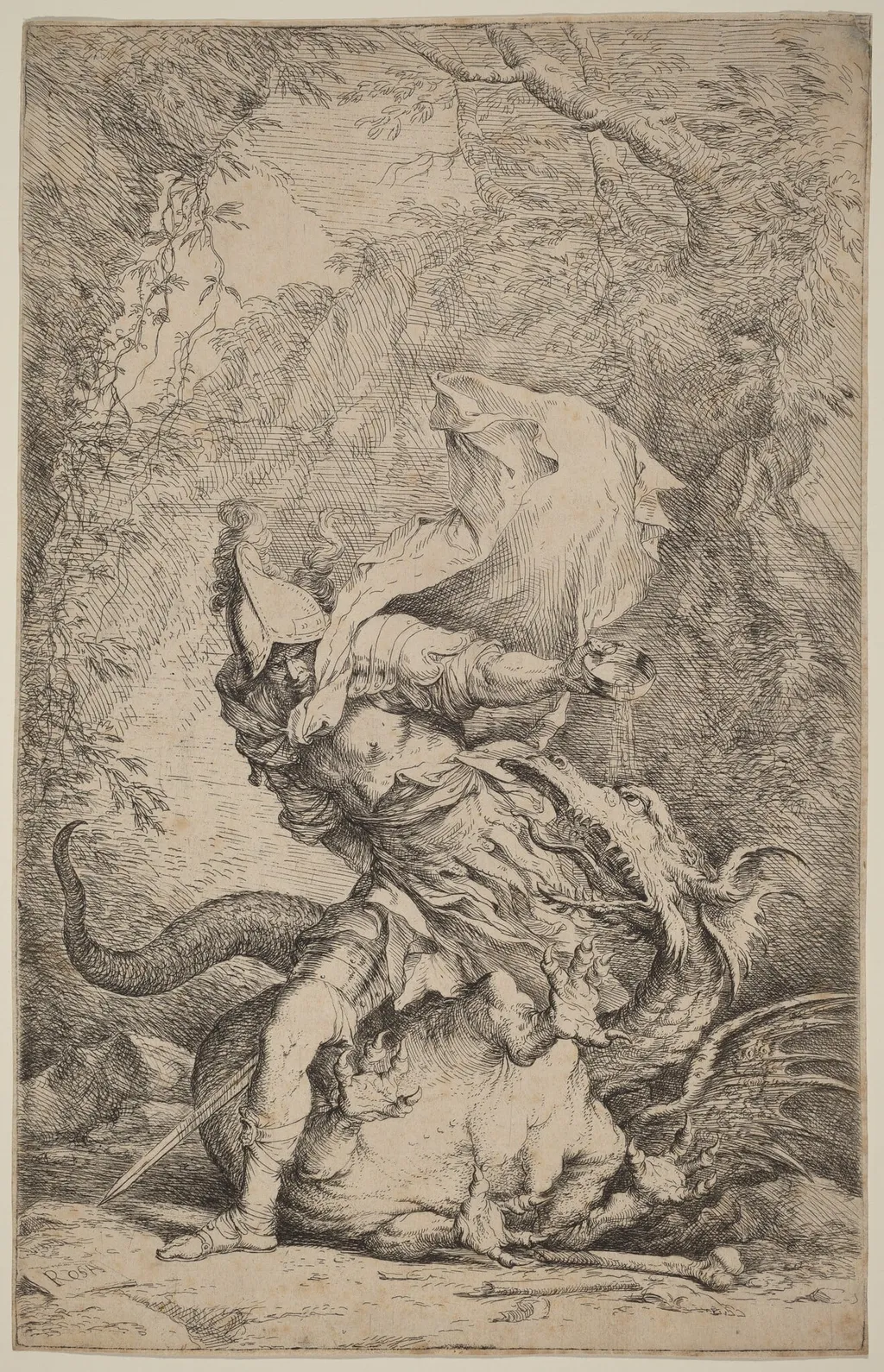
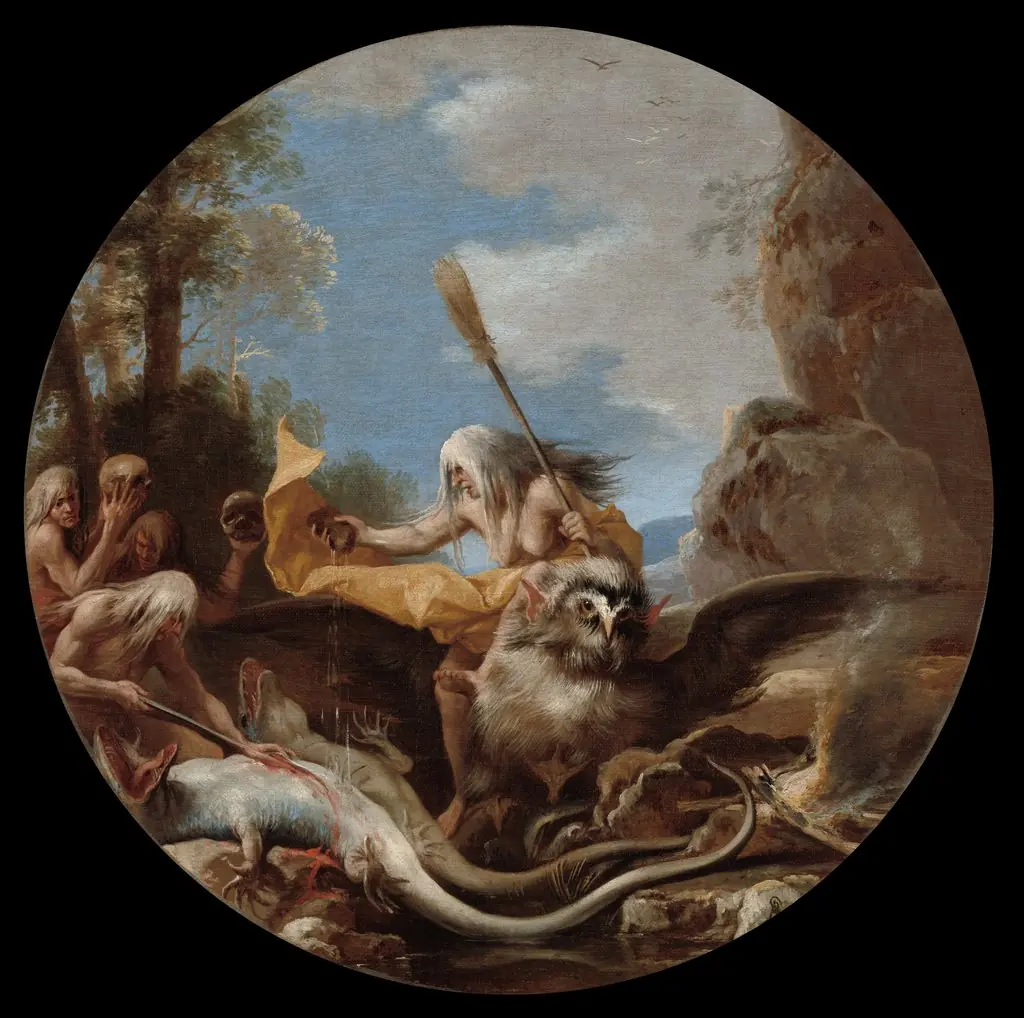
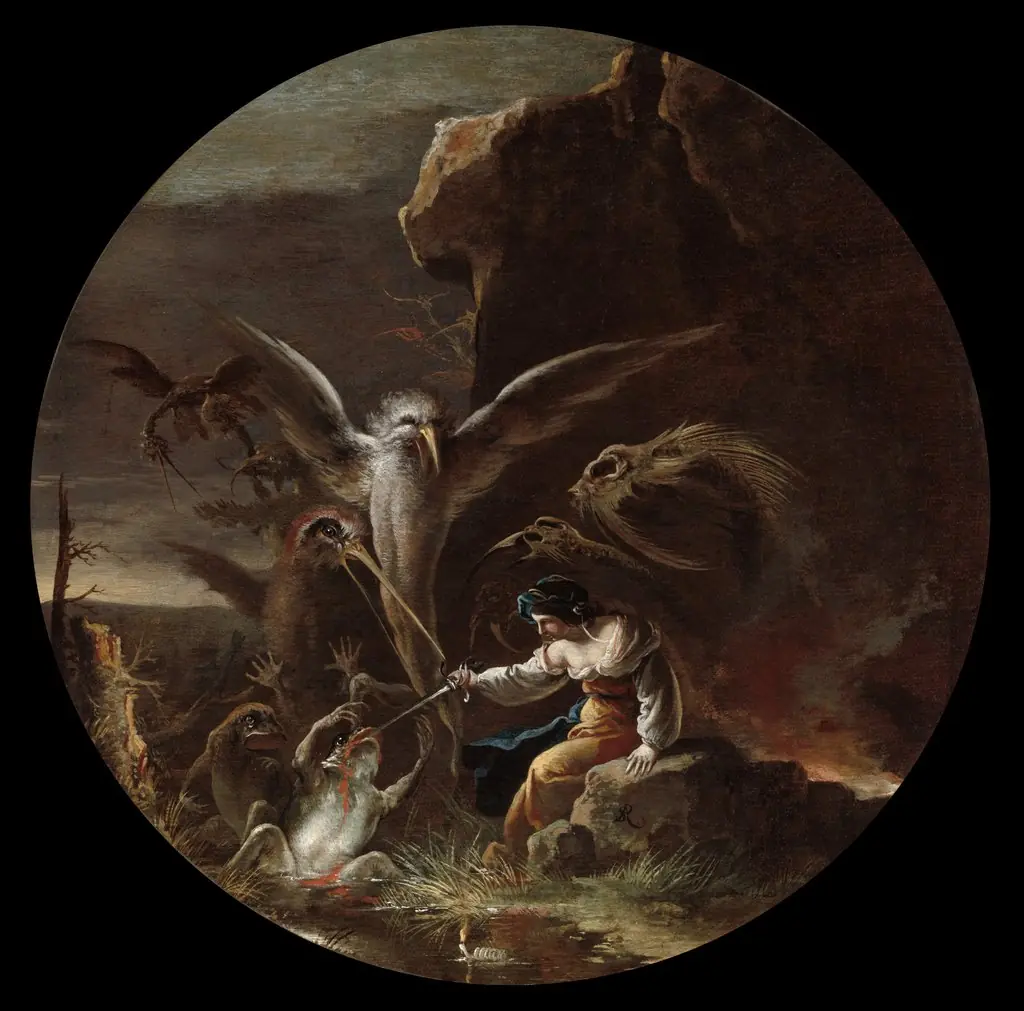
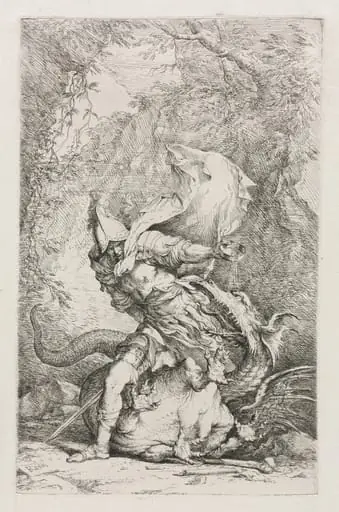
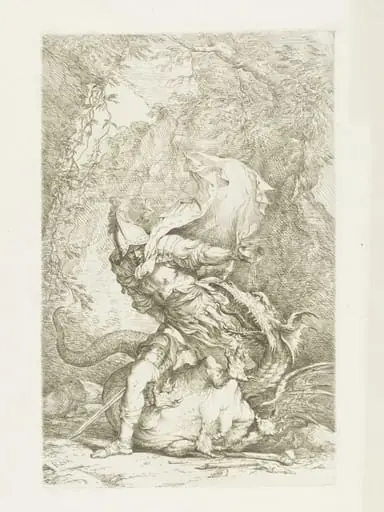
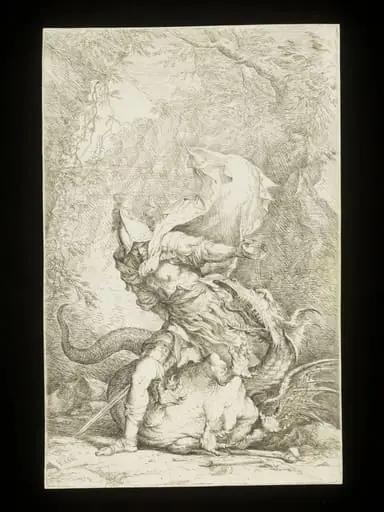
Jason and the Dragon is an ink print by the Baroque artist Salvator Rosa. It dates from 1664 and is held in the collection of the National Gallery of Art.
About this work
Overview
Created circa 1664, this print by Italian artist Salvator Rosa combines etching and drypoint on laid paper. The work depicts a violent encounter between a heroic figure and a dragon, rendered with the stark contrasts and dynamic composition typical of the Baroque period.
Subject & Meaning
The image portrays a man locked in combat with a dragon, sword raised as the beast’s jaws snap near his face. Torn garments and disheveled hair emphasize the peril, while the dragon’s glistening scales and coiled tail suggest a primal, untamed force. The scene conveys themes of heroic struggle against overwhelming danger.
Technique & Style
Rosa employed both etching and drypoint, allowing him to achieve fine lines alongside deeper, richer burr marks that give the dragon’s scales and the figure’s musculature a tactile quality. The use of chiaroscuro—sharp light against deep shadow—heightens the drama, a hallmark of Baroque visual language.
History & Provenance
Salvator Rosa, active in Naples, Rome and Florence, was known not only as a painter but also as a poet, satirist and printmaker. His outspoken temperament sometimes provoked controversy, yet his prints circulated widely among collectors of the 17th‑century art market, establishing his reputation beyond his paintings.
Context
The composition reflects Rosa’s fascination with mythological narratives placed within rugged, natural settings. By situating the combat amid tangled foliage and a tree‑bound dragon, he merges classical heroism with the wild, untamed landscapes that recur throughout his oeuvre.
Own this work as a print
Artist & collection
Artist
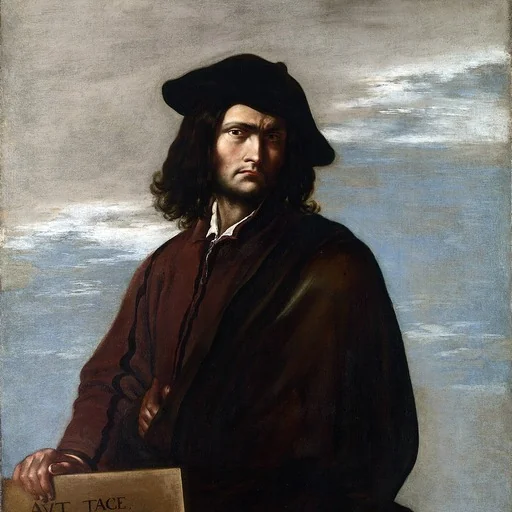
Salvator Rosa (1615 – 15 March 1673) is best known today as an Italian Baroque painter, whose romanticised landscapes and history paintings, often set in dark and untamed nature, exerted considerable influence from the 17th century into…