Artwork
Jason and the Dragon
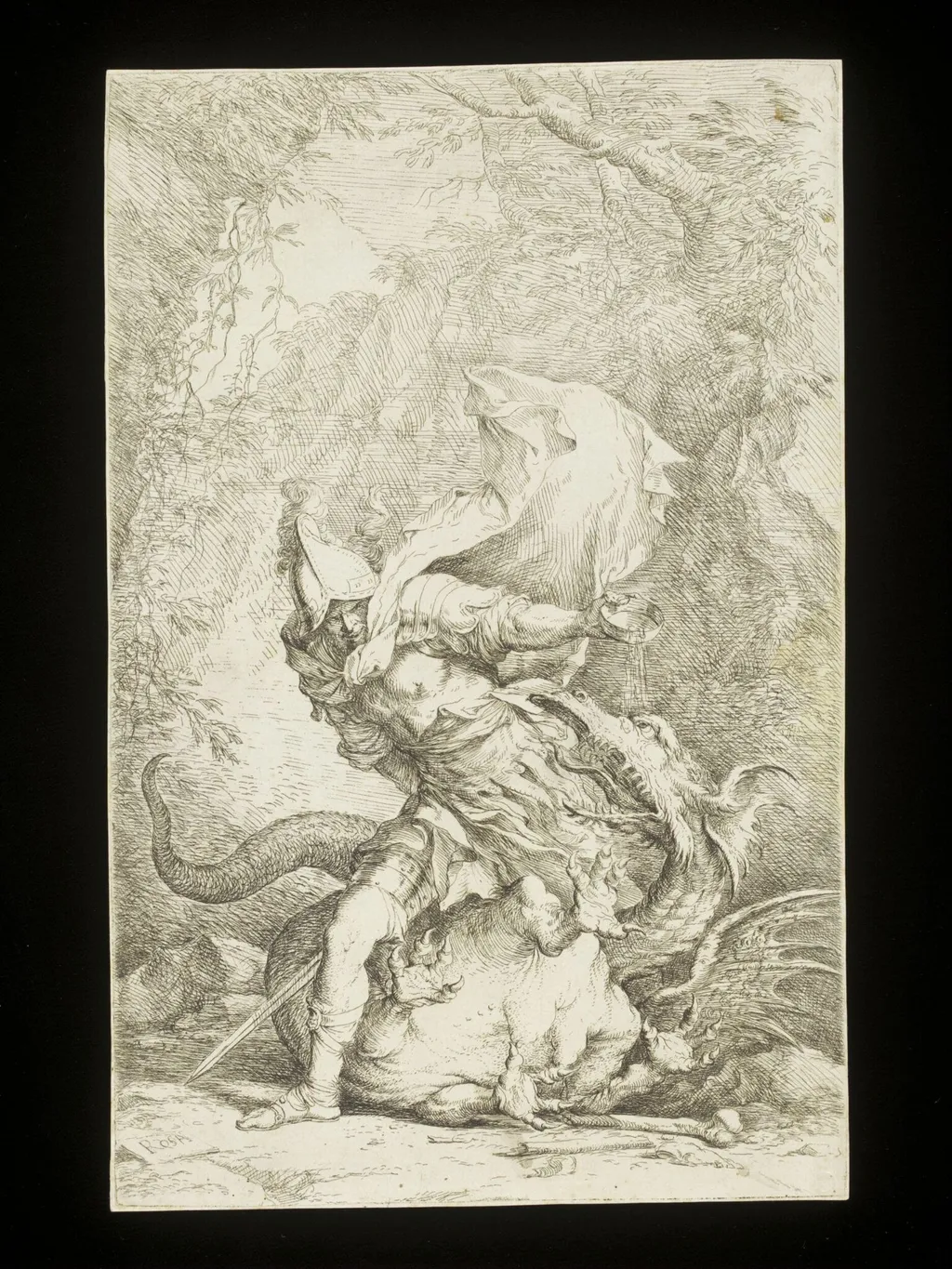
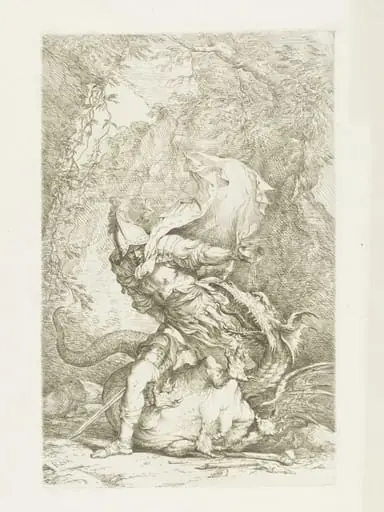
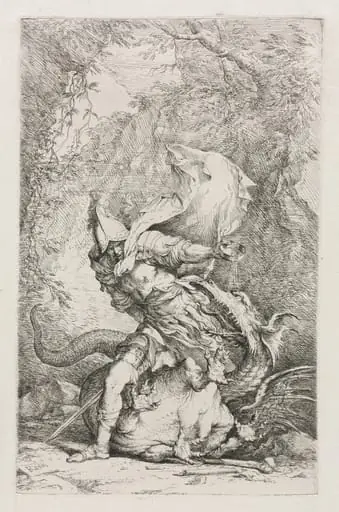
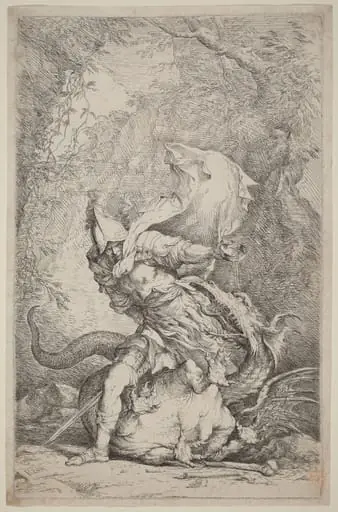
Jason and the Dragon is a print by the Baroque artist Salvator Rosa. It dates from 1633 and is held in the collection of the Victoria and Albert Museum.
About this work
Overview
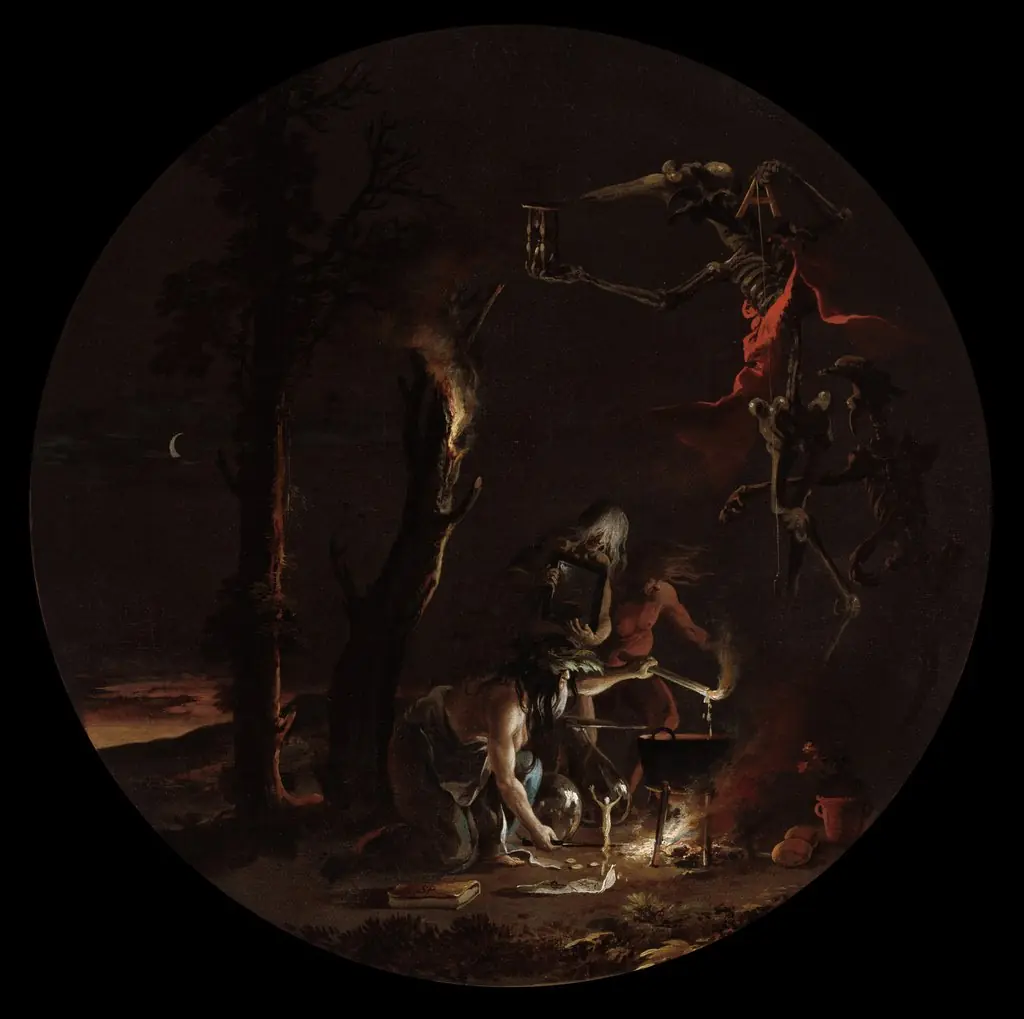
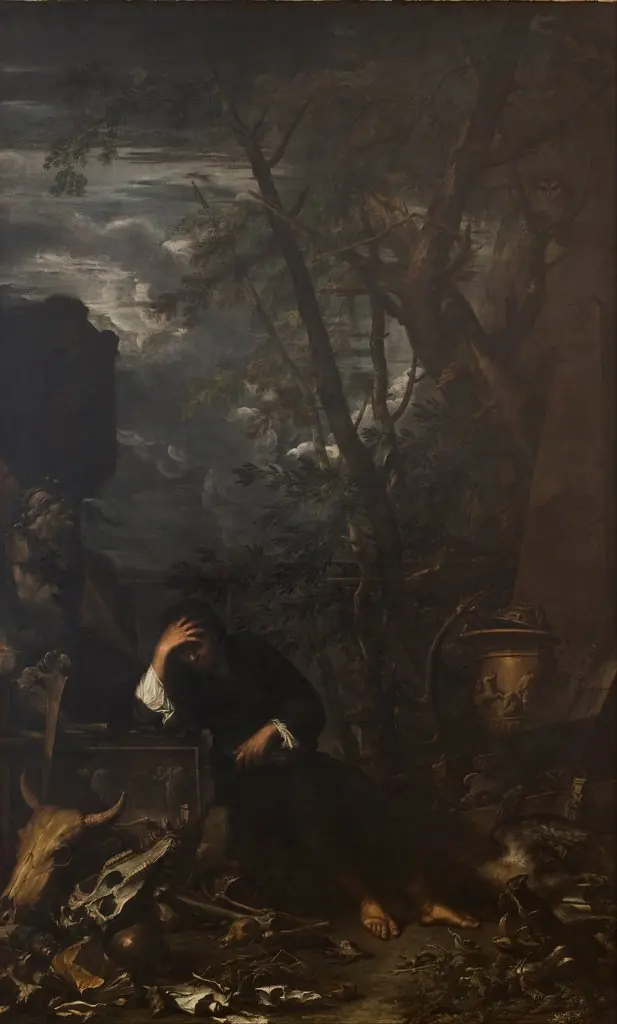
Salvator Rosa, active in 17th-century Italy, was known for his intense and unconventional imagery. Though trained in Naples, his work diverged from prevailing styles, embracing the grotesque and the supernatural. This etching, part of a broader series of prints, reflects his fascination with mythological narratives steeped in danger and magic, particularly those drawn from classical literature.
Subject & Meaning
Rosa’s interpretation emphasizes tension and otherworldly atmosphere, aligning with Ovid’s *Metamorphoses*, a favored source for his dramatic compositions.
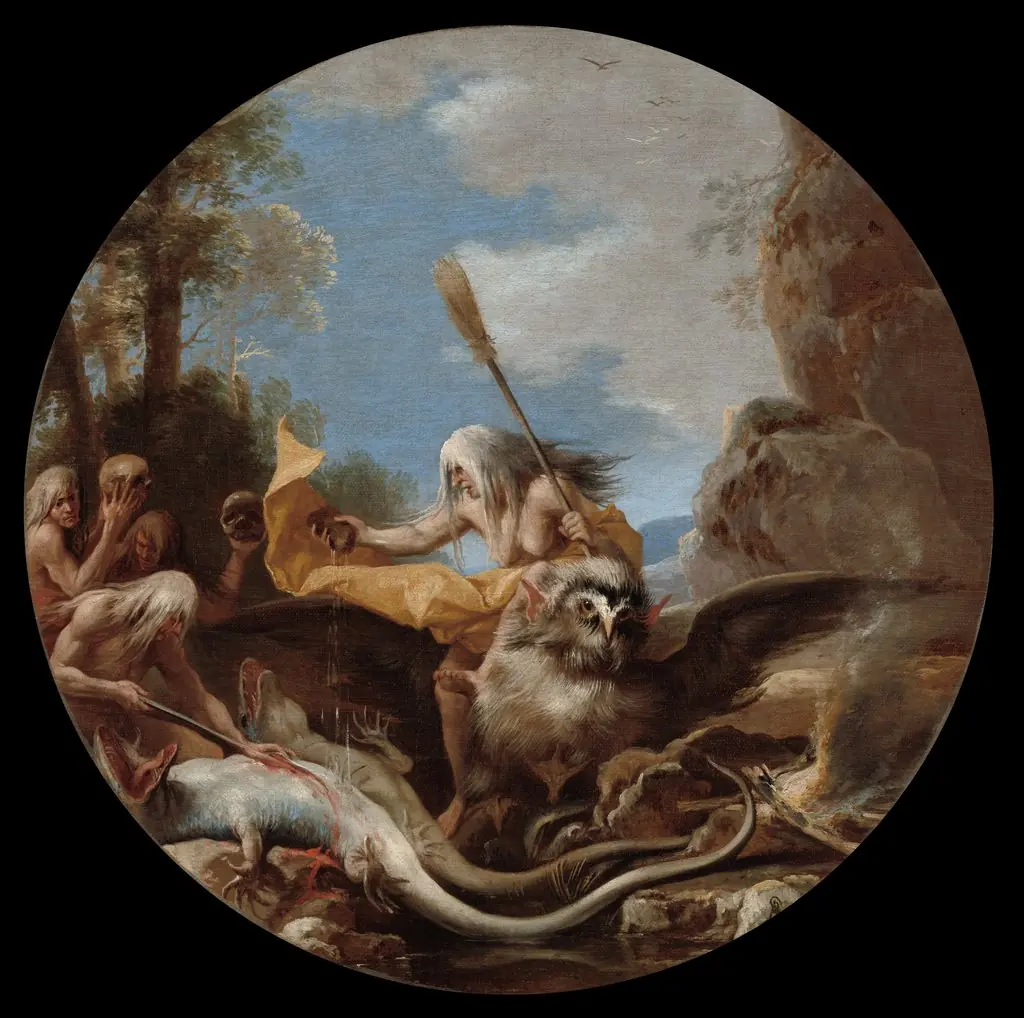
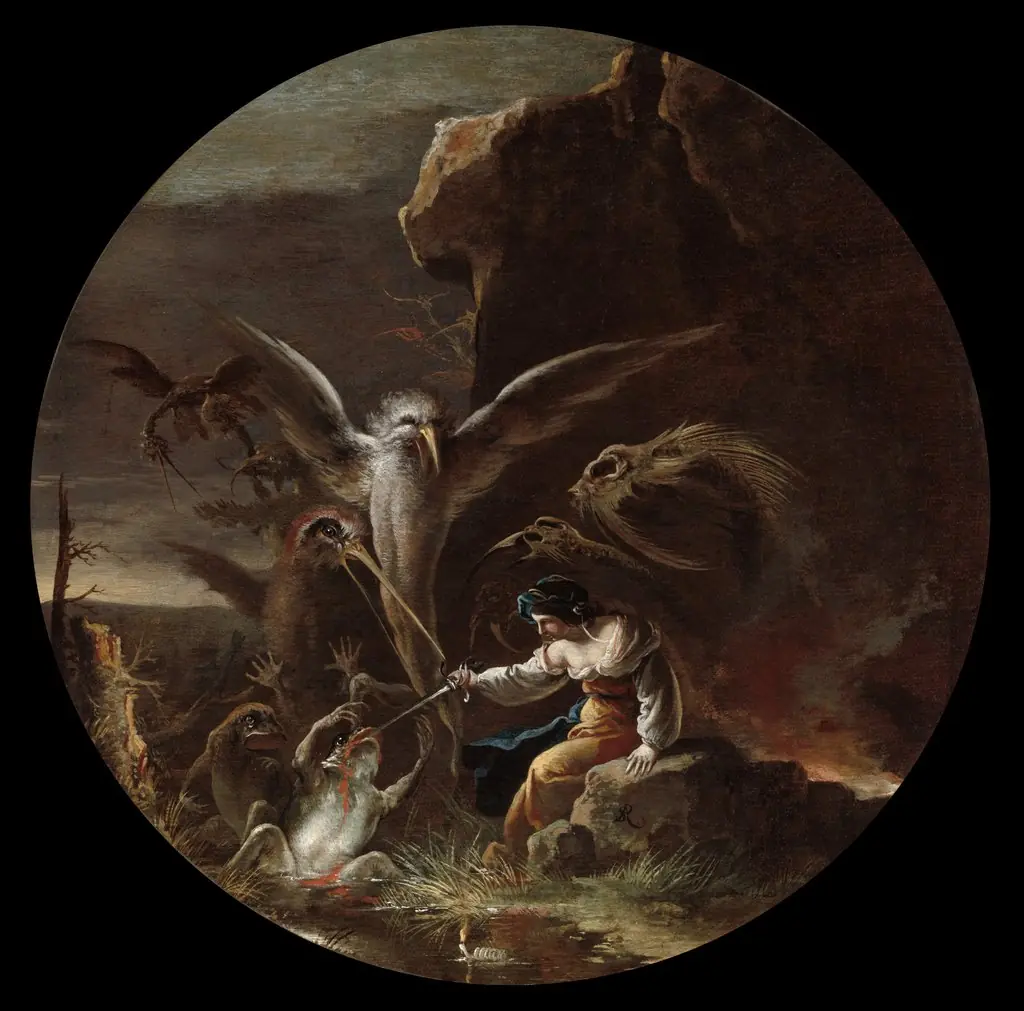
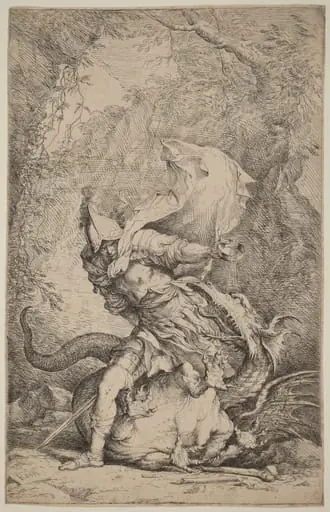
The scene depicts Jason, the Greek hero, confronting the dragon that guards the Golden Fleece. He is aided by Medea, whose magical potion calms the beast. The moment captures a turning point in the myth: reason and sorcery overcoming brute force. Rosa’s interpretation emphasizes tension and otherworldly atmosphere, aligning with Ovid’s *Metamorphoses*, a favored source for his dramatic compositions.
Technique & Style
Executed as an etching, the work showcases Rosa’s mastery of line and shadow to evoke mood rather than detail. His bold, incised strokes create a sense of movement and unease, with the dragon’s coiled form dominating the composition. The dark, textured background enhances the eerie tone, characteristic of Rosa’s preference for the sublime and the uncanny over idealized beauty.
History & Provenance
This print belongs to a group of etchings Rosa produced during the 1640s and 1650s, a period when he focused intensely on printmaking. While many of his works circulated widely in Europe, this particular impression is held in the collection of the Victoria and Albert Museum, where it remains part of a significant archive of his graphic output.
Context
Rosa worked amid a cultural climate that valued intellectual engagement with antiquity, yet rejected the harmony of High Renaissance ideals. His choice of mythological subjects—especially those involving magic, violence, or transformation—reflected a growing interest in the irrational and the emotional. His prints appealed to collectors seeking alternatives to classical restraint.
Legacy
Rosa’s etchings influenced later artists drawn to the dramatic and the macabre, including Romantic painters and printmakers of the 18th and 19th centuries. His departure from conventional aesthetics helped expand the scope of narrative art, validating the power of the unsettling and the mysterious in visual storytelling.
Artist & collection
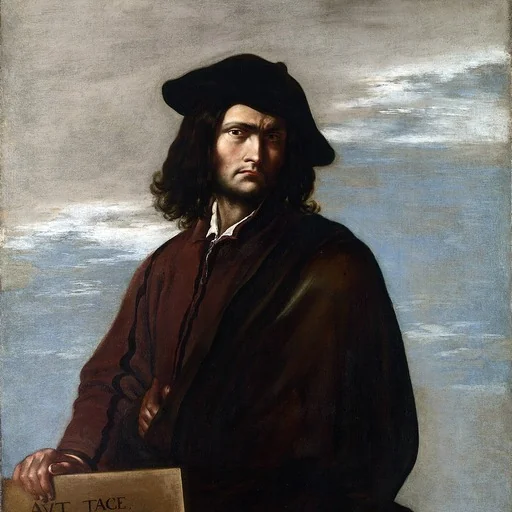
Artist
Salvator Rosa (1615 – 15 March 1673) is best known today as an Italian Baroque painter, whose romanticised landscapes and history paintings, often set in dark and untamed nature, exerted considerable influence from the 17th century into…