Artwork
H Beard Print Collection
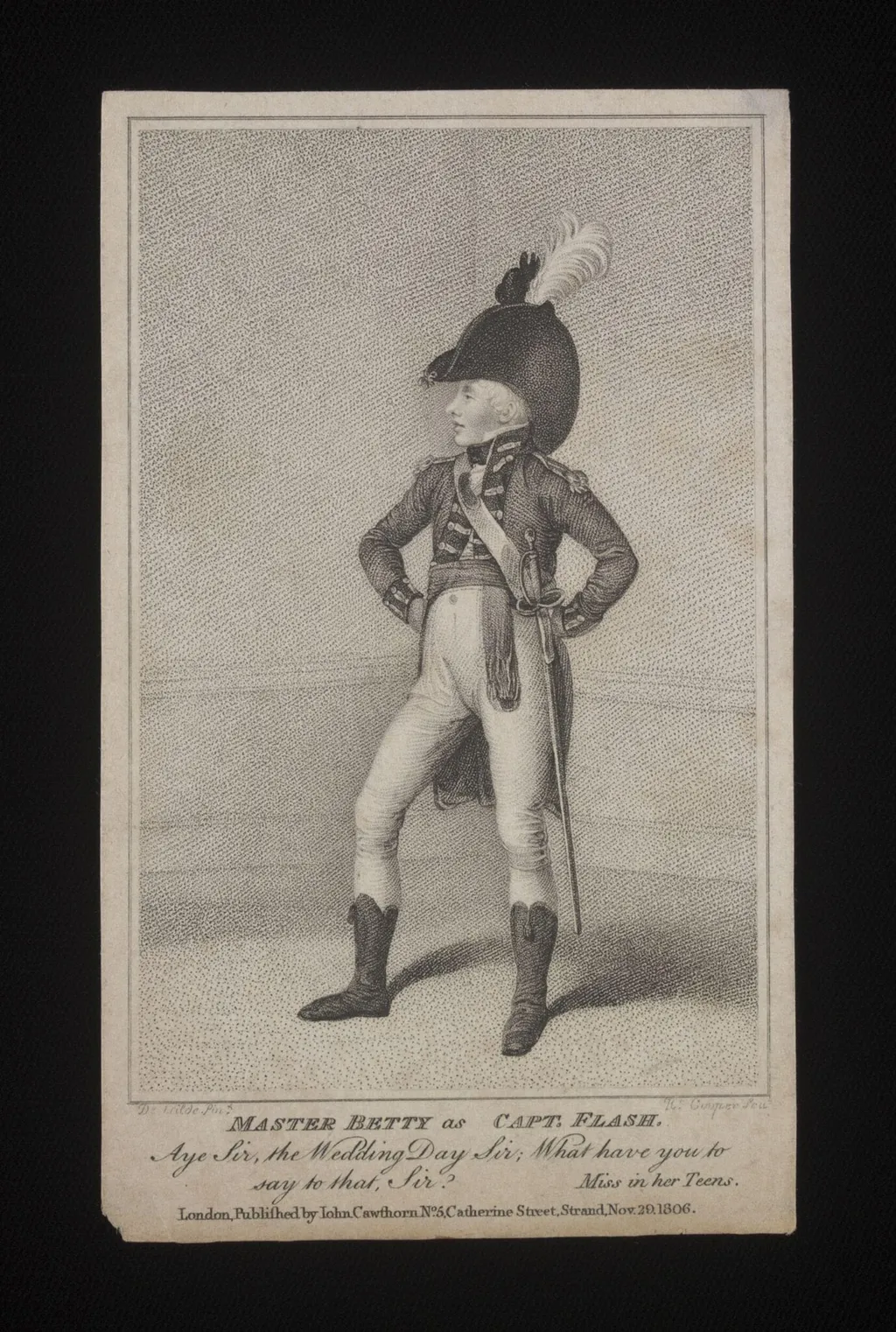
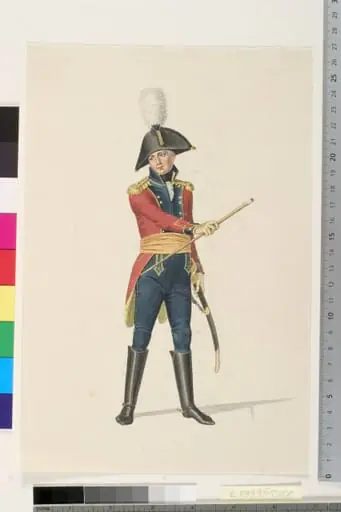
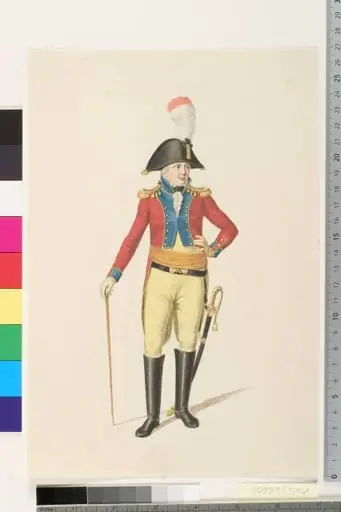
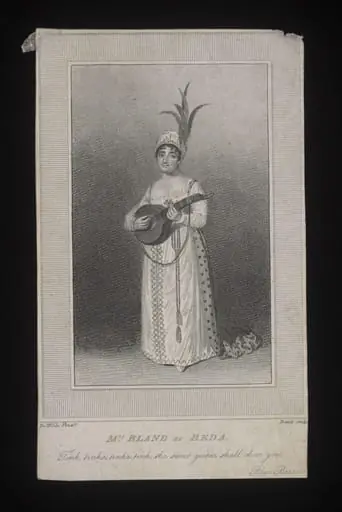
H Beard Print Collection is a print by the Romanticist artist Samuel De Wilde. It dates from 20 and is held in the collection of the Victoria and Albert Museum.
About this work
The H Beard Print Collection is a print made by Samuel De Wilde.
It was created on November 29, 1806.
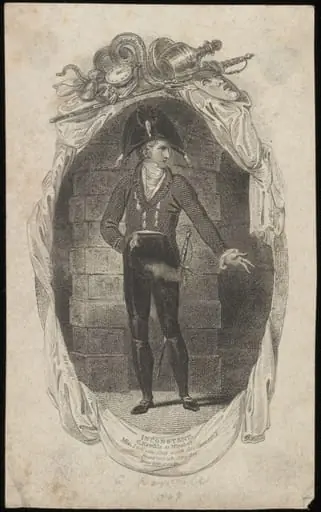
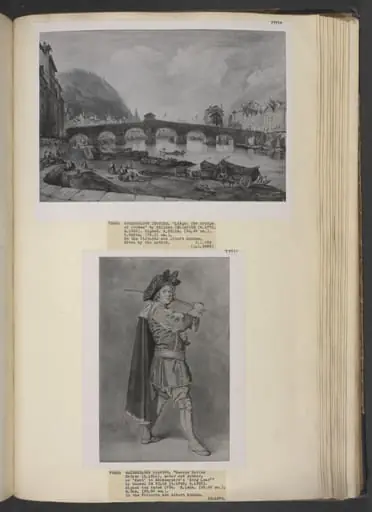
The print is an engraved portrait of Master Betty as Captain Flash, which is an interesting fact because it shows a specific character from a play.
You can learn more about this type of art at the Victoria and Albert Museum or by looking into the movement of Romanticism.
Overview
This 1806 engraving is part of the H Beard Print Collection, depicting the young actor Master Betty in the role of Captain Flash. Created by Samuel De Wilde on November 29 of that year, it is a fine example of theatrical portraiture from the early 19th century. The print captures a moment from a popular stage production, reflecting the era’s fascination with performance and celebrity.
Subject & Meaning
Master Betty, a child actor renowned for his emotional intensity, portrayed Captain Flash, a dashing character from the play 'The Poor Soldier.' The engraving immortalizes his stage persona, blending youthful charisma with dramatic flair. It underscores the cultural significance of theater in Regency Britain, where actors—especially prodigies—became public figures admired beyond the stage.
Technique & Style
Executed in line engraving by Samuel De Wilde, the portrait employs fine, controlled strokes to render texture and expression. The composition emphasizes the actor’s posture and costume, typical of theatrical portraiture of the period. The absence of elaborate backgrounds focuses attention on the figure, aligning with the direct, intimate style favored in prints meant for public circulation.
History & Provenance
The print was produced shortly after Master Betty’s rise to fame and entered the H Beard Collection, a curated assemblage of theatrical imagery. De Wilde, a noted illustrator of stage performers, frequently collaborated with publishers to distribute such portraits. The print’s survival reflects its popularity and the collection’s role in preserving ephemeral theatrical culture of the time.
Context
In early 19th-century Britain, theater was a dominant form of public entertainment, and actors like Master Betty became cultural icons. Engraved portraits like this one served as affordable souvenirs, circulating among middle-class audiences. They reflect a broader trend of visual documentation of performance, linking theater to the emerging print culture and the rise of celebrity.
Legacy
The engraving remains a valuable record of theatrical practice and public taste in the Regency era. Held in institutional collections, it contributes to scholarly understanding of how performance was mediated through print. While the play itself has faded from memory, the image endures as a testament to the power of visual representation in shaping cultural memory.
Artist & collection
Artist
Samuel De Wilde (1751 – 19 January 1832), born and died in London, was a portrait painter and etcher of Dutch descent famous for his theatrical paintings.

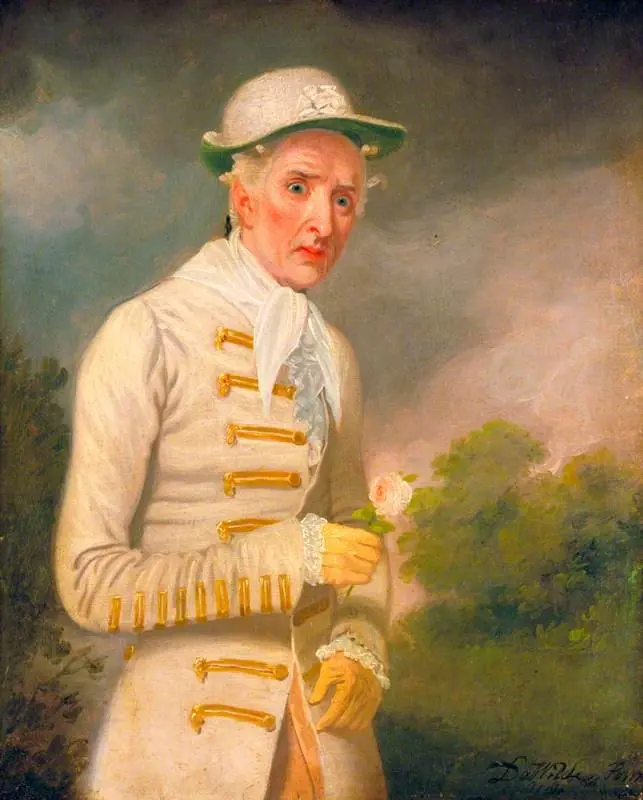 William Farren (1786–1861), as Lord Ogleby in 'The Clandestine Marriage' by George Colman the Elder and David Garrick
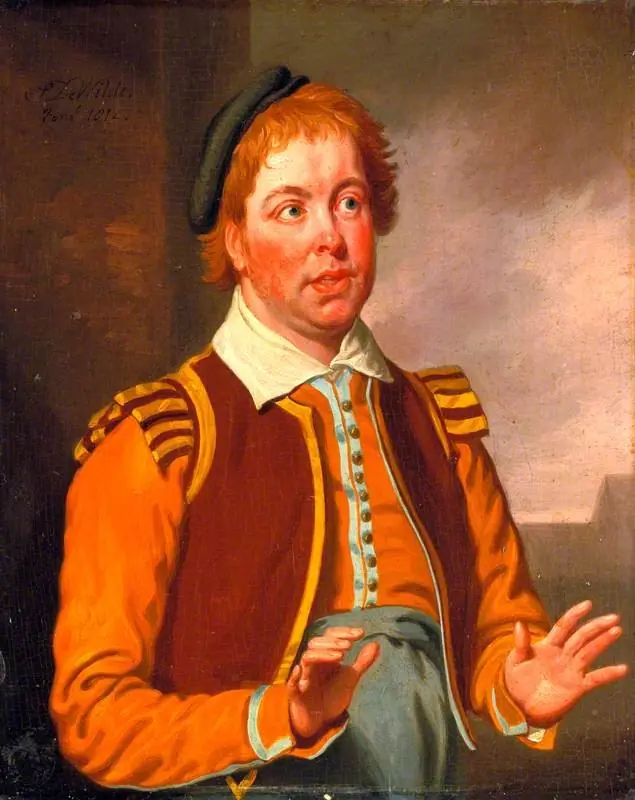 John Liston (c.1776–1846), as Pompey in 'Measure for Measure' by William Shakespeare
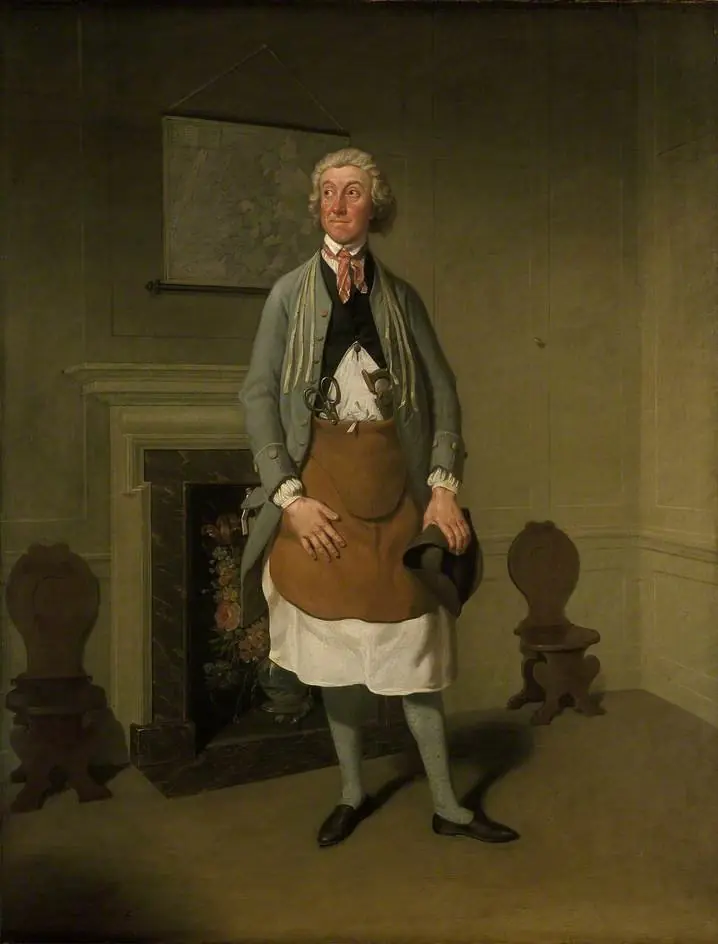 Mr Suett as Dicky Gossip in 'My Grandmother'
 Portrait of George Davies Harley
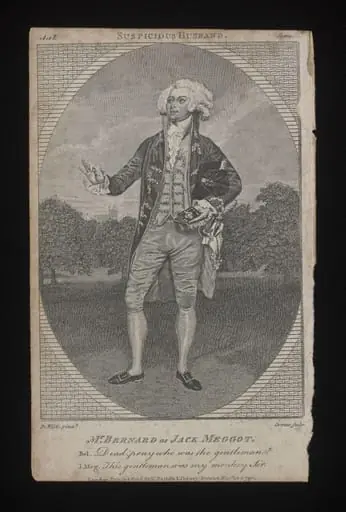 H Beard Print Collection
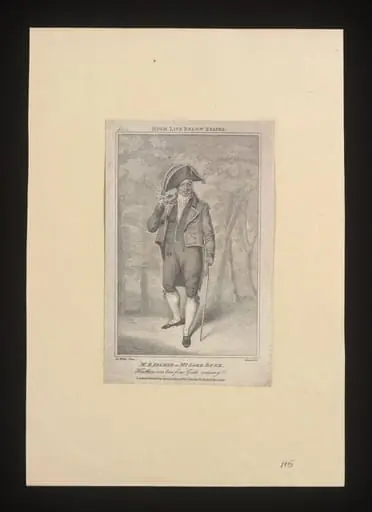 Mr Robert Palmer as My Lord Duke
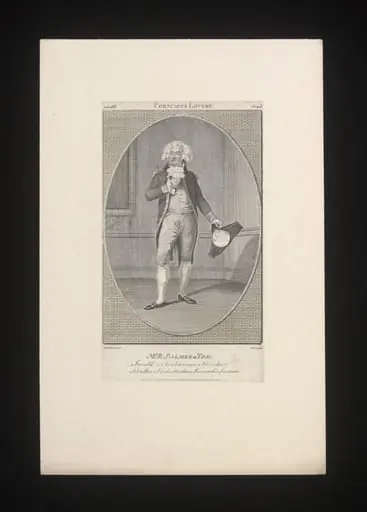 Mr Robert Palmer as Tom
 H Beard Print Collection