Artwork
John Liston (c.1776–1846), as Pompey in 'Measure for Measure' by William Shakespeare
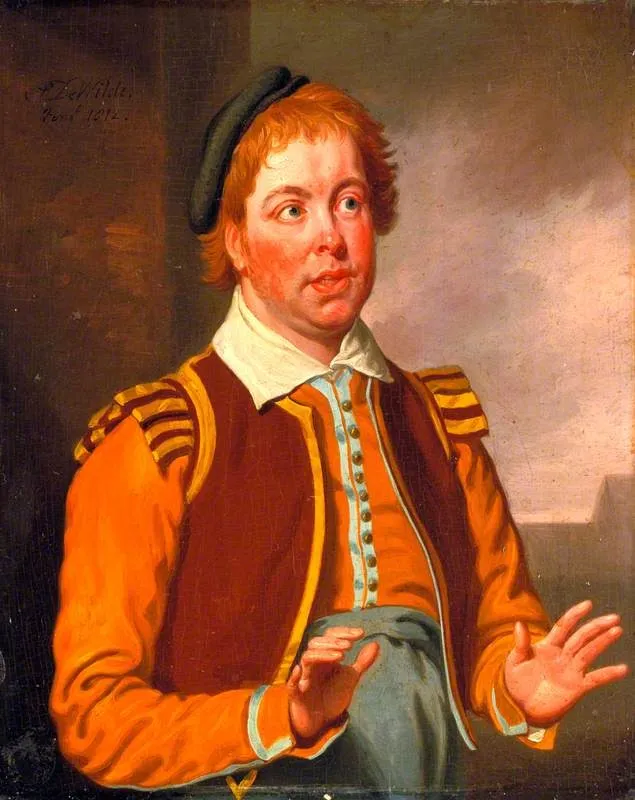
John Liston (c.1776–1846), as Pompey in 'Measure for Measure' by William Shakespeare is an oil painting by Samuel De Wilde. It dates from 1812 and is held in the collection of the Victoria and Albert Museum.
About this work
Overview
Samuel De Wilde’s oil portrait, created in 1812, presents the English actor John Liston in the role of Pompey from Shakespeare’s *Measure for Measure*. The work exemplifies De Wilde’s focus on theatrical portraiture, capturing a performer in costume rather than in ordinary attire.
Subject & Meaning
The sitter is shown in a vivid stage costume: a red‑yellow jacket edged in gold, a white shirt, and a black hat, with his right hand raised palm‑outward as if delivering a line. The expression is solemn, reflecting the gravitas of the character he portrays.
Technique & Style
Executed in oil on canvas, the painting employs a realistic approach with careful attention to the textures of fabric and metal trim. A dark, indistinct background recedes, suggesting a stage setting while keeping the focus on the actor’s face and gesture.
History & Provenance
De Wilde, a London‑born portraitist of Dutch heritage, was the pre‑eminent painter of actors between the late 18th and early 19th centuries. This portrait, part of his extensive series of theatrical likenesses, entered the collection of the Victoria and Albert Museum, where it remains on view.
Context
During the period 1770–1820, theatrical portraiture flourished in England as a means of commemorating popular stage personalities. De Wilde’s work reflects this trend, documenting both the individual performer and the broader cultural importance of Shakespearean drama on the London stage.
Artist & collection
Artist
Samuel De Wilde (1751 – 19 January 1832), born and died in London, was a portrait painter and etcher of Dutch descent famous for his theatrical paintings.

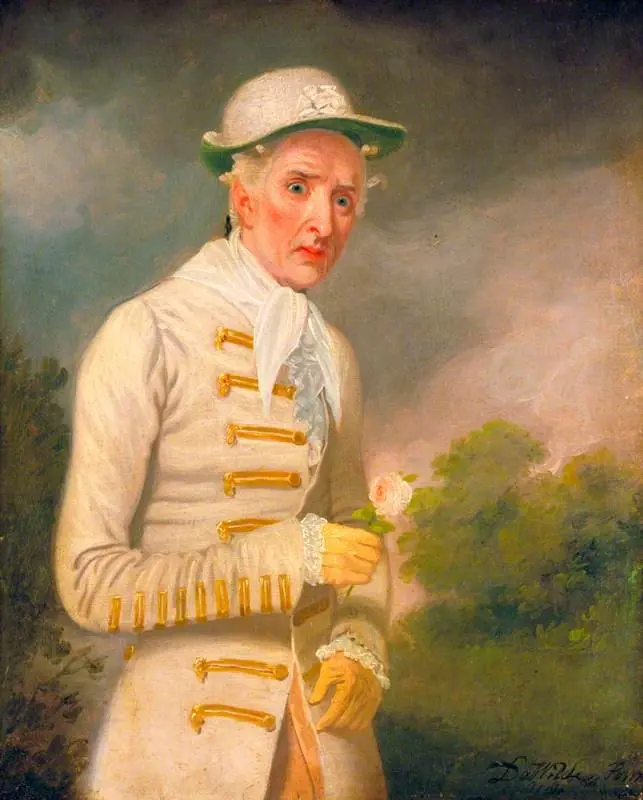 William Farren (1786–1861), as Lord Ogleby in 'The Clandestine Marriage' by George Colman the Elder and David Garrick
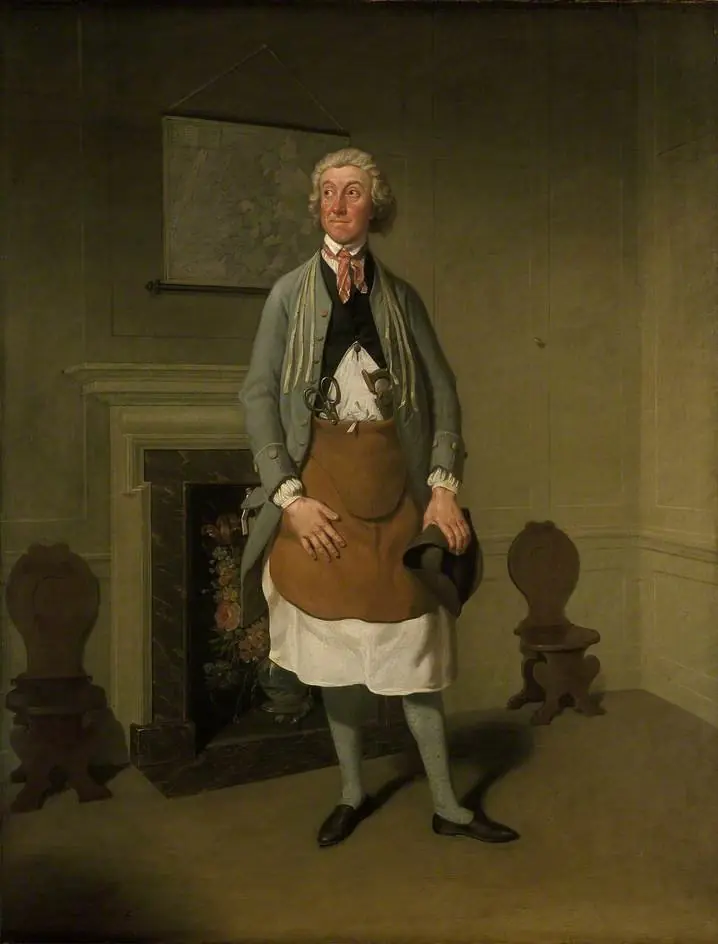 Mr Suett as Dicky Gossip in 'My Grandmother'
 Portrait of George Davies Harley
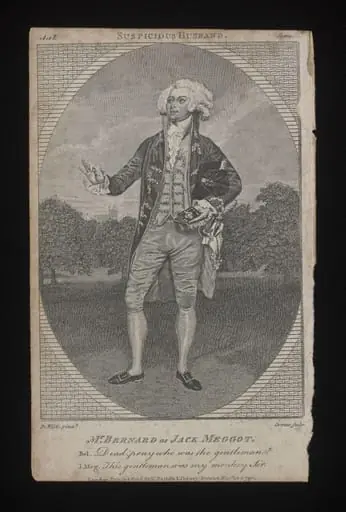 H Beard Print Collection
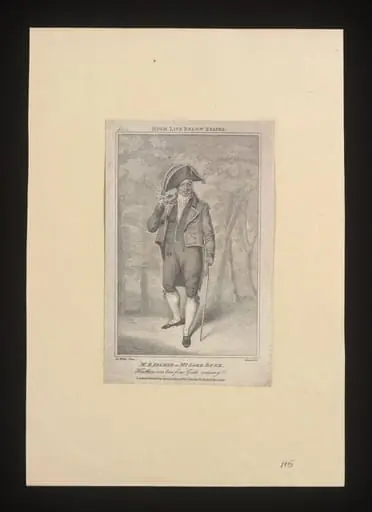 Mr Robert Palmer as My Lord Duke
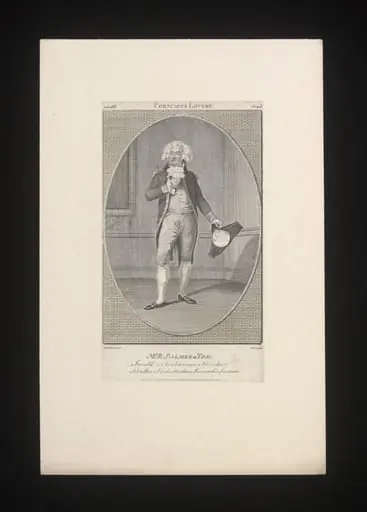 Mr Robert Palmer as Tom
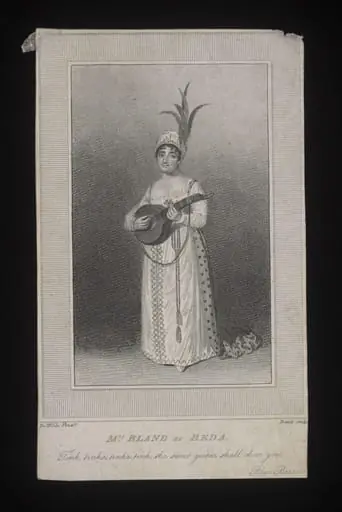 H Beard Print Collection
 H Beard Print Collection