Artwork
Portrait of an Old Man
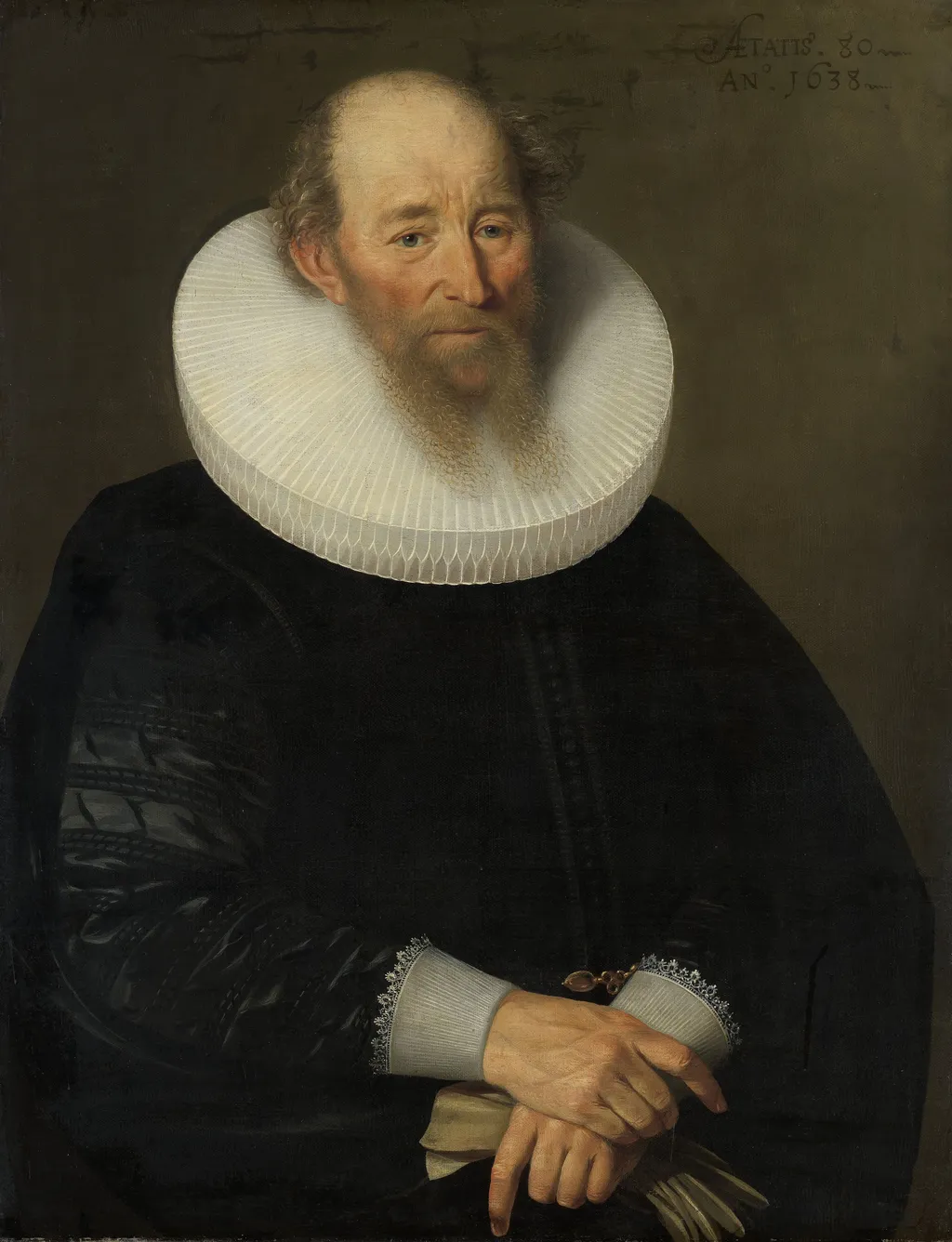
Portrait of an Old Man is an oil painting by the Dutch Golden Age artist Samuel Hoffmann. It dates from 1638 and is held in the collection of the Rijksmuseum.
About this work
Overview
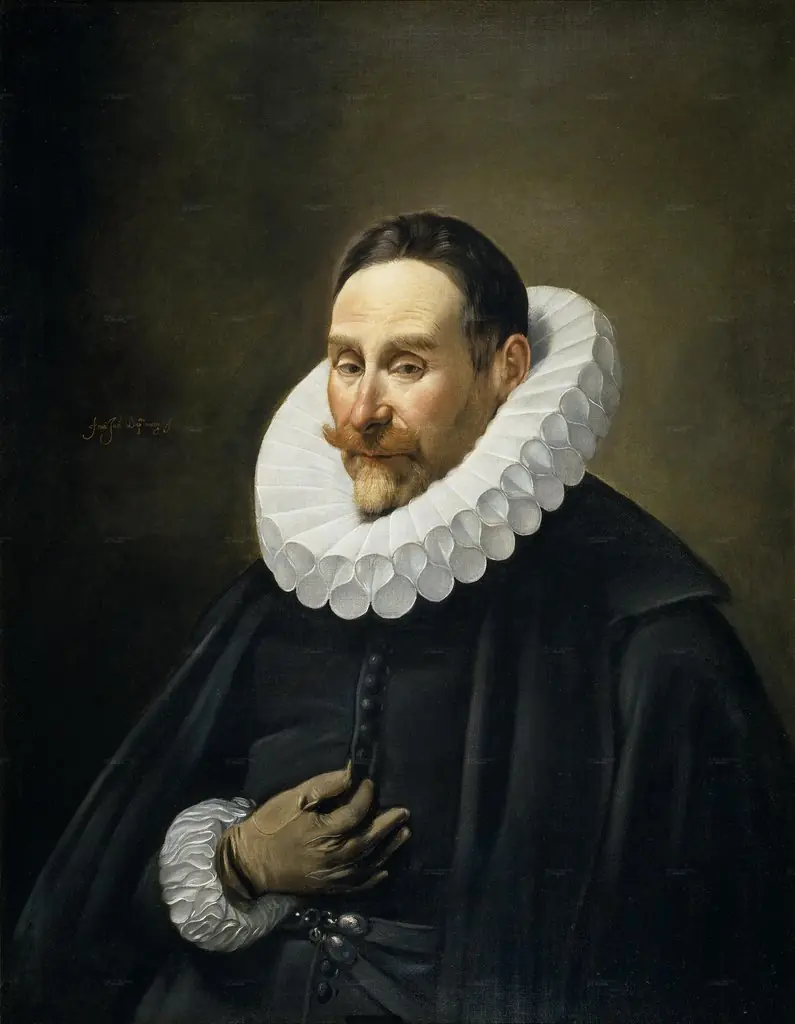
Samuel Hoffmann’s oil painting, Portrait of an Old Man, dates from 1638 and is part of the Rijksmuseum’s collection. The work presents a single figure, an elderly gentleman, rendered in a restrained palette that emphasizes his solemn demeanor. The canvas measures a modest size, allowing close observation of the sitter’s features and attire.
Subject & Meaning
The sitter is an aged man with a receding hairline, a long, curling beard, and clasped hands placed one over the other. He is dressed in a dark robe trimmed with white lace and a ruffled collar, suggesting a status of modest wealth or clerical affiliation. His contemplative expression and subdued pose convey introspection and dignity.
Technique & Style
Hoffmann employs chiaroscuro to model the figure, using a muted brown backdrop to set off the illuminated face and hands. The delicate handling of the lace trim and the soft transitions of light across the robe demonstrate a careful attention to texture. The overall composition balances realism with a restrained baroque sensibility.
History & Provenance
Created in 1638, the portrait entered the Rijksmuseum’s holdings in the early twentieth century, though earlier ownership records are scarce. Its acquisition reflects the museum’s broader effort to represent Dutch and German portraiture of the seventeenth century, situating Hoffmann among his contemporaries.
Context
The painting belongs to a period when portraiture served both personal commemoration and social signaling. Hoffmann, active in the Germanic regions, often depicted sitters in sober attire, aligning with the Protestant aesthetic of modesty. The work’s muted tones and focus on the individual’s inner life echo broader trends in Northern European art of the time.
Own this work as a print
Artist & collection