Artwork
View of Woolwich
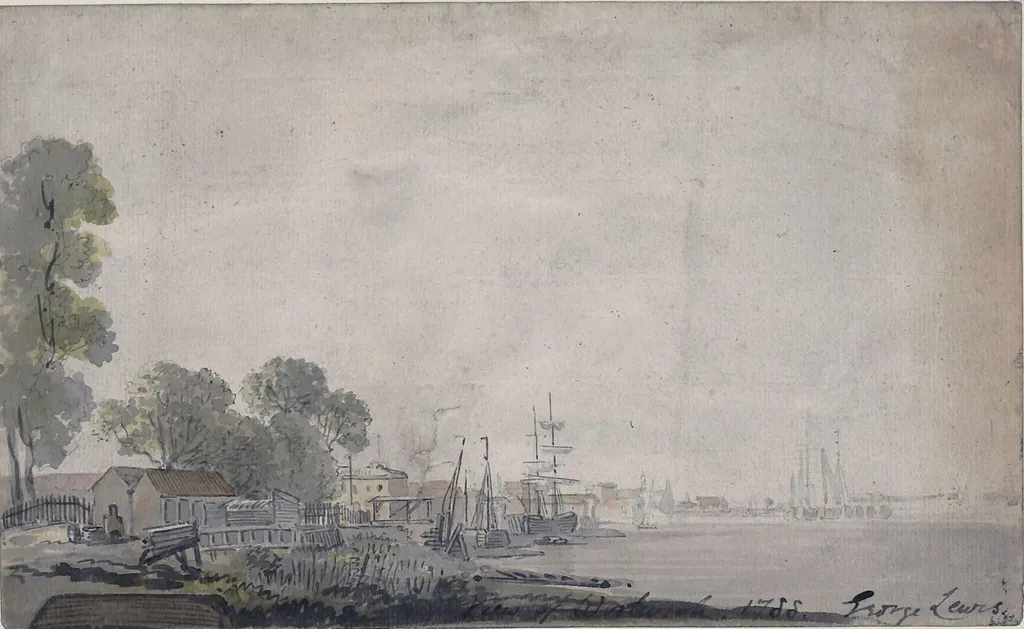
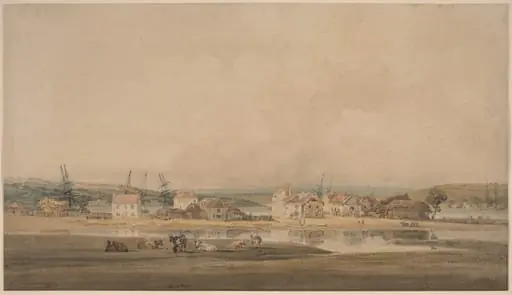
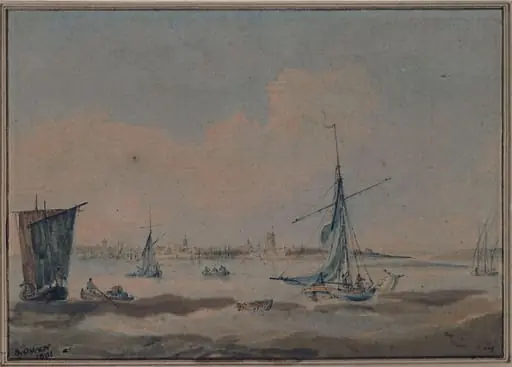
View of Woolwich is a watercolor work on paper by the Rococo painting artist George Lewis. It dates from 1788 and is held in the collection of the Victoria and Albert Museum.
About this work
Overview
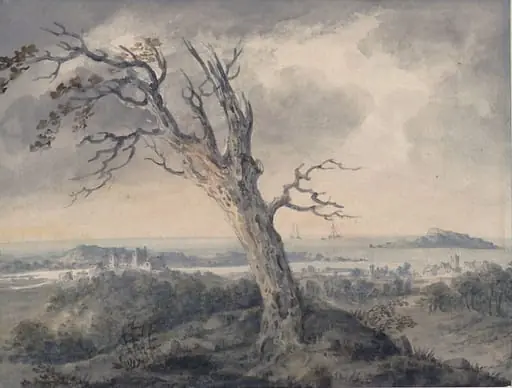
Created in 1788, View of Woolwich is a watercolor landscape by George Lewis, depicting a tranquil stretch of the Thames waterfront.
Created in 1788, View of Woolwich is a watercolor landscape by George Lewis, depicting a tranquil stretch of the Thames waterfront. The work is executed in delicate, translucent washes, capturing the quiet atmosphere of a modest riverside settlement. It is part of the permanent collection at the Victoria and Albert Museum, where it represents early topographical watercolor practice in late 18th-century Britain.
Subject & Meaning
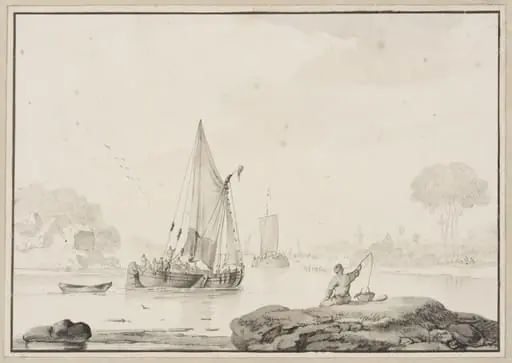
The scene portrays Woolwich’s harbor with modest wooden structures, a low fence, and anchored vessels, suggesting a working waterfront rather than a grand urban center. The absence of human figures and the subdued sky emphasize stillness and solitude. The painting conveys a sense of everyday life along the river, valuing quiet observation over dramatic narrative.
Technique & Style
Lewis employed light, layered watercolor washes to suggest form without heavy detail. Soft greens and browns define the ground and foliage, while the water and sky are rendered with minimal pigment, creating a hazy, atmospheric effect. The brushwork is restrained, favoring gentle transitions over sharp contours, aligning with the aesthetic of topographical accuracy tempered by poetic restraint.
History & Provenance
The watercolor was completed in 1788 and entered the Victoria and Albert Museum’s collection through its established holdings of British watercolors. Its provenance is not extensively documented beyond institutional acquisition, but its preservation reflects the museum’s long-standing interest in documentary landscape works from the period.
Context
In the late 18th century, watercolor was increasingly used for recording local scenes, especially along the Thames. Artists like Lewis contributed to a growing tradition of topographical views that balanced precision with mood. Woolwich, as a naval and industrial hub, offered subjects that appealed to both civic pride and aesthetic contemplation.
Legacy
View of Woolwich exemplifies the quiet, observational mode of British watercolor before the Romantic movement’s dramatic turn. It remains a representative example of how everyday landscapes were documented with restraint, influencing later generations interested in the interplay of place, light, and subtle detail.
Artist & collection
Artist
George Lewis painted the Thames-side town of Woolwich in 1788, when its dockyards hummed with wooden hulls and mast-makers’ sheds.