Artwork
Virgin and Child with Two Angels
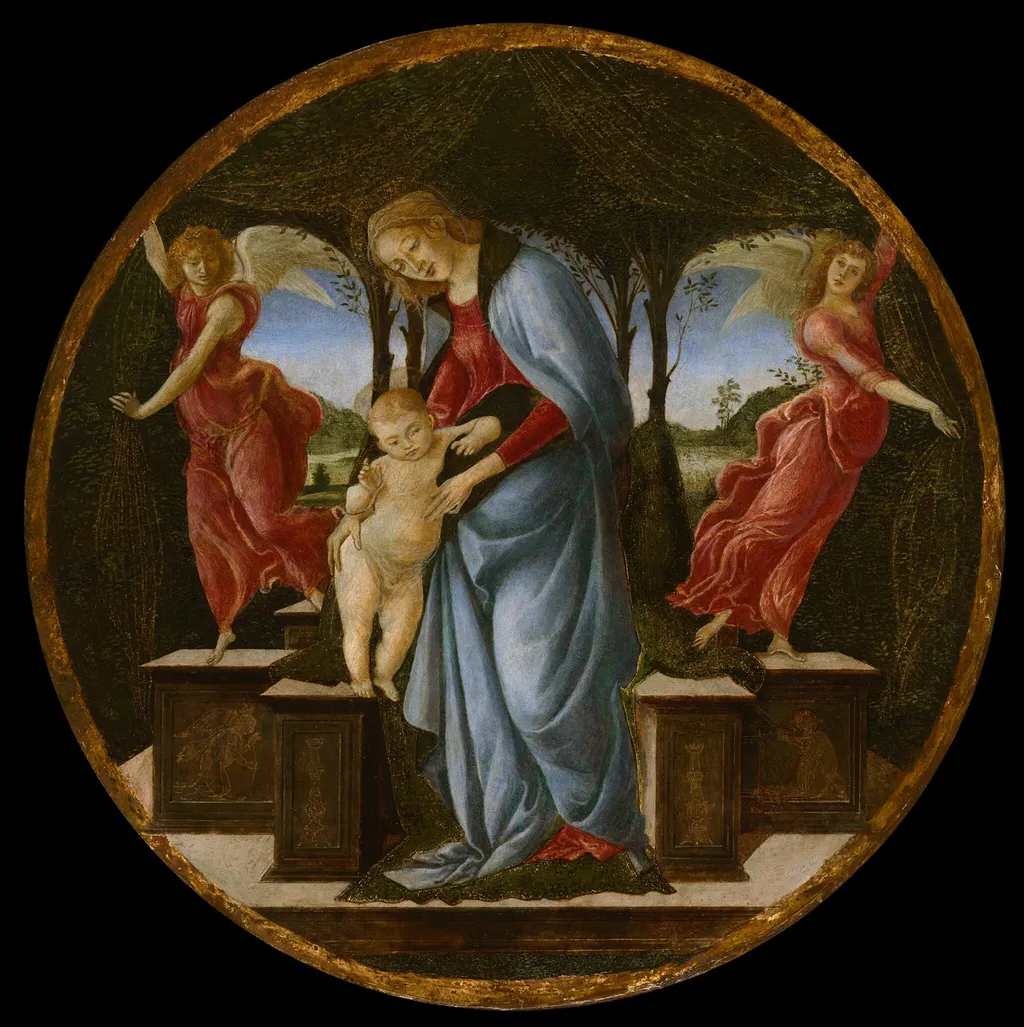
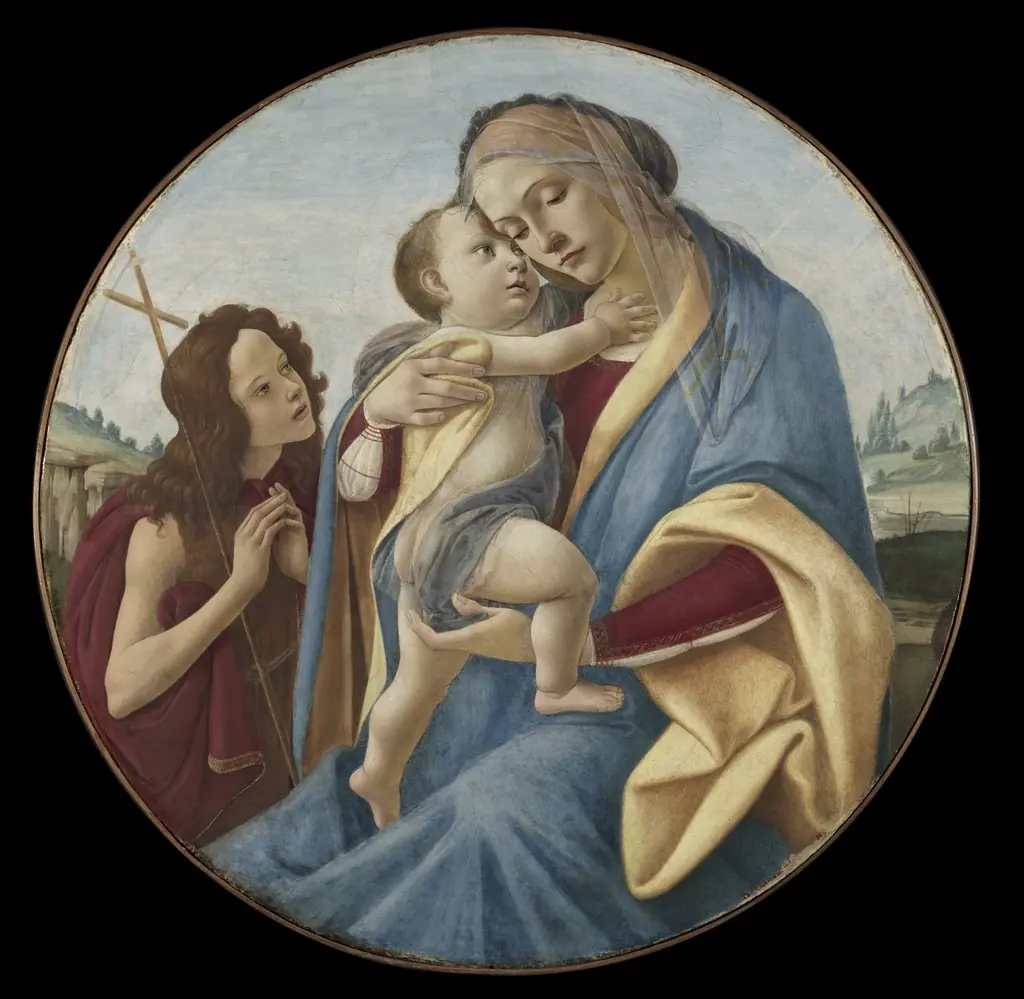
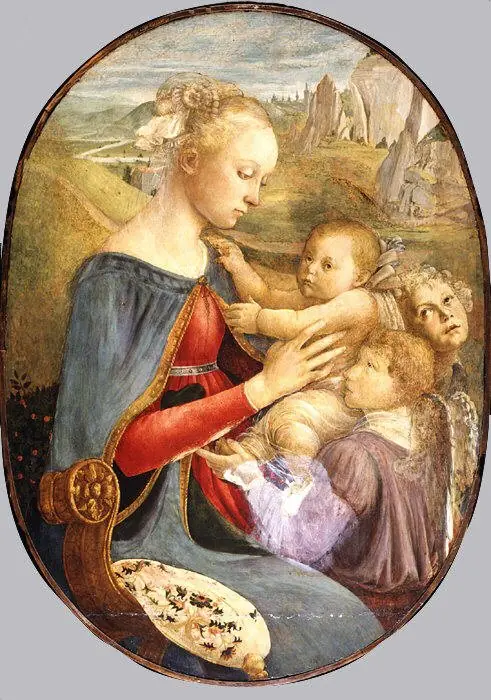
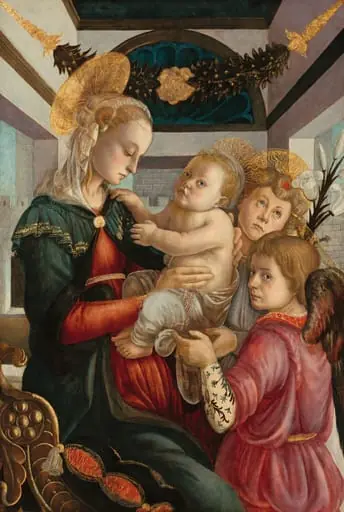
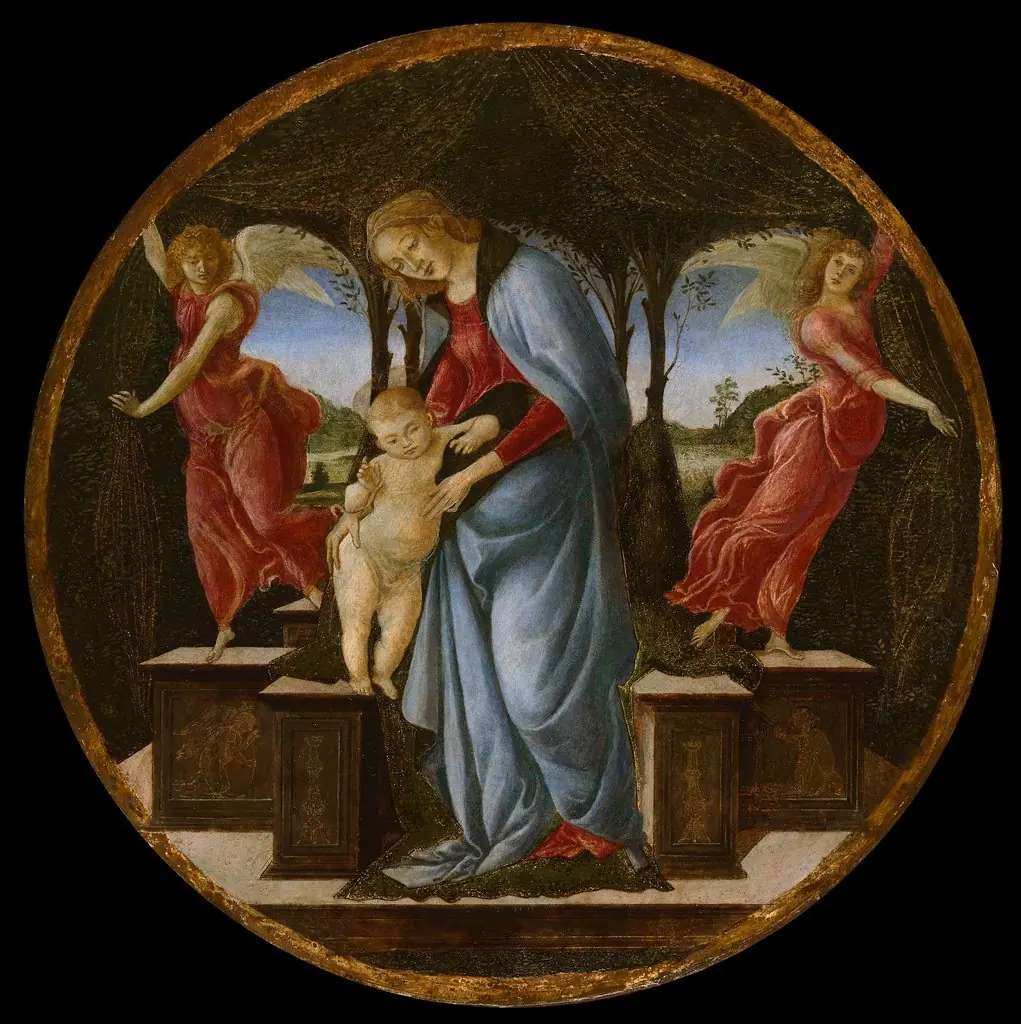
Virgin and Child with Two Angels is a tempera painting by the Early Renaissance artist Sandro Botticelli. It dates from 1490 and is held in the collection of the Art Institute of Chicago. Painted in Florence around 1490, this tempera on panel depicts the Virgin Mary with the infant Jesus, accompanied by two angels.
About this work
This painting shows the Virgin Mary holding the baby Jesus. Two angels pull back a curtain to frame them. Thin trees and what looks like a throne surround the scene.
Botticelli painted this in Florence around 1490. It feels quiet and close-up, like a private moment. Jesus lifts his hand in a small blessing gesture.
Look next at the Art Institute of Chicago where this hangs.
Overview
Its circular format, typical of Florentine private altarpieces, aligns with domestic religious practice, likely intended for use in a bedroom or private chapel.
Painted in Florence around 1490, this tempera on panel depicts the Virgin Mary with the infant Jesus, accompanied by two angels. The composition is intimate and contained, suggesting a personal devotional purpose rather than public display. Its circular format, typical of Florentine private altarpieces, aligns with domestic religious practice, likely intended for use in a bedroom or private chapel.
Subject & Meaning
The Virgin and Child are presented as serene, central figures, framed by drawn-back curtains that evoke a sacred revelation. The angels, acting as attendants, enhance the sense of reverence without grandeur. Christ’s subtle blessing gesture reinforces his divine role, while the quiet demeanor of the figures invites contemplation, reflecting a devotional tradition focused on personal connection rather than spectacle.
Technique & Style
Botticelli employs fine brushwork and delicate tonal transitions in tempera, achieving a luminous, almost ethereal quality. The figures are elongated and graceful, with flowing drapery and soft contours characteristic of his late style. The background features slender, stylized trees and a minimal architectural suggestion of a throne, creating a symbolic rather than naturalistic setting that prioritizes spiritual presence over spatial realism.
History & Provenance
The painting was created during Botticelli’s later period, after his association with Fra Filippo Lippi and amid the religious upheavals of Savonarola’s influence in Florence. Its small scale and format suggest it was commissioned by a private patron, likely for domestic worship. It entered the Art Institute of Chicago’s collection in the early 20th century, where it remains today as part of its Renaissance holdings.
Context
In late 15th-century Florence, devotional images like this were common in private homes, especially in the form of tondi. The emphasis on intimacy and quiet reverence reflects a shift from public liturgical art toward personal spirituality. Botticelli’s work bridges the mystical traditions of earlier Florentine painters like Fra Angelico and the emerging humanist sensibilities of the High Renaissance.
Legacy
This painting exemplifies Botticelli’s mature style, where spiritual quietude replaces earlier narrative dynamism. It preserves the devotional ethos of early Renaissance Florence while anticipating the introspective tone of later religious art. Its preservation and display in a major museum ensure continued study of how private faith shaped visual culture in Renaissance Italy.
Artist & collection

Artist
Sandro Botticelli was a Florentine painter who loved the drama of stories—myths, saints, and ancient tales.