Artwork
Triptych: Saint Jerome
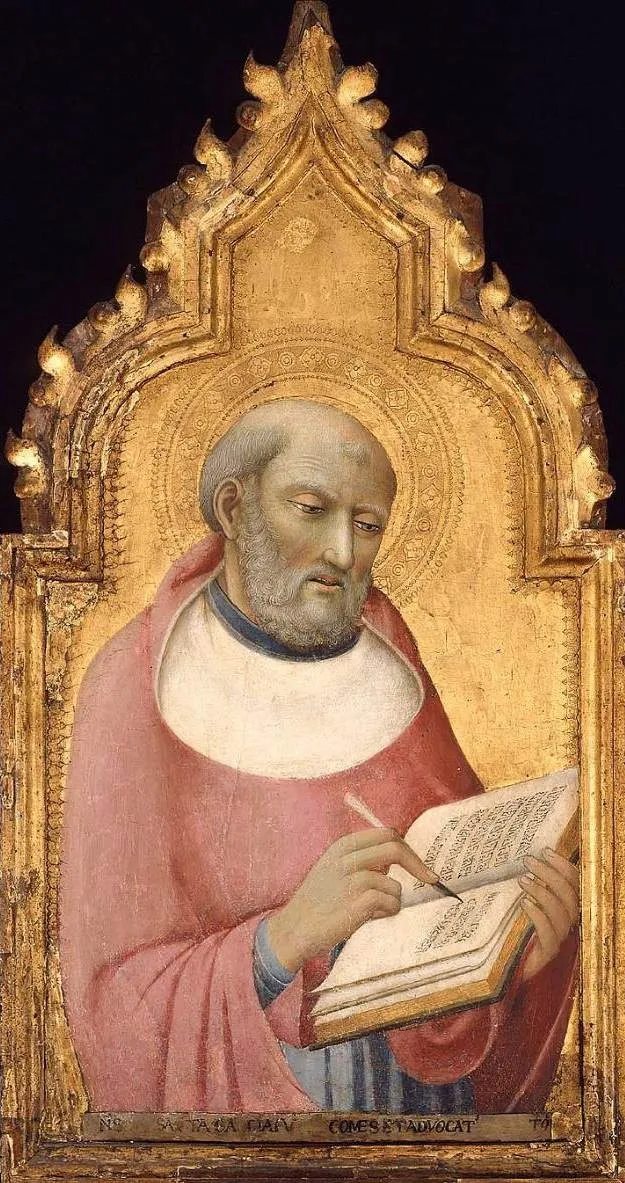
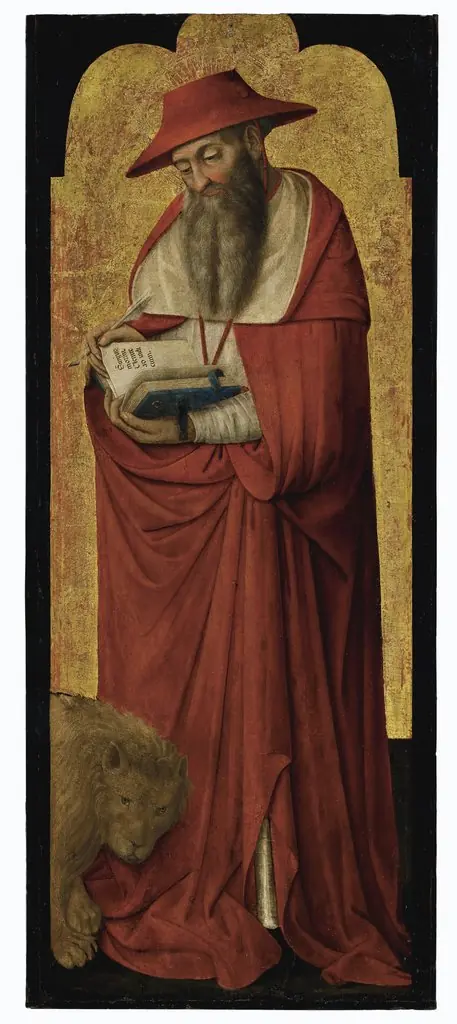
Triptych: Saint Jerome is a tempera painting by the Early Renaissance artist Sano di Pietro. It dates from 1470 and is held in the collection of the Museum of Fine Arts Boston.
About this work
Overview
Created around 1470 by Sano di Pietro, this tempera-on-panel triptych centers on Saint Jerome, a Church Father renowned for translating the Bible into Latin.
Created around 1470 by Sano di Pietro, this tempera-on-panel triptych centers on Saint Jerome, a Church Father renowned for translating the Bible into Latin. The work is part of the collection at the Museum of Fine Arts, Boston. Its compact format and devotional focus reflect the devotional practices of 15th-century Sienese art, where religious figures were rendered with solemn clarity to inspire contemplation.
Subject & Meaning
The painting portrays Saint Jerome in scholarly repose, dressed in a pink robe and white collar, signifying his ecclesiastical status. He holds an open book, likely the Scriptures he translated, emphasizing his role as a theologian and translator. The Latin inscription at the base reinforces his identity and the sacred nature of his work, aligning the viewer with the spiritual authority of his scholarship.
Technique & Style
Sano di Pietro employed tempera, a medium prized for its luminous, durable finish, applied in fine layers to achieve subtle tonal shifts. The figure is set against a dark background, heightening the contrast with the gold arch and richly colored garments. The arch’s scalloped edge and precise linear framing reflect Sienese Gothic conventions, prioritizing symbolic order over naturalistic space.
History & Provenance
The triptych was likely commissioned for private devotion in Siena, a center of religious art production during the Quattrocento. It entered the Museum of Fine Arts, Boston, in the early 20th century through a private collection, though its earlier ownership remains undocumented. Its survival in good condition suggests it was carefully preserved, possibly within a religious or aristocratic household.
Context
In late 15th-century Tuscany, images of Saint Jerome were common in domestic altarpieces, reflecting his veneration as a model of piety and intellectual devotion. Artists like Sano di Pietro catered to patrons seeking personal spiritual connection through imagery that combined textual authority with visual solemnity, blending devotional function with regional stylistic traditions.
Legacy
This triptych exemplifies the enduring influence of Sienese painting in the late Middle Ages, where religious iconography remained central to artistic production. Though not widely known outside specialist circles, it contributes to understanding how devotional art functioned in private spaces, preserving the visual language of faith through meticulous craftsmanship and symbolic clarity.
Artist & collection
Artist
Sano di Pietro or Ansano di Pietro di Mencio (1405–1481) was an Italian painter of the Sienese school of painting.

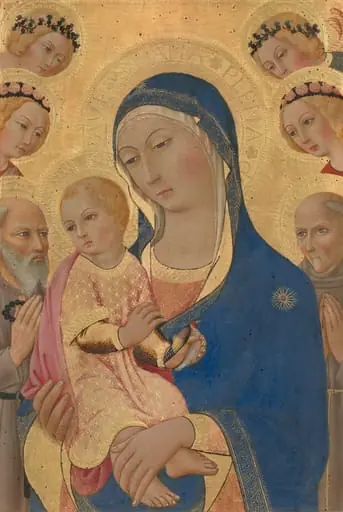 Madonna and Child with Saint Jerome, Saint Bernardino, and Angels
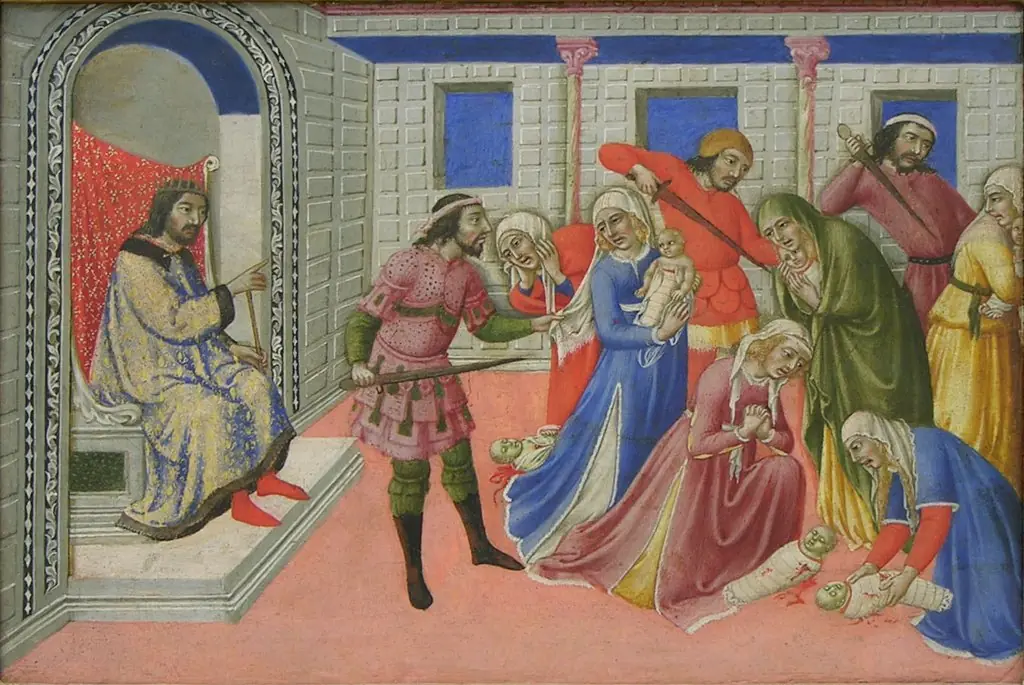 The Massacre of the Innocents
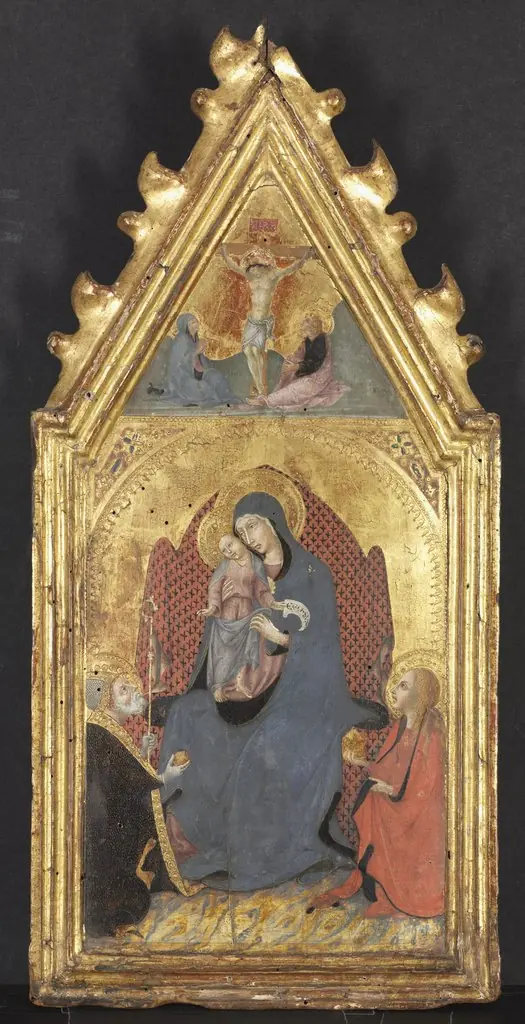 Virgin and Child Adored by Saints Mary Magdalene and Nicolas of Bari; Christ Crucified with the Virgin and Saint John the Evangelist
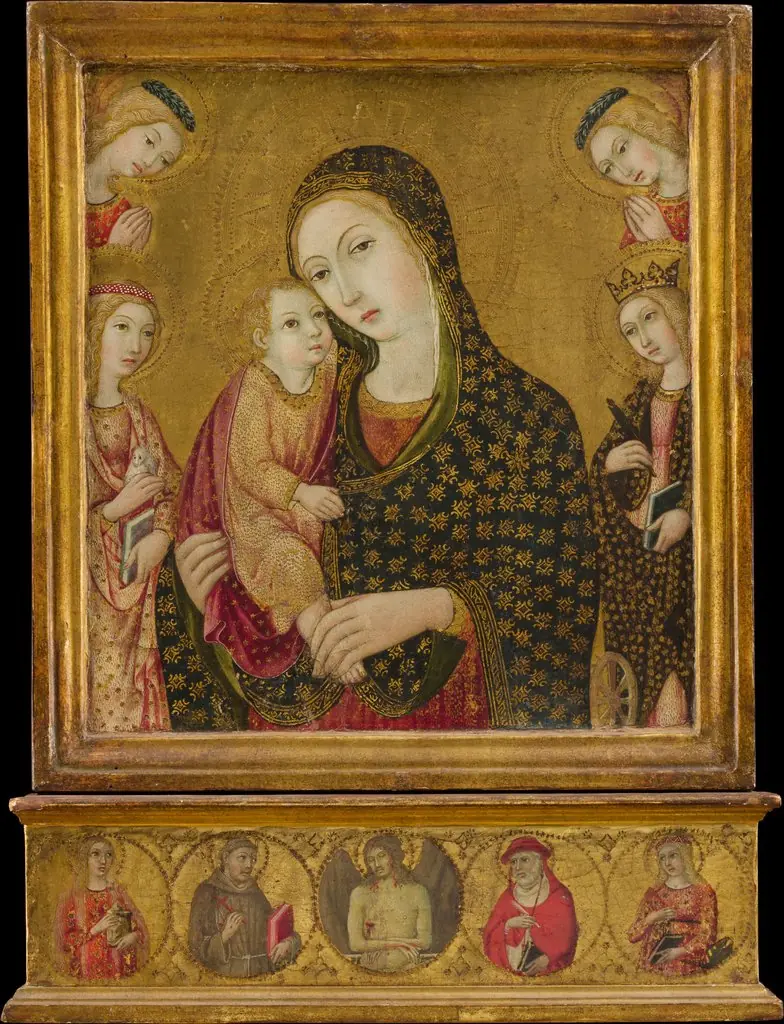 Madonna and Child with the Dead Christ, Saints Agnes and Catherine of Alexandria, and Two Angels
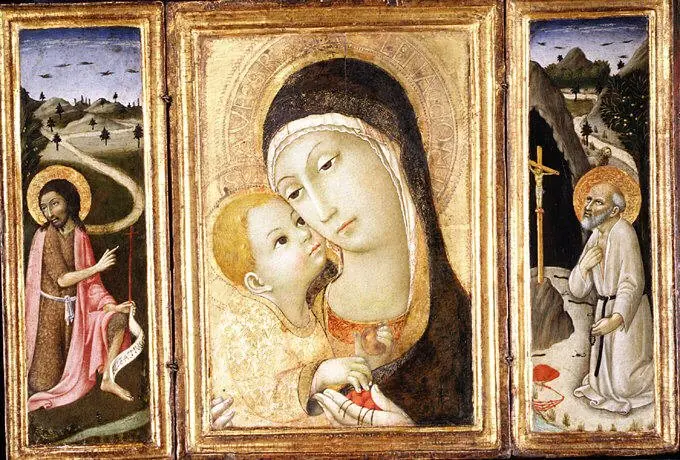 Madonna and Child; Saint John the Baptist; Saint Jerome
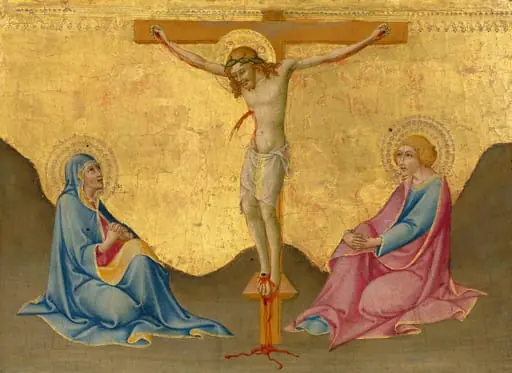 The Crucifixion
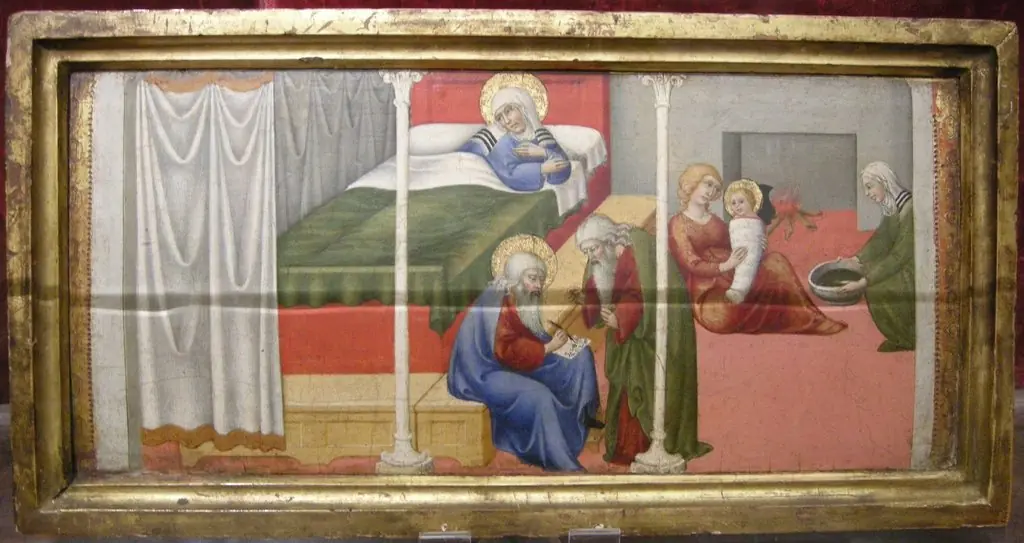 The Birth and Naming of Saint John the Baptist
 The Adoration of the Magi